A Mission to Turn India Electric Brings Livelihood to 5000+ Informal Workers, Cuts Carbon Across 25+ Cities
Accelero Vehicles’ eBik initiative is expanding access to affordable electric mobility for India’s informal workforce. Bridging climate awareness and strengthening India’s informal workforce, eBik’s vehicles have made accessible green transport a reality for thousands of informal workers.
Updated on: 16 March 2026

Sector

Solution

Technology

State of Origin
Impact Metrics
4,400+ tonnes
of CO₂-equivalent emissions cut, comparable to removing 968 cars from the road or growing 1.85 lakh mature trees.
5,000+ users
across Delhi-NCR and Uttar Pradesh, with products operating in 25+ cities.
95% users
employed in the informal economy, including street vendors, delivery workers, and farmers.
49% users
fully transitioning away from their previous vehicles to eBik mobility solutions.
This story was submitted under our programme Frontier Voices of India. If you have an innovation that’s solving critical challenges in India, we want to hear from you. Register using this link, or write to us at frontiertech@thebetterindia.com.
What will make India’s transition to electric mobility more sustainable? Is it just conversations around climate commitments, or does it have to be more equitable than that?
Anant Jain’s Accelero Vehicles, which launched its ‘Electric Banayenge India Ko’ (eBik) project in 2017, is looking to answer this very question.
Anant opines that as the Indian automobile industry transitions to the usage of EVs, the informal workforce remains largely unprepared to adapt to this change due to a lack of training and high market prices, which means that informal workers seldom experience the benefits of these products. Faced with unfamiliar technical systems, workers in this industry, and the public as a whole, risk being left behind.
In this context, an effective EV shift will depend upon the awareness of its benefits to livelihood, health, and the eBik centres its business model centers the transport needs of informal workers.
This product line operates in 25+ cities across Delhi-NCR and Uttar Pradesh. In addition to improved health and climate sustainability, it highlights the immediate advantages of increased mobility for Indian labourers and supports calls for greater investment in green energy.
Recognizing the need for eBik products
Conversations regarding electric vehicles have long reflected the global pressure to reduce greenhouse gas emissions. However, concerns around affordability and access limit the adoption of these vehicles on a large scale, and even the relatively cheap Chinese-made machinery cannot satisfy the daily requirements of Indian users. This supply shortage has highlighted the significance of eBik in the transport industry.
Founded in response to the lack of affordable and high-quality EVs in the Indian market, eBik initially aimed to design a prototype that could bear an entire family’s weight. Following years of local research, the company’s machinery is now capable of bearing up to four times the load of its Chinese competitors, and is used not only for personal transport, but also to support livelihoods. This has paved the way for a new line of efficient EVs, bringing new transport options suited to the Indian work environment.
What eBik provides to its users
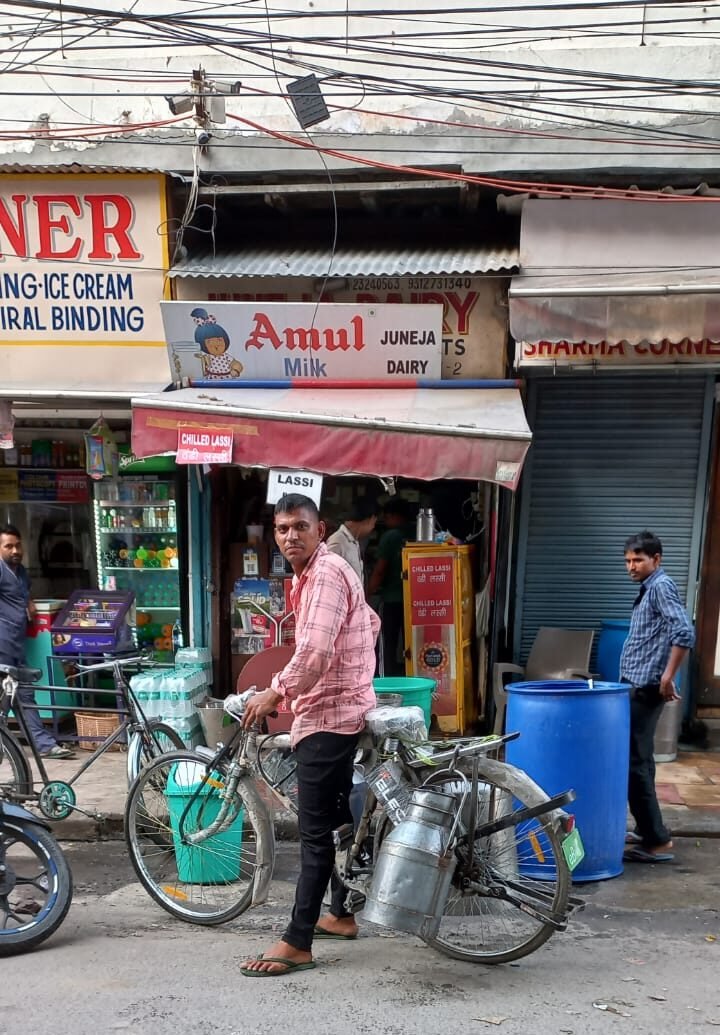
The most popular products sold by eBik are electric bicycles (INR 16,800+). The company also sells electric vegetable carts (INR 23,500+), as well as kits used to electrify manual carts.
Partner organizations in other regions have also found innovative ways to incorporate eBik products into their work. For example, in 2025, through partners including the Pune Municipal Corporation and a cooperative named SWaCH, eBik products were adopted by frontline waste management workers in Pune. This has presented novel ways to integrate EVs in the service economy that could be adapted on a larger scale.
From the initial stages, the target customers of the company have been workers employed in the informal economy. According to Anant, over 95% follow professions such as street hawking, delivery, farming, and technical and factory jobs, and 38% directly use eBik EVs for income generation. The most popular products on the eBik line remain the electric carts, which are most suitable for the latter category. After years of expansion, the customer base now numbers around 5,000, with one-third living below the poverty line and the majority being based in the Delhi-NCR and UP regions. An impressive 85% of them use eBik products more than their previous vehicles and 49% state that they have transitioned completely.
eBik’s positive impact can be examined from three lenses:
- Improved working conditions
Firstly, the adoption of their products has led to safer and healthier working conditions for individual users. Public spaces in North India, especially during hot summers, pose serious health risks for daily workers, and the use of automobiles in the place of manual vehicles can greatly reduce impediments to health. In an impact report by 60 Decibels, 49% of participants cited reduced fatigue, as well as less time and lower expenses spent on commutes, after the adoption of eBik products.
- Accessible green technology
Secondly, eBik’s focus on the urban and rural poor as customers is a significant step towards democratizing green technology. In the face of climate change, making EVs easily affordable for the masses assists in their widespread adoption, and the potential for affordability is estimated to only improve with time while preserving product quality. According to a study conducted by the Climate Collective Foundation, based on the average number of charging lifecycles per EV battery, eBik adoption reduced CO2-equivalent emissions by 4,454 tons between 2021 and 2025. This was comparable to decommissioning 968 cars or growing 1.85 lakh mature trees in the same period.
- Benefits to livelihood
Most importantly, using eBik products has greatly improved mobility for users, with 18% stating that they use these to travel greater distances. This, in turn, has promoted the livelihoods of 38% of surveyed users, with 41% using eBik vehicles to transport goods and delivery services. Three in five users have also expressed that eBik has helped increase their savings. Although most users are urban, these advantages show that EV adoption can also benefit workers in villages, allowing them to commute further in search of work.
Overcoming obstacles to present a success story
The first challenge to be overcome during the development of the brand was a lack of awareness. Once this was achieved, product sales faced few hindrances. Design and assembly take place at Accelero facilities, components are procured from various manufacturers, and sales takes place both online as well as in partnered cycle shops.
The other, ongoing challenge is related to the legal recognition of electric vehicles. Since electric carts are not covered under the Central Motor Vehicles Act, public R&D funding and credit was not available for eBik in the early stages. Instead, investors in eBik have included private entities such as Social Alpha, Acumen, LetsVenture, and the SELCO Foundation. Inclusion in future policy discussions could provide stronger incentives to green energy startups such as Accelero.
By simultaneously tackling climate change and improving labor conditions in North India, eBik represents a success story to be referenced when charting future pathways of economic development.
Not only does it demonstrate that environmentally friendly transport is viable, but it also challenges the notion that sustainability adversely impacts growth. Easily accessible and affordable electric vehicles bring mobility and wellbeing benefits that translate directly into increased economic activity, and this in turn fosters a better business environment for stakeholders across the board.
Share Your Story Today, Shape Viksit Bharat Tomorrow
Got an idea, innovation, or experience that's making a difference? Share your story now and ignite India's transformation because your voice can drive the future forward!
Handpicked stories tailored just for you
Explore stories that inspire, inform, and ignite new ideas across tech, innovation, and real-world impact

How AI is Cutting Post-Harvest Losses and Strengthen Agricultural Markets Across India
Agrograde uses artificial intelligence to address post-harvest quality assessment gaps in India’s agricultural markets. It deploys AI-based apps and sorting...
Read More