
A Non-Lethal Animal Deterrent System Is Cutting Crop Losses by up to 50% in Maharashtra
VAJRA is a system offers a humane and effective way of repelling wildlife incursions into farmland. Its Kolhapur-based team uses remote sensing and the random deployment of deterrents to reduce human–animal conflict.
Updated on: 16 June 2026

Sector

Solution
Yield

Technology

State of Origin
Impact Metrics
30–50% reduction in crop losses
following deployment in Maharashtra.
20–35% increase in incomes
from agriculture due to reduced field damage.
Reduced danger of animal attacks
for farmers using deterrent system instead of manually guarding fields.
Every year across India, about INR 10,000 crore is lost due to crop destruction by wild animals. The primary recourse for most affected farmers has been to physically guard crops, often having to watch them overnight. In addition to being tiring, this exposes the farmers to more animal attacks. Moreover, animals quickly grow accustomed to traditional deterrents and learn to ignore or bypass them. This, in turn, pushes farmers to resort to lethal methods that can harm animals and attract legal penalties.
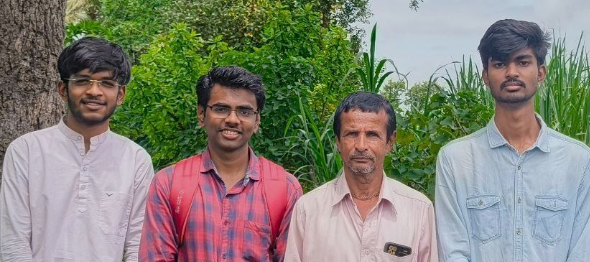
There is thus a pressing need for non-lethal systems that repel wild animals and safeguard agricultural produce. VAJRA, developed by students from Kolhapur’s DY Patil Education Society, addresses this need by combining remote sensing with the randomized deployment of deterrents.
Combating the habituation factor
When a source of deterrence becomes predictable, it stops being effective against animals. This phenomenon, known as habituation, explains why firecrackers and fences fail to scare away elephants or monkeys. Noting this, researchers have developed devices that produce animal-repelling stimuli in a less predictable manner. However, these devices often lack stable mounting and a multimodal approach.
In light of these limitations, innovator Vedant Prakash Chilbule designed VAJRA. The system contains two types of sensors: vibration sensors with a 50 m range (adequate for 1 acre of land) and PIR motion sensors to track heat signatures. Power is generated via a 20 W solar panel, allowing setup in remote areas without grid coverage.
Once an animal intrusion is detected, a variety of deterrents can be activated—high-pitched speakers, 175 kHz ultrasonic transducers, strobe lights, and scent releases. Together, these can repel a range of animals that commonly destroy crops. To balance stability and unpredictability, the entire system is mounted on a single motorized pole, the height of which is dynamically adjusted between 3 and 4 meters.
Field effectiveness
VAJRA has so far been piloted in rural regions of Maharashtra, addressing the local concerns of farmers faced with human–animal conflict. The early stages of development involved 60 interviews across various districts, particularly around rural Kolhapur. This ensured that the product design was informed by on-the-ground requirements.
According to reports from the team of developers, the system lowers crop losses by 30–50% and consequently boosts agricultural incomes by 20–35%. The surveyed farmers reported that it was easier to set up than most alternatives. If adopted nationwide, VAJRA has the potential to save INR 4000–5000 crore per year by preventing crop destruction. This is especially promising as the agricultural sector contributes about 19% to India’s national GDP. Additionally, the fact that VAJRA operates on solar energy lowers electricity costs for farmers and allows them to set up the system in fields far from the mainstream power grid.
From a qualitative perspective, the system reduces physical strain on farmers, allowing them sufficient rest without the need to constantly monitor their fields. It also reduces the likelihood that they will be caught in violent confrontations with animals. This is achieved while replacing the use of lethal deterrents such as electrical wires or poisoning, which both harm biodiversity as well as attract legal consequences for farmers. All in all, the system is geared to reflect the priorities of small and marginal farmers, making it easy to replicate across different Indian contexts.
Potential for expansion
Following the results of the pilot deployment, VAJRA could potentially reach other agricultural regions in India that are prone to animal intrusions. Support at the policy level—such as in the form of subsidies for those purchasing deterrent systems, reduced insurance premiums for those already using them, or faster compensation for these users—would lower the costs of adoption for the smaller landowners who make up ~85% of Indian farmers. At the same time, partnerships with the Livestock Health & Disease Control (LH&DC) and National Livestock Mission (NLM) could facilitate knowledge exchange and provide financial support.
The developers also envision collaborations with manufacturers and distributors, as well as seed funding from entities such as the NIDHI Accelerator and C-CAMP Animal Husbandry Grand Challenge. These steps, accompanied by national standards for non-lethal deterrents, would help address crop losses in humane and ethical ways. Ultimately, the end result of such interventions would benefit not only agricultural producers but also consumers in both rural and urban areas.
Share Your Story Today, Shape Viksit Bharat Tomorrow
Got an idea, innovation, or experience that's making a difference? Share your story now and ignite India's transformation because your voice can drive the future forward!
Resources to Replicate This Idea

BUILD YOUR OWN
Do you want to know how this innovator scaled their idea, how much it cost them, and what resources/partnerships they deployed?
Handpicked stories tailored just for you
Explore stories that inspire, inform, and ignite new ideas across tech, innovation, and real-world impact

Maharashtra’s First 3D-Printed School Cuts Construction Time By 6X, Waste By 95%
Cretebots, an Indian startup, uses robotic 3D construction printing to build structures layer by layer on-site — completing buildings 6...
Read More