Advanced Drone Technology from IIT Kanpur Startup Transforms Disaster Management in India
EndureAir Systems, an IIT Kanpur-incubated startup, played a critical role during the 2021 Uttarakhand disaster by deploying its indigenous drones for surveillance and search operations. Their success marks a turning point in India’s disaster response, demonstrating how homegrown tech can be pivotal in saving lives and improving resilience.
Updated on: 19 June 2025

Sector

Solution

Technology

State of Origin
Impact Metrics
Critical surveillance
and search-and-rescue enabled during 2021 Uttarakhand disaster.
Improved and enhanced
assessment for hydropower projects, and operational effectiveness in disaster response.
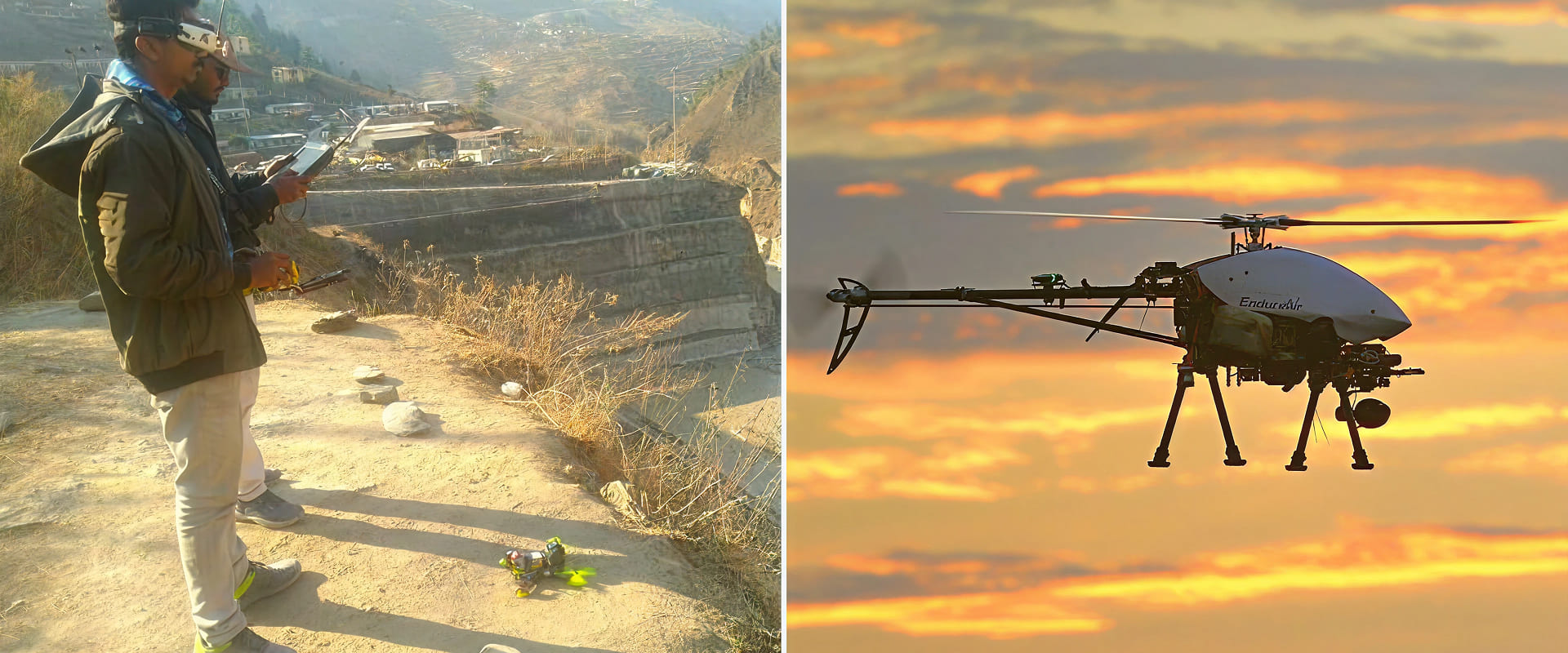
On February 7, 2021, a glacial lake outburst flood devastated parts of Uttarakhand. For the first time, a startup—EndureAir Systems—was brought into India’s official disaster response by the NDRF. The drones, developed at IIT Kanpur, supported search-and-rescue missions and offered high-resolution video footage that proved crucial for assessing damage to hydropower projects. The event marked the operational debut of startup-led drone intervention in a national emergency.

Innovation Meets Urgency
The deployment followed a demo of EndureAir’s Vibhram drone, capable of carrying a 5 kg payload and flying for up to 80 minutes. Alongside smaller surveillance drones, Vibhram delivered critical visual data from disaster zones. Though initial delays limited early response, the mission validated the drones’ practical utility and provided invaluable user feedback—spurring further product improvements.
EndureAir’s integration into disaster response highlights the country’s commitment to Atmanirbhar Bharat, promoting local innovation in solving national crises. The use of indigenous drone technology strengthens both operational effectiveness and domestic tech ecosystems, paving the way for a more prepared and self-reliant India under the Viksit Bharat vision.

Beyond Rescue: Scaling Innovation for Broader Impact
Since Uttarakhand, EndureAir has advanced its models, introducing Vibhram-E and Vibhram G with payload capacities of up to 15 kg, longer range, and better endurance. These platforms hold promise not just in disaster zones but also in sectors like healthcare logistics, remote surveillance, and infrastructure inspection.
The startup’s field experience revealed the importance of early-stage coordination between innovators and disaster agencies. Improvements in real-time data transmission and mobility are underway. Their work presents a scalable model for deeper engagement with startups in national emergency frameworks.
EndureAir’s success story offers a blueprint for how India can integrate frontier technologies into disaster response. As natural calamities become more frequent, indigenous drone startups like EndureAir show that innovation isn’t just about efficiency—it’s about saving lives and securing the future.
Share Your Story Today, Shape Viksit Bharat Tomorrow
Got an idea, innovation, or experience that's making a difference? Share your story now and ignite India's transformation because your voice can drive the future forward!
BUILD YOUR OWN

BUILD YOUR OWN
How can I implement this innovation effectively?
How is this innovation being adopted around the world?
Where else could this innovation make an impact?
Who has seen real results from using this innovation?
What insights do experts share about this innovation?
What policies support or influence this innovation?
How could this innovation evolve in the future?
Is this innovation accessible and inclusive for everyone?
How can I contribute to or participate in this innovation?
What resources can help me explore this innovation further?
If you would like to know more about this innovation, fill this form to contact the innovator.
Handpicked stories tailored just for you
Explore stories that inspire, inform, and ignite new ideas across tech, innovation, and real-world impact

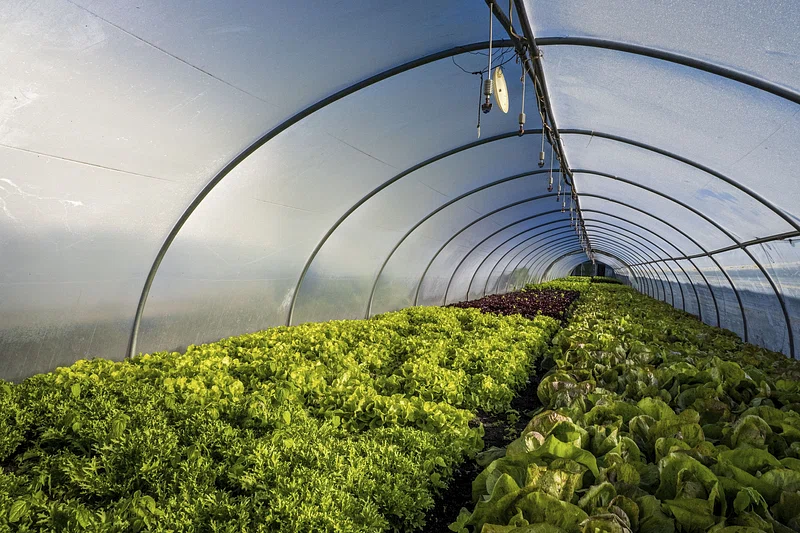
800,000 Sq Ft of Farms Now Run on AI-Driven Indoor Farming Systems
4CLIMATE is an Indian agri-tech company automating indoor farms using AI, IoT sensors, and cloud-based control systems. From climate and...
Read More