Algorithms of Accountability: AI in E-Governance for Secure and Responsive Urban Systems
Indian cities are embedding AI into governance systems to improve transparency, workforce integrity, and citizen responsiveness. From property tax detection and sentiment analysis to chatbot grievance redressal and attendance tracking, these tools serve as digital custodians of civic accountability and urban security.
Updated on: 23 July 2025

Sector

Solution

Technology

State of Origin
Impact Metrics
₹23 crore+ identified
in unassessed property tax.
92% accuracy
in query handling for 3 lakh+ citizens.
28% improvement
in attendance compliance.
Localised unrest defused
with social media sentiment tracking.
As Indian cities modernize their administrative frameworks, the push toward digital governance has created an opportunity—and a necessity—for embedding artificial intelligence as a layer of oversight. AI is no longer just about speed or convenience; it is emerging as a safeguard of public trust, detecting service gaps, flagging anomalies, and reinforcing staff accountability.
In this context, cities like Bengaluru, Pune, Jaipur, and others are leading efforts to use AI in ways that directly strengthen urban resilience, security, and institutional transparency. These projects bridge the space between citizen-facing services and internal civic systems, ensuring that governance is not just smart—but secure, responsive, and measurable.
Civic Systems with a Nervous System
The four cities featured here are applying AI across core governance functions:
-
Bengaluru launched an AI-enabled chatbot capable of handling multi-departmental citizen grievances. Integrated with municipal service databases, the chatbot provides instant resolution for routine issues and triages complex cases to appropriate departments. During crises or high-footfall complaint periods, the bot prevents overload, ensuring that emergency civic risks (like waterlogging or road collapse) are not lost in bureaucratic queues.
-
A parallel initiative in Bengaluru involves sentiment analysis on social media platforms. The city’s command center uses natural language processing (NLP) to monitor public mood, identify emerging unrest or dissatisfaction hotspots, and deploy outreach campaigns accordingly. This is particularly valuable during periods of construction, disruption , or civic unrest, helping authorities respond before escalation.
-
In Pune, the municipal corporation deployed an AI/ML model to detect property tax evasion. By comparing GIS satellite imagery with self-declared property boundaries and structures, the system automatically flags mismatches – reducing manual inspection errors and improving fiscal discipline. This has implications beyond revenue: accurate land and asset records are essential for urban security, emergency planning, and disaster compensation .
-
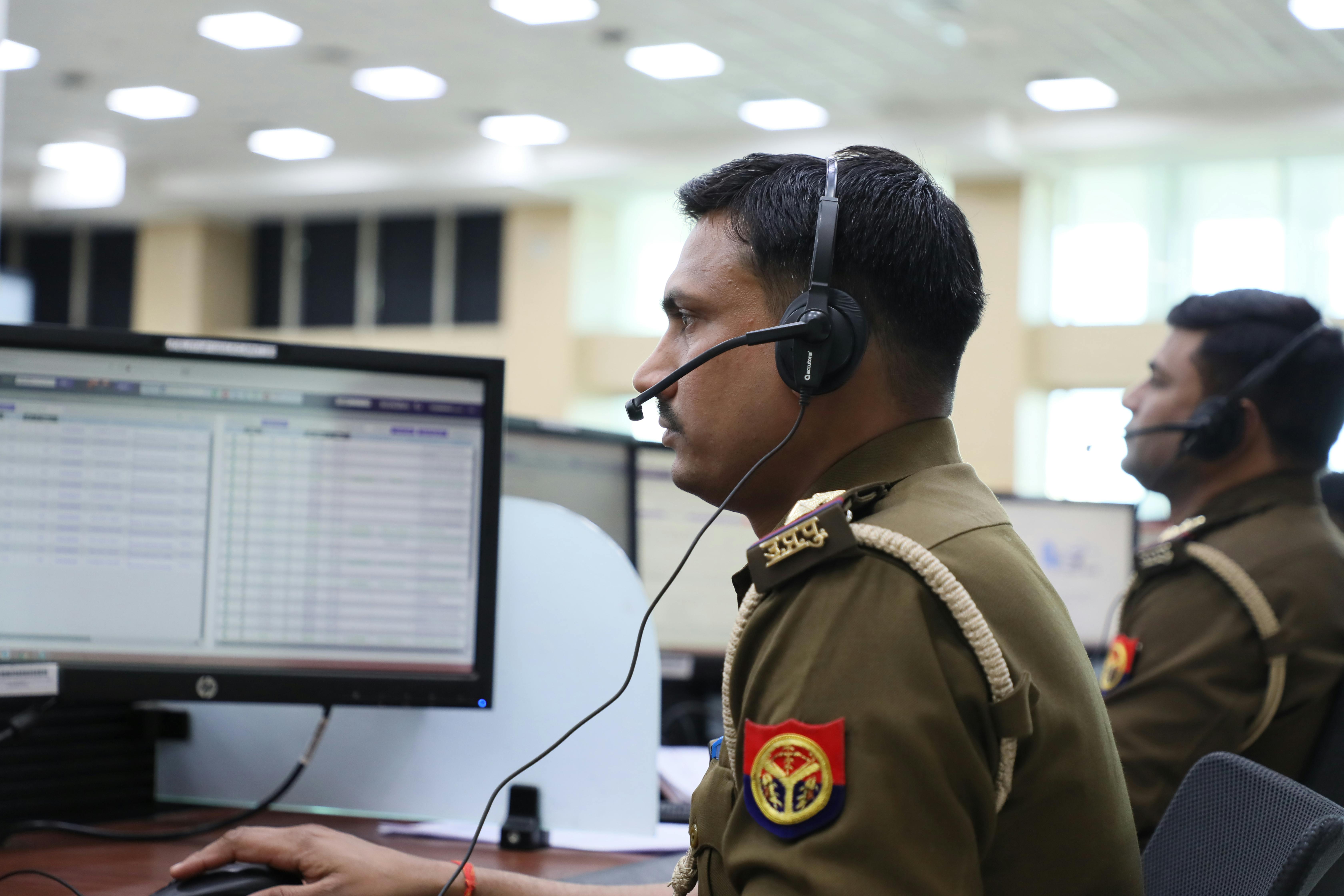
Jaipur adopted facial recognition-based attendance systems for civic staff across municipal departments. The system improves punctuality, reduces proxy attendance, and ensures that emergency and frontline workers are traceable and available. In times of disaster response or sanitation campaigns, this can prove extremely valuable in leveraging digital accountability for institutional readiness.
Quantifiable Outcomes
The impact of these systems extends across governance layers:
-
Pune identified
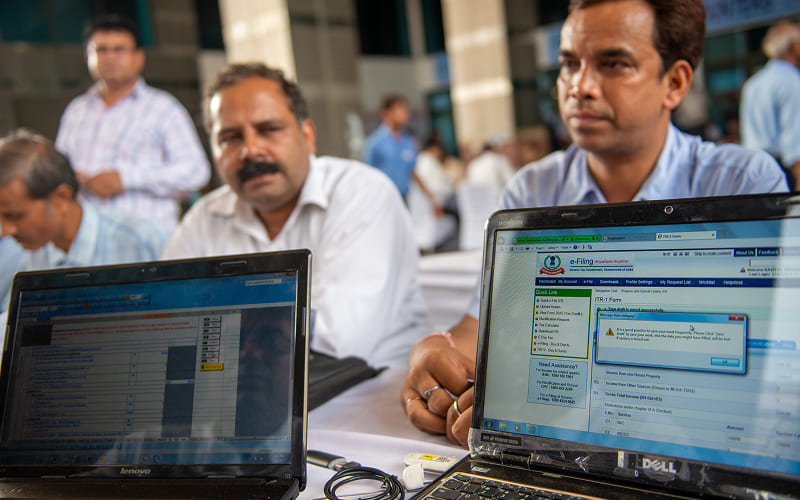
- Pune identified over ₹23 crore in previously unassessed property tax through AI-led mapping
- Bengaluru’s chatbot has handled over 3 lakh citizen queries, with a resolution accuracy above 92%
- Jaipur’s facial recognition system improved attendance compliance by 28% within the first quarter
- Social media sentiment tracking in Bengaluru helped defuse two localized unrest flashpoints through timely engagement
These results demonstrate that AI doesn’t just improve response time—it builds a network of institutional self-awareness.
Building Blocks for Secure Digital Governance
These models are scalable and interoperable with:
- State-wide property databases and tax recovery platforms
- Urban alert systems, for use during protests, pandemics, or power outages
- Integrated grievance redressal dashboards across police, health, and transport
- Personnel management for essential civic workers
They also form the foundation for predictive governance models, where cities can anticipate complaints, service outages, or violations before they manifest.
When Governance Has Eyes and Ears
These AI systems are not intrusive—they are infrastructural. They represent a new phase of public administration where data integrity, service accountability, and workforce transparency are not manually enforced but systemically ensured.
By merging citizen interfaces with institutional control, AI is helping Indian cities build governments that are not only more efficient—but more vigilant, fair, and secure. As cities grow denser and more digital, such systems are not a luxury—they are the neural core of the 21st-century civic contract.
Share Your Story Today, Shape Viksit Bharat Tomorrow
Got an idea, innovation, or experience that's making a difference? Share your story now and ignite India's transformation because your voice can drive the future forward!
BUILD YOUR OWN

BUILD YOUR OWN
How can I implement this innovation effectively?
How is this innovation being adopted around the world?
Where else could this innovation make an impact?
Who has seen real results from using this innovation?
What insights do experts share about this innovation?
What policies support or influence this innovation?
How could this innovation evolve in the future?
Is this innovation accessible and inclusive for everyone?
How can I contribute to or participate in this innovation?
What resources can help me explore this innovation further?
If you would like to know more about this innovation, fill this form to contact the innovator.
Handpicked stories tailored just for you
Explore stories that inspire, inform, and ignite new ideas across tech, innovation, and real-world impact

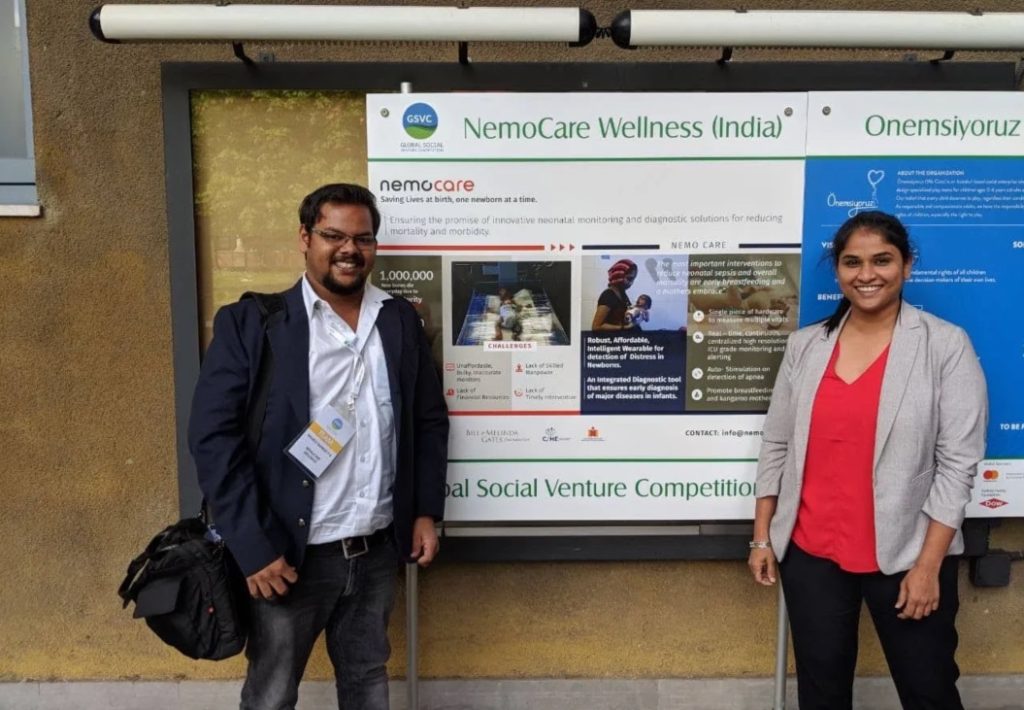
Indigenous Wearable Tech Saves Thousands of High-Risk Newborns in India
NemoCare, founded by Manoj Sanker and Pratyusha Pareddy, is strengthening neonatal care in India through Raksha, a wearable monitoring device....
Read More