Beyond Electric Cars: The Pune Startup Building Solar-Powered Mobility for Indian Cities
A Pune-based startup is pioneering India’s first solar-powered electric vehicle platform, addressing urban mobility challenges through affordable EVs, solar charging technology, electric taxis, cargo transport, and indigenous manufacturing for sustainable Indian cities.
Updated on: 07 May 2026

Sector

Technology

State of Origin
Disclaimer:
Reimagining Urban Mobility: How Vayve Mobility Is Building a Solar EV Platform for Indian Cities
Addressing India’s Urban Mobility Challenge
India’s rapid urbanisation has intensified pressure on transport infrastructure across cities. Congested roads, rising air pollution, dependence on imported fossil fuels, and inadequate last-mile connectivity continue to shape the mobility experience in both metropolitan and emerging urban centres. While electric vehicles have gained momentum as a cleaner alternative, affordability, charging access, and suitability for dense Indian cities remain significant barriers to large-scale adoption.
Pune-based startup Vayve Mobility is attempting to address these gaps through the development of compact, solar-powered electric vehicles designed specifically for urban India. Founded in 2021 by four professionals from multinational companies, the startup is building what it describes as a new category of urban mobility platform that combines electric mobility, solar charging, and lightweight vehicle architecture for city use.
Building India’s First Solar-Powered Urban EV
The company first gained attention through Eva, a compact solar-assisted electric car unveiled at the 2023 Auto Expo in Greater Noida, and subsequently exhibited at Bharat Mobility Global Expo 2025. Designed primarily for urban commuting, the vehicle reflects a shift away from conventional automobile design toward mobility systems tailored for crowded Indian cities. Unlike standard hatchbacks or SUVs built for highway use, Eva has been developed as a smaller and narrower vehicle intended to navigate dense traffic conditions, reduce parking space requirements, and improve energy efficiency.
The vehicle has a 2+1 seating configuration designed for short-distance urban travel and is targeted at users such as office commuters, students, parents, and elderly passengers. Buyers can opt for a solar roof panel that charges the battery while the car is parked outdoors or during daytime driving. According to the company, the solar roof can generate enough energy to power approximately 10–12 km of driving per day, amounting to more than 3,000 km annually under typical conditions.
Integrating Solar Energy With Everyday Mobility
This feature is particularly relevant in the Indian urban context, where access to EV charging infrastructure remains uneven and many households lack dedicated charging facilities. By supplementing conventional charging with solar energy, the vehicle attempts to reduce operational costs while also lowering dependence on grid electricity.
Eva is offered in three variants — Nova, Stella, and Vega — with battery capacities ranging from 9 kWh to 18 kWh and a claimed real-world driving range of 125 km to 250 km depending on the variant. The top-end Vega variant delivers up to 250 km of range on an 18 kWh battery pack. The vehicle is powered by a 15 kW air-cooled electric motor and can be charged using a standard 15A household socket in approximately four hours, while also supporting fast charging. According to the company, the vehicle delivers approximately 14 km per unit of electricity under real-range conditions.
The company positions the vehicle not merely as a consumer product, but as part of a broader urban sustainability strategy. Reduced fuel consumption, lower operating costs, and smaller vehicle dimensions are intended to address several urban development concerns simultaneously — including traffic congestion, energy consumption, and vehicular emissions.
Expanding Beyond Personal Mobility
Since unveiling the prototype, Vayve Mobility has expanded its focus beyond personal commuting. The startup has developed its vehicle architecture into a multi-product platform capable of supporting taxi services, cargo transport, and institutional mobility applications.
One of the startup’s major areas of focus is India’s ride-hailing and shared mobility sector. The company is developing an electric taxi variant intended to compete with low-cost CNG taxis commonly used in app-based transport networks. According to the company, the platform delivers significantly lower total cost of ownership compared to conventional CNG vehicles, making it potentially viable for fleet operators and drivers operating in high-utilisation urban environments.
This has implications for both economic and environmental sustainability in cities. Ride-hailing platforms in India continue to face profitability challenges, while drivers often struggle with fuel expenses and fluctuating earnings. Lower operating costs through electric mobility could improve driver incomes while simultaneously reducing urban emissions and fuel consumption.
Developing Solutions for Urban Logistics and Public Transport
The same platform is also being adapted for lightweight cargo movement and last-mile logistics. With the growth of e-commerce and urban delivery systems, Indian cities are witnessing increasing pressure from small commercial vehicles operating within dense urban corridors. Lightweight electric cargo vehicles could help reduce emissions and operational costs in this segment while improving efficiency in last-mile deliveries.
In parallel, the startup is exploring shuttle mobility solutions for campuses, gated communities, institutional zones, and large public events. These applications are particularly relevant in urban spaces where low-speed, short-distance transport systems are increasingly required but often rely on imported electric mobility kits with limited durability and serviceability.
Supporting Indigenous Manufacturing and Sustainability Goals
An important aspect of the company’s approach is its emphasis on indigenous manufacturing. Most vehicle components are sourced within India, with the exception of imported lithium battery cells and semiconductor chips. This aligns with broader national priorities around domestic manufacturing, technological self-reliance, and localisation within the EV ecosystem. The startup is currently engaging with government agencies, financial institutions, and mobility stakeholders to secure support for scaling production and deployment.
Vayve has also signed a Memorandum of Understanding with a French mobility group for the export of its CTHaul light cargo EV to France and other European markets, with type-approval processes currently underway through France’s accredited authority, UTAC.
A New Model for Sustainable Urban Development
Vayve Mobility’s work highlights an emerging shift in India’s urban development discourse — from viewing mobility purely as transportation infrastructure to treating it as an integrated sustainability challenge involving energy, emissions, public health, affordability, and urban design.
Rather than replicating global EV models for the Indian market, the startup is attempting to develop mobility solutions rooted in local urban realities: constrained road infrastructure, high-density traffic, rising fuel costs, and uneven charging access. In doing so, it offers a case study in how clean mobility innovation can intersect with broader goals of sustainable and inclusive urban development in India.
Share Your Story Today, Shape Viksit Bharat Tomorrow
Got an idea, innovation, or experience that's making a difference? Share your story now and ignite India's transformation because your voice can drive the future forward!
Disclaimer:
Resources to Replicate This Idea
BUILD YOUR OWN INTERVENTION
Handpicked stories tailored just for you
Explore stories that inspire, inform, and ignite new ideas across tech, innovation, and real-world impact

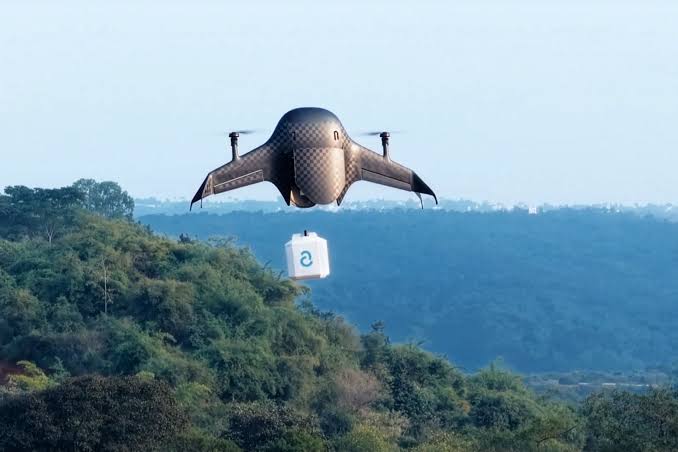
Pilotless Cargo Flights with Zero Failures: Reimagining Diagnostic Logistics in Indian Cities
An energy-efficient autonomous aircraft combining vertical take-off with fixed-wing cruise has completed over 1,000 flights carrying diagnostic samples between hospitals,...
Read More