Breaking the Magnet Monopoly: How Chara is Rewiring India's Electric Future
As India races toward electrification, one Bengaluru startup is challenging the global dependence on rare earth magnets. Chara Technologies has developed magnet-free electric motors that promise cleaner supply chains, greater energy security, and a new pathway for India’s deep-tech manufacturing ambitions.
Updated on: 31 July 2026

Sector

Solution

Technology

State of Origin
Impact Metrics
70+ customers
across electric mobility and industrial sectors have adopted Chara's rare earth-free motor technology.
500,000 motors
sold would deliver climate benefits equivalent to planting 1 million trees.
3 international markets
India, Italy, and Belgium have generated commercial demand for Chara's rare earth-free motors through customer enquiries and deployments.
Only company
at commercial scale shipping rare earth-free motors and controllers for mobility.
Six years ago, if someone had stopped Bhaktha Keshavachar and asked him about rare earth magnets, he admits he would have struggled to explain why they mattered. Today, those minerals sit at the heart of global debates on industrial policy, energy security, and supply chain resilience. What was once an obscure technical issue has become a strategic concern for countries racing towards electrification.
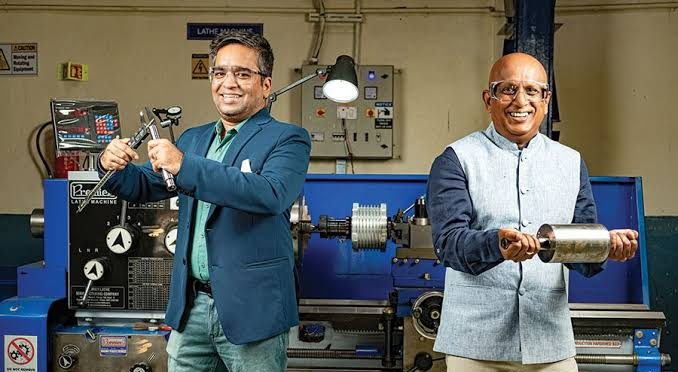
Founded in Bengaluru and now headquartered in Delhi, Chara Technologies was established by Bhaktha Keshavachar to address climate change, he founded Chara (derived from the Sanskrit word for motion) with a clear objective: eliminate rare earth magnets from electric motors entirely rather than simply reduce dependence on them.
The company set out to prove that magnet-free motors could be commercially viable, scalable, and competitive. After three years of intensive research and development, Chara claims to be the only company currently shipping rare earth-free motors and controllers for mobility at commercial scale.
The Hidden Challenge Inside Every Electric Motor
The motivation behind Chara’s innovation lies at the intersection of two global transitions. First is the rapid electrification of transport and industry, where electric motors are replacing internal combustion engines as the core technology powering vehicles and machinery. Second is the growing realization that these motors depend heavily on permanent magnets made from rare earth elements, creating a significant geopolitical vulnerability.
India imported approximately 53,700 tonnes of permanent magnets in FY2024–25, with nearly 93% sourced from China. This dependence has elevated rare earths from a technical input to a matter of national strategic importance. Temporary export restrictions and growing geopolitical tensions have further exposed the risks associated with concentrated supply chains.
Beyond strategic dependence, Chara also highlights the environmental cost of rare earth extraction. Although these minerals are relatively abundant, they occur in very low concentrations, making extraction resource-intensive. According to the company, producing one tonne of rare earth materials can generate nearly 2,000 tonnes of radioactive waste, alongside significant topsoil degradation. Keshavachar describes this as the “EV paradox” while electric vehicles eliminate tailpipe emissions, they remain dependent on an upstream supply chain with considerable environmental costs.
Reinventing the Electric Motor
Conventional electric mobility primarily relies on Permanent Magnet Synchronous Motors (PMSM) and Brushless DC (BLDC) motors because they are highly efficient. However, both require permanent rare earth magnets. Chara instead chose a different technological pathway by reviving the switched reluctance motor, a well-established concept that historically failed to gain commercial adoption because controlling it with sufficient precision proved extremely difficult.
Rather than using magnets to generate rotational force, Chara’s motors allow electricity to follow the path of least magnetic resistance. A proprietary controller, powered by custom algorithms and embedded software, continuously regulates current in real time to ensure smooth and efficient rotor movement. In effect, the company’s innovation transforms what was once a hardware limitation into a software-controlled solution.
Developing this capability required approximately three years of fundamental R&D spanning motor design, power electronics, embedded systems, and control algorithms before the technology was ready for commercial deployment. By replacing permanent magnets with intelligent software and controller architecture, Chara seeks to remove both strategic dependence on rare earth imports and the environmental costs associated with mining them.
Overcoming the Deep-Tech Valley of Death
Commercialising a fundamentally new hardware technology presented challenges well beyond engineering. Keshavachar identifies three recurring barriers faced by deep-tech startups in India.
The first was access to patient capital. Unlike software startups that often generate revenue within months, Chara required years of research before commercial sales became possible, making it difficult to attract conventional venture capital.
The second challenge was talent. While India produces a large pool of software engineers, specialists in core electromagnetics, power electronics, and advanced hardware design remain scarce, with many employed by multinational corporations that startups struggle to compete with.
The third bottleneck was market adoption. Indian manufacturers tend to be cautious about integrating unproven technologies developed by startups, reflecting relatively low industrial investment in research and development compared with global competitors.
An early grant from IASC helped Chara survive its most uncertain stage, well before investors widely recognised the importance of rare earth independence. As awareness of critical mineral security increased, the company successfully completed three funding rounds. A manufacturing and market-access partnership with Greaves Electric Mobility further enabled Chara to scale production and reach customers that would otherwise have been inaccessible to a young startup.
From Electric Vehicles to Agricultural Machinery
Although Chara initially expected electric vehicles to become its primary market, customer demand expanded into several unexpected sectors. Today, the company serves more than 70 customers across applications including electric three-wheelers, tractors, tillers, golf carts, and other off-highway agricultural equipment.
Its customer base is concentrated around Chennai and Karnataka, although manufacturers distribute products nationally. Companies such as Bulwark and VST, which exports to African markets, have adopted Chara’s technology. International interest has also emerged organically, with manufacturers in Italy and Belgium approaching the company through its website in response to the same concerns over rare earth dependence. Chara has additionally identified growing opportunities within the United States golf cart market, which sells approximately 300,000 golf carts annually.
The company also measures its environmental impact directly by estimating CO₂-equivalent emissions avoided through each motor sold. Internally, it uses a simple benchmark: selling 500,000 motors would generate climate benefits comparable to planting one million trees.
Advancing India’s Industrial and Strategic Priorities
Chara’s mission aligns closely with India’s broader development objectives. As the country transitions towards electric mobility to reduce dependence on imported fossil fuels, replacing one form of import dependence with another could undermine long-term energy security. Indigenous technologies that reduce reliance on critical mineral imports therefore contribute not only to climate goals but also to industrial resilience, technological self-reliance, and manufacturing competitiveness.
The company’s magnet-free motor technology directly supports this transition by offering an alternative pathway for electrification without reproducing vulnerabilities within the rare earth supply chain. Increasingly, discussions around critical minerals have moved beyond technical communities into national policy conversations, with Chara participating in these dialogues.
Despite completing three funding rounds and securing manufacturing partnerships, the founders argue that policy support remains incomplete. Chara has obtained both ICAT and ERI certifications, yet manufacturers integrating these certified motors into vehicles must still undergo an additional six to eight months of duplicate testing. Streamlining this certification process, the founders believe, would substantially accelerate commercial adoption.
Looking ahead, Chara advocates production-linked or sales-linked incentives specifically designed for breakthrough technologies, stronger collaboration between government and research institutions, and targeted support similar to that provided during the early growth of India’s electric two-wheeler ecosystem.
As countries worldwide seek alternatives to concentrated rare earth supply chains, Chara has positioned itself ahead of an emerging global need. Whether India can fully capitalise on this advantage will depend not only on continued engineering innovation but also on the policy environment that determines how quickly homegrown deep-tech solutions can scale.
Share Your Story Today, Shape Viksit Bharat Tomorrow
Got an idea, innovation, or experience that's making a difference? Share your story now and ignite India's transformation because your voice can drive the future forward!
Resources to Replicate This Idea
BUILD YOUR OWN INTERVENTION
Handpicked stories tailored just for you
Explore stories that inspire, inform, and ignite new ideas across tech, innovation, and real-world impact

Safe Access: India’s Community-Verified Digital Locator for HIV Prevention Services
Safe Access is a free, community-driven Indian platform that helps people locate verified PrEP and PEP providers nearby. By mapping...
Read More