Building India’s First Homegrown Bio 3D Printer: The Vision of Avay Biosciences
Avay Biosciences, founded by Siddharth Nair in 2022, developed India’s first homegrown bio 3D printer to make tissue engineering accessible and affordable. Reducing reliance on costly imports, the startup supports regenerative research and ethical testing. Its innovation promotes Atmanirbhar Bharat and is transforming the landscape of biomedical R&D in India.
Updated on: 19 June 2024

Sector

Solution

Technology

State of Origin
Impact Metrics
25 printers sold
across India , South Korea, and the European Union.
Reduced cost barrier
for medical research infrastructure.
Supports ethical alternatives
to animal testing.
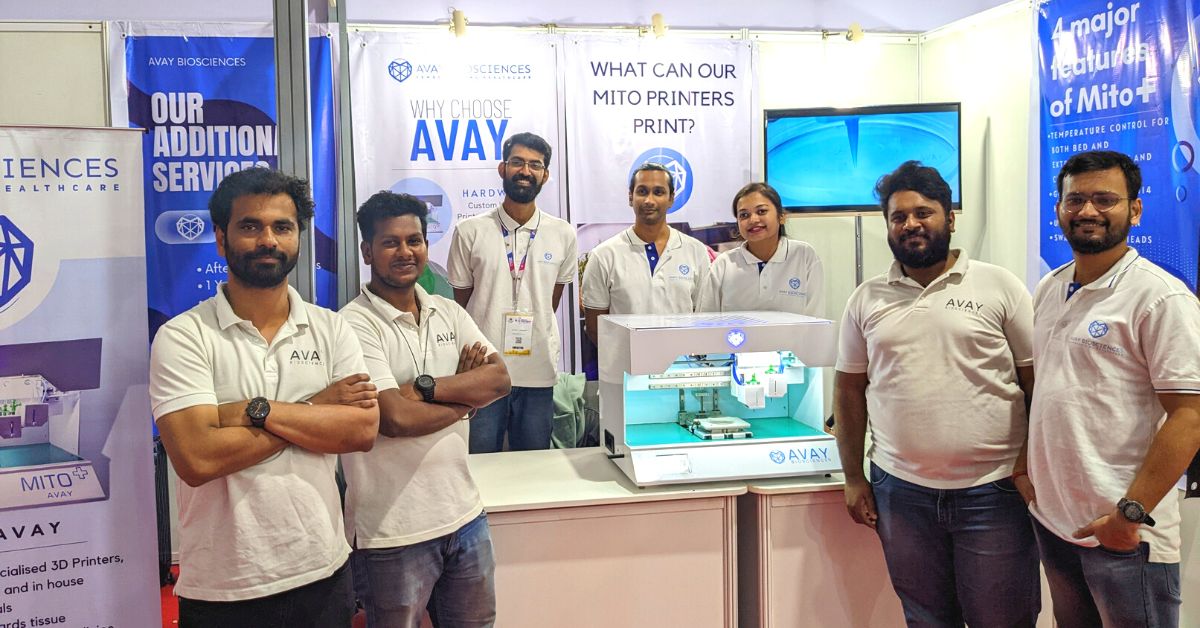
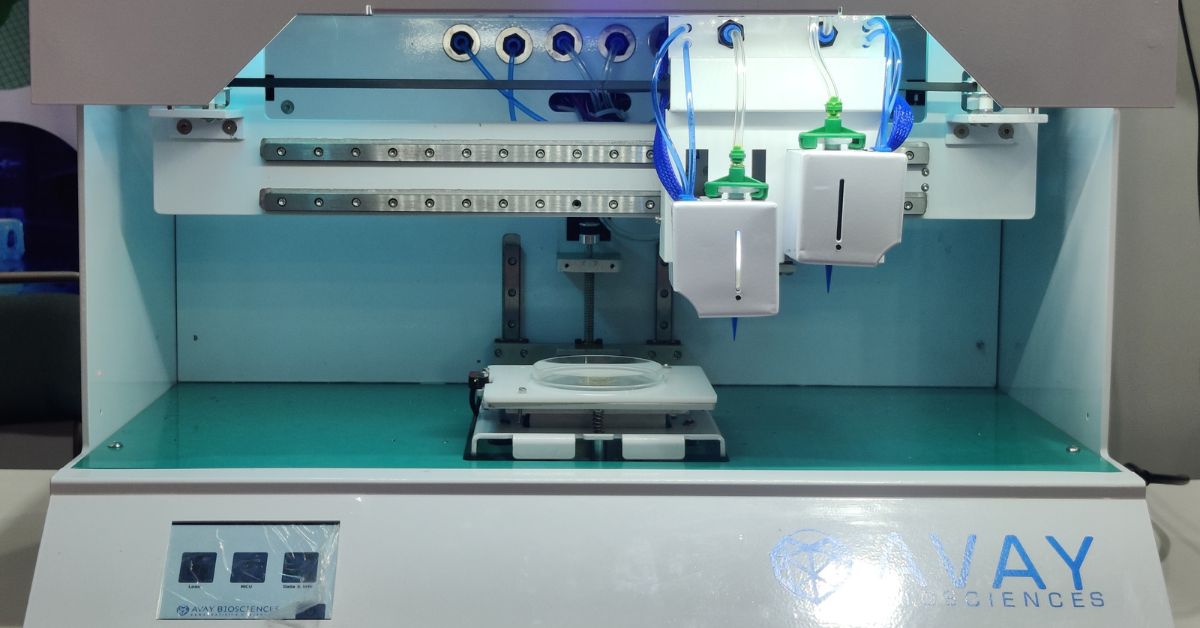
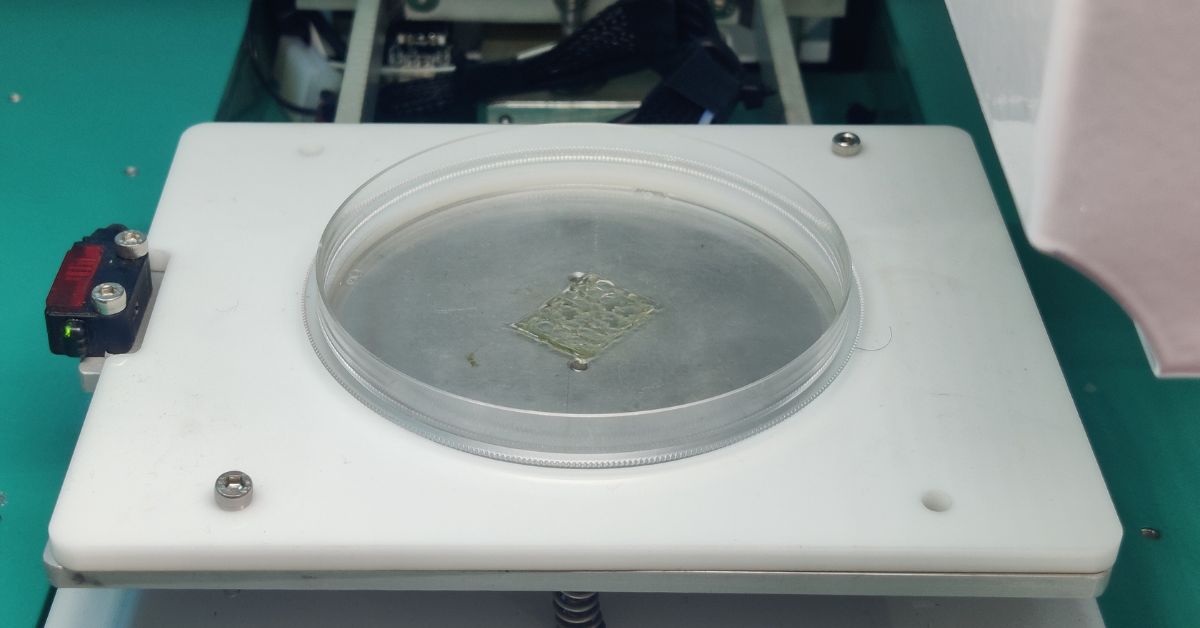
In November 2022, Chennai startup Avay Biosciences launched Mito Plus, their bio 3D printer that can print human tissues. This was a significant milestone in India’s healtech ecosystem, with the organisation providing fully indigenous development of both software and hardware for end-to-end bio 3D printing solutions in India.
Manish Amin, CEO, explains that bioprinting replicates tissues using ‘bioinks’, which are engineered to print artificial living tissues such as skin. Bioinks are gels and pastes that contain two components – the cells for the type of tissue required and biomaterial that can support cell growth. Biomaterials (such as gelatine and collagen) are made from natural sources like meat, bones and cartilage using chemical processing, and imitate the cell’s environment as it would have been in the body. These are used as support structures upon which cells grow and interconnect.
Addressing the high costs of medical research infrastructure
India has long faced challenges in scaling biotech innovation due to the high cost of specialized tools like bioprinters, most of which are imported from the US, Germany, or Japan. These machines often cost over ₹50 lakh, making them inaccessible to many research labs and academic institutions.
Avay Biosciences’ bio 3D printer is designed to significantly reduce this cost barrier. Built entirely in India, it allows researchers to print biological tissue using hydrogels and living cells—a process essential for studying diseases, testing drugs, and developing regenerative therapies. By enabling in-vitro tissue modeling, the device also offers an ethical alternative to animal testing.
The first prototype of Mito Plus installed at IISc, Bengaluru, and the advanced version was developed with inputs from Dr Bikramjit Basu at the university.
A growing footprint in India’s research landscape
Since its inception, Avay Biosciences has sold around 25 bio 3D printers across India, South Korea, and the European Union. The device is currently being used for various applications, including tissue regeneration studies, pharmaceutical testing, and bio-ink research. Since 2024, they have been focussing on scaling their device to reach different clinical research organisations, CDMOs and diagnostic labs.
In early 2025, they were recognised as one of the best early-stage startups in India by Razorpay. They are set to expand their business to the UK, particularly for usage by the National Health Service (NHS).
The startup has also attracted attention from academic incubators, including IIT Madras and VIT, and has received funding from the Biotechnology Industry Research Assistance Council (BIRAC) and Startup India. Siddharth and his team continue to innovate, offering customized features to meet diverse research needs across biomedical fields. Now, they’re working on automating a drug discovery process by using tools such as liquid handling systems and 3D bioprinting.
Future prospects and broader applications
The success of Avay Biosciences holds significant implications beyond the research lab. Bio 3D printing is considered a cornerstone of the future of medicine, with applications in organoid development, burn treatment, and cosmetic testing. As the technology matures, it could enable breakthroughs such as printing patient-specific tissues for transplants or creating lab-grown skin and cartilage.
Avay’s approach—focusing on affordability, modular design, and indigenous production—makes its printer highly replicable. It has the potential to be integrated into public medical colleges, biotechnology hubs, and even pharma R&D labs, supporting India’s aspirations to lead in frontier medical innovation.
Pioneering biotech for a self-reliant India
Avay Biosciences is not just building devices—it is building capacity. By indigenizing a complex and futuristic technology like bio 3D printing, it empowers Indian researchers to innovate without constraints. The startup embodies India’s shift toward deep-tech entrepreneurship and scientific independence, and stands as a vital enabler of the country’s bioeconomy and healthcare innovation goals.
Share Your Story Today, Shape Viksit Bharat Tomorrow
Got an idea, innovation, or experience that's making a difference? Share your story now and ignite India's transformation because your voice can drive the future forward!
BUILD YOUR OWN

BUILD YOUR OWN
How can I implement this innovation effectively?
How is this innovation being adopted around the world?
Where else could this innovation make an impact?
Who has seen real results from using this innovation?
What insights do experts share about this innovation?
What policies support or influence this innovation?
How could this innovation evolve in the future?
Is this innovation accessible and inclusive for everyone?
How can I contribute to or participate in this innovation?
What resources can help me explore this innovation further?
If you would like to know more about this innovation, fill this form to contact the innovator.
Handpicked stories tailored just for you
Explore stories that inspire, inform, and ignite new ideas across tech, innovation, and real-world impact

800,000 Sq Ft of Farms Now Run on AI-Driven Indoor Farming Systems
4CLIMATE is an Indian agri-tech company automating indoor farms using AI, IoT sensors, and cloud-based control systems. From climate and...
Read More