Capturing Carbon, Creating Value:Greengine's Algae-Based Path to Net-Zero Industry
Greengine’s patented Vertical Algal Biofilm Technology captures industrial CO₂ and converts it into valuable biomass, replacing costly storage-based carbon capture with a modular, revenue-generating alternative — now validated at TRL 8+ across commercial sites including EIL, IOCL, and Unnao.
Updated on: 23 July 2026

Sector

Solution

Technology

State of Origin
Impact Metrics
9 UN SDGs
supported through Greengine's work.
Captures CO₂ up to 15x faster
per square metre than conventional systems (up to 150 kg/m²/year).
85 kg of biomass
produced up to per square metre each year.
Only 10% of water
and space used compared to conventional systems.
As Indian cities and industrial corridors face mounting pressure to cut greenhouse gas emissions while sustaining economic growth, a Kanpur-based deep-tech startup is offering an unconventional answer: algae. Greengine Environmental Technologies, founded in June 2015 by Nitin Srivastava, has spent nearly a decade developing Vertical Algal Biofilm Technology (VABT™) — a patented, biology-driven carbon capture and utilization (CCU) platform now operating at commercial demonstration scale. While Greengine sits squarely in the climate-tech and industrial decarbonization space rather than urban development proper, its work has direct implications for cities: industrial clusters ringing metropolitan areas are major contributors to urban air pollution and regional carbon budgets, making scalable, space-efficient capture technology relevant to how Indian urban regions manage emissions from the industry that sustains them.
The Technology: Engineering Biology for Industrial Scale
Microalgae have long been recognized as efficient natural carbon absorbers, but translating that biological potential into reliable industrial performance has proven difficult. Conventional suspension-based photobioreactors — large water-filled tanks in which algae float freely — suffer from uneven light distribution, contamination, high water and energy demands, and unpredictable biomass yields as they scale up.
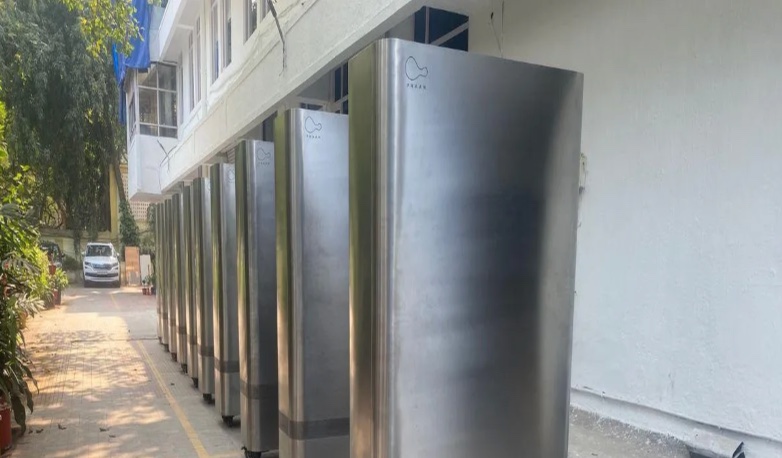
Greengine’s answer was to abandon the suspension model altogether. VABT™ grows engineered algal biofilms directly on vertical surfaces rather than suspending them in water. This architectural shift addresses several bottlenecks at once: it improves light exposure uniformity across the biofilm, enhances gas transfer between CO₂ and the algae, reduces contamination risk, and simplifies harvesting because the biomass can be scraped or automated off a solid surface rather than filtered from a liquid slurry. The result is a platform the company describes as compact, modular, fully automated, and data-intelligent — reinforced by IoT sensors and real-time monitoring that allow predictive maintenance and consistent performance across multiple sites.
The system captures industrial flue-gas CO₂ and converts it into biomass that can be repurposed for bio-based materials and other circular-economy products, turning what would otherwise be a waste stream and compliance cost into a saleable output.
Building the Platform: From Lab Bench to TRL 8+
Greengine’s development path followed a deliberately staged trajectory: literature review and lab-scale research, proof-of-concept experiments, prototype development, patent filing to protect the core process and engineering, pilot-scale validation, and iterative optimization. The company states its technology and intellectual property were developed entirely in-house, with external laboratories in India providing only testing and validation support rather than co-development.
That process has taken the platform to what the company classifies as Technology Readiness Level (TRL) 8+ — meaning the system has moved beyond prototyping into demonstrated, near-commercial operation. A live installation at Engineers India Limited (EIL) in Gurugram is a 2.25-tonne-per-annum CO₂ capture and utilization plant, with the platform achieving a capture rate of up to 150 kg of CO₂ per square metre per year — up to 15 times that of conventional systems — alongside a biomass yield of up to 85 kg per square metre annually, while using roughly 10% of the water and space that conventional systems require. Additional plants are planned at the Greengine Global AlgaeX Innovation Center in Unnao, Uttar Pradesh, and with Indian Oil Corporation Limited (IOCL) — signalling a move from single-site validation toward a repeatable deployment model with public-sector and PSU partners.
The company holds two granted patents with additional applications filed, and has been recognized through the Microsoft Synapses Challenge, the CXXO Deeptech Disruptor Award, HDFC Tech Awards, Sankalp Bharat Awards 2024, and inclusion in the LCE’24 Global Cohort — a set of endorsements that has helped build early credibility with industrial partners in a market where biological CCU has no established track record.
Funding and Scaling
Greengine has invested roughly ₹5 crore to date in research, pilot infrastructure, product development, IP creation, and field validation — a comparatively lean figure for a hardware- and biology-intensive climate technology, reflecting a startup that has scaled deliberately through pilot revenue, awards, and government-linked support rather than large venture rounds. Startup India schemes and various innovation challenges and competitions are cited by the company as having materially supported this journey, suggesting the platform’s early growth leaned more on public innovation ecosystems than private capital markets.
Looking ahead, the company has been explicit about what it believes it needs to scale further: formal recognition of VABT™ as a validated CCU solution to accelerate industrial acceptance and integration into national decarbonization strategy, dedicated funding for large-scale demonstration projects, and continued policy support. This reflects a common pattern among Indian deep-tech climate ventures — technology validated at pilot scale but constrained less by engineering risk than by the absence of de-risking capital and regulatory frameworks built for first-of-kind industrial deployments.
Geographically, current operations are concentrated in Uttar Pradesh and Haryana, with the company stating intent to expand internationally once the domestic reference sites are further established.
Impact and Stakeholders
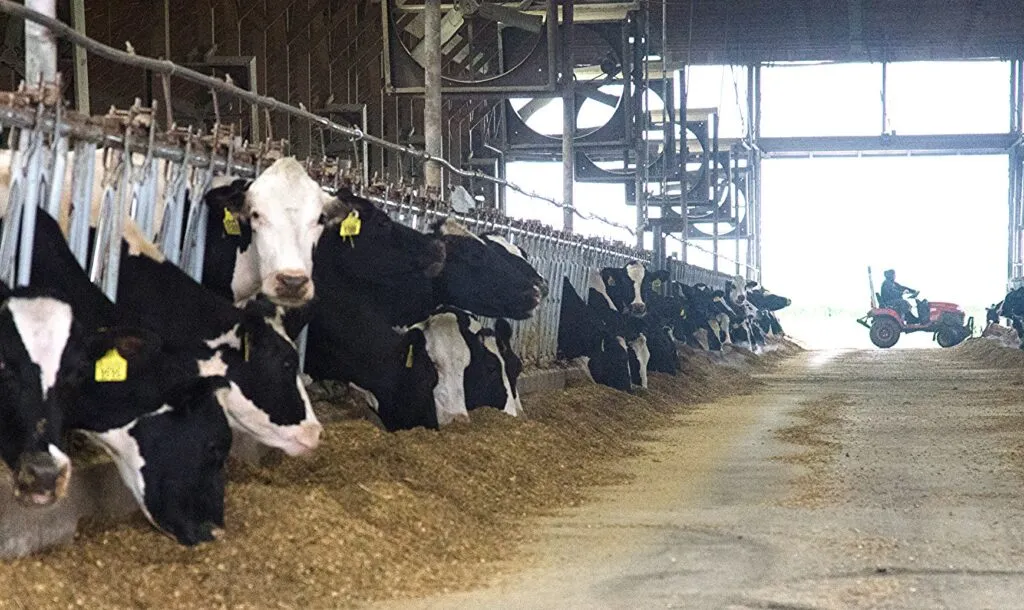
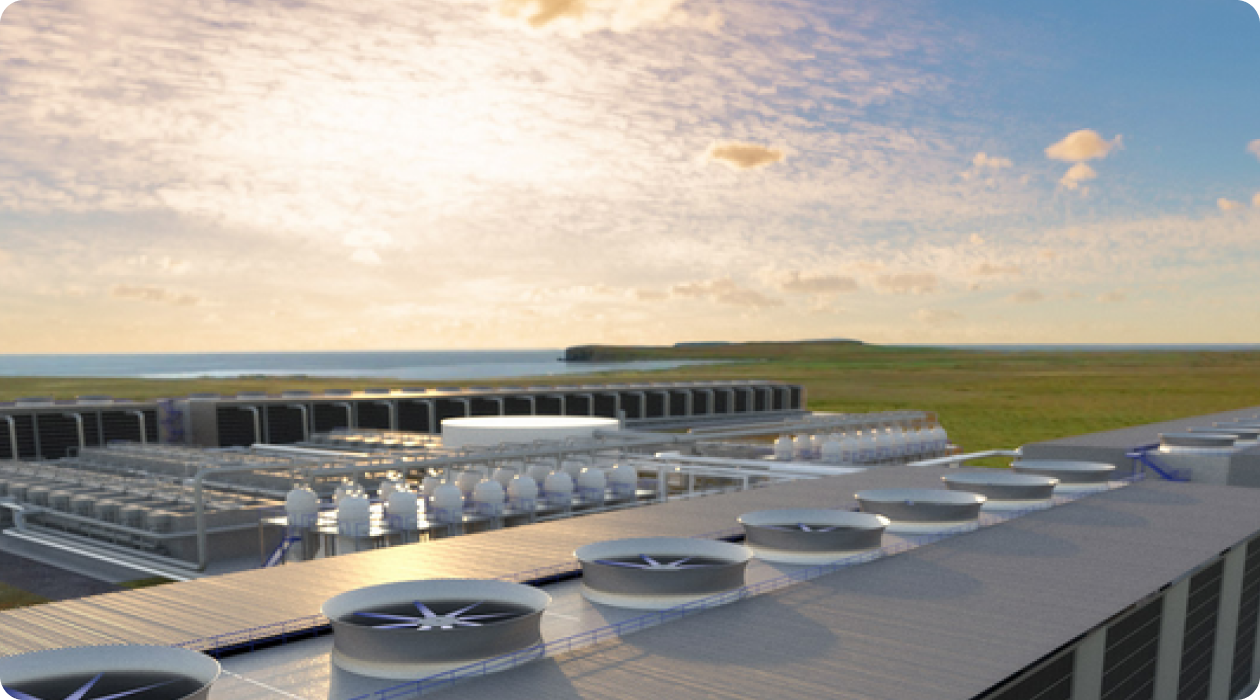
Greengine positions its core value proposition as converting carbon management from a cost center into a revenue-generating activity. Traditional decarbonization levers — energy efficiency, renewables, fuel switching, afforestation — reduce emissions but cannot eliminate the residual process emissions inherent to hard-to-abate sectors like cement, steel, and chemicals. Conventional mechanical carbon capture, meanwhile, tends to be capital-intensive and requires costly transport and long-term geological storage of captured CO₂, pricing out small and mid-sized industrial facilities.
By capturing CO₂ on-site and converting it directly into biomass, Greengine’s model removes the storage-and-transport cost layer and creates a product industries can sell or repurpose. Stated beneficiaries span industrial companies, research institutions, policymakers, and — by extension — the urban communities located near industrial clusters that stand to benefit from improved regional air quality. Endorsements from Vartika Shukla, former Chairperson of Engineers India Limited, and Alok Sharma, former Director (R&D) at Indian Oil Corporation Limited, indicate that the technology has drawn interest at senior levels within large public-sector industrial and engineering institutions — a meaningful signal for a first-of-kind biological platform seeking enterprise adoption.
Implications for Frontier Technology in India
Greengine’s trajectory illustrates a broader pattern shaping India’s climate-tech and deep-tech sectors: technically ambitious, IP-generating startups building almost entirely in-house, scaling on modest capital, and depending heavily on public innovation programs, PSU partnerships, and competition-based validation rather than large private funding rounds. This model has advantages — it keeps ownership of core IP domestic and avoids premature scaling before technology is proven — but it also exposes a structural gap. Companies at TRL 8+ with real commercial deployments still describe policy recognition and demonstration funding as their primary bottleneck, suggesting that India’s climate-finance and regulatory architecture has not fully caught up with the pace of its deep-tech innovation. For urban and industrial policymakers, biological CCU platforms like VABT™ represent a lower-footprint, revenue-generating complement to conventional decarbonization tools — one that could be particularly relevant as India’s industrial belts, many adjacent to rapidly growing cities, face tightening emissions expectations without the capital intensity that mechanical carbon capture demands.
Share Your Story Today, Shape Viksit Bharat Tomorrow
Got an idea, innovation, or experience that's making a difference? Share your story now and ignite India's transformation because your voice can drive the future forward!
Resources to Replicate This Idea
BUILD YOUR OWN INTERVENTION
Handpicked stories tailored just for you
Explore stories that inspire, inform, and ignite new ideas across tech, innovation, and real-world impact

Safe Access: India’s Community-Verified Digital Locator for HIV Prevention Services
Safe Access is a free, community-driven Indian platform that helps people locate verified PrEP and PEP providers nearby. By mapping...
Read More