
Catching Symptoms Early: How AI is Redefining the Diagnosis of Autoimmune Diseases
In recent years, India has seen an upsurge in the occurrence of autoimmune diseases. Healthtech company ImmunyFit is using AI to diagnose and predict them faster.
Updated on: 17 June 2026

Sector

Solution

Technology
AI

State of Origin
Karnataka
Impact Metrics
30–50% earlier identification
of autoimmune diseases projected.
20–30% faster diagnosis
of autoimmune diseases projected.
More resources available
for disease management rather than diagnostic cycles.
Greater access to immune health
for patients outside Tier-I cities.
Today, 3–4% of Indians live with autoimmune diseases, with 90% of this population being women. Even under the best conditions, diagnosing and managing these diseases is an arduous process since their symptoms are complex and may require multiple consultations. Integrated tools to identify them early on are lacking. Moreover, the necessary medical expertise is concentrated in Tier-I cities, increasing the financial burden of travel for those from villages and Tier-II/Tier-III cities.
Aiming to fill these gaps in the market, Bengaluru’s Immunyfit Healthcare Pvt Ltd has developed a digital platform to support those with autoimmune diseases. This platform uses AI to analyze multiple sources of data and provide customized insights, thereby facilitating personalized care for millions living with these diseases.
Modeling patient health for analysis
The underlying technology behind Immunyfit is based on three foundations: systems biology, AI, and digital twin modeling.
Autoimmune diseases are influenced by various pathways in the body—metabolic, immune, and inflammatory. This makes it difficult to diagnose them using single-symptom approaches. However, systems biology brings together health information on all pathways, along with clinical and patient-reported data. Using AI, the platform is able to detect patterns associated with autoimmune diseases.
Next, based on the gathered insights, Immunyfit creates a virtual model, or ‘digital twin’, of the patient under consideration. This model reflects the immune health of that patient and simulates how they may respond to different pressures over time. In effect, it allows clinicians to identify risk factors and early signs of autoimmune diseases.
Readiness for deployment
Currently, Immunyfit’s technology is in the stage of research and development. From its offices in Bengaluru, Hyderabad, and Manipal, the company is compiling a database to accurately inform the modeling of various autoimmune diseases.
According to founder Sudeep Suru, the early implementation of the platform will be in 5–10 clinical hubs across major urban centres such as Bengaluru, Chennai, Hyderabad, Mumbai, and Delhi. The reason for selecting these areas is that they tend to have the highest numbers of medical experts in rheumatology and immunology. During this phase, the Immunyfit platform will be implemented for 10,000–50,000 patients with, or at risk of, autoimmune diseases. In the next phase, 20–30 hospitals and diagnostic centers across 8–10 states will be approached for partnership.
Advantages of adoption
This enterprise is designed to be scalable for millions of patients across India. Once this scaling happens, it will reduce the amount of time and energy spent on diagnosis, allowing doctors to devote more resources to disease management. This may particularly benefit India’s women, who are more likely to have autoimmune diseases. At the same time, medical researchers will gain more access to data and insights on these conditions, especially within underresearched populations.
The company’s projections indicate that Immunyfit could identify autoimmune diseases 30–50% sooner than traditional diagnosis and reduce the time spent on diagnosis by 20–30%. These goals have been supported by different institutions—for example, in 2025, France’s Dassault Systèmes 3DEXPERIENCE Lab recognized Immunyfit as among the top six global health innovations and continues to lend it support. IIHMR University Jaipur, one of India’s leading centres for health management, has also presented it with an Innovation Award.
Making the platform accessible to India’s masses
Clinical partnerships with doctors, diagnostic laboratories, and hospitals could pave the way for larger studies on the effectiveness of Immunyfit as a tool. Research groups, specifically focusing on systems biology, can play a role in strengthening its scientific rigor, while institutions with stakes in public health can support awareness building and accountability.
At the policy level, Immunyfit would benefit from recognition via national research funding, health data infrastructure, and clear standards regulating the use of AI tools in healthcare. With greater resources and testing, the platform can achieve its scaling targets and improve the quality of autoimmune disease detection across India. For those prone to developing these diseases, and for those struggling to find the necessary medical care, this intervention could bring much-needed relief.
Share Your Story Today, Shape Viksit Bharat Tomorrow
Got an idea, innovation, or experience that's making a difference? Share your story now and ignite India's transformation because your voice can drive the future forward!
Resources to Replicate This Idea

BUILD YOUR OWN
Do you want to know how this innovator scaled their idea, how much it cost them, and what resources/partnerships they deployed?
Handpicked stories tailored just for you
Explore stories that inspire, inform, and ignite new ideas across tech, innovation, and real-world impact

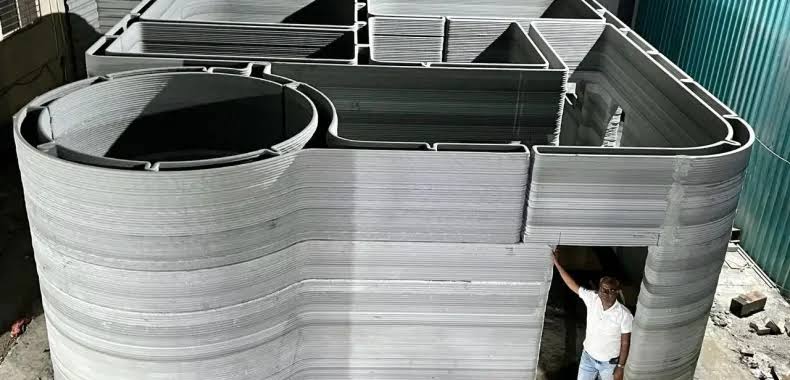
Maharashtra’s First 3D-Printed School Cuts Construction Time By 6X, Waste By 95%
Cretebots, an Indian startup, uses robotic 3D construction printing to build structures layer by layer on-site — completing buildings 6...
Read More