Computer Vision Meets Microfluidics: Taking Laboratory-Grade Blood Counts Out of the Laboratory
A portable analyser combining optical imaging, microfluidics and computer-vision AI delivers complete blood count results from two drops of finger-prick blood in about ten minutes. It aims to bring laboratory-grade testing to primary care and underserved settings.
Updated on: 28 September 2026

Sector

Solution

Technology

State of Origin
Disclaimer:
The Complete Blood Count (CBC) is one of the most frequently ordered blood tests. It is central to identifying and monitoring anaemia, infections, inflammatory disorders and other haematological abnormalities. Yet automated CBC testing is not available at every point of care. Conventional analysers need dedicated equipment, consumables, maintenance, supporting utilities and trained personnel, and these requirements make them impractical for small clinics, primary health centres and rural facilities.
Where there is no analyser, samples must be collected, transported, processed and reported back. This adds delay between consultation and result. Patients may wait, return for a second visit or travel to a separate diagnostic centre, which is hardest for people living far from laboratories and for those who need repeated testing. Frontline screening programmes also suffer, since replicating a centralised laboratory in every community setting is difficult.
The Intervention
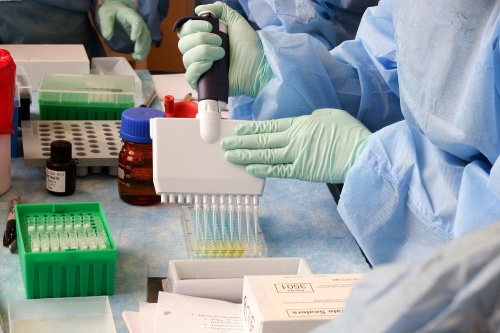
Adsys One, developed by co-founders Hardik Sharma and Apoorv Agarwal, is a compact, portable CBC analyser designed to bring laboratory-style testing to the point of care. It needs only about 0.015 mL of blood, roughly two drops from a finger prick, and is designed to return results in about 10 minutes. The goal is for CBC testing to happen during the same visit, in clinics, hospitals, diagnostic centres and other decentralised settings, without a full-scale laboratory analyser.
How the Technology Works
The system replaces an infrastructure-heavy workflow with an automated, digital one:
- Microfluidic slide. A small blood sample is introduced into a proprietary test cartridge, for which a patent has been granted.
- Optical imaging. An imaging system captures information from individual blood cells.
- Computer vision and AI. Algorithms identify and classify the cells and derive quantitative haematological parameters, automating microscopic analysis that would otherwise need laboratory infrastructure and trained staff.
- Integrated device. Optics, microfluidics, electronics, embedded computing and software are packaged into a portable unit.
The engineering challenges were considerable. The team had to achieve consistent sample preparation, cell distribution and imaging quality from a very small sample. They also had to build AI that performs reliably across variations in patient samples, cell morphology and imaging conditions, which required extensive laboratory experimentation and clinical samples.
Development and Validation Journey
The work progressed from core optical and microfluidic technology to functional prototypes, analytical validation and hospital-based testing. About ₹3.4 crore has been deployed so far, drawn from investments, grants and personal funds. Support has come from Social Alpha, Rainmatter Foundation, IKP, BFI, BIRAC AGC JanCare, FITT and CMIE AIIMS Delhi. Validation partners include AIIMS Delhi and Saket Hospital Jaipur, with testing data from Jaipur and New Delhi. The company has received the IKP BFI Biome Award and the IKP Future Stars Award. It is now moving towards larger clinical validation, regulatory approval, manufacturing readiness and deployment, with a manufacturing licence expected within a few months.
Impact to Date
Adsys One has not yet received regulatory approval, so the company makes no claims about clinical outcomes, treatment outcomes, cost savings or population-level improvements. The demonstrated impact is technological and workflow-oriented: a compact CBC platform that works with a sample of about two drops and a turnaround of around 10 minutes. Clinical partners involved in evaluation have pointed to the value of having CBC testing close to where patients are examined. Feedback from development and pilot testing has informed improvements to the device, sample handling, imaging and usability.
Relevance and Importance
Timely diagnostics are the foundation of effective primary care. If a clinician can see a CBC result during the consultation, the gap between examination and decision shrinks, and fewer patients drop out between a test request and a follow-up visit. A small-volume, minimally invasive test suits screening for anaemia and infection, routine assessments and patients needing repeated monitoring. The platform also lets existing facilities add CBC capability without the footprint of a conventional analyser.
Alignment with India’s Development Goals
- Universal health coverage and SDG 3: Decentralised diagnostics help extend quality care to underserved and resource-constrained settings.
- Strengthening primary care: Testing at the first point of contact supports the national emphasis on primary healthcare.
- Indigenous deep-tech and medtech: A granted patent, in-house AI, optics and microfluidics capability, and a move towards domestic manufacturing build self-reliance in medical devices.
- Digital health: AI-enabled, digitally ready diagnostics fit a connected healthcare system.
- Innovation ecosystem: The progression from incubation and grants to validation at premier institutions shows the public and private deep-tech pipeline at work.
Way Forward
Scaling will need structured clinical-validation programmes, government-supported test sites, clearer regulatory pathways for AI-enabled diagnostics, manufacturing and supply-chain readiness, and consistency in consumables and calibration. Inclusion in public-health procurement, screening initiatives and reimbursement mechanisms for point-of-care testing would help bridge the gap between validation and adoption. Real-world impact will be measured after regulatory clearance and deployment.
Share Your Story Today, Shape Viksit Bharat Tomorrow
Got an idea, innovation, or experience that's making a difference? Share your story now and ignite India's transformation because your voice can drive the future forward!
Disclaimer:
Resources to Replicate This Idea
BUILD YOUR OWN INTERVENTION
Handpicked stories tailored just for you
Explore stories that inspire, inform, and ignite new ideas across tech, innovation, and real-world impact

Pilotless Cargo Flights with Zero Failures: Reimagining Diagnostic Logistics in Indian Cities
An energy-efficient autonomous aircraft combining vertical take-off with fixed-wing cruise has completed over 1,000 flights carrying diagnostic samples between hospitals,...
Read More