Digital Backbone of Public Health: Assam’s Swasthya Sewa Dapoon Reforms Healthcare Delivery
Launched by the National Health Mission, Assam, the Swasthya Sewa Dapoon is a unified, open-source MIS-GIS system that integrates human resources, financial monitoring, health infrastructure, and service delivery on one platform. Developed in-house, this scalable solution has brought unprecedented transparency, accountability, and efficiency to Assam’s healthcare system, supporting national goals of digital governance, equity, and quality healthcare access.
Updated on: 31 October 2018

Sector

Solution

Technology

State of Origin
Impact Metrics
Mortality rate reduced
for under-5 population by 21 points over three years.
Maternal Mortality Rate dropped
from 480 to 237.
Improved transparency
accountability and efficiency with a unified MIS-GIS platform.
Infant Mortality Rate dropped
from 68 to 44.
By 2018, Assam’s health sector was grappling with fragmented data systems. Human resources, health infrastructure, service delivery records, and incentive schemes operated in silos, leading to inefficiencies, delayed decisions, and inconsistent service delivery. Recognizing the urgent need for an integrated solution, the state launched the Swasthya Sewa Dapoon, a comprehensive MIS-GIS-based platform built entirely with in-house capacity using open-source technologies.
The innovation was spearheaded under the leadership of J.V.N. Subramanyam, IAS, then mission director of NHM, Assam. The system consolidated modules for HR management, financial tracking, ASHA performance monitoring, maternal-infant death reporting, inventory management, and infrastructure development, enabling real-time, data-driven decisions at every level of the health system.
Aligning Digital Health with National Mandates
The initiative is a direct response to national health and digital governance priorities. It operationalizes components of the Digital India Mission, Ayushman Bharat, and the Viksit Bharat @2047 vision by delivering real-time insights, data integrity, and citizen-centric services.
By integrating GIS-mapping of all health facilities, Swasthya Sewa Dapoon strengthens infrastructure planning. Its transparent HR and ASHA modules democratize access to information and incentives, supporting the National Health Policy’s objectives of inclusive, equitable, and efficient health systems.
Transformative Outcomes Across the Board
- Human Resource Management: A unified HR-MIS database now governs recruitment, transfer, and salary disbursement for both regular and NHM employees. Transparent, merit-based counseling and on-spot appointment letters have eliminated delays and malpractice.
- Performance Monitoring: 691 Community Health Officers (CHOs) are tracked through a dedicated module. In 2017–18 alone, CHOs conducted 15.10 lakh OPDs and 36,258 deliveries, contributing to improved maternal and child health indicators.
- ASHA Services: The ASHA Payment and Performance Monitoring System (APPMS) enabled 100% DBT-linked incentive payments, and created a digitized performance-based categorization system. This directly supported improved service delivery and a 21-point reduction in Assam’s under-5 mortality rate over three years.
- Maternal & Infant Health: Maternal Mortality Ratio dropped from 480 (2004–06) to 237 (2014–16). Infant Mortality Rate fell from 68 (2005) to 44 (2016) due to enhanced death tracking, timely reviews, and systemic responsiveness.
- Inventory and Infrastructure Monitoring: Real-time tracking of essential drug availability and civil work progress has reduced expired stock and helped ensure <10% stock-out rate for essential drugs.
Scalability and Cross-Sectoral Relevance
Swasthya Sewa Dapoon’s modular architecture and open-source foundation make it cost-effective and easily replicable. It runs on state-hosted servers and uses platforms like PFMS for seamless financial integration. Its success demonstrates a scalable model for other Indian states and sectors such as education, rural development, or nutrition, where decentralized service delivery and transparency are crucial.
By using customized dashboards, drill-down analytics, and SMS-based communication, the system bridges operational gaps across governance levels, enabling rapid scaling without exponential cost increases.
A Digital Health Milestone for India
Swasthya Sewa Dapoon exemplifies how public sector innovation can rival, or even surpass, private tech solutions in complexity, scalability, and impact. By combining technology, transparency, and accountability, the platform has transformed Assam’s public health machinery into a responsive and citizen-oriented system.
This integrated digital backbone not only streamlines internal processes but directly contributes to healthier outcomes for millions, making it a true frontier innovation in India’s journey towards universal, quality healthcare.
Sources:

Share Your Story Today, Shape Viksit Bharat Tomorrow
Got an idea, innovation, or experience that's making a difference? Share your story now and ignite India's transformation because your voice can drive the future forward!
BUILD YOUR OWN

BUILD YOUR OWN
How can I implement this innovation effectively?
How is this innovation being adopted around the world?
Where else could this innovation make an impact?
Who has seen real results from using this innovation?
What insights do experts share about this innovation?
What policies support or influence this innovation?
How could this innovation evolve in the future?
Is this innovation accessible and inclusive for everyone?
How can I contribute to or participate in this innovation?
What resources can help me explore this innovation further?
If you would like to know more about this innovation, fill this form to contact the innovator.
Handpicked stories tailored just for you
Explore stories that inspire, inform, and ignite new ideas across tech, innovation, and real-world impact

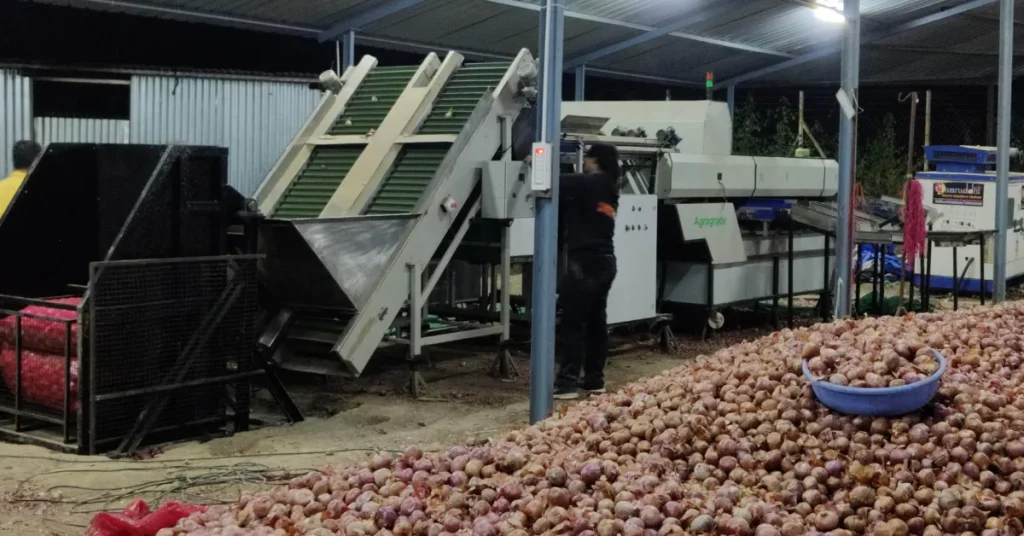
How AI is Cutting Post-Harvest Losses and Strengthen Agricultural Markets Across India
Agrograde uses artificial intelligence to address post-harvest quality assessment gaps in India’s agricultural markets. It deploys AI-based apps and sorting...
Read More