Fighting Climate Change With Tech: How A Digital Platform Provided Climate Alerts to 3 Million Farmers
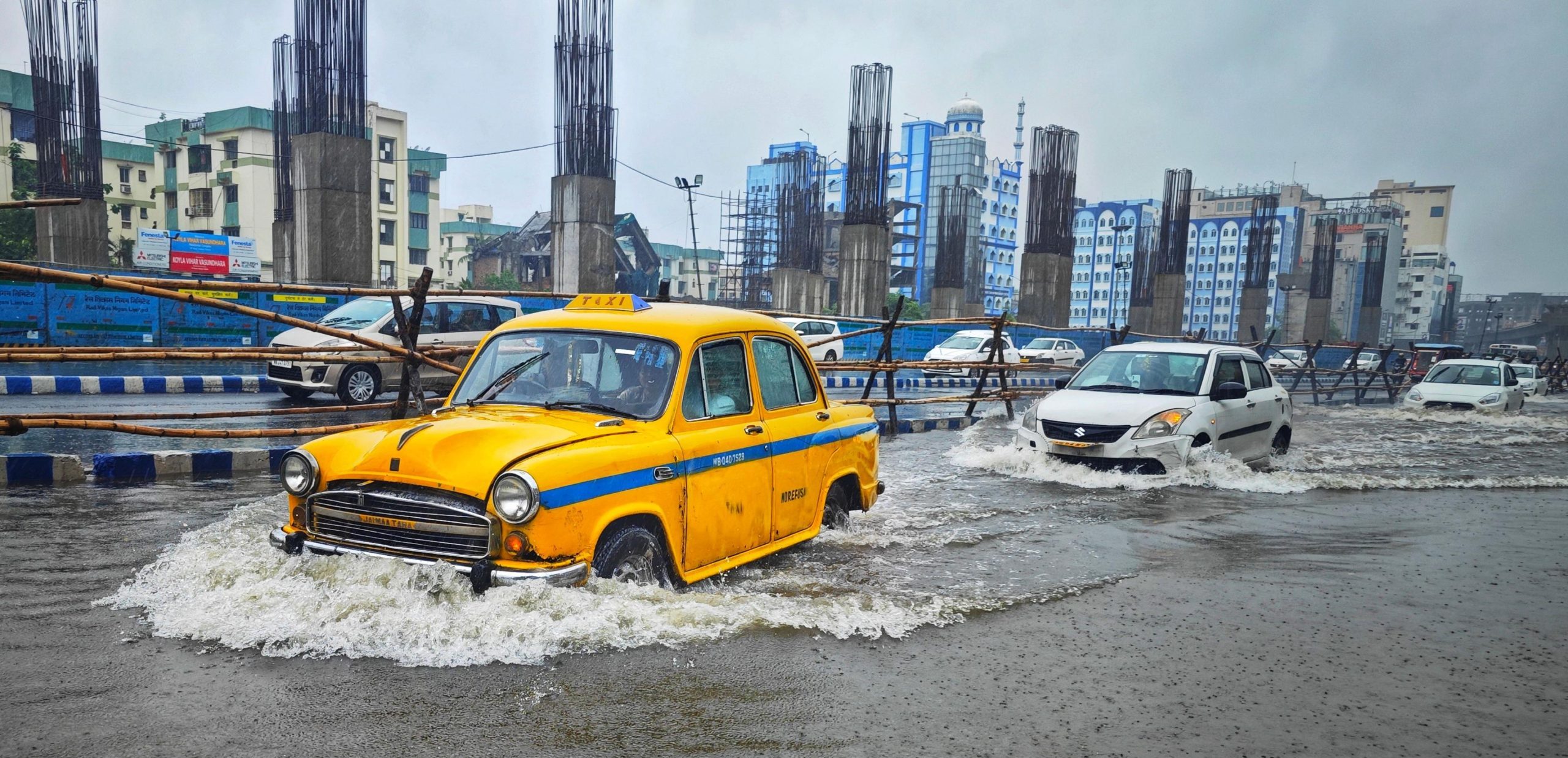
As the effects of climate change worsen, natural disasters such as floods and droughts are affecting more people. Using AI, we could not only understand but also predict these disasters.
Updated on: 30 September 2026

Sector

Solution

Technology
AI

State of Origin
Disclaimer:
Features ‘as is’ submissions and neither constitutes endorsement, certification, recommendation, or validation by NITI Aayog nor makes NITI Aayog liable in any manner.
Impact Metrics
18,000+ villages reached
in Andhra Pradesh alone.
12 hazard categories
covered by digital platform.
7-day early alerts
for natural disasters.
15 min nowcasting
for live announcements during weather events.
With climate change, disaster events across the globe are increasing in frequency, adversely affecting millions of people. In India, although some measures have been taken to respond to such events, climate disaster management remains largely fragmented. Multiple sources of disaster data exist, but they are spread across different departments, making it difficult to exchange and collate information for forecasting.
As a result, governments are limited in their capacity to predict damages and prepare resources a priori. This inefficiency in climate governance has massive costs in terms of both resources and human life.
What if there was a unified nation-level framework that brought together all relevant disaster data for analysis and forecasting? Vassar Labs IT Solutions, based in Hyderabad, offers a framework that achieves exactly this. Founded in 2014 by Laxmi Prasad Putta, this startup has developed a digital infrastructure that has transformed climate resilience in multiple Indian states.
Components of the innovation
In general, it is challenging to build climate disaster protocols that are predictive for two reasons: firstly, because of inadequate data and analytic capacity, and secondly, because most existing prediction systems cannot identify which demographics will bear the brunt of a given disaster.
Aiming to overcome these limitations, Vassar Labs has developed metWISE, a Digital Public Infrastructure (DPI) that can be incorporated by various programs for predicting climate disasters. The components of this innovation include machine learning models, a geospatial intelligence engine, hydrological modeling capabilities, and agentic AI.
In addition, metWISE has access to an extensive database of weather information. Some of this data is gathered directly from capture devices such as Doppler radars, Automatic Weather Stations (AWSs), and historical data records. Other sources include weather forecasting frameworks including the India Meteorological Department (IMD), the US’s National Oceanic and Atmospheric Administration (NOAA), the European Organisation for the Exploitation of Meteorological Satellites (EUMETSAT), Google WeatherNext, ECMWF, and GFS. Moreover, the agentic AI component, metMIND, plays a key role in retrieving disaster data from multilingual reports, advisories, and other event-specific government publications.
How the innovation works
When deployed in any region, the metWISE framework accesses all relevant climate information for that region and, using AI and geospatial analytics, synthesizes these data into reference datasets. During this stage, it constructs models of flooding, precipitation, heatwaves, and other climate events. Next, it comes up with hazard forecasts and assembles disaster alert systems for that region.
Currently, the framework factors in over 12 different categories of hazards. All gathered intelligence is broadcasted to the authorized stakeholders via dashboards, mobile applications, WhatsApp alerts, and so on. Not only does metWISE offer early disaster alerts 7 days in advance but it also facilitates nowcasts every 15 minutes during weather events.
Where is metWISE used?
metWISE has been adopted across India, spearheaded by four large-scale applications. In Andhra Pradesh’s AWARE program, it is used at all levels, from the state command center to last-mile field officers, and has benefited 18,000+ villages. In Kerala, it is the foundation of the Flood Forecasting Early Warning System (FFEWS). As part of Odisha’s GOWATER program, it has enabled flood management across 406 reservoirs, and through the Tamil Nadu Water Resources Information System (TNWRIS), it has monitored 90+ water reservoirs for flooding.
The direct beneficiaries of each metWISE application have included not only citizens but also frontline responders, local governments, and sectors such as agriculture, transport, healthcare, and water resources. All in all, metWISE has helped approximately 3 million farmers by providing them with much-needed climate alerts.
Supporting partners
The initial investment that kickstarted metWISE came directly from the founder and co-founders, covering research and development and the pilot deployment stage. All of the aforementioned core technologies were designed in-house by the Vassar Labs team.
Following validation, Vassar Labs has partnered with a number of state governments, including those of Odisha, Andhra Pradesh, Tamil Nadu, and Kerala, to provide metWISE as an underlying layer for digital climate governance.
Scaling impact in the future
To scale metWISE further, Vassar Labs would require greater access to climate and disaster data. This could come from partnerships with more government institutes such as the National Disaster Management Authority (NDMA), State Disaster Management Authorities (SDMAs), District Disaster Management Authorities (DDMAs), Central Water Commission (CWC), and National Remote Sensing Centre (NRSC). Policymakers could also support the exchange of knowledge by issuing standardized data sharing frameworks with open APIs.
At the same time, metWISE would benefit from more collaborations with research institutions, universities, and entities such as the UNDRR, which could sharpen its AI and climate modeling capabilities.
By facilitating these links, governments can assist more startups in the climate tech space as they address the urgent challenges of global warming and the resulting climate crisis.
Share Your Story Today, Shape Viksit Bharat Tomorrow
Got an idea, innovation, or experience that's making a difference? Share your story now and ignite India's transformation because your voice can drive the future forward!
Disclaimer:
Features ‘as is’ submissions and neither constitutes endorsement, certification, recommendation, or validation by NITI Aayog nor makes NITI Aayog liable in any manner.
Resources to Replicate This Idea
BUILD YOUR OWN INTERVENTION
Handpicked stories tailored just for you
Explore stories that inspire, inform, and ignite new ideas across tech, innovation, and real-world impact

18,000+ Datasets, 2.5 Million Documents: How Frontier AI Is Making Public Data Accessible to India
FACTLY’s frontier AI projects, Dataful, Tagore AI, and GoPie, are transforming how India accesses, understands, and uses public data. With...
Read More