From Farmer to Eco-friendly Entrepreneur: How 350,000 Indian Agriculturalists are Becoming Global Exporters
India produces a variety of agricultural commodities, but due to low digital documentation, its farmers struggle to compete on global markets. A digital platform developed by Hyderabad-based firm TRST01 is changing this using GIS, digital MRV data, and AI.
Updated on: 17 June 2026

Sector

Solution

Technology
Digital Platform
& 1 other

State of Origin
Disclaimer:
Features ‘as is’ submissions and neither constitutes endorsement, certification, recommendation, or validation by NITI Aayog nor makes NITI Aayog liable in any manner.
Impact Metrics
5–15% income increases
projected for farmers using the platform.
6 lakh users
of the platform from India, Southeast Asia, and West Africa.
~3.5 lakh hectares of farmland
covered on the platform.
30–50% faster demonstration of compliance
to importers' environmental regulations.
With the growing awareness of environmental degradation, laws have been passed around the world to ensure the eco-friendly sourcing of agricultural produce. Several countries now emphasize the need for traceability and sustainability in importers’ supply chains. Consequently, compliance standards have become strict in the agricultural export market.
While this rewards sustainable farming, it places the burden of transparency on individual sellers who may not always have the resources to digitize their production records. In developing countries like India, where it is still difficult to track supply chains from farms to consumers, these standards often exclude local farmers from premium markets.
TRST01, based in Hyderabad, aims to empower these same farmers. By creating a digital platform that helps them document both production and export, it connects them to buyers offering higher prices for agricultural produce.
Features of the platform
In India, the digitization of land records is an ongoing process, and it can be challenging to access data on the conditions of agricultural production. With this observation in mind, TRST01 set out to aid in record digitization using geospatial mapping and satellite-based imagery. This endeavor identified land boundaries, titles, and the areas where major commercial crops were cultivated. All collected data was then validated for consistency with production and sales records using AI algorithms.
The resulting database, compiled through extensive fieldwork, can help farmers demonstrate proof of origin for any produce they export. These farmers can also track the export shipments through the supply chain in real time and improve communication with international buyers.
TRST01’s product thus encompasses an elaborate digital MRV (Monitoring, Reporting, and Verification) system custom-made for Indian agriculture. Importantly, since it focuses on exports, its features ensure alignment with environmental policies such as the European Union Deforestation Legislation (EUDR), verifying whether produce has been grown on deforestation-free land.
Material benefits from implementation
By heightening transparency in the agricultural production process, TRST01’s platform encourages international consumers to view India’s farmers as part of a trustworthy, data-driven supply chain. According to TRST01 founder Prabir Mishra, this means that these farmers have access to higher-value buyers, potentially increasing their incomes by 5–15%.
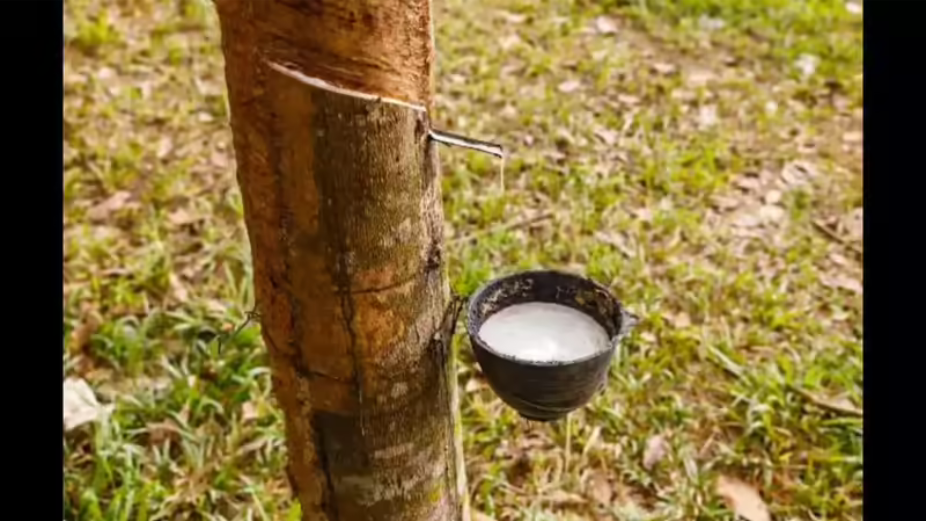
At present, the platform supports over 350,000 farmers and other agricultural stakeholders in India. Their lands include ~98,000 hectares of rubber plantations (Kerala, Tamil Nadu), ~125,000 acres of coffee plantations (Karnataka), and ~200,000 hectares of soybean plantations (Maharashtra, Madhya Pradesh).
In Southeast Asia and West Africa, TRST01’s operations have provided similar levels of transparency to agricultural exports, having reached 250,000 more farmers growing a range of crops. In all included contexts, the time required for demonstrating compliance to environmental regulations can reduce by 30–40%.
In the next stage, TRST01 plans to expand its impact to reach 3.5 million Indian farmers. This would raise the data coverage of rubber, coffee, and soybean plantations to 8.84 lakh, 4 lakh, and 20 lakh hectares, respectively.
Partnerships for the future
TRST01 has already secured a collaboration with the Rubber Board of India to onboard rubber farmers onto the platform and help them increase their visibility abroad. In the near future, it plans to reach similar agreements with other agricultural boards (e.g., for coffee, oilseed, and soybean), as well as with farmer cooperatives and processors.
Policy support from government could increase the credibility of such partnerships. Connecting the platform to existing digital agriculture records and farmer registries at the national level—for example, through data exchange with Agristack—would improve the quality of the TRST01 database and bring benefits to more farmers. Simultaneously, it would signal public trust in the venture.
On the one hand, TRST01’s model contributes to income generation for farmers, and on the other, it amplifies the goal of environmental sustainability in business. It thus presents an example of how rural empowerment can thrive alongside eco-friendly practices. As India continues to experience economic growth, such examples can help ensure that the benefits reach as many citizens as possible.
Share Your Story Today, Shape Viksit Bharat Tomorrow
Got an idea, innovation, or experience that's making a difference? Share your story now and ignite India's transformation because your voice can drive the future forward!
Disclaimer:
Features ‘as is’ submissions and neither constitutes endorsement, certification, recommendation, or validation by NITI Aayog nor makes NITI Aayog liable in any manner.
Resources to Replicate This Idea
BUILD YOUR OWN INTERVENTION
Handpicked stories tailored just for you
Explore stories that inspire, inform, and ignite new ideas across tech, innovation, and real-world impact

18,000+ Datasets, 2.5 Million Documents: How Frontier AI Is Making Public Data Accessible to India
FACTLY’s frontier AI projects, Dataful, Tagore AI, and GoPie, are transforming how India accesses, understands, and uses public data. With...
Read More