From Sea to Fuel: How Indian Researchers Are Turning Seaweed into Clean Energy
An Indian marine bioenergy initiative is converting seaweed into high-energy biofuels using mechanised ocean farming and hydrothermal liquefaction. By producing carbon-neutral fuel without using land or freshwater, the model demonstrates how ocean-based biomass can strengthen India’s climate action, reduce fossil fuel dependence, and support long-term energy security.
Updated on: 01 January 2026

Sector

Solution

Technology

State of Origin
Impact Metrics
No extra carbon
added to atmosphere while producing fuel.
No farmland or freshwater
used, since seaweed is grown entirely in the ocean.
Large-scale seaweed farming
enabled using mechanised systems to grow and harvest biomass consistently.
Healthy marine ecosystems
supported, as seaweed farms provide shelter and breeding spaces for marine life.
Sea6 Energy is a Bengaluru-based clean energy startup founded in 2010 by IIT Madras alumni Nelson Vadassery, Shrikumar Suryanarayan, Sri Sailaja Nori, and Sowmya Balendiran. The enterprise focuses on harnessing seaweed—specifically marine macroalgae—as a sustainable and scalable feedstock for biofuel production. The initiative was conceived in response to the twin challenges of climate change and India’s dependence on fossil fuels, with the objective of identifying alternative energy pathways that do not compete with land, freshwater, or food systems.
Rationale for Seaweed as an Energy Resource
Seaweed, a fast-growing marine biomass, has historically been used in food products, industrial stabilisers, animal feed, fertilisers, and bioplastics. Its capacity for rapid biomass generation and natural carbon sequestration positions it as a promising renewable resource. Recognising these attributes, Sea6 Energy sought to explore whether seaweed could be deployed at scale as a feedstock for energy and industrial fuels, thereby expanding the role of oceans in India’s clean energy ecosystem.
Initially, the founders explored microalgae-based solutions due to their high growth rates. However, they subsequently pivoted to macroalgae—particularly red seaweed species—owing to their greater scalability, ease of harvesting, and economic viability for large-scale deployment. This strategic shift allowed the company to focus on developing systems capable of producing substantial quantities of biomass in marine environments.
Mechanised Ocean Farming System

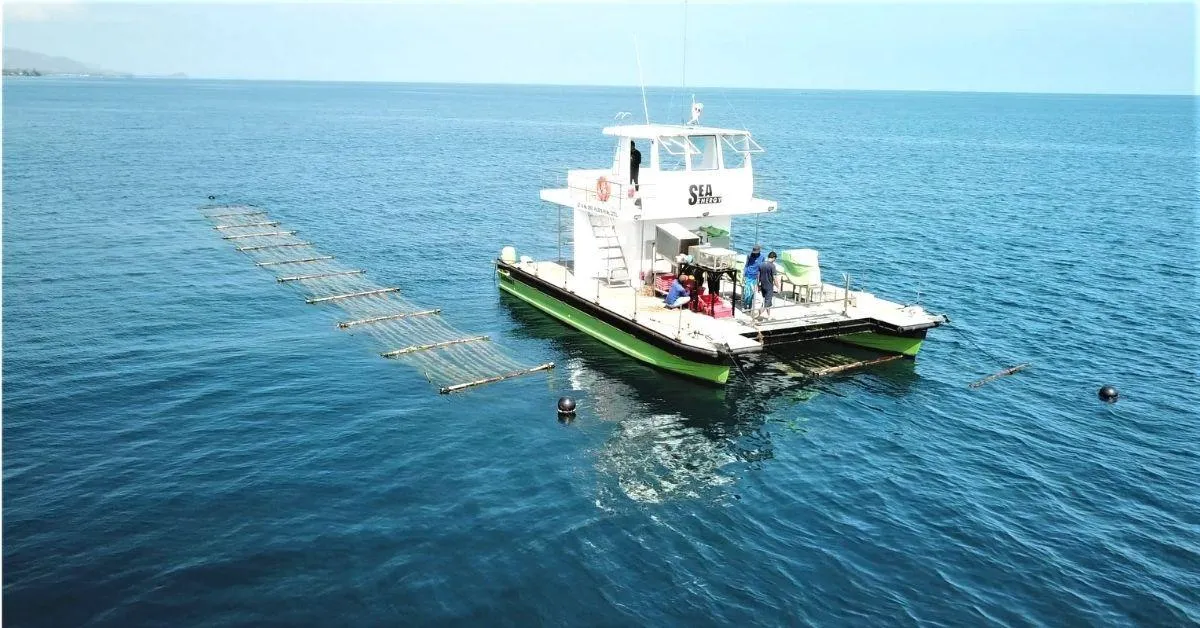
A core technological contribution of Sea6 Energy is the development of a mechanised ocean farming system designed for large-scale seaweed cultivation. This system enables controlled and repeatable farming of seaweed in coastal waters, ensuring a consistent and renewable supply of marine biomass. By operating in the ocean, the model avoids competition with agricultural land and freshwater resources, addressing a critical limitation faced by many terrestrial bioenergy solutions.
The harvested seaweed biomass is converted into biocrude using a thermochemical process known as hydrothermal liquefaction (HTL). This process involves subjecting wet biomass to high temperature and pressure conditions, mimicking the natural geological processes that form fossil fuels over millions of years, but achieving similar outcomes within a short time frame. The resulting biocrude has energy densities comparable to conventional crude oil and can be further refined into usable fuels and chemicals.
Environmental Performance and Carbon Considerations
An important environmental characteristic of this approach is its carbon-neutral potential. The carbon dioxide released when seaweed-derived fuels are combusted is broadly offset by the carbon absorbed by the seaweed during its growth cycle. As a result, the overall process offers a pathway to reduce net greenhouse gas emissions when compared to fossil fuel use.
Sea6 Energy’s work has attracted both investment and institutional interest. In 2021, the company raised USD 9 million from Aqua-Spark, a Netherlands-based investment firm, to scale its seaweed-based technologies. More recently, in December 2024, Sea6 Energy entered into a strategic partnership with Hindustan Petroleum Corporation Limited (HPCL) to jointly research and develop technologies for converting seaweed biomass into biofuels and chemicals. This collaboration aligns with the objectives of India’s National Biofuel Policy and reflects growing interest in marine biomass as a component of national energy strategies.
Beyond energy production, the environmental impacts of large-scale seaweed cultivation are significant. Seaweed farming does not require fertilisers, freshwater, or arable land, and it can enhance marine biodiversity by creating habitats for aquatic organisms. Additionally, widespread seaweed cultivation contributes to carbon sequestration, supporting broader climate mitigation efforts.
In conclusion, the Sea6 Energy model demonstrates how underutilised marine resources can be integrated into India’s clean energy and climate action framework. By combining mechanised ocean farming with advanced biomass conversion technologies, the initiative offers a pathway to diversify India’s renewable energy portfolio while reducing pressure on land-based resources. As India seeks to meet its climate commitments, enhance energy security, and transition towards a low-carbon economy, seaweed-based biofuels present a promising complementary solution with relevance across energy, environmental sustainability, and industrial policy domains.
Share Your Story Today, Shape Viksit Bharat Tomorrow
Got an idea, innovation, or experience that's making a difference? Share your story now and ignite India's transformation because your voice can drive the future forward!
Handpicked stories tailored just for you
Explore stories that inspire, inform, and ignite new ideas across tech, innovation, and real-world impact


AI-Enabled Gynaecological Care Expands Access to 400,000+ Women Across India
Pinky Promise is a chat-first, AI-assisted women’s healthcare platform delivering affordable, confidential gynaecological care at scale. Founded in 2022, it...
Read More