From Smart Cow Collars to Carbon Credits: How AI Is Transforming Dairy Farming for 22 Lakh Farmers Across India
AI-powered smart cattle collars and precision breeding tools to methane reduction programmes and carbon credit generation are transforming dairy farming through technology built for rural India. Today, this AI ecosystem supports over 22 lakh farmers, helping improve animal health, increase milk yields, reduce emissions, and create more sustainable and profitable livelihoods.
Updated on: 03 July 2026

Sector

Solution

Technology

State of Origin
Disclaimer:
Features ‘as is’ submissions and neither constitutes endorsement, certification, recommendation, or validation by NITI Aayog nor makes NITI Aayog liable in any manner.
Impact Metrics
45% methane reduction
lowering livestock methane emissions through AI-enabled feed interventions and climate-smart dairy practices.
$2.1M annual carbon revenue
creating an additional income stream for farmers through carbon credit generation from methane reduction.
22 lakh+ farmers reached
through an AI-powered dairy ecosystem delivering smarter livestock management, precision breeding, and climate-smart farming solutions across India.
20M cattle covered
through the Maharashtra Methane Mission, one of the world's largest livestock methane reduction initiatives.
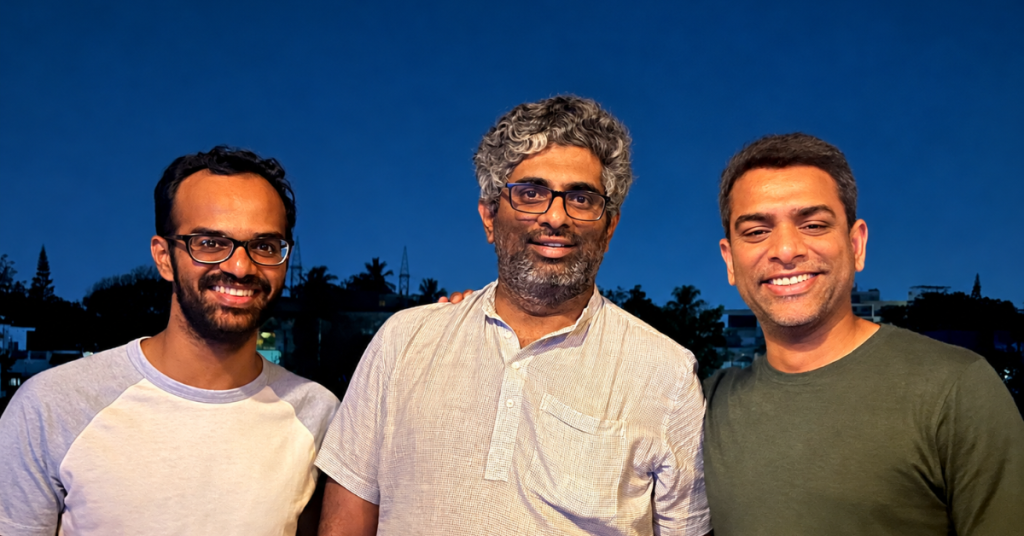
Founded in 2022 by Ashish Sonkusare, alongside co-founders Shailendra Narwade and Vidhi Gaur, eVerse.AI was created to bridge the technology gap in India’s dairy sector.
After decades of working with global technology companies, Ashish realised that while industries around the world had embraced digital innovation, smallholder dairy farmers continued to rely on guesswork for critical decisions affecting animal health and productivity.
The team set out to use Artificial Intelligence (AI), Internet of Things (IoT), and blockchain technologies to solve these everyday challenges while improving farmer incomes.
Today, eVerse.AI has built an integrated digital ecosystem that helps farmers manage livestock more efficiently. Its flagship Connected Cow Collar functions like a fitness tracker for cattle, continuously monitoring activity, movement, body temperature, and behavioural patterns.
Using AI and machine learning, the system predicts illnesses before visible symptoms appear, detects the optimal breeding window, and enables real-time GPS tracking of animals. Farmers also use the Connected Cow mobile application to access health records, productivity data, and medical history, while CowGPT, the company’s multilingual WhatsApp-based AI assistant, provides instant guidance on animal care, nutrition, and disease management through text and voice.
Beyond improving livestock health, eVerse.AI is tackling climate change by helping dairy farmers reduce methane emissions through scientifically designed feeding interventions. These programmes generate carbon credits, creating an additional source of income for participating farmers alongside increased milk production.
By combining climate finance with agricultural innovation, the company is building a more sustainable dairy ecosystem.
Working closely with large organisations, eVerse.AI has expanded its reach to over 22 lakh farmers across India. Through accessible, locally relevant technology, the company is helping farmers improve animal health, increase productivity, reduce losses, and build more resilient rural livelihoods.
AI for the planet
If you think of it, sustainability and dairy farming are deeply interconnected, with each influencing the other.
Climate change is reducing dairy productivity through rising temperatures, water scarcity, unpredictable weather, and increasing disease outbreaks, making it harder for farmers to maintain healthy livestock and stable milk production.
At the same time, the dairy sector is a significant contributor to greenhouse gas emissions, particularly methane released through enteric fermentation in cattle and nitrous oxide from manure management and feed production. According to studies, livestock accounts for nearly 60 percent of agricultural greenhouse gas emissions globally.
Building a sustainable dairy sector therefore requires improving productivity while reducing environmental impact. Researchers highlight several strategies, including better animal nutrition, selective breeding, genetic technologies, methane-reducing feed additives, improved manure management, and precision livestock farming.
These interventions not only lower emissions but also improve animal health, feed efficiency, and milk yields, creating both environmental and economic benefits.
Technology is playing an increasingly important role in this transition. AI, IoT-enabled livestock monitoring, and data-driven farm management allow farmers to detect diseases early, optimise breeding, reduce resource wastage, and make informed decisions that improve productivity with a smaller carbon footprint.
Climate-linked initiatives such as methane reduction programmes and carbon credit markets further incentivise farmers to adopt sustainable practices by creating new income streams.
Ultimately, sustainable dairy farming is about balancing food security, farmer livelihoods, and environmental responsibility. By integrating scientific innovation, climate-smart farming practices, and supportive policies, the dairy industry can continue meeting the world’s growing demand for milk while reducing its contribution to climate change and strengthening resilience for future generations.
eVerse.AI is addressing one of the dairy sector’s biggest environmental challenges by helping farmers reduce methane emissions from cattle while improving productivity and incomes.
Livestock is a major source of agricultural methane, a greenhouse gas that has a far greater warming effect than carbon dioxide over the short term. Recognising this, the company has developed large-scale methane reduction programmes that combine scientific feeding practices with AI-driven monitoring.
Through initiatives such as the Maharashtra Methane Mission, eVerse.AI works with farmers to introduce balanced feed interventions that improve digestion and reduce the amount of methane produced by cattle.
These nutritional changes not only lower greenhouse gas emissions but also enhance animal health and increase milk production, allowing farmers to benefit economically while adopting more sustainable practices.
The reduction in methane emissions is scientifically measured and converted into carbon credits, creating an additional income stream for participating farmers. The company aims to ensure that climate finance reaches smallholder farming communities, rewarding them for adopting environmentally responsible practices.

By linking emission reductions with financial incentives, eVerse.AI is demonstrating that climate action and rural livelihoods can go hand in hand, enabling dairy farmers to become active participants in India’s transition towards a more sustainable and climate-resilient agricultural future.
The Maharashtra Methane Mission (M3) is one of the world’s largest livestock methane reduction initiatives, designed to reduce emissions while improving the sustainability of dairy farming.
Covering nearly 20 million cows and buffaloes across Maharashtra, the project aims to cut methane emissions from enteric fermentation (a natural digestive process in ruminant animals where microbes in the stomach break down fibrous plant materials) by 30 percent.
Alongside reducing emissions from digestion, the programme also promotes manure-to-energy systems that capture methane and convert it into biogas. By combining climate-smart farming with carbon credit generation, the initiative is expected to create nearly 30 million tonnes of CO₂-equivalent carbon credits, providing dairy farmers with an additional source of income.
Beyond its environmental impact, the mission strengthens local agricultural supply chains by encouraging the cultivation of methane-reducing feed ingredients, positioning India as a global leader in sustainable livestock management while contributing to the country’s commitment to reduce methane emissions by 30 percent by 2030.
Deploying AI in dairy farming, beyond methane emissions
Among eVerse.AI’s other solutions is PregDetector, an AI-powered, non-invasive reproductive diagnostic tool that helps dairy farmers accurately detect pregnancy and estrus (the specific period in a cow’s reproductive cycle when she is ready to be bred) in cattle without the need for veterinarians, laboratory tests, or invasive procedures.
The system analyses microscopic salivary ferning patterns using deep convolutional neural networks (CNNs). Changes in these crystallisation patterns, driven by fluctuations in reproductive hormones, allow the AI to identify whether an animal is in estrus, early pregnancy, or later stages of pregnancy within seconds.
Designed for field use, PregDetector is compatible with smartphone microscopy attachments, enabling point-of-care diagnosis without specialised infrastructure. By delivering fast, objective, and consistent results, the technology reduces animal stress, improves breeding efficiency, eliminates human subjectivity, and supports precision livestock farming through continuous AI learning and data-driven reproductive management.
Another tool SemenTrace, an AI-powered precision cattle breeding platform, digitises and streamlines the entire breeding lifecycle from semen production and distribution to insemination, pregnancy diagnosis, and calving. Designed for semen stations, dairy cooperatives, veterinarians, AI technicians, and farmers, it combines computer vision, artificial intelligence, and multilingual support to improve breeding decisions and ensure complete traceability.
Built for rural India, the platform works offline in low-connectivity areas and supports over ten Indian languages. By enabling data-driven breeding, tracking conception rates, monitoring genetic diversity, and eliminating manual errors, it helps improve herd productivity, strengthen breeding programmes, and promote sustainable livestock management across the dairy value chain.
Scaling AI across India’s dairy sector has the potential to transform the livelihoods of millions of smallholder farmers while strengthening the country’s food security and climate resilience.
AI-powered tools like the above can help farmers detect diseases early, optimise breeding, improve animal nutrition, and monitor livestock health in real time, leading to higher milk yields, lower veterinary costs, and reduced animal mortality.
Multilingual, voice-enabled AI assistants can make expert guidance accessible even in remote rural areas, bridging knowledge gaps without requiring specialised training.
At the same time, AI can support sustainable dairy farming by reducing methane emissions, improving feed efficiency, and enabling participation in carbon credit programmes that create new income streams. Digital traceability and data-driven breeding can also improve genetic diversity and productivity across the dairy value chain.
As the world’s largest milk producer, India has a unique opportunity to use AI not only to increase dairy incomes but also to build a more sustainable, resilient, and globally competitive livestock sector.

Share Your Story Today, Shape Viksit Bharat Tomorrow
Got an idea, innovation, or experience that's making a difference? Share your story now and ignite India's transformation because your voice can drive the future forward!
Disclaimer:
Features ‘as is’ submissions and neither constitutes endorsement, certification, recommendation, or validation by NITI Aayog nor makes NITI Aayog liable in any manner.
Resources to Replicate This Idea
BUILD YOUR OWN INTERVENTION
Handpicked stories tailored just for you
Explore stories that inspire, inform, and ignite new ideas across tech, innovation, and real-world impact


Turning Chemistry Into Code: The Technology Making Complex Diagnostics Faster and More Precise
Algorithmic Biologics is turning chemistry into code, using programmable DNA molecules to simplify complex diagnostic testing. Its technology could enable...
Read More