How a Pune Startup Cut Battery-Mineral Import Dependence with Sodium-Ion Cells
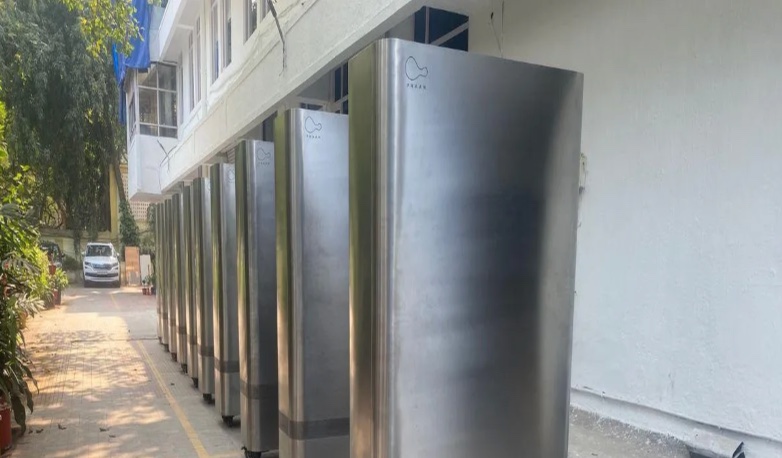
Rechargion Energy is scaling sodium-ion battery technology as a safer, lithium-free alternative to lithium-ion batteries, cutting India’s dependence on imported critical minerals. The Pune deep-tech startup has built regulator-tested cells for EV, solar, and grid energy storage.
Updated on: 23 July 2026

Sector

Solution

Technology

State of Origin
Impact Metrics
110-120 Wh/kg energy density
achieved for stationary storage and micro-mobility.
Matched with lithium's
3.7V nominal voltage, meaning minimal redesign needed for existing battery management systems.
Eliminated need
for cobalt, nickel, and lithium — none of which are domestically available in India.
India’s clean energy transition has a supply chain problem hiding inside it. As the country pushes solar, wind, and electric mobility to displace fossil fuels, nearly all of that new capacity depends on one component: the lithium-ion battery. And the lithium-ion value chain — from critical mineral extraction to cell manufacturing — is dominated by a handful of countries, with China alone controlling roughly 70 percent of it. Lithium, nickel, and cobalt, the minerals that make these batteries work, are not found in usable, extractable quantities in India. Cobalt in particular carries a documented human cost: much of the global supply comes from mines in the Democratic Republic of Congo linked to child labor. Lithium extraction is separately water-intensive, and lithium-ion cells carry a known risk of thermal runaway, the reason they are restricted on aircraft and implicated in a string of electric-vehicle fires.
For a country trying to decarbonize while also building energy independence, this is an uncomfortable trade: swapping dependence on imported fossil fuels for dependence on an equally concentrated, ethically fraught battery supply chain. This is the gap Rechargion Energy, a Pune-based deep-tech startup, has built its business around.
The Technology: Why Sodium
Rechargion’s core bet is sodium-ion battery chemistry — a technology that has existed in parallel with lithium-ion since the earliest days of battery research but was sidelined decades ago because lithium matured and commercialized faster. Renewed interest in new electrode materials and electrochemical processes has made sodium viable again, and its underlying appeal is straightforward: sodium is abundant, present in seawater, and India is already a major producer of sodium chloride. Unlike lithium, it does not require securing scarce imported minerals.
The company, founded by Dr. Manjusha Shelke, works with polyanionic cathode materials described as substantially safer than conventional lithium chemistries, with low thermal-runaway probability and a long cycle life — testing has passed 15,000 charge cycles. Because sodium’s nominal voltage (around 3.7V) is close to lithium’s, sodium cells can largely reuse existing battery management systems rather than requiring redesigned electronics. A structural quirk also favors sodium: aluminum, cheaper than the copper needed on a lithium anode, can be used on both electrodes, and the cells can safely charge and discharge across a wider state-of-charge range, improving usable energy. Rechargion’s cells have also been tested down to -20°C, addressing a known weak point of lithium batteries in cold climates.
The trade-off is energy density. Rechargion’s cells deliver roughly 110-120 Wh/kg, below high-end lithium nickel-cobalt-manganese (NCM) chemistries and toward the lower end of lithium iron phosphate (LFP), the safer lithium standard. That makes sodium a stronger fit for stationary storage, micro-mobility (two- and three-wheelers), and grid-scale or data-center storage — applications where safety, longevity, and cost matter more than energy-to-weight ratio — rather than for passenger EVs or aviation, though early testing has included a working sodium-powered drone.
Building the Company: From Lab Bench to Pilot Plant
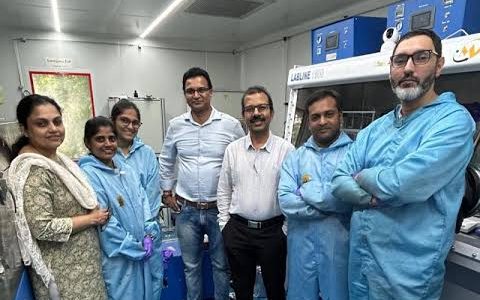
Rechargion’s origin sits inside India’s public research infrastructure. Dr. Shelke developed the underlying materials science as a scientist at CSIR-National Chemical Laboratory (NCL) in Pune, initially as part of NCL’s national program on indigenous lithium-ion batteries — work that made clear India would remain raw-material dependent even if it built its own lithium cells domestically. That realization pushed the research toward “beyond lithium” chemistries, including sodium-ion and lithium-sulfur systems.
The company was incorporated in 2021 through NCL’s Scientist Entrepreneurship Scheme, a lab-to-market pathway that lets government scientists spin out their research into companies. Dr. Shelke retained her government scientist position and holds an equity stake; her husband, who took voluntary retirement from a faculty post to lead the company full-time, became founder-CEO. A third co-founder, John Normanton — a UK-based startup operator with prior experience at Intel and multiple exits — joined as strategic advisor, giving the company a cross-border India-UK structure. NCL’s incubator, Venture Center, served as a fourth institutional partner and housed the company’s early R&D.
Funding has been almost entirely non-dilutive and public-sector driven, a pattern common to India’s deep-tech startups. Rechargion was recognized early by Social Alpha as a high-impact startup, then received its largest grant — matching-equity funding from the Ministry of Heavy Industries via ARAI — supplemented by smaller awards from the Department of Science and Technology, the Indo-US Science and Technology Forum, a UNIDO deployment grant, and a modest CSR contribution from Cummins India.
That capital funded the shift from lab-scale proof of concept to a manufacturable product. Rechargion initially rented time at IIT Bombay’s pilot cell-manufacturing facility, at roughly ₹5 lakh a week — workable for validation, not the iterative day-and-night experimentation battery-chemistry optimization requires. That early access shaped what the company’s own facility needed to look like; it then built and commissioned a pilot plant at Venture Center in 2024, using the pooled MHI, USISTF, and DST grants plus Social Alpha’s matching equity. Since then, Rechargion has scaled its own cathode materials in-house, built cells up to several amp-hours, and secured regulatory validation from ARAI under IEC 62660 and the equivalent BIS standard — a distinction it says only two organizations worldwide, and no other Indian company, currently hold for sodium-ion cells.
Impact and Early Deployment
Rechargion has run field demonstrations across three use cases: stationary solar-energy storage, a retrofitted e-bike (swapping a lithium pack for sodium in an existing commercial bike), and a vertical-flight drone — a deliberate rebuttal to the assumption that sodium’s added weight rules out aerial use. It is now running small paid pilots, including a 1-3 kWh stationary storage deployment with the Confederation of Indian Industry’s Hyderabad office, alongside pilots in electric two-wheelers and renewable storage. Larger prospective customers — Indian Railways and NTPC among them — want deployments at hundreds of kilowatt-hours, well beyond what the pilot plant can supply, pushing Rechargion toward a dedicated 2-20 MW manufacturing facility outside its current incubation campus.
On sustainability metrics, the company is still building out formal measurement: it is optimizing water use in cathode and anode material synthesis and working toward recovering both water and NMP solvent from its coating processes, but does not yet have quantified water-savings or emissions-offset data to report publicly.
What This Means for Frontier Tech in India
Rechargion’s trajectory is a useful proxy for the structural challenge facing India’s deep-tech and clean-energy sector. The science is not the bottleneck — Rechargion secured India’s first sodium-ion regulatory validation on its first attempt. Capital is. As an academic spinout without inherited business capital, the company has pieced together its scale-up from government grants, incubator equity, and small CSR contributions rather than institutional venture capital, because battery manufacturing is capital-intensive and investors remain wary after visible failures in India’s lithium-ion manufacturing efforts. Dr. Shelke has pointed to newer vehicles like the government’s RDI Scheme as a positive but overdue signal — support that, had it existed a year earlier, could have changed the company’s scaling trajectory.
The broader implication is that India’s ambition to build sovereign battery and clean-energy supply chains depends less on whether its scientists can produce world-class materials innovation — the evidence suggests they can — and more on whether patient, non-dilutive capital and de-risking infrastructure (shared pilot facilities, matching-equity grants, faster regulatory-to-funding pipelines) scale at the same pace as the science. Sodium-ion storage will not replace lithium-ion outright; lower energy density keeps it out of passenger EVs and aviation for now. But for grid storage, data-center backup, micro-mobility, and renewable-energy buffering — categories set to grow as India’s electricity demand and digital infrastructure expand — it is a credible, domestically sourced alternative, and a test of whether India’s public research system can reliably convert lab breakthroughs into manufacturable, investable technology.
Share Your Story Today, Shape Viksit Bharat Tomorrow
Got an idea, innovation, or experience that's making a difference? Share your story now and ignite India's transformation because your voice can drive the future forward!
Resources to Replicate This Idea
BUILD YOUR OWN INTERVENTION
Handpicked stories tailored just for you
Explore stories that inspire, inform, and ignite new ideas across tech, innovation, and real-world impact

Safe Access: India’s Community-Verified Digital Locator for HIV Prevention Services
Safe Access is a free, community-driven Indian platform that helps people locate verified PrEP and PEP providers nearby. By mapping...
Read More