

How AI-powered Traffic Surveillance is Unlocking Safer, Smarter Indian Cities
AI is turning traffic cameras into civic tools—enforcing rules, improving safety, and aiding city planning. Cities like Chandigarh and Pimpri Chinchwad use intelligent systems to detect violations, trigger responses, and feed urban analytics. Beyond enforcement, these platforms lay the groundwork for multipurpose surveillance that strengthens trust, responsiveness, and real-time governance.
Updated on: 16 July 2025

Sector

Solution

Technology

State of Origin
Disclaimer:
Impact Metrics
3 lakh+
traffic violations flagged in a year in Chandigarh.
Across India’s fast-urbanising cities, a new kind of traffic camera is doing more than just watching — it’s thinking. With artificial intelligence at the helm, urban surveillance is evolving into a powerful tool not only for traffic enforcement but also for enhancing public safety, shaping commuter behavior, and building citizen trust in city systems.
Beyond red lights — embedding intelligence in urban streetscapes
In Chandigarh, Pimpri Chinchwad, and other leading smart cities, traffic surveillance has moved beyond the passive lens. AI-powered systems are now actively detecting violations — from red light jumping and wrong-way driving to helmetless riding and illegal parking — and issuing automated e-challans in real time.
At the core of this transformation is Automatic Number Plate Recognition (ANPR), fed by live CCTV feeds and anchored in cloud-based analytics. In Chandigarh, this approach enabled authorities to flag over 3 lakh violations in a single year, streamlining enforcement without increasing manpower.
Safety as a service — making AI work for public trust
What makes these systems effective is not just automation — it’s consistency and visibility. AI doesn’t tire, doesn’t miss a shift, and doesn’t discriminate. With violations being detected and penalised uniformly, road users begin to internalise a culture of discipline.
In Pimpri Chinchwad, where surveillance is tightly integrated with the city’s command and control centre, authorities have expanded their scope beyond traffic, using the same infrastructure to improve emergency response, manage urban safety, and coordinate law enforcement in real time. AI becomes the quiet sentry — always watching, always learning.
From traffic signals to civic signals — designing systems for scale and reuse
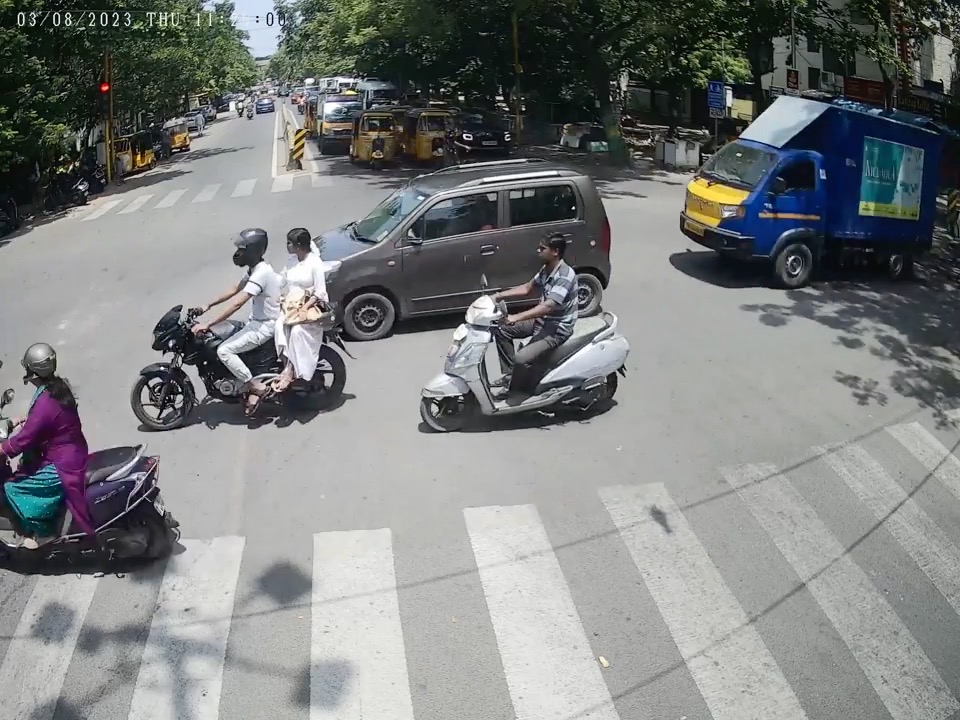
These AI deployments are more than one-off tech interventions — they are templates. With the Smart Cities Mission pushing for Integrated Command and Control Centres across India, the groundwork is already in place. The beauty of these systems lies in their interoperability — the same surveillance backbone can be used for women’s safety, crime prevention, and disaster response.
Patterns captured through AI analytics also inform long-term planning. Cities can now identify accident-prone hotspots, peak traffic violation hours, and areas requiring infrastructural redesign — translating raw data into public value.
Rethinking surveillance as infrastructure for safer India
For a country aiming to build future-ready urban ecosystems under Digital India and Viksit Bharat, AI-based surveillance offers a clear path forward. These systems do more than digitise enforcement — they institutionalise accountability.
As more Indian cities adopt AI not just to regulate, but to protect and serve, we’re witnessing a shift: from surveillance as oversight to surveillance as safety. The road to smarter mobility, it turns out, also leads to safer streets.
Sources:

Share Your Story Today, Shape Viksit Bharat Tomorrow
Got an idea, innovation, or experience that's making a difference? Share your story now and ignite India's transformation because your voice can drive the future forward!
Disclaimer:
Resources to Replicate This Idea
BUILD YOUR OWN INTERVENTION
Additional Research
How can I implement this innovation effectively?
How is this innovation being adopted around the world?
Where else could this innovation make an impact?
Who has seen real results from using this innovation?
What insights do experts share about this innovation?
What policies support or influence this innovation?
How could this innovation evolve in the future?
Is this innovation accessible and inclusive for everyone?
How can I contribute to or participate in this innovation?
What resources can help me explore this innovation further?
Handpicked stories tailored just for you
Explore stories that inspire, inform, and ignite new ideas across tech, innovation, and real-world impact

How AI Diagnostics Are Reaching India’s Frontline Health Workers
AffEx equips rural health workers with an AI-powered point-of-care screening kit — testing hemoglobin, blood pressure, ECG, and cardiac and...
Read More