How AI-Powered Underwater Robots Are Transforming India’s Marine Infrastructure and Coral Conservation
An indigenous AI-powered underwater robots inspects critical infrastructure, assists the Indian Navy, and supports coral reef surveys in Andaman and Lakshadweep, reducing risk for humans and improving marine conservation.
Updated on: 18 July 2026

Sector

Solution

Technology

State of Origin
Disclaimer:
Features ‘as is’ submissions and neither constitutes endorsement, certification, recommendation, or validation by NITI Aayog nor makes NITI Aayog liable in any manner.
Impact Metrics
AI-powered defect detection for underwater assets
EyeROV’s EVAP platform analyses live underwater footage to identify corrosion, cracks, leakages and structural damage, enabling faster and more accurate inspections.
300-metre deep underwater operations
Enabled by EyeROV’s indigenous robotic systems such as TUNA and SAGARA, allowing safer inspection of underwater infrastructure without sending divers into hazardous environments.
High-resolution underwater data without repeated human dives
EyeROV’s robotic systems enable non-invasive monitoring of coral reefs and marine infrastructure, improving safety while reducing operational challenges.
Operating in 5 countries
demonstrating global applicability in marine infrastructure inspection, research and conservation across diverse underwater environments.
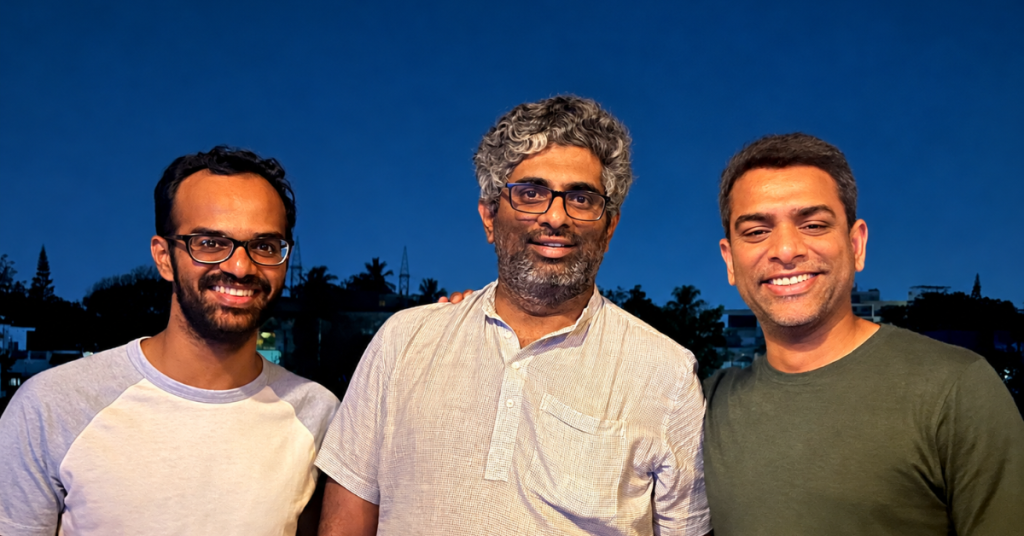
EyeROV, a Kochi-based marine deep-tech startup founded in 2017 by IIT graduates Johns T. Mathai and Kannappa Palaniappan, has developed one of India’s first indigenous full-stack underwater robotics platforms, combining artificial intelligence, robotics and advanced imaging to inspect underwater infrastructure and support marine conservation.
The innovation addresses a long-standing challenge in underwater operations, where inspections of dams, tunnels, ship hulls, pipelines and bridges have traditionally relied on divers working in hazardous and often inaccessible environments.
EyeROV has created a suite of remotely operated and autonomous marine robots tailored to different underwater tasks.
Its inspection robots, including TUNA and SAGARA, are equipped with high-resolution 4K cameras and can operate at depths of up to 300 metres. Other platforms include Sea Serpent for coastal surveillance, TSROV for inspecting narrow tunnels and pipelines over distances of up to 10 kilometres, and iBOAT ALPHA for underwater mapping and bathymetric surveys. Together, these systems provide an Indian alternative to expensive imported marine robotics technology.
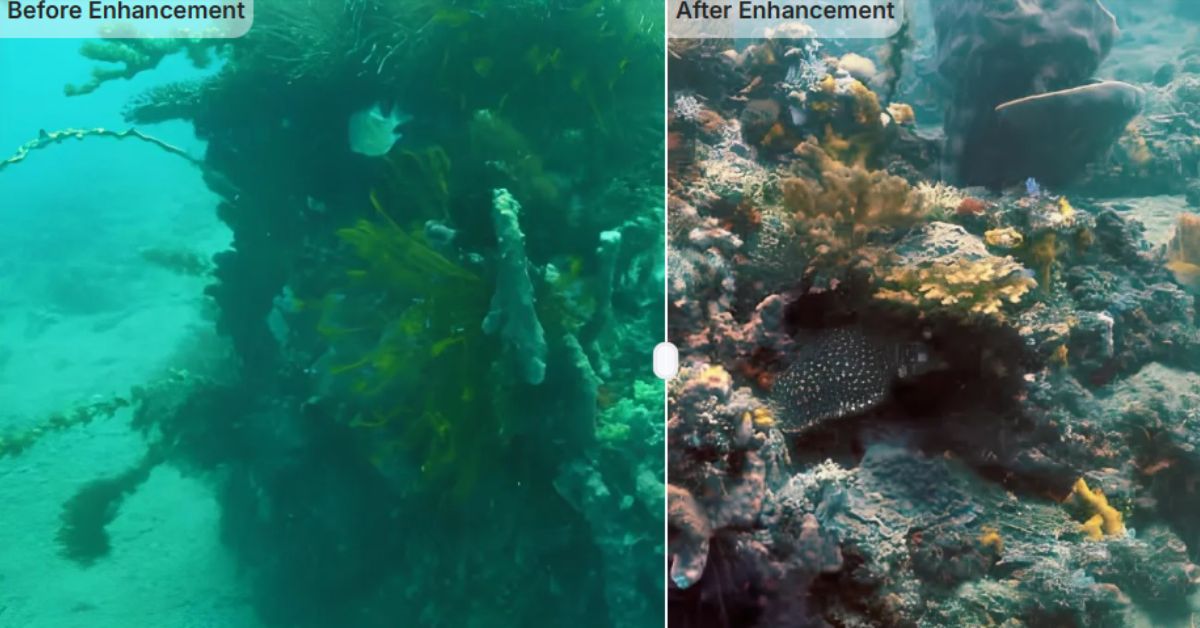
At the core of the innovation is EyeROV’s AI-powered software platform, EVAP, which analyses live underwater footage captured by the robots. The platform enhances visibility in sediment-heavy or low-light waters, reconstructs digital models of underwater structures, and automatically identifies defects such as corrosion, cracks, leakages and structural damage.
This enables engineers to conduct faster, safer and more accurate inspections without sending divers into dangerous conditions.
Beyond industrial applications, the technology is also contributing to environmental conservation. EyeROV’s robots are being used to monitor coral reefs in the Andaman and Lakshadweep islands, collecting high-resolution imagery and environmental data without disturbing fragile ecosystems.
By reducing the need for repeated human dives, the system enables scientists to track reef health, bleaching events and biodiversity more effectively. The innovation demonstrates how AI-powered underwater robotics can simultaneously improve infrastructure safety, advance marine research and strengthen conservation efforts while building India’s indigenous marine technology capabilities.
Implications in coastal surveillance
Studies on a long-term coral restoration initiative in the Gulf of Mannar have demonstrated that degraded reefs can be successfully revived through science-based restoration techniques.
Conducted between 2002 and 2024 by the Suganthi Devadason Marine Research Institute (SDMRI), the project involved transplanting more than 51,183 coral fragments from 20 native species onto specially designed artificial substrates along India’s southeast coast.
Over the course of the programme, researchers continuously refined transplantation methods, substrate designs and monitoring protocols to improve survival and growth. The transplanted corals recorded survival rates ranging from 55.6 percent to 79.5 percent, with branching Acropora species performing particularly well, growing up to 16.7 cm per year. Importantly, many restored corals reached reproductive maturity, indicating that they could naturally contribute to reef regeneration.
Ecological monitoring found significant improvements in reef health at restored sites, including increased live coral cover, higher coral densities and greater abundance of reef fish compared with unrestored areas.
These outcomes suggest that coral transplantation not only restores coral populations but also supports the recovery of the broader marine ecosystem.
Published in the Journal of Environmental Management, the study concludes that adaptive, evidence-based coral transplantation using artificial substrates is an effective and scalable restoration strategy.
Despite ongoing threats from climate change and human activities, the Gulf of Mannar project offers a practical model that can be replicated across other vulnerable reef ecosystems in India and around the world.
The success of long-term coral restoration depends not only on transplanting corals but also on continuously monitoring their health. The Gulf of Mannar restoration project showed that restored reefs had higher coral cover, greater fish abundance and improved ecosystem health.
However, tracking these changes requires regular underwater surveys across vast and often inaccessible reef systems.
This is where EyeROV’s innovation becomes critical. Its AI-powered underwater robots enable scientists to inspect coral reefs without relying on divers, who are limited by depth, weather conditions and safety risks. Equipped with high-resolution cameras and AI-based image analysis, the robots can capture detailed visual data, assess coral bleaching, detect disease, measure coral growth, map reef structures and monitor biodiversity over time. Because the robots can operate repeatedly with minimal disturbance, they provide a consistent and non-invasive way to evaluate whether restoration efforts are succeeding.
For large-scale restoration programmes like the Gulf of Mannar initiative, such technology is invaluable. Continuous, data-driven monitoring helps researchers identify stressed reefs early, measure the survival and reproductive success of transplanted corals, and refine restoration strategies based on real-time evidence. In this way, EyeROV bridges a crucial gap between coral restoration and conservation, transforming reef monitoring from an intermittent, labour-intensive process into a scalable, AI-enabled system that can help safeguard India’s fragile marine ecosystems.
India’s growing focus on underwater infrastructure development
India’s maritime sector is a critical driver of trade, connectivity and economic growth, handling nearly 95 percent of the country’s trade by volume and around 70 percent by value. With an extensive coastline of 11,099 kilometres, nearly 14,500 kilometres of navigable waterways, 12 major ports and over 200 non-major ports, India’s maritime network plays a central role in connecting domestic industries with global markets.
Launched in 2015, the Sagarmala Programme was designed to harness this potential through port-led development. The initiative focuses on modernising ports, improving connectivity, promoting port-based industrialisation, supporting coastal communities and expanding the use of coastal shipping and inland waterways.
By integrating ports with road, rail and water transport networks, Sagarmala aims to reduce logistics costs, improve cargo movement efficiency and strengthen India’s position as a global maritime hub.
Since its launch, the programme has undertaken 845 projects worth Rs 6.06 lakh crore. Of these, according to government data, 315 projects have been completed, while others are under implementation or planning.

Infrastructure development under Sagarmala has significantly expanded India’s maritime capacity. Data suggests that fishing harbour projects have benefited more than 30,000 fishermen by improving coastal livelihoods and strengthening fisheries infrastructure.
The programme has also contributed to improved port performance. As India moves towards becoming a global maritime power, Sagarmala represents a long-term strategy to create a more connected, efficient and sustainable maritime ecosystem, strengthening trade, supporting coastal economies and enabling the growth of the blue economy.
How EyeROV can support India’s maritime future
As India expands its maritime infrastructure through initiatives like Sagarmala and Sagarmala 2.0, the need for safer, faster and more efficient underwater inspection technologies will become increasingly important.
The development of ports, coastal infrastructure, inland waterways, shipyards, offshore facilities and underwater pipelines requires regular monitoring to ensure safety and operational efficiency. This is where innovations like EyeROV can play a crucial role.
EyeROV’s indigenous AI-powered underwater robots can transform how India inspects and maintains critical maritime assets. Traditionally, underwater assessments of ports, bridges, dams, ship hulls and pipelines rely on divers, making the process risky, time-consuming and dependent on weather and visibility conditions.
EyeROV’s remotely operated vehicles can access difficult underwater environments, capture high-resolution imagery and use AI-based analysis to identify structural issues such as cracks, corrosion and leakages.
As Sagarmala focuses on expanding port capacity and improving maritime connectivity, these robotic systems can enable predictive maintenance, reducing downtime and preventing costly infrastructure failures. Their ability to generate detailed underwater data can also support digital mapping, asset monitoring and long-term planning of marine infrastructure.
Beyond industrial applications, EyeROV can contribute to sustainable maritime development by enabling environmental monitoring alongside infrastructure growth. By assessing coral reefs, marine habitats and coastal ecosystems, the technology can help ensure that India’s blue economy expansion balances economic growth with ecological protection. In the future, underwater robotics could become a key pillar of a safer, smarter and more sustainable maritime ecosystem.
Sources:

Share Your Story Today, Shape Viksit Bharat Tomorrow
Got an idea, innovation, or experience that's making a difference? Share your story now and ignite India's transformation because your voice can drive the future forward!
Disclaimer:
Features ‘as is’ submissions and neither constitutes endorsement, certification, recommendation, or validation by NITI Aayog nor makes NITI Aayog liable in any manner.
Resources to Replicate This Idea
BUILD YOUR OWN INTERVENTION
Handpicked stories tailored just for you
Explore stories that inspire, inform, and ignite new ideas across tech, innovation, and real-world impact


Turning Chemistry Into Code: The Technology Making Complex Diagnostics Faster and More Precise
Algorithmic Biologics is turning chemistry into code, using programmable DNA molecules to simplify complex diagnostic testing. Its technology could enable...
Read More