How Bharat-VISTAAR Is Connecting 140M+ Farmers to Smarter Agriculture
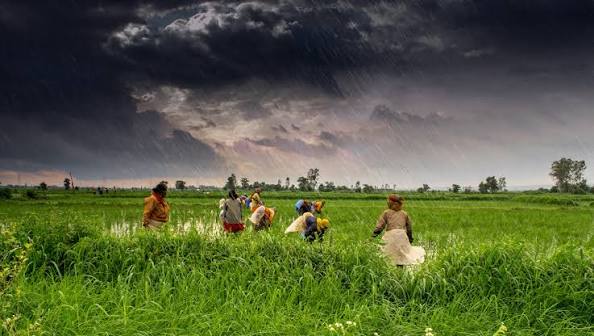
Bharat-VISTAAR is an AI-driven, voice-first platform that integrates trusted agricultural data to provide farmers with personalised crop, weather, market, and scheme recommendations. By making digital services accessible in local languages, it empowers millions of farmers to make faster, more informed decisions.
Updated on: 29 June 2026

Sector

Solution

Technology

State of Origin
Disclaimer:
Impact Metrics
140M+ farmers connected
through an AI-powered, multilingual Digital Public Infrastructure delivering personalised agricultural intelligence at national scale.
Voice-first, multilingual access
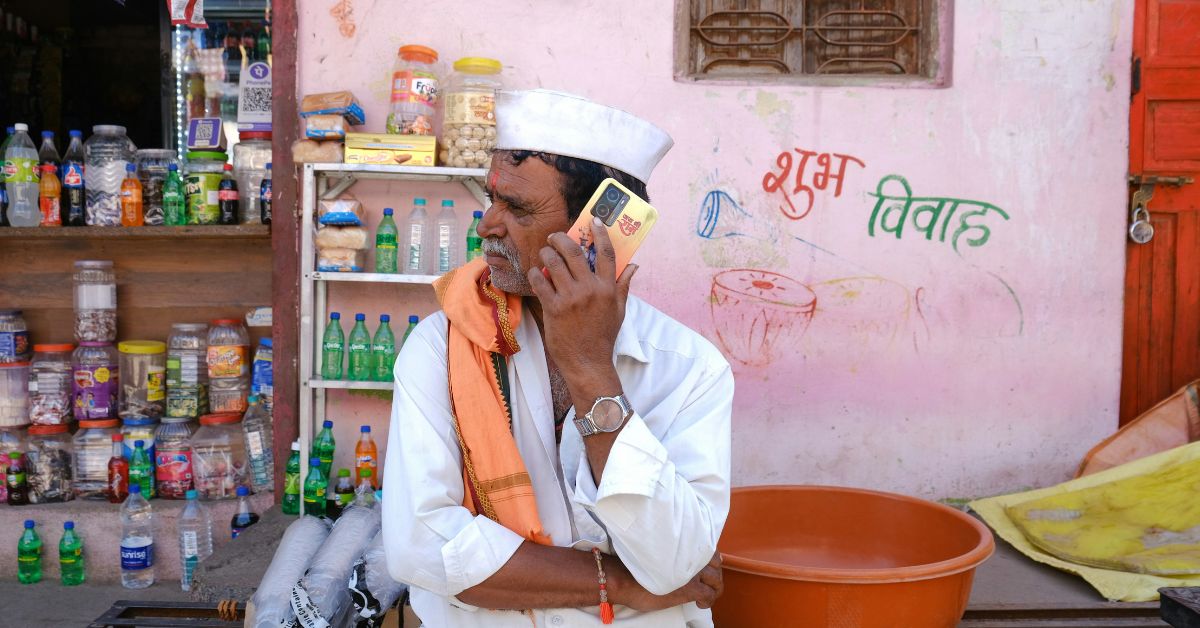
making AI-powered farming support accessible to smallholder farmers, including those with limited digital literacy or without smartphones.
Hyperlocal AI advisories
tailored to each farmer's location, crop, weather conditions, land records, and farming practices.
Unified agricultural ecosystem
integrating weather, crop, market, government, and scientific data into a single decision-support platform.
In a move that will enable AI (artificial intelligence) to broaden its user base to India’s farming community — the country has an estimated 110 million land-owning farmers — the government announced the launch of Bharat VISTAAR (Virtually Integrated System to Access Agricultural Resources) as part of the Union Budget 2026.
Think of it as an AI-powered, voice-first, multilingual, national Digital Public Infrastructure (DPI) platform for agriculture, connecting farmers, government agencies, research institutions, and AgTech innovators. Built on a federated architecture, the platform enables seamless exchange of agricultural data with farmers through mobile applications, web portals, assisted service centres, and voice-based interfaces.
While this is on the demand side, on the supply side, Bharat VISTAAR integrates trusted data sources from organisations such as ICAR (Indian Council of Agricultural Research), IMD (India Meteorological Department), and state agriculture departments.
These integrations provide farmers with real-time weather forecasts, crop advisories, market prices, government scheme information, land record services, and other critical agricultural insights, which are analysed and combined to deliver personalised crop health advisories, weather alerts, and decision support tailored to each farmer’s location, crop, and farming conditions.
The innovation can be thought of as one that transforms fragmented agricultural systems into a farmer-first digital ecosystem that improves productivity, accessibility, and informed decision-making across India’s farming community.
Exploring the possibilities of AI in agriculture
Farmers can access crop management guidance, weather forecasts, market prices, pest and disease alerts, soil health insights, and information on government schemes through a mobile app, web portal, AI voice chatbot, and dedicated helpline. Phase I, launched in February 2026, supports Hindi and English and integrates ten major central agricultural schemes, with additional regional languages and state-specific services planned.
The platform also includes voice support for non-smartphone users, ensuring accessibility for smallholder farmers.
A study exploring the potential of AI in agriculture found that, despite the lucrative nature of AI’s offerings, smallholder farmers were not benefiting. This is especially true in developing countries. The study assessed AI’s potential to improve productivity, optimise resources, and build resilience against climate change and other growing challenges through technologies such as precision farming, smart irrigation, crop monitoring, disease detection, and yield prediction, but found that their adoption remains limited across much of the developing world.
The reasons were barriers such as poor connectivity, limited access to affordable digital tools, inadequate credit, low digital literacy, and weak extension services. Researchers also caution that many AI models are trained using data from industrialised farming systems, making them less effective in local farming conditions characterised by mixed cropping, rain-fed agriculture, and diverse soil types.
This is where Bharat-VISTAAR steps in as a boon.
A major step in transforming fragmented agricultural data
According to experts at the International Water Management Institute (IWMI), Bharat-VISTAAR transforms fragmented agricultural data into a unified, decision-ready ecosystem. While the platform integrates farmer records, government databases, and scientific recommendations from ICAR, its true potential lies in enabling proactive, climate-resilient farming rather than simply providing information.
They emphasise that farmers increasingly face interconnected risks, including erratic rainfall, droughts, floods, heat stress, pests, soil degradation, and volatile markets. To address these challenges, Bharat-VISTAAR must combine integrated data with advanced intelligence systems that help farmers act before losses occur.
Equally important is ensuring that these insights remain accessible. By delivering recommendations in multiple Indian languages (as of now, Hindi is the added language) through simple, voice-enabled interfaces, advanced AI can support even smallholder farmers with limited digital literacy.
The researchers hypothesise that integrating climate, water, production, and market risks into a single operational framework will enable governments, insurers, financial institutions, and agricultural service providers to offer coordinated, risk-responsive support.
Ultimately, they say Bharat-VISTAAR’s success will be measured not by the volume of data it connects, but by its ability to improve decisions, reduce losses, strengthen resilience, and protect farmers’ livelihoods. By integrating state-specific land records, crop calendars, weather patterns, government schemes, and extension services into a common Digital Public Infrastructure, the platform can deliver hyperlocal advisories tailored to each farmer’s geography, crop, and climatic conditions. This standardised yet flexible approach allows every state to build on the same digital backbone while addressing its unique agricultural priorities.
The platform’s multilingual, voice-first design also makes it accessible to smallholder farmers, many of whom have limited digital literacy or do not own smartphones.
Beyond advisory services, the platform can streamline access to crop insurance, institutional credit, market linkages, subsidies, and disaster relief, reducing delays and improving transparency.
By combining AI-driven insights with trusted public data and local agricultural expertise, Bharat-VISTAAR can help farmers make informed decisions, reduce climate-related risks, improve productivity, and build more resilient livelihoods across India’s highly diverse agricultural landscape.
Sources:

Share Your Story Today, Shape Viksit Bharat Tomorrow
Got an idea, innovation, or experience that's making a difference? Share your story now and ignite India's transformation because your voice can drive the future forward!
Disclaimer:
Resources to Replicate This Idea
BUILD YOUR OWN INTERVENTION
Handpicked stories tailored just for you
Explore stories that inspire, inform, and ignite new ideas across tech, innovation, and real-world impact

How AI Diagnostics Are Reaching India’s Frontline Health Workers
AffEx equips rural health workers with an AI-powered point-of-care screening kit — testing hemoglobin, blood pressure, ECG, and cardiac and...
Read More