How Bio-Based Sanitation Systems Are Reducing Water Waste in Cities
Pune-based Rutu Biosystems is using biotechnology-driven waterless urinal systems to reduce odour, conserve water, and improve urban sanitation infrastructure. Its microbial sanitation technology has saved over 50 crore litres of water across 15,000 public washrooms in India.
Updated on: 16 May 2026

Sector

Solution

Technology

State of Origin
Disclaimer:
Impact Metrics
50 crore litres of water
saved through deployment across public washrooms.
15,000+ public washrooms
equipped with the technology across India.
700 metric tonnes
of CO₂ emissions avoided.
Public sanitation infrastructure is rarely framed as a climate or urban development issue. Yet in rapidly growing cities, public toilets sit at the intersection of water scarcity, public health, infrastructure maintenance, and urban hygiene. Conventional urinal systems consume enormous quantities of potable water every day while also contributing to persistent sanitation problems such as foul odour, clogged drainage systems, and high maintenance costs. In this context, Pune-based Rutu Biosystems is attempting to rethink urban sanitation through biotechnology-driven, waterless urinal systems.
Turning a Sanitation Problem Into a Biotechnology Solution
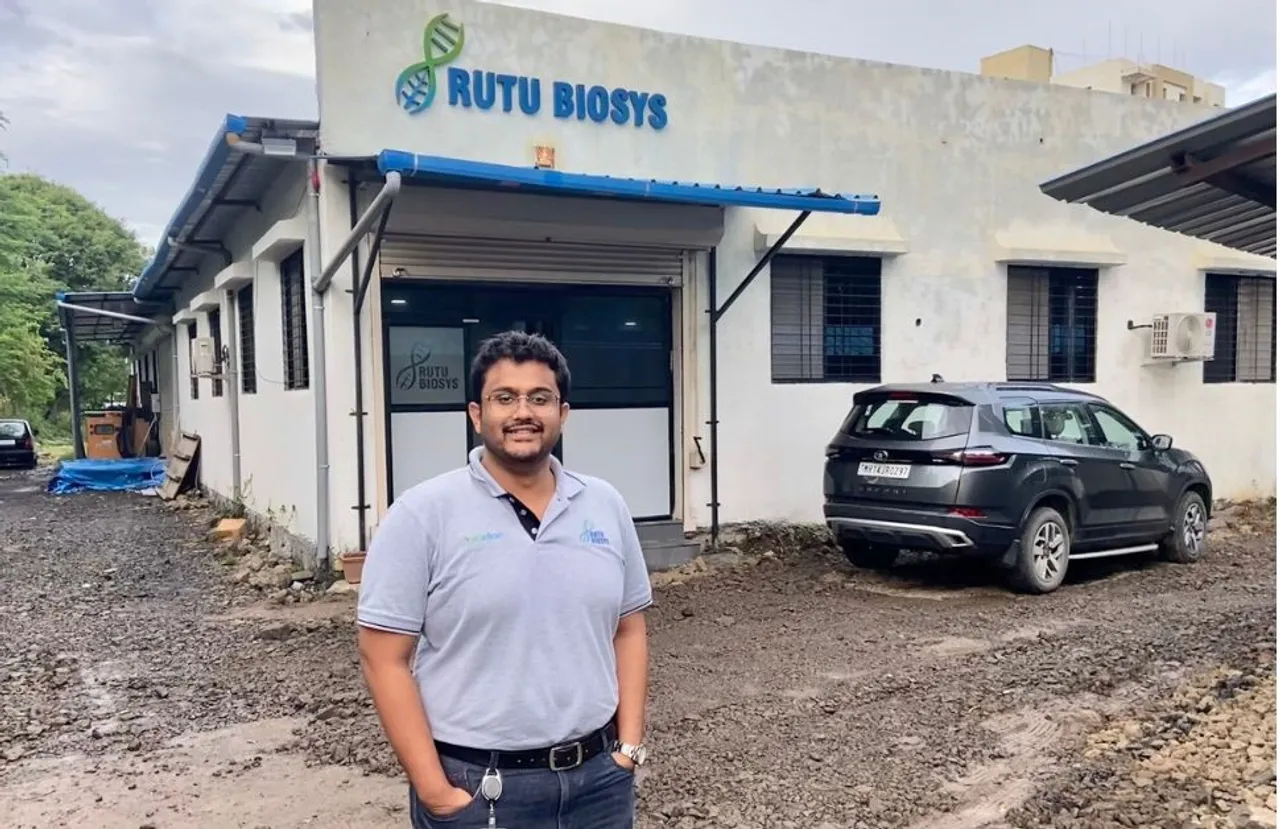
Founded in 2007, the company began as an odour management and sanitation venture started by Mohan Kulkarni, an electrical engineer who transitioned into biotechnology research. Over time, the startup evolved into developing microbial sanitation technologies aimed at reducing both water consumption and odour generation in public washrooms. Today, under the leadership of biotechnology graduate Kedar Kulkarni, the company has deployed its solutions across more than 15,000 public washrooms in India.
The core innovation lies in challenging one of the most deeply embedded assumptions in sanitation systems: that urinals require water to function hygienically. According to the company, water is not only unnecessary for transporting liquid waste through drainage systems but also contributes to the odour problem itself. Uric salts deposited in urinal drain lines react with water and oxygen, producing ammonia gas — the source of the characteristic smell associated with poorly maintained public toilets.
How the Technology Works
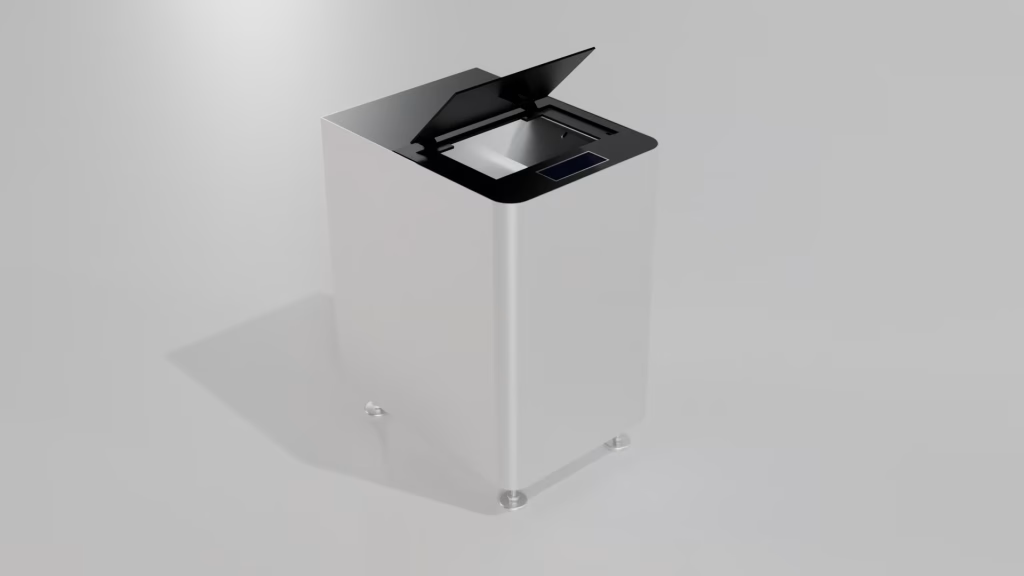
Rutu Biosystems’ technology replaces this water-intensive system with a biotechnology-based treatment process. Its sanitation model combines bio blocks, urinal screens, odour controllers, and bio-based cleaning agents that contain naturally occurring bacteria and enzymes, primarily from the bacillus family. These microorganisms biologically break down uric salts before ammonia can form, converting waste into nitrogen compounds instead. The result is an odourless system that functions with little to no flushing water.
Unlike large-scale infrastructure overhauls that require expensive retrofitting, the technology is designed to integrate into existing sanitation systems. Existing urinals can be converted into waterless units simply by replacing conventional products with the company’s microbial treatment systems. This low-barrier deployment model is particularly significant for Indian cities, where ageing sanitation infrastructure, limited municipal budgets, and maintenance challenges often slow the adoption of sustainable technologies.
Why Waterless Infrastructure Matters for Cities
The implications of such systems extend beyond hygiene. Urban India is increasingly facing water stress, with cities under pressure from population growth, climate variability, and declining groundwater reserves. Public sanitation systems, especially in transport hubs, institutions, commercial complexes, and high-footfall public areas, collectively consume massive quantities of freshwater each day. By eliminating the need for continuous flushing, waterless urinal systems create an opportunity to reduce non-essential urban water demand at scale.
According to the company, its installations have collectively saved over 50 crore litres of water while avoiding approximately 700 metric tonnes of carbon emissions — an environmental impact it equates to planting 30,000 trees. The carbon reductions emerge not only from lower water usage but also from reduced pumping, treatment, and wastewater processing requirements associated with urban sanitation systems.
The technology also addresses another persistent urban infrastructure challenge: maintenance. Conventional urinals often experience pipe blockages caused by uric salt accumulation, leading to recurring repair costs and sanitation failures in public spaces. By biologically breaking down these deposits at the source, microbial treatment systems can extend the operational life of sanitation infrastructure while reducing maintenance burdens on municipalities and facility operators.
Beyond Cleanliness: Rethinking Urban Resource Use
The case of Rutu Biosystems illustrates how frontier biotechnology can reshape everyday urban systems that are rarely viewed through an innovation lens. Rather than developing entirely new infrastructure, the company’s approach focuses on retrofitting existing systems with biological processes that reduce resource intensity and improve efficiency.
As cities search for pathways toward climate resilience and sustainable infrastructure, sanitation technologies are likely to become increasingly important within broader urban development conversations. Waterless sanitation systems demonstrate how even routine civic infrastructure can become a site for climate action, resource conservation, and public health improvement simultaneously.
In this sense, the startup’s work is not simply about cleaner washrooms. It represents a broader shift toward designing urban systems that are less dependent on water-intensive processes and more aligned with the environmental realities facing cities in the coming decades.
Share Your Story Today, Shape Viksit Bharat Tomorrow
Got an idea, innovation, or experience that's making a difference? Share your story now and ignite India's transformation because your voice can drive the future forward!
Disclaimer:
Resources to Replicate This Idea
BUILD YOUR OWN INTERVENTION
Handpicked stories tailored just for you
Explore stories that inspire, inform, and ignite new ideas across tech, innovation, and real-world impact

How AI Diagnostics Are Reaching India’s Frontline Health Workers
AffEx equips rural health workers with an AI-powered point-of-care screening kit — testing hemoglobin, blood pressure, ECG, and cardiac and...
Read More