How Sanitary Products Become Paper and Plastic: The Technology That Saved 500 Tons of Carbon in a Year
With a growing prioritization of women’s health needs, more Indians are gaining access to sanitary products. However, the improper disposal of these products poses a threat to public health. Pune-based PadCare Labs has found a method of safely breaking them down to paper and plastic and recycling these.
Updated on: 31 July 2026

Sector

Solution
Women's Health

Technology

State of Origin
Impact Metrics
40,000+ disposal sites
scoured to procure sanitary products.
25 Indian cities
serviced.
2000+ facilities
for collecting and recycling sanitary products.
~2.14 kg of carbon saved
for every kg of sanitary waste processed.
Awareness about menstrual health products has grown in India over the past few decades. This has largely been driven by an increased prioritization of women’s hygiene, dignity, and privacy in mainstream society.
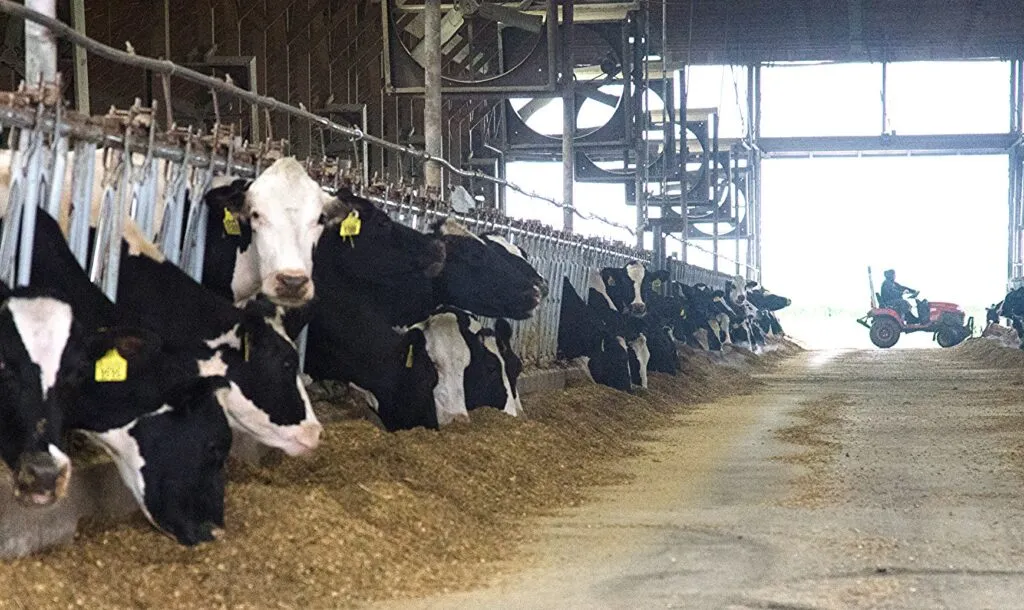
However, at the same time, there remains a gap in terms of the safe disposal of sanitary pads, napkins, and other related accessories. Once used, these products find their way to landfills, where they must usually be picked up and segregated by hand by safai karamcharis and other waste management staff. Thus, their improper disposal causes both environmental pollution as well as safety risks for municipal workers.
But what if they could be removed from the waste ecosystem altogether? Pune-based startup PadCare Labs translates this idea into a reality. Founded by Ajinkya Dhariya in 2018, this startup has developed a technology that safely breaks down sanitary waste into recyclable paper and plastic—a solution that has already generated economic value across sectors.
The recycling process
The first step in PadCare’s recycling process is to gather the waste material. To date, it has collected used sanitary napkins and nappies from over 40,000 sites in India.
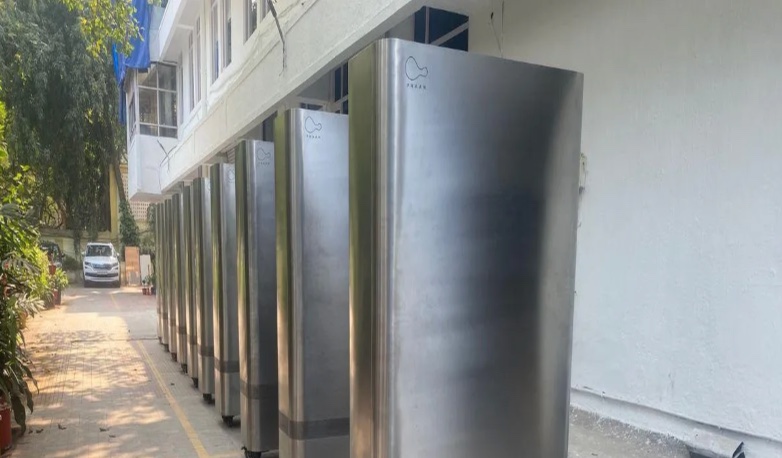
Next, it uses a machine built in-house—the PadCareX—to perform what it calls the Five Ds of safe recycling. These include disinfection to eliminate biological components, deodorization to remove odors, decolorization to make the material look different, disintegration to break it down to its ingredients, and deactivation to produce a non-hazardous output.
By the end of the process, the machine will have converted the material into paper pulp and plastic beans. These can then be used to manufacture paper and various other office supplies.
PadCare’s business model
The startup operates through a B2B model, serving sectors as diverse as information technology and education. In a typical operation, it charges a business to collect used sanitary products from its workplaces, then returns the recycled paper and plastic free of charge. This reduces the effort that the client must invest while resulting in an environment-friendly and healthy outcome.
In its early phase, PadCare received funding from the Indian government via the Atal New India Challenge (AINC). Technical equipment for research was provided by the Venture Center at the National Chemical Laboratory, while the Maharashtra State Innovation Society helped with conducting pilot tests of the recycling process. Later funders included the Infosys Foundation, BIRAC, and the Department of Biotechnology.
Today, PadCare works closely with The Energy and Water Institute (TERI); the Ministry of Environment, Forest and Climate; the Ministry of Housing; and the Central Pollution Control Board to refine its technology.
What impact has PadCare created?
Eight years from its founding, PadCare has spread its services to 25 cities in India, with the main operational clusters being around Pune, Bengaluru, and New Delhi. It has over 800 clients, mostly in the Southern states of the country, and has stored and distributed its recycled materials in 2000+ facilities.
The most quantifiable metric to demonstrate its success is the carbon equivalent that it has saved through recycling. In 2025 alone, PadCare’s activities saved ~500 metric tons of carbon equivalent, and in general, every kilogram of sanitary waste is converted into ~2.14 kg of carbon equivalent. Additionally, every used sanitary product that is broken down into paper and plastic is one less product that could pollute the environment or endanger the health of a waste management worker.
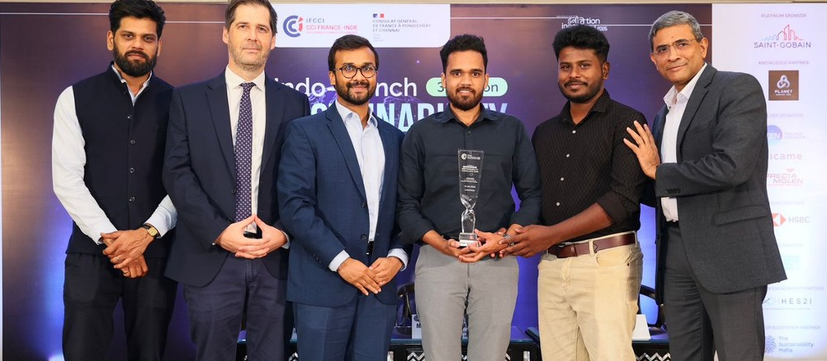
Recognizing the startup’s achievements, several organizations have awarded it prestigious prizes. For example, in the CII Innoverge Recognition ceremony of 2026, PadCare was the second runner-up. FICCI’s Indian Circular Economy Awards of 2021 presented it with a winning prize in the startup category. Moreover, PadCare has appeared in both the UNICEF’s Innovation30 and Forbes Under-30 lists.
How could PadCare scale its work further?
Increasing the impact of a startup that recycles sanitary waste will require not only additional funding opportunities but also policy-level support. The latter will lend it more legitimacy in the eyes of the public, as well as making the ecosystem more conducive to innovation by similar tech founders.
The Solid Waste Management Rules of 2026 clearly regulate the segregation of waste, ensuring that the appropriate vendors are contracted for the purpose. Such legislation is a step towards standardizing waste management processes as a whole.
However, handling sanitary waste carries with it an additional social stigma—and this can be strongly addressed if state governments directly contract PadCare to handle sanitary waste from their offices. Once the startup establishes a B2G pipeline, policymakers can make consent forms, No Objection Certificates, and other clearance-related documentation more efficient. With this added confidence from the government, innovators such as PadCare can give sanitary products the additional advantage of being environmentally sustainable.
Share Your Story Today, Shape Viksit Bharat Tomorrow
Got an idea, innovation, or experience that's making a difference? Share your story now and ignite India's transformation because your voice can drive the future forward!
Resources to Replicate This Idea
BUILD YOUR OWN INTERVENTION
Handpicked stories tailored just for you
Explore stories that inspire, inform, and ignite new ideas across tech, innovation, and real-world impact

Safe Access: India’s Community-Verified Digital Locator for HIV Prevention Services
Safe Access is a free, community-driven Indian platform that helps people locate verified PrEP and PEP providers nearby. By mapping...
Read More