Indian-Built Hybrid Machine Delivers Precision Manufacturing
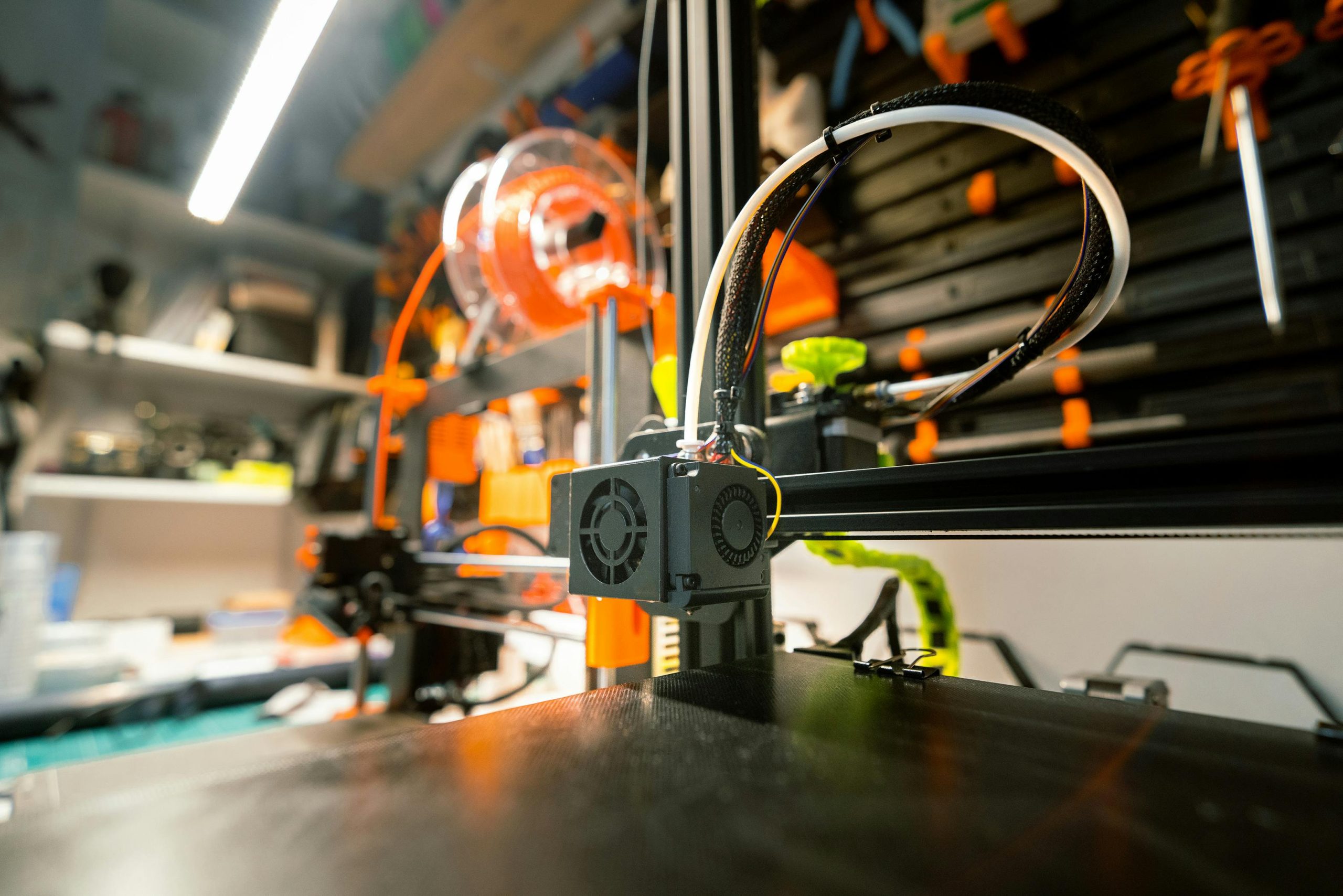
Ethereal Machines, founded by Kaushik Mudda and Navin Jain, built Halo, a hybrid 5-axis CNC and 3D printer enabling both additive and subtractive manufacturing for complex designs. Winner of CES 2018 Best of Innovation, it now powers jewelry, automotive, and wearable tech industries. With ₹175+ crore funding and global partnerships, it strengthens domestic manufacturing and ‘Make in India’.
Share



Sector

Technology

State of Origin
Impact Metrics
Advanced domestic manufacturing
for wearables, infrastructure, and other industries.
BUILD YOUR OWN

BUILD YOUR OWN
How can I implement this innovation effectively?
How is this innovation being adopted around the world?
Where else could this innovation make an impact?
Who has seen real results from using this innovation?
What insights do experts share about this innovation?
What policies support or influence this innovation?
How could this innovation evolve in the future?
Is this innovation accessible and inclusive for everyone?
How can I contribute to or participate in this innovation?
What resources can help me explore this innovation further?
From Concept to Factory Floor: Navigating the Realities of Advanced Manufacturing Integration in India
The successful integration of cutting-edge manufacturing technologies, exemplified by Ethereal Machines’ Halo—a hybrid 5-axis CNC machine and 3D printer—demands more than technical prowess. It requires a nuanced understanding of India’s industrial ecosystem, policy landscape, and the socio-economic factors shaping technology adoption. As Indian manufacturers strive to compete globally, the implementation of such dual-capability machines is redefining production processes, cost structures, and workforce requirements. This section unpacks the critical insights, challenges, and enablers that shape the practical rollout of advanced manufacturing solutions in India.
Leveraging Industrial Clusters and Talent Ecosystems
India’s manufacturing hubs, such as Bengaluru, Pune, and Chennai, have emerged as fertile ground for technology adoption due to their concentration of skilled engineers, research institutions, and vibrant startup communities. Ethereal Machines’ decision to base its operations in Bengaluru is a case in point—tapping into the city’s deep pool of technical talent and access to venture capital. This mirrors the approach of global manufacturing leaders, where geographic clusters like Germany’s Stuttgart or the U.S. Midwest drive innovation through proximity to expertise and resources.
Indian policy has recognized the value of such clusters. The Karnataka government’s “Elevate” program, for example, provides funding and mentorship to manufacturing startups, while the Centre for Innovation Incubation and Entrepreneurship (CIIE) at IIM Ahmedabad supports early-stage ventures in advanced manufacturing. These initiatives help bridge the gap between laboratory innovation and factory-floor application, accelerating the commercialization of technologies like the Halo.
Policy Alignment and Institutional Support: The ‘Make in India’ Imperative
The alignment of advanced manufacturing technologies with national policy priorities is pivotal for large-scale adoption. The ‘Make in India’ initiative, launched in 2014, explicitly encourages domestic innovation and the reduction of import dependency—an acute issue given that over 85% of India’s electronic components are sourced from abroad. Ethereal Machines’ hybrid solutions directly address this vulnerability by enabling local production of high-precision parts, thereby strengthening supply chain resilience.
Further, financial incentives such as the Production Linked Incentive (PLI) scheme and research grants from the Department of Science and Technology (DST) have been instrumental in supporting technology developers. The synergy between government backing and entrepreneurial initiative is evident in the rapid scaling of companies like Ethereal Machines, which has secured over ₹175 crore in funding and established global partnerships.
Pilot Projects and Academia-Industry Collaboration
Real-world validation through pilot projects and institutional partnerships is a cornerstone of successful technology implementation. The Indian Institute of Technology (IIT) Madras’s Centre for Additive Manufacturing exemplifies this approach, serving as a testbed for hybrid manufacturing processes and workforce training. Such collaborations not only de-risk technology adoption for industry partners but also ensure that academic research is attuned to market needs.
Government-led pilots, such as those under the Ministry of Micro, Small and Medium Enterprises (MSME), have established additive manufacturing clusters to facilitate technology transfer to small manufacturers. These clusters provide shared access to advanced equipment and technical support, democratizing innovation beyond large corporations. In Jaipur, for instance, jewelry artisans participating in MSME pilot programs have leveraged hybrid machines to create intricate designs, boosting export competitiveness.
Learning from Global Models: Adaptation, Not Imitation
While India’s journey is unique, global experiences offer valuable lessons. Germany’s Industrie 4.0 and the U.S. Advanced Manufacturing National Program Office (AMNPO) have demonstrated the benefits of integrating additive and subtractive processes within smart factories. These models emphasize public-private partnerships, robust skill development frameworks, and the creation of innovation hubs—elements India is beginning to emulate.
Expert Perspectives: Bridging Precision and Accessibility
Indian thought leaders consistently highlight the need for accessible, affordable advanced manufacturing solutions tailored to local contexts. Prof. Ashutosh Sharma, former Secretary of DST, notes, “Hybrid manufacturing is not just about precision—it’s about democratizing access to world-class production capabilities for Indian SMEs.” Kaushik Mudda, co-founder of Ethereal Machines, echoes this sentiment, emphasizing the importance of designing machines that are both technologically advanced and cost-effective for small manufacturers.
Institutions such as IIT Delhi and the National Institute of Design (NID) are at the forefront of developing design-for-manufacturing principles that optimize hybrid processes for Indian conditions. Their research and outreach programs are building a new generation of engineers and designers equipped to drive the next wave of industrial transformation.
—
These implementation insights reveal that the path to widespread adoption of hybrid manufacturing technologies in India is multifaceted—requiring strategic alignment of talent, policy, finance, and collaborative innovation. By leveraging its unique strengths and learning from global best practices, India is poised to transform its manufacturing landscape and assert itself as a leader in advanced industrial production.
Charting India’s Path in the Global Manufacturing Revolution
As the world embraces a new era of manufacturing, India’s adoption of hybrid technologies—combining additive and subtractive processes—reflects both global convergence and local innovation. Countries like Germany, the United States, and China are redefining industrial competitiveness through coordinated policies, digital transformation, and strategic investments. India’s journey, while distinct, is increasingly informed by these international models, offering valuable lessons and unique opportunities for leapfrogging traditional manufacturing paradigms.
Germany’s Industrie 4.0: Blueprint for Digital Manufacturing Integration
Germany’s Industrie 4.0 stands as a benchmark for integrating cyber-physical systems, automation, and data-driven manufacturing. The initiative has propelled German firms to the forefront of advanced manufacturing, particularly in sectors such as automotive and aerospace. Companies like Siemens and BMW deploy hybrid manufacturing—using multi-axis CNC machines alongside 3D printing—to produce highly customized, complex parts with rapid turnaround. This digital-first approach is underpinned by robust government support, industry consortia, and a skilled workforce, enabling Germany to maintain its competitive edge. The formalized policy framework and public-private partnerships offer a template for countries seeking to scale advanced manufacturing.
U.S. Innovation Ecosystems: Accelerating Adoption Through Collaboration
The United States has prioritized advanced manufacturing through initiatives like the Advanced Manufacturing National Program Office (AMNPO), which coordinates federal investments and fosters innovation ecosystems. U.S. firms, especially in defense and medical devices, leverage hybrid manufacturing to reduce costs and accelerate product development. Open innovation—where startups, universities, and large manufacturers collaborate—has catalyzed breakthroughs in materials science and process automation. For example, General Electric’s use of hybrid additive-subtractive machines has revolutionized jet engine component production, slashing lead times and enabling design innovations. The U.S. model demonstrates the power of coordinated policy, research funding, and industry-academia linkages in driving technology adoption.
China’s “Made in China 2025”: State-Led Transformation and Scale
China’s “Made in China 2025” strategy exemplifies a state-led approach to upgrading manufacturing capabilities. By prioritizing automation, digitalization, and indigenous innovation, China has rapidly scaled advanced manufacturing sectors, including robotics and precision engineering. The government’s targeted subsidies and infrastructure investments have enabled widespread adoption of hybrid manufacturing technologies, particularly among large enterprises. For instance, Chinese aerospace firms have integrated hybrid machines to produce lightweight, high-strength components, enhancing global competitiveness. While China’s centralized model contrasts with India’s more decentralized innovation landscape, it underscores the impact of cohesive policy and sustained investment.
India’s Policy Landscape: Opportunities and Gaps
India’s policy environment is evolving, with initiatives like ‘Make in India’ and the IndiaAI mission promoting innovation in manufacturing. However, unlike Germany’s Industrie 4.0 or the U.S.’s AMNPO, India lacks a comprehensive, unified strategy for advanced manufacturing. The Production Linked Incentive (PLI) scheme and the National Policy on Electronics 2019 provide targeted support, but a broader framework integrating financial incentives, skill development, and infrastructure is needed. India’s strengths—its vast engineering talent pool and vibrant startup ecosystem—position it to leapfrog traditional manufacturing stages if supported by integrated policy action. As Kaushik Mudda, co-founder of Ethereal Machines, notes, “India’s advantage lies in its ability to innovate affordably and inclusively, but scaling requires cohesive policy and industry collaboration.”
International Collaboration and Technology Transfer: Pathways for India
Global experience highlights the value of international collaboration in accelerating technology adoption. Ethereal Machines’ partnerships with overseas firms exemplify how Indian startups can access cutting-edge expertise and new markets. Academic collaborations, such as those between IITs and international universities, are fostering joint research in hybrid manufacturing and materials science. The Ministry of Micro, Small and Medium Enterprises (MSME) has piloted additive manufacturing clusters, drawing on global best practices to support small manufacturers. These efforts, combined with targeted policy interventions, can help India bridge capability gaps and position itself as a leader in next-generation manufacturing.
—
India’s journey in hybrid manufacturing is at a pivotal juncture. By learning from global leaders, investing in skill development, and fostering international partnerships, India can harness hybrid technologies to drive inclusive industrial growth and establish itself as a key player in the global manufacturing landscape.
Unlocking India’s Industrial Future: The Expanding Horizons of Hybrid Manufacturing
Hybrid additive-subtractive manufacturing technologies, exemplified by innovations from Ethereal Machines, are rapidly redefining India’s industrial and service sectors. Moving beyond traditional manufacturing, these advanced processes combine the precision of CNC machining with the flexibility of 3D printing, unlocking new possibilities for design, customization, and efficiency. Their adoption is not only catalyzing industrial competitiveness but also fostering inclusive growth, skill development, and policy innovation across the country.
Accelerating Automotive Innovation: From Prototyping to Production
Hybrid manufacturing is revolutionizing India’s automotive sector, where rapid prototyping and tooling are critical to maintaining a competitive edge. Leading manufacturers such as Tata Motors and Mahindra & Mahindra have integrated 3D printing and CNC machining to streamline product development cycles. By leveraging these technologies, automotive firms can swiftly iterate designs, reduce material waste, and lower costs—factors essential for both domestic and export markets.
A notable example is Tata Motors’ use of hybrid manufacturing for prototyping complex engine components, which has reportedly reduced development times by up to 40%. This aligns with India’s broader push for indigenous innovation under the ‘Make in India’ initiative, which encourages the adoption of advanced manufacturing to boost local value addition. The convergence of hybrid manufacturing with digital design tools is also enabling the production of lightweight, high-precision parts, supporting the automotive industry’s transition toward electric and fuel-efficient vehicles.
Transforming Healthcare: Personalized Devices and Surgical Precision
The healthcare sector in India is witnessing a paradigm shift with the adoption of hybrid manufacturing for patient-specific medical solutions. Institutions such as the All India Institute of Medical Sciences (AIIMS) have pioneered the use of 3D printing and CNC machining to create customized prosthetics, dental implants, and anatomical models for surgical planning.
For instance, AIIMS Delhi’s pilot projects have demonstrated that hybrid-manufactured prosthetics can be tailored to individual patients, significantly improving comfort and mobility. Surgeons benefit from highly accurate anatomical models, which enhance preoperative planning and reduce surgical risks.
Empowering Traditional Sectors: Jewelry and Artisan Enterprises
India’s jewelry industry, a major contributor to exports and employment, is embracing hybrid manufacturing to achieve intricate designs previously unattainable through conventional methods. Startups in Jaipur and Mumbai have adopted these technologies to produce bespoke, high-value pieces with remarkable precision and efficiency.
For example, Jaipur-based artisans using hybrid machines have expanded their creative repertoire, attracting international buyers and increasing local incomes. According to the Gem & Jewellery Export Promotion Council (GJEPC), the integration of advanced manufacturing has led to a 25% increase in design throughput and reduced lead times for custom orders. This technological shift is revitalizing traditional craftsmanship, enabling artisans to compete in global markets while preserving cultural heritage.
Academic and Policy Catalysts: Building India’s Manufacturing Knowledge Base
Academic institutions are at the forefront of research and development in hybrid manufacturing. IIT Bombay and the Indian Institute of Science (IISc) Bangalore are conducting pioneering studies on materials optimization, process integration, and automation. Their research not only advances the technical frontier but also informs industry best practices and workforce training.
Government initiatives, particularly those led by the Ministry of Micro, Small and Medium Enterprises (MSME), have established additive manufacturing clusters to facilitate technology adoption among small manufacturers. These clusters provide shared access to advanced equipment, technical support, and training, enhancing the competitiveness of MSMEs—a sector that accounts for nearly 30% of India’s GDP.
Expert Perspectives: Indian Voices on Hybrid Manufacturing’s Promise
Indian thought leaders emphasize the strategic importance of developing indigenous advanced manufacturing capabilities. Dr. Raghunath Anant Mashelkar, former Director General of CSIR, has argued that “India’s future industrial competitiveness hinges on our ability to innovate in manufacturing, reducing reliance on imports and fostering sustainable growth.” Prof. Ashutosh Sharma, former Secretary of the Department of Science and Technology (DST), highlights the necessity of academia-industry collaboration: “Hybrid manufacturing is a cornerstone of Industry 4.0, and India must invest in research, skill development, and commercialization to lead globally.”
Industry practitioners echo these sentiments. Kaushik Mudda, co-founder of Ethereal Machines, notes that “making advanced manufacturing accessible and affordable for Indian SMEs is key to democratizing innovation.” Institutions like IIT Delhi and the National Institute of Design (NID) are shaping the next generation of engineers and designers, ensuring that India’s workforce is equipped to harness the full potential of hybrid manufacturing.
—
Hybrid additive-subtractive manufacturing is thus not merely a technological upgrade—it is a catalyst for systemic transformation across India’s industrial, healthcare, and creative sectors. Supported by robust policy frameworks, academic research, and industry leadership, these technologies are laying the foundation for a more innovative, inclusive, and globally competitive India.
Catalysts of Change: Real-World Impact of Hybrid Manufacturing in India
Hybrid manufacturing technologies, exemplified by Ethereal Machines’ Halo, are reshaping India’s industrial landscape. From Bengaluru’s tech corridors to Jaipur’s artisanal workshops, these innovations are not only accelerating production but also democratizing access to advanced manufacturing. The following impact stories reveal how hybrid manufacturing is driving economic growth, fostering inclusion, and supporting national policy objectives across diverse sectors.
Accelerating Innovation in Startups and SMEs
The adoption of hybrid manufacturing has been particularly transformative for startups and small-to-medium enterprises (SMEs) in urban innovation hubs. In Bengaluru, a wearable technology startup leveraged the Halo machine to reduce prototyping time by 30%, resulting in faster product iterations and improved precision. This efficiency enabled the company to bring products to market ahead of competitors, directly enhancing customer satisfaction and revenue streams. Similarly, in Pune, automotive component SMEs have integrated hybrid manufacturing to produce lightweight, high-precision parts. These advancements contribute to improved fuel efficiency in vehicles, aligning with India’s environmental targets under the National Electric Mobility Mission Plan (NEMMP) and the Faster Adoption and Manufacturing of Electric Vehicles (FAME) scheme.
Empowering Traditional Sectors and Local Artisans
Hybrid manufacturing is bridging the gap between traditional craftsmanship and global markets. In Jaipur, renowned for its jewelry industry, artisans have adopted hybrid manufacturing techniques to expand their design capabilities. By combining digital precision with handcrafted artistry, these artisans now create intricate pieces that appeal to international buyers, leading to increased incomes and job creation in communities historically dependent on manual labor.
Skills Development and Gender Inclusion
The spread of advanced manufacturing technologies is generating new opportunities for workforce development. Engineers and technicians trained to operate hybrid machines are acquiring skills that significantly enhance their employability. Notably, women-led startups in Bengaluru have reported greater access to manufacturing resources, enabling them to compete in sectors traditionally dominated by men. These efforts are fostering a more inclusive industrial ecosystem, as evidenced by the increasing participation of women in technology-driven enterprises.
Building Economic Resilience in MSMEs
The COVID-19 pandemic underscored the vulnerability of India’s MSMEs, but technology adoption has emerged as a critical factor in economic recovery. MSMEs that integrated hybrid manufacturing were better equipped to adapt to market disruptions, thanks to flexible production capabilities and cost-effective solutions. These firms demonstrated greater resilience, maintaining operations and safeguarding jobs even during periods of supply chain uncertainty. This adaptability is central to the government’s ‘Make in India’ initiative, which emphasizes strengthening domestic manufacturing capacity.
Expert Perspectives: Indian Thought Leadership on Hybrid Manufacturing
Indian experts consistently highlight the strategic significance of indigenous manufacturing innovations. Dr. Raghunath Anant Mashelkar, former Director General of CSIR, has advocated for reducing import dependency through homegrown advanced manufacturing solutions, emphasizing their role in sustainable industrial growth. Prof. Ashutosh Sharma, former Secretary of the Department of Science and Technology (DST), underscores the importance of academia-industry collaboration in accelerating technology commercialization and facilitating India’s transition to Industry 4.0. Industry voices like Kaushik Mudda, co-founder of Ethereal Machines, stress that combining precision engineering with affordability is key to making advanced manufacturing accessible to SMEs nationwide.
—
These impact stories collectively illustrate how hybrid manufacturing is not merely a technological upgrade but a catalyst for inclusive growth, skill development, and economic resilience. By aligning with national policies and leveraging India’s diverse talent pool, hybrid manufacturing technologies are poised to drive the next wave of industrial transformation, ensuring that innovation reaches every corner of the country.
Voices Shaping India’s Hybrid Manufacturing Revolution
India’s journey toward advanced manufacturing is being shaped by a chorus of influential voices from academia, industry, and policy circles. These experts emphasize that indigenous innovation, robust academia-industry collaboration, and inclusive design are essential for the country’s economic self-reliance and global competitiveness. Their perspectives, grounded in research and real-world application, are informing the evolution of hybrid manufacturing technologies—where additive and subtractive processes converge—to meet India’s unique developmental needs.
Indigenous Innovation: Reducing Import Dependency and Building Self-Reliance
Dr. Raghunath Anant Mashelkar, former Director General of the Council of Scientific and Industrial Research (CSIR), has long championed the cause of “aatmanirbharta” (self-reliance) in technology. He argues that India’s reliance on imported manufacturing technologies not only exposes the economy to global supply chain shocks but also stifles domestic innovation. Dr. Mashelkar asserts, “India must move from being a consumer of global technologies to a creator of indigenous solutions tailored to our context.”
This vision is reflected in national initiatives such as the ‘Make in India’ campaign and the Production Linked Incentive (PLI) scheme, which incentivize local manufacturing of electronics and precision components. The CSIR’s own research centers, such as the Central Mechanical Engineering Research Institute (CMERI), have developed indigenous hybrid manufacturing systems, demonstrating the feasibility and impact of homegrown innovation.
Academia-Industry Synergy: Accelerating Technology Commercialization
Prof. Ashutosh Sharma, former Secretary of the Department of Science and Technology (DST), underscores the necessity of bridging the gap between academic research and industrial application. He notes, “India’s academic institutions are a powerhouse of innovation, but without strong industry linkages, these breakthroughs often remain confined to laboratories.”
To address this, the DST has launched programs like the Technology Incubation and Development of Entrepreneurs (TIDE) and the IndiaAI mission, fostering partnerships that accelerate the commercialization of advanced manufacturing technologies. A notable example is the collaboration between IIT Delhi and Bharat Forge, which led to the development of hybrid manufacturing modules for automotive components—reducing production costs while enhancing quality.
The National Institute of Design (NID) further contributes by embedding design-for-manufacturing principles into engineering curricula, ensuring that new technologies are both efficient and user-centric. These efforts are critical for India’s transition to Industry 4.0, where digital and physical systems are deeply integrated.
Democratizing Advanced Manufacturing: The SME Imperative
Industry leaders like Kaushik Mudda, co-founder of Ethereal Machines, highlight the importance of making advanced manufacturing accessible to India’s vast network of small and medium enterprises (SMEs). Mudda’s company, recognized globally for its hybrid CNC machines, exemplifies how precision engineering can be delivered at a fraction of traditional costs. “For India’s manufacturing renaissance to be truly inclusive, we must design technologies that are affordable, scalable, and easy to adopt by SMEs,” Mudda emphasizes.
Pilot projects in states such as Karnataka and Gujarat have demonstrated that when SMEs gain access to hybrid manufacturing tools, they can rapidly upgrade their capabilities, enter new markets, and generate high-value jobs. The government’s Credit Linked Capital Subsidy Scheme (CLCSS) and the Digital MSME initiative further support this democratization by providing financial and technical assistance to small manufacturers.
Design-Driven Innovation: Optimizing Hybrid Manufacturing Processes
Institutions like IIT Delhi and NID are at the forefront of research on design-for-manufacturing (DFM) principles tailored to hybrid processes. Dr. P.V.M. Rao, Professor of Mechanical Engineering at IIT Delhi, explains that “integrating DFM with hybrid manufacturing not only reduces material waste but also shortens product development cycles—critical for sectors like aerospace and medical devices.”
A case in point is the collaboration between IIT Delhi and Hindustan Aeronautics Limited (HAL), where hybrid manufacturing techniques were used to produce lightweight, high-strength components for aircraft, resulting in significant cost and time savings. These successes underscore the importance of design thinking in maximizing the benefits of hybrid technologies.
Policy and Practice: Aligning Research with National Priorities
The alignment of expert perspectives with national policy frameworks is crucial for sustained progress. The National Policy on Electronics 2019 and the Digital India initiative provide the scaffolding for scaling advanced manufacturing across the country. By integrating expert recommendations—such as targeted R&D funding, skill development, and public-private partnerships—these policies are translating research insights into actionable strategies.
For instance, the Ministry of Electronics and Information Technology (MeitY) has established Centers of Excellence in emerging areas like additive manufacturing and robotics, fostering an ecosystem where academic research, industry needs, and policy objectives converge. These centers serve as testbeds for piloting new technologies and training the next generation of manufacturing professionals.
In summary, the perspectives of India’s leading experts and institutions are not only shaping the trajectory of hybrid manufacturing but are also ensuring that its benefits are widely shared. Their collective vision—rooted in indigenous innovation, robust collaboration, and inclusive design—offers a roadmap for India’s industrial transformation in the decades ahead.
Catalyzing India’s Manufacturing Renaissance: Policy Content
India’s journey toward global manufacturing leadership is being shaped by a suite of forward-thinking policies and initiatives. With a strategic focus on advanced manufacturing technologies—including hybrid, AI-driven, and precision engineering solutions—the government is laying the groundwork for a resilient, innovation-driven industrial ecosystem. This section explores the nuanced policy landscape, highlighting research-backed strategies, real-world implementations, and expert perspectives that are propelling India’s manufacturing sector into the future.
Strategic Policy Frameworks: From ‘Make in India’ to National Electronics Policy
The ‘Make in India’ campaign, launched in 2014, stands as a cornerstone of India’s manufacturing policy. Its explicit mandate is to transform India into a global manufacturing hub by fostering investment, enhancing skill development, and building world-class infrastructure. Within this framework, sectors like electronics and precision engineering have received particular attention. The Production Linked Incentive (PLI) scheme, for instance, offers financial incentives to domestic manufacturers of electronic components, aiming to reduce import dependency and stimulate local value addition.
The National Policy on Electronics 2019 further strengthens this ecosystem by outlining a comprehensive strategy for skill development, R&D promotion, and infrastructure creation. The policy’s ambitious target—to achieve a $400 billion electronics manufacturing industry by 2025—reflects India’s commitment to scaling up its capabilities and integrating into global value chains.
Digital Infrastructure and Smart Manufacturing: The Role of Digital India
The Digital India initiative, launched in 2015, serves as a critical enabler for advanced manufacturing. By expanding broadband connectivity, digitizing government services, and promoting digital literacy, Digital India creates the necessary foundation for the adoption of smart factory technologies. This is particularly relevant for the integration of AI, IoT, and robotics in manufacturing processes—key components of Industry 4.0.
A notable example is the IndiaAI Mission, spearheaded by MeitY, which supports AI-driven automation in manufacturing. Pilot projects in states like Karnataka and Telangana have demonstrated significant improvements in productivity and quality control through AI-enabled predictive maintenance and real-time monitoring.
Research, Innovation, and Skill Development: Building Human Capital
Recognizing that technology adoption must be underpinned by robust human capital, the government has prioritized skill development and research. The Pradhan Mantri Kaushal Vikas Yojana (PMKVY) offers specialized training in advanced manufacturing technologies, with a focus on inclusivity for women and marginalized groups.
In parallel, the Atal Innovation Mission (AIM) and its Atal Tinkering Labs foster grassroots innovation by providing students and entrepreneurs with access to state-of-the-art prototyping tools and mentorship. These initiatives are complemented by public-private partnerships, such as the collaboration between Tata Consultancy Services and the Indian Institute of Science, which has led to the development of indigenous additive manufacturing solutions for aerospace and healthcare sectors.
Inclusive Growth and Regional Empowerment: Bridging the Urban-Rural Divide
Ensuring that the benefits of advanced manufacturing reach rural and underserved communities is a key policy priority. The government’s focus on digital inclusion—through initiatives like BharatNet and Common Service Centres—has enabled rural entrepreneurs to access e-learning platforms and digital manufacturing tools. Pilot projects in Tamil Nadu and Maharashtra have established community-based manufacturing hubs equipped with hybrid machines, empowering local artisans and small businesses.
Expert Perspectives and Policy Evolution: Toward Industry 5.0
Indian experts and institutions are increasingly advocating for a transition toward Industry 5.0, which emphasizes human-machine collaboration and sustainability. The Confederation of Indian Industry (CII) has called for the establishment of national centers of excellence in hybrid manufacturing, supported by international collaborations and public-private partnerships. These centers would serve as innovation hubs, accelerating the adoption of emerging technologies such as composites, bio-materials, and autonomous systems.
Looking ahead, policy evolution will likely focus on integrating environmental sustainability, ethical AI, and workforce reskilling into the manufacturing agenda.
—
India’s policy landscape for advanced manufacturing is dynamic, research-driven, and increasingly inclusive. By leveraging strategic incentives, digital infrastructure, skill development, and expert guidance, the nation is poised to lead the next wave of industrial innovation—ensuring growth that is both competitive and equitable.
Charting the Next Frontier: Hybrid Manufacturing’s Transformative Trajectory in India
As India positions itself at the vanguard of global manufacturing, hybrid technologies—melding additive and subtractive processes—are set to redefine the nation’s industrial landscape. The integration of artificial intelligence (AI), Internet of Things (IoT), and advanced materials is not only enhancing operational efficiency but also democratizing access to cutting-edge manufacturing. This evolution holds the promise of fostering innovation beyond metropolitan centers, catalyzing inclusive growth, and aligning with global shifts toward sustainable, human-centric production. The following sections examine the research-backed possibilities shaping India’s hybrid manufacturing future.
AI-Driven Autonomy: The Rise of Smart Factories
The convergence of AI and IoT with hybrid manufacturing is ushering in an era of fully autonomous smart factories. These next-generation facilities leverage real-time data analytics for predictive maintenance, quality assurance, and agile supply chain management. For instance, Tata Steel’s Kalinganagar plant has piloted AI-powered predictive maintenance, reducing downtime by over 15% and setting a benchmark for digital transformation in heavy industry.
Indian policymakers are actively encouraging this shift. The Ministry of Heavy Industries’ “Samarth Udyog Bharat 4.0” initiative supports the adoption of smart manufacturing technologies, including digital twins and IoT-enabled machinery, across industrial clusters. As these models scale, MSMEs can access shared digital infrastructure, lowering entry barriers and accelerating nationwide adoption.
Democratizing Manufacturing: Empowering MSMEs and Rural India
Hybrid manufacturing’s scalability offers unprecedented opportunities for India’s micro, small, and medium enterprises (MSMEs), which constitute nearly 30% of the nation’s GDP. By deploying modular hybrid machines in rural and peri-urban areas, India can decentralize production and foster innovation clusters outside traditional hubs.
Pilot projects in Tamil Nadu and Maharashtra have established community-based manufacturing hubs equipped with hybrid fabrication tools. These hubs enable local artisans and entrepreneurs to prototype and produce high-value goods, from medical devices to sustainable packaging, without reliance on distant supply chains. According to Dr. Priya Ranjan, Director at the National Institute for Micro, Small and Medium Enterprises (ni-msme), “Hybrid manufacturing is a game-changer for rural entrepreneurship, bridging the gap between grassroots innovation and global markets.”
Material Innovation: Unlocking New Sectors and Sustainability
The fusion of hybrid manufacturing with advanced materials—such as composites, bioplastics, and recycled polymers—is opening new avenues in aerospace, healthcare, and green packaging. Indian startups like Carbon Clean and Pandorum Technologies are leveraging additive-subtractive techniques to create lightweight aircraft components and bioengineered tissues, respectively.
Government policy is keeping pace. The Department of Science and Technology’s “Materials for Sustainable Development” program funds research on integrating biomaterials with digital manufacturing platforms. These efforts align with India’s commitments under the Paris Agreement and the National Manufacturing Policy, which prioritize resource efficiency and circular economy principles.
Institutional Leadership: Centers of Excellence and Global Collaboration
To sustain momentum, India is investing in national centers of excellence dedicated to hybrid manufacturing research and skill development. The Indian Institute of Science (IISc) and Indian Institutes of Technology (IITs) have launched interdisciplinary labs focusing on AI-driven manufacturing and advanced materials. These centers foster public-private partnerships, drawing on expertise from global leaders while nurturing indigenous innovation.
International collaboration is also central to India’s strategy. The Indo-German Centre for Sustainability and the UK-India Manufacturing Partnership facilitate technology transfer and joint research, ensuring Indian manufacturers remain globally competitive.
Expert Perspectives: Indian Thought Leadership on Industry 5.0
Indian experts emphasize the need for a human-centric approach as manufacturing enters the Industry 5.0 era. Dr. Anurag Tripathi, Senior Fellow at the National Council of Applied Economic Research (NCAER), notes, “The future of manufacturing lies in synergizing human creativity with machine precision. India’s demographic dividend can be harnessed through targeted skilling and inclusive technology adoption.”
Policy think tanks such as NITI Aayog advocate for integrating inclusive design principles and gender-sensitive workplace policies into manufacturing innovation.
—
India’s hybrid manufacturing journey is poised at a pivotal juncture. By leveraging AI, advanced materials, and inclusive policy frameworks, the nation can unlock new economic frontiers, empower its vast MSME sector, and set global benchmarks for sustainable, human-centric industrial growth.
Bridging the Gap: Advancing Accessibility in India’s Manufacturing Revolution
Equitable access to advanced manufacturing technologies stands at the heart of India’s vision for inclusive economic growth. Yet, persistent disparities—rooted in geography, gender, and socio-economic status—threaten to leave rural and marginalized communities behind. Overcoming these barriers demands a nuanced approach, integrating policy innovation, community engagement, and technology design that prioritizes accessibility. As India accelerates towards Industry 4.0, ensuring that no group is excluded from the benefits of hybrid manufacturing is both a social imperative and a strategic necessity.
Infrastructure and Digital Literacy: The Twin Pillars of Access
A significant barrier to technology adoption in rural India is the lack of robust infrastructure and digital literacy. According to the National Sample Survey Office (NSSO), only about 24% of rural households had internet access as of 2021, compared to 42% in urban areas. This digital divide restricts the ability of rural entrepreneurs and artisans to leverage advanced manufacturing tools such as CNC machines or 3D printers.
Government initiatives like Digital India have made strides in expanding broadband connectivity and digital services to remote regions. For example, the BharatNet project aims to connect over 250,000 Gram Panchayats with high-speed internet, laying the groundwork for digital manufacturing hubs in villages.
Targeted Skill Development and Inclusive Training
Skill development remains central to democratizing access to advanced manufacturing. The Pradhan Mantri Kaushal Vikas Yojana (PMKVY) is a flagship scheme that offers industry-relevant training, with special provisions for women, Scheduled Castes, and Scheduled Tribes. In 2022, the Ministry of Skill Development and Entrepreneurship reported that over 30% of PMKVY beneficiaries were women, reflecting a conscious effort to bridge gender gaps in technical fields.
States like Tamil Nadu and Maharashtra have piloted community-based manufacturing hubs, where local youth and artisans receive hands-on training in hybrid manufacturing technologies. These hubs, often established in partnership with NGOs and local industries, have enabled rural entrepreneurs to produce customized tools and components, boosting local economies.
Inclusive Design: Technology for All
The principle of inclusive design is gaining traction among Indian technology developers and policymakers. This approach advocates for products, workplaces, and training materials that accommodate a broad spectrum of users, including those with disabilities or limited formal education. For instance, the National Institute of Design (NID) has collaborated with manufacturing startups to create user interfaces in regional languages and develop ergonomic workstations suitable for women and differently-abled workers.
Gender-sensitive workplace environments are also being prioritized. The Confederation of Indian Industry (CII) has published guidelines for manufacturing units to ensure safe, accessible, and equitable workspaces for women. These efforts reflect a broader shift towards embedding accessibility into the very fabric of India’s manufacturing ecosystem.
Policy Innovations and Community-Led Models
Policy frameworks are evolving to support inclusive technology adoption. Public-private partnerships are also instrumental. The Atal Innovation Mission (AIM) has launched Atal Community Innovation Centres (ACICs) in underserved regions, providing funding, mentorship, and infrastructure for grassroots innovators.
Expert Perspectives: Insights from Indian Thought Leaders
Indian experts emphasize that accessibility is not just a technical challenge but a socio-economic one. The consensus among policymakers, researchers, and industry leaders is clear: accessibility must be a foundational pillar of India’s manufacturing future. By integrating inclusive design, targeted skill development, and participatory policy-making, India can unlock the full potential of its diverse population, ensuring that the benefits of advanced manufacturing are shared equitably across all segments of society.
Unlocking India’s Manufacturing Future: Pathways for Meaningful Participation
India’s journey toward advanced manufacturing is not just a technological evolution—it is a collective endeavor that thrives on the active participation of citizens, institutions, and communities. As the nation accelerates its adoption of hybrid and digital manufacturing technologies, diverse engagement opportunities are emerging, supported by robust policy frameworks and innovative platforms. From grassroots initiatives to high-impact research collaborations, these avenues are shaping an inclusive and dynamic manufacturing ecosystem.
Skill Development Through Targeted Education and Training
A foundational pillar for participation in advanced manufacturing is access to specialized education and hands-on training. Indian universities and technical institutes are increasingly integrating courses on CNC machining, robotics, and additive manufacturing into their curricula. The Indian Institute of Technology (IIT) Bombay, for example, offers dedicated modules and workshops on 3D printing and digital fabrication, equipping students with industry-relevant competencies. The National Skill Development Corporation (NSDC) has also partnered with industry leaders to launch sector-specific training programs, aiming to upskill over one million youth in advanced manufacturing by 2025. These initiatives not only bridge the skills gap but also democratize access to cutting-edge knowledge, enabling broader participation across urban and rural regions.
Catalyzing Innovation Through Government-Led Platforms
Government initiatives play a pivotal role in nurturing innovation and entrepreneurship within the manufacturing sector. The Atal Innovation Mission (AIM), spearheaded by NITI Aayog, stands out as a flagship program offering funding, incubation, and mentorship to startups and innovators. Through its Atal Incubation Centers and Atal Tinkering Labs, AIM has supported over 10,000 startups and fostered a culture of experimentation among school students. Additionally, national innovation challenges such as the Smart India Hackathon and the India Innovation Growth Programme invite citizens to solve real-world manufacturing problems, often leading to scalable solutions.
Strengthening Industry-Academia Collaboration
Robust partnerships between industry and academia are crucial for translating research breakthroughs into commercial applications. Indian policy frameworks, such as the National Policy on Skill Development and Entrepreneurship and the Draft National Policy on Advanced Manufacturing, explicitly encourage joint research, technology transfer, and pilot projects. The Confederation of Indian Industry (CII) and the Department of Science & Technology (DST) have launched collaborative programs like the CII-DST Technology Facilitation Centre, which connects academic researchers with manufacturing firms to co-develop innovative solutions. A notable example is the collaboration between IIT Madras and Tata Steel, resulting in the development of advanced steel alloys for additive manufacturing. These partnerships not only accelerate technology adoption but also create new avenues for students, researchers, and professionals to engage in high-impact projects.
Expanding Access Through Grassroots and Community Initiatives
Participation in advanced manufacturing is not limited to urban centers or formal institutions. NGOs and social enterprises are playing a transformative role in extending technology access to underserved communities. Organizations like Digital Empowerment Foundation (DEF) and Pratham have launched digital literacy and maker programs in rural India, introducing youth to basic manufacturing tools and digital fabrication techniques. DEF’s “Smartpur” initiative, for instance, has established rural digital hubs equipped with 3D printers and CNC machines, enabling local entrepreneurs to prototype and manufacture products tailored to community needs.
Enabling Financial Participation Through Crowdfunding and Investment Networks
The rise of crowdfunding platforms and angel investment networks is democratizing financial participation in India’s manufacturing startup ecosystem. Platforms like Ketto and LetsVenture allow individuals to invest in or support early-stage manufacturing ventures, often focused on sustainable or socially impactful technologies. For example, Pune-based startup Ethereal Machines, which developed a hybrid 5-axis CNC machine, successfully leveraged both crowdfunding and venture capital to scale its operations and reach global markets. The government’s Startup India initiative further incentivizes such investments through tax benefits and regulatory support. These financial mechanisms empower citizens to play an active role in shaping the future of Indian manufacturing, beyond traditional employment or academic pathways.
—
By leveraging these diverse participation opportunities—spanning education, innovation, collaboration, community engagement, and investment—India is building a resilient and inclusive manufacturing ecosystem. Strategic policy support and real-world initiatives are ensuring that the benefits of advanced manufacturing are accessible to all, driving national development and global competitiveness.
Ethereal Machines Official Website – https://etherealmachines.com
How Ethereal Machines Is Redefining Indian Manufacturing with 5-Axis CNC Technology – https://blume.vc/commentaries/the-impossible-machine-how-two-indian-engineers-built-a-manufacturing-juggernaut-against-all-odds
Bridging India and the U.S. with Precision CNC Manufacturing by Ethereal Machines – https://etherealmachines.com/blog/bridging-india-and-the-u-s-with-precision-cnc-manufacturing/
An Exploration of CNC Manufacturing by Ethereal Machines – https://etherealmachines.com/blog/an-exploration-of-cnc-manufacturing-by-ethereal-machine/
Ethereal Machines Leads the Deep Tech Revolution in Manufacturing – https://etherealmachines.com/press-media/innovation-unleashed-ethereal-machines-leads-the-deep-tech-revolution-in-manufacturing/
NITI Frontier Tech Hub (for broader Indian breakthrough tech stories) – https://niti.gov.in/whats-new/niti-frontier-tech-hub-only-way-predict-future-create-it
If you would like to know more about this innovation, fill this form to contact the innovator.
Handpicked stories tailored just for you
Explore stories that inspire, inform, and ignite new ideas across tech, innovation, and real-world impact