India’s First Electric Microcar Could Transform Congested Urban Transport Systems
Designed for dense city roads, this microcar combines low energy consumption, compact design, and smart mobility technology to address traffic congestion, emissions, and inefficient urban commuting across Indian metros.
Updated on: 18 May 2026

Sector

Solution
Climate Action

Technology

State of Origin
Disclaimer:
Features ‘as is’ submissions and neither constitutes endorsement, certification, recommendation, or validation by NITI Aayog nor makes NITI Aayog liable in any manner.
Impact Metrics
50–70 Wh/km energy consumption
nearly half that of many conventional electric cars (100–120 Wh/km), reducing electricity demand per commute.
160 km range per charge
enabling full-day intra-city commuting without frequent charging.
Under 4 hours charging time
improving usability for urban users with limited charging windows.
1,100 mm vehicle width
reducing road and parking space occupancy in dense urban areas.
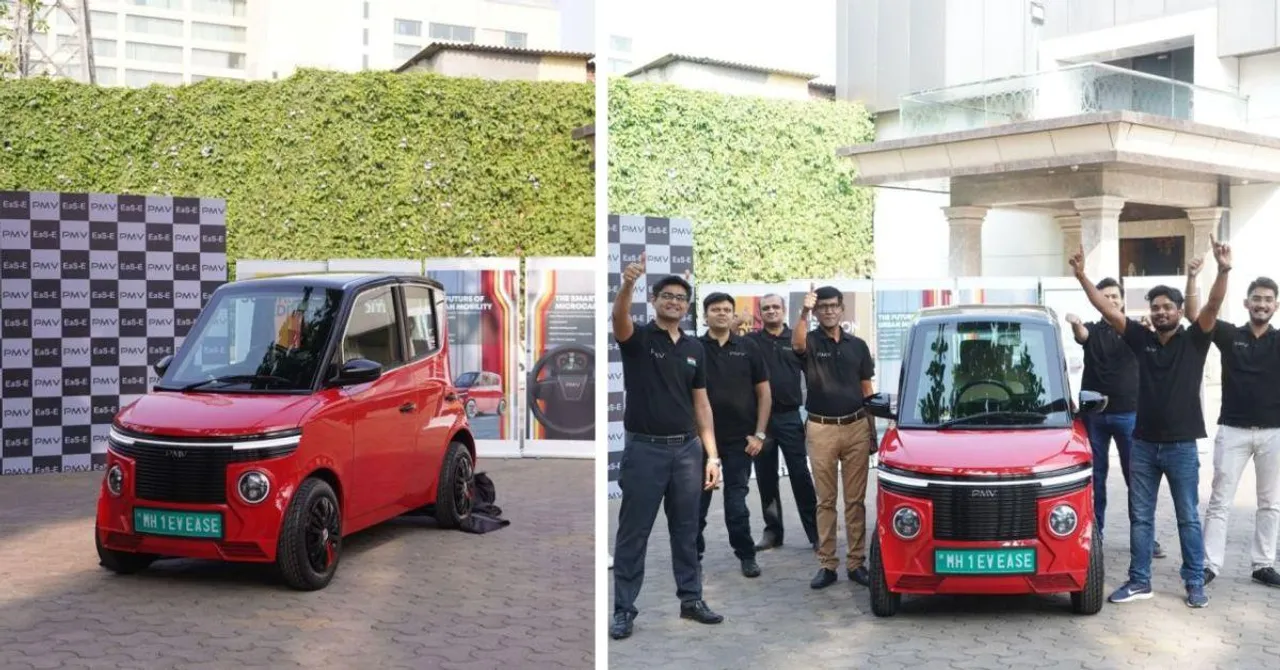
As Indian cities grapple with traffic congestion, rising emissions, and shrinking road space, urban mobility startups are beginning to rethink what a “city car” should look like. One such example is PMV Electric, a Mumbai-based company that has developed India’s first electric microcar, the EaS-E.
Founded by engineer-turned-entrepreneur Kalpit Patel, the startup emerged from a simple observation: most cars occupying city roads during rush hour carry only a single passenger despite being designed for four or five people. The mismatch between vehicle size and actual usage, Patel believed, contributes significantly to congestion, inefficient energy use, and pressure on urban infrastructure.
The Urban Mobility Challenge
Indian cities have witnessed rapid growth in private vehicle ownership over the last decade, particularly larger vehicles such as SUVs. However, road widths, parking infrastructure, and traffic systems have not expanded at the same pace. This has intensified congestion in dense urban centres such as Mumbai, Delhi, Bengaluru, and Pune.
PMV Electric’s approach addresses this challenge through a compact, lightweight electric vehicle specifically designed for intra-city commuting. The EaS-E is a two-seater microcar with a width of just 1,100 mm, allowing it to occupy significantly less road and parking space than conventional cars.
The startup positions the vehicle not merely as an electric car, but as a new category of “personal mobility vehicle” tailored for crowded urban environments.
Technology and Design Innovation
The EaS-E was developed over nearly four years through multiple prototype iterations involving engineers and designers. According to the company, the vehicle combines compact design with digital connectivity and energy efficiency features.
Key technological features include:
- Electric powertrain designed for urban commuting
- Range of approximately 160 km per charge
- Full charging time of under four hours
- Energy consumption of 50–70 Wh/km, lower than conventional electric cars
- Remote diagnostics and connectivity
- Remote park assist and vehicle location features
- Touch-button driving mode designed for ease of navigation in traffic
The company also emphasises domestic manufacturing, stating that the vehicle’s design, engineering, and development were carried out entirely in India.
Implications for Sustainable Urban Development
Micro-mobility solutions such as the EaS-E could play an important role in addressing several urban development concerns simultaneously.
Reduced Road Congestion
Compact vehicles occupy less road space and can improve traffic flow in high-density areas where large private vehicles create bottlenecks. In cities with narrow roads and limited parking infrastructure, smaller vehicles could reduce pressure on urban transport systems.
Lower Energy Consumption
The startup claims that the EaS-E consumes nearly half the electricity used by conventional electric cars. Lower energy demand per vehicle could reduce strain on power infrastructure as EV adoption increases.
Reduced Emissions
While EVs already lower tailpipe emissions, lightweight electric vehicles further improve efficiency by requiring smaller batteries and consuming less power during operation.
Urban Land Use Efficiency
Parking occupies substantial urban land in Indian cities. Smaller vehicles require less parking space, potentially improving land-use efficiency in dense residential and commercial areas.
Market Response and Scalability
The company reports receiving over 7,000 pre-orders from cities including Mumbai, Delhi, Bengaluru, Chennai, and Pune, alongside interest from parts of Europe. The response suggests growing consumer interest in alternatives to conventional private vehicles, particularly among urban commuters seeking cost-efficient and sustainable mobility options.
While large-scale adoption will depend on regulatory support, charging infrastructure, pricing, and consumer acceptance, PMV Electric’s model demonstrates how frontier mobility technologies can be adapted specifically for the constraints of Indian cities rather than replicating automobile trends from Western markets.
Why It Matters
As cities search for climate-resilient and space-efficient transportation solutions, electric microcars represent a potential middle ground between two-wheelers and full-sized cars. PMV Electric’s EaS-E illustrates how urban mobility innovation can emerge from local infrastructure realities and commuter behaviour patterns.
The case highlights a broader shift in urban transportation thinking — from designing bigger vehicles for individual ownership to designing smarter, more efficient mobility systems aligned with the needs of dense cities.
Share Your Story Today, Shape Viksit Bharat Tomorrow
Got an idea, innovation, or experience that's making a difference? Share your story now and ignite India's transformation because your voice can drive the future forward!
Disclaimer:
Features ‘as is’ submissions and neither constitutes endorsement, certification, recommendation, or validation by NITI Aayog nor makes NITI Aayog liable in any manner.
Resources to Replicate This Idea
BUILD YOUR OWN INTERVENTION
Handpicked stories tailored just for you
Explore stories that inspire, inform, and ignite new ideas across tech, innovation, and real-world impact

Pilotless Cargo Flights with Zero Failures: Reimagining Diagnostic Logistics in Indian Cities
An energy-efficient autonomous aircraft combining vertical take-off with fixed-wing cruise has completed over 1,000 flights carrying diagnostic samples between hospitals,...
Read More