Electrifying Wastewater: Chemical-Light Micro-Electrolysis That Cuts Footprint by 90% and Sludge by 70%
This patented technology is transforming industrial wastewater treatment through compact, electrically driven systems that reduce chemical use, sludge generation and treatment costs. With over 5.3 billion litres of water treated and 16,000+ tonnes of toxic sludge reduced, the innovation is advancing water reuse and more sustainable industrial operations.
Updated on: 26 October 2026

Sector

Solution

Technology

State of Origin
Disclaimer:
Features ‘as is’ submissions and neither constitutes endorsement, certification, recommendation, or validation by NITI Aayog nor makes NITI Aayog liable in any manner.
Impact Metrics
5.3 billion+ litres of water treated
Indra's ElectroX technology enables wastewater treatment across industrial applications, reducing freshwater demand and supporting more sustainable water management.
16,000+ tonnes of toxic sludge reduced
By minimising sludge generation, ElectroX helps reduce hazardous waste volumes and the environmental burden associated with conventional wastewater treatment. (Compared with conventional chemical and biological treatment.)
14,000+ tonnes of harmful chemicals reduced
ElectroX reduces dependence on treatment chemicals, helping industries lower chemical consumption and improve the environmental footprint of wastewater treatment. (Compared with conventional chemical and biological treatment.)
3,800+ tonnes of greenhouse gas emissions potentially reduced
Indra estimates that its deployments have helped avoid greenhouse gas emissions, contributing to a lower-carbon approach to wastewater treatment.
Conventional wastewater treatment faces several challenges, including heavy reliance on treatment chemicals, large infrastructure needs, and significant sludge generation. High capital and operational costs also limit the accessibility of advanced wastewater treatment technologies.
Additionally, conventional systems often struggle to consistently treat complex industrial effluents and fluctuating pollutant loads. Inadequate wastewater recycling further contributes to freshwater consumption and environmental pollution.
These challenges are compounded by long installation timelines, complex operational requirements, and limited real-time monitoring capabilities.
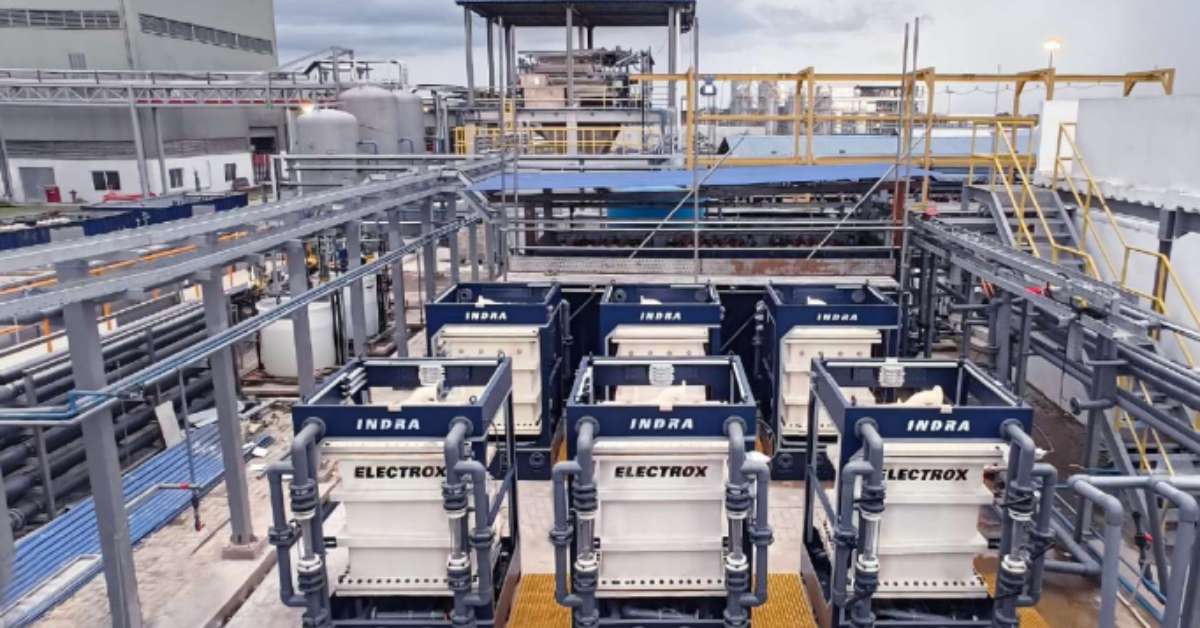
Indra, an Indian deep-tech company, addresses these challenges through its modular systems by making wastewater treatment compact, chemical-light, automated, decentralised, and economically viable, enabling industries to recover and reuse wastewater at the point of generation.
Its patented ElectroX technology uses non-contact micro-electrolysis, combining electrochemical reactions with intelligent process control to remove pollutants directly from wastewater.
The technology integrates electrochemical oxidation, coagulation, pollutant separation, and digital monitoring to deliver efficient and adaptable treatment across diverse wastewater characteristics, supporting sustainable water management and reducing dependence on conventional treatment methods.
An electrically driven, decentralised system
The project, ElectroX, was initiated in 2018. While translating advanced electrochemical principles from laboratory experiments into reliable, industrial-scale treatment systems was the main challenge, care had to be taken to adapt the technology to varying wastewater characteristics, pollutant concentrations, industrial contaminants, and fluctuating hydraulic loads.
The innovation, however, addresses key gaps in the wastewater treatment sector by offering a compact, efficient, and sustainable alternative to conventional treatment systems.
Its key differentiators include up to 90% reduction in treatment footprint compared with conventional systems, up to 70% reduction in sludge generation depending on the application, and elimination of bulk chemical dosing for primary treatment under suitable operating conditions. ElectroX can achieve up to 99% water recovery in appropriately configured treatment systems, enabling greater wastewater reuse and reducing freshwater consumption.
Its modular, plug-and-play design supports retrofits, decentralised installations, and large-scale industrial deployments, while IoT-enabled process intelligence through Indra’s digital monitoring and automation platforms enhances operational efficiency, process control, and real-time monitoring.
Indra’s ElectroX technology has positively impacted an estimated 5,00,000+ lives through sustainable wastewater treatment and water reuse initiatives. To date, the technology has enabled the recycling of over 5.3 billion litres of water, while reducing approximately 16,000+ tonnes of harmful toxic sludge and 14,000+ tonnes of harmful chemicals.
Additionally, deployments have potentially reduced greenhouse gas emissions by approximately 3,800+ tonnes, contributing to an estimated 70% net carbon offset across all deployments.
These outcomes benefit industries, communities, and other stakeholders by promoting water conservation, reducing environmental pollution, and supporting more sustainable resource management.
Measuring on-ground tangible impact
Indra conducted 500 LPH on-site pilot trials of its ElectroX technology at Tata Steel Kalinganagar to treat stormwater and process effluent, addressing challenges such as high operating costs for hardness removal, increased discharge costs due to variable treated water quality, and high chemical consumption for RO cleaning.
Pilot results demonstrated a 93.5% reduction in chemical oxygen demand (COD) alongside a 91.5% reduction in silica (SiO₂) and a 57.1% reduction in total hardness.
Improving treatment economics
Before the introduction of Indra’s ElectroX technology, industries and commercial establishments faced several challenges in wastewater treatment.
Limited access to high-quality recycled water increased dependence on freshwater procurement, and complex plant operations frequently resulted in inconsistent treatment performance, creating challenges in meeting regulatory requirements.
Indra’s ElectroX technology addresses these issues through modular, compact electrochemical reactors that reduce land and civil infrastructure requirements.
Its advanced electrochemical processes minimise chemical dependency and sludge generation, while intelligent process control helps optimise treatment efficiency and lifecycle costs. The technology effectively treats complex organic pollutants, heavy metals, colour, and other contaminants across diverse industrial applications.
By enabling the reuse of treated wastewater for cooling, utilities, flushing, and suitable industrial processes, ElectroX promotes water circularity and reduces freshwater consumption. Furthermore, digital monitoring, remote diagnostics, automation, and predictive maintenance simplify plant operations, improve operational visibility, and enhance treatment reliability.
If scaled, how could this be a boon for India?
Scaling ElectroX would benefit from stronger government and policy support, including stricter wastewater reuse mandates, initiatives promoting decentralised treatment, and incentives for sustainable industrial water management.
The innovation has been selected for the Urban Water Challenge, World Water Week, Stockholm (2019), Global Freshwater Challenge (2022).
Strategic partnerships with Engineering, Procurement, and Construction (EPC) companies, industrial manufacturers, water utilities, and municipal authorities could accelerate technology adoption across diverse sectors.
Continued collaboration with IITs, research institutions, and technology partners would further support research and innovation, improve energy efficiency, and expand the technology’s treatment capabilities. Additionally, improved market access through faster technology validation, demonstration projects, and performance-based procurement frameworks would encourage industries and public-sector organisations to adopt proven innovative solutions, enabling wider deployment of ElectroX and advancing sustainable wastewater management.
Share Your Story Today, Shape Viksit Bharat Tomorrow
Got an idea, innovation, or experience that's making a difference? Share your story now and ignite India's transformation because your voice can drive the future forward!
Disclaimer:
Features ‘as is’ submissions and neither constitutes endorsement, certification, recommendation, or validation by NITI Aayog nor makes NITI Aayog liable in any manner.
Resources to Replicate This Idea
BUILD YOUR OWN INTERVENTION
Handpicked stories tailored just for you
Explore stories that inspire, inform, and ignite new ideas across tech, innovation, and real-world impact

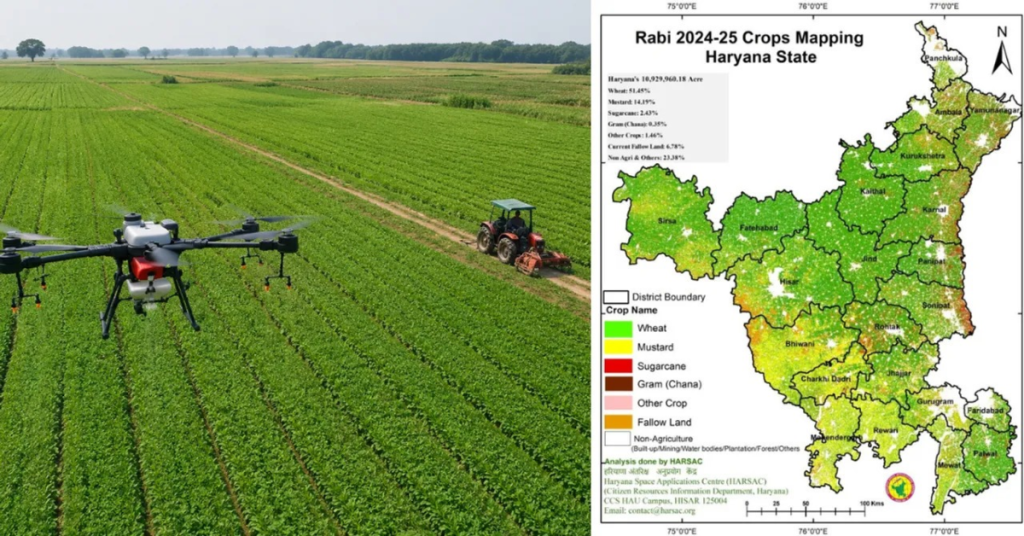
How AI and Satellite Innovation Are Transforming Agriculture for 15 Lakh Farmers Across Haryana
From satellite imagery and AI-powered analytics to drone mapping, frontier technologies are transforming how India monitors crop health, predicts yields...
Read More