Inside the Copper Nanotechnology Powering 99.99% Antimicrobial Activity
An IIT Delhi innovation is harnessing active copper nanotechnology to deliver 99.99% antimicrobial activity across medical materials, reducing India’s reliance on imported antimicrobial technologies. With applications spanning hospital surfaces, PPE, implants, and wound care, the technology could strengthen infection prevention and improve healthcare outcomes at scale.
Updated on: 27 June 2026

Sector

Solution

Technology

State of Origin
Disclaimer:
Impact Metrics
99.99% antimicrobial activity
against bacteria, viruses, fungi, and algae, delivering broad-spectrum protection under international testing standards.
4 categories of microbes
eliminated through a single copper-based technology.
90% import dependence addressed
by replacing imported antimicrobial textile technologies with a homegrown, patented copper nanotechnology developed in India.
Made-in-India material innovation
strengthening India's self-reliance in advanced antimicrobial technologies while creating opportunities for future global exports.
Copper is versatile as an antimicrobial. While the United States Environmental Protection Agency (US EPA) officially declared this in 2008 — the report stated that copper and its alloys can eliminate approximately 99.9 percent of bacteria within two hours — the use of copper as an antimicrobial dates back to 3000 BC.
To understand copper’s antimicrobial applications and what leaning into it would mean for the healthcare industry at large, we assess the current uses of copper and its strong contact-killing abilities.
Studies have shown that copper surfaces can significantly lower healthcare-associated infections (HAIs), which is why copper coatings are increasingly applied to frequently touched surfaces such as door handles, bed rails, trays, intravenous (IV) poles, and bathroom fixtures, especially in hospital environments.
Owing to its low toxicity in living tissues, copper is also used in wound dressings to prevent infections and promote healing, as well as in antimicrobial coatings for medical implants.
When juxtaposed against India’s imports of antimicrobial textiles — 90 percent, according to a report by ICAR – Central Institute for Research on Cotton Technology — an innovation by an IIT Delhi scientist seems to be a ray of hope for the healthcare industry.
The disinfectant and the nanotechnology behind it
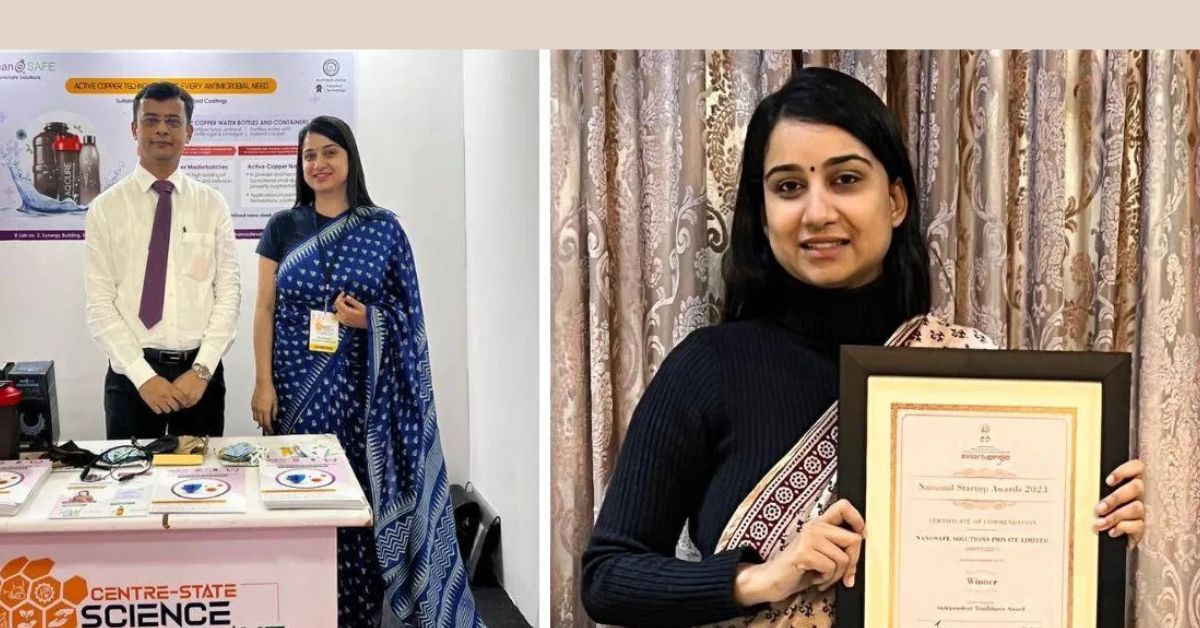
Anasuya Roy’s innovation of an antimicrobial technology under her company, Nanosafe Solutions, is advancing India’s self-reliance in advanced materials.
While pursuing her PhD in polymer nanotechnology at IIT Delhi, Anasuya recognised that India depended heavily on imported antimicrobial technologies despite having strong scientific expertise. The innovation, a patented active copper-based antimicrobial technology, was a breakthrough during the COVID-19 pandemic, when it was used in the ‘NSafe face masks’ manufactured in India, helping address shortages while reducing reliance on imports.
Building on this success, Nanosafe expanded its technology across industries, including plastics, polymers, textiles, paints, coatings, foams, leather, construction materials, and automotive components.
The patented technology converts copper into active micro-sized particles that can be incorporated into various products to eliminate bacteria, viruses, fungi, and algae. Unlike many existing antimicrobial solutions that target only one type of microbe or rely on silver, Nanosafe’s copper-based technology is safe, sustainable, and effective against four categories of microbes: bacteria, virus, fungi and algae, consistently demonstrating 99.99 percent antimicrobial activity under international testing standards.
Nanosafe aims to strengthen India’s material science ecosystem by promoting import substitution while developing globally competitive technologies for future export.
Understanding the science to widen the scale and scope of research
Copper is a highly effective antimicrobial agent because it disrupts essential cellular processes and exhibits cytotoxic effects against microorganisms.
Its primary mechanisms include generating reactive oxygen species (ROS), which cause oxidative damage, and displacing or binding to the natural metal cofactors required by microbial proteins, thereby impairing vital cellular functions.
According to research, copper-containing nanoparticles inhibit microorganisms through these same mechanisms but often demonstrate superior antimicrobial performance compared to conventional copper materials. Their enhanced effectiveness is largely attributed to their high surface area, unique crystal structure, and faster dissolution rate, which enables the release of greater amounts of copper ions. Because they attack microbes through several mechanisms at once, the likelihood of microorganisms developing resistance is considerably reduced.
When incorporated into materials such as medical or dental products, copper nanoparticles primarily exert their antimicrobial effects through the release of copper ions. They eliminate microbes by producing reactive oxygen species, disrupting cell walls and membranes, and interacting with proteins and DNA, ultimately damaging multiple cellular structures and leading to microbial death.
What would this mean for India’s healthcare sector?
Healthcare-associated infections (HAIs) remain a major challenge worldwide, spreading through frequently touched surfaces, contaminated medical equipment, and hospital textiles. Copper-based antimicrobial technology has the potential to transform healthcare by preventing infections before they occur rather than relying solely on treatment after infection.
Integrating antimicrobial copper into these high-contact surfaces can continuously eliminate bacteria, viruses, fungi, and algae, reducing the risk of disease transmission in hospitals, clinics, and diagnostic centres.
Unlike conventional disinfectants that require repeated manual application, copper-based antimicrobial coatings provide continuous protection, lowering maintenance efforts while improving hygiene standards. The technology can be incorporated into hospital beds, door handles, surgical equipment, wound dressings, personal protective equipment (PPE), medical implants, and reusable textiles, creating safer healthcare environments for both patients and healthcare workers.
Its broad-spectrum antimicrobial activity is particularly significant in combating antimicrobial resistance, one of the world’s fastest-growing public health threats. By destroying microorganisms through multiple mechanisms, including reactive oxygen species generation, membrane disruption, and DNA damage, the technology reduces the likelihood of microbes developing resistance.
Beyond hospitals, copper-based antimicrobial materials can improve hygiene in ambulances, pharmacies, public transport, schools, and community healthcare facilities.
As a safe, durable, and scalable solution, this innovation could strengthen infection prevention, reduce healthcare costs, improve patient outcomes, and enhance public health resilience, particularly in resource-constrained settings where preventing infections is often more cost-effective than treating them.
Sources:

Share Your Story Today, Shape Viksit Bharat Tomorrow
Got an idea, innovation, or experience that's making a difference? Share your story now and ignite India's transformation because your voice can drive the future forward!
Disclaimer:
Resources to Replicate This Idea
BUILD YOUR OWN INTERVENTION
Handpicked stories tailored just for you
Explore stories that inspire, inform, and ignite new ideas across tech, innovation, and real-world impact

How AI Diagnostics Are Reaching India’s Frontline Health Workers
AffEx equips rural health workers with an AI-powered point-of-care screening kit — testing hemoglobin, blood pressure, ECG, and cardiac and...
Read More