
Low-Cost Indigenous Sensors + AI Deliver Real-Time Landslide Alerts Across Himalayan Slopes
An IIT Mandi team led by Prof. Kala Venkata Uday has developed a low-cost AI-based early warning system that predicts landslides up to three hours in advance with over 90% accuracy. Deployed across 60+ high-risk sites in Himachal Pradesh, the indigenous sensor network provides real-time alerts to residents and authorities, strengthening disaster preparedness in vulnerable mountain regions.
Updated on: 11 December 2025

Sector

Solution

Technology

State of Origin
Impact Metrics
Predicts landslides
up to three hours in advance.
Over 90% accuracy
in forecasting slope failure.
Installed at 60+ sites
across Himachal Pradesh.
Provides real-time siren
blinker, and SMS alerts to communities and authorities.
An indigenous artificial intelligence–based landslide early warning system developed by Professor Kala Venkata Uday at the Indian Institute of Technology (IIT) Mandi is enabling advance alerts of up to three hours before slope failure in vulnerable Himalayan regions. Conceived to address the growing frequency of rainfall-induced landslides in Himachal Pradesh and Uttarakhand, the system combines low-cost sensors, machine learning algorithms, and real-time communication protocols to provide reliable community-level warnings in some of India’s most hazard-prone terrain.
Technology overview and motivation
India records one of the world’s highest burdens of landslides, with nearly 12% of the national landmass classified as highly susceptible. Increasingly erratic monsoons, deforestation, and unregulated construction have intensified slope instability across the Himalayan belt. Traditional monitoring systems are often imported, expensive, and difficult to maintain, limiting large-scale deployment.
To address this gap, Professor Uday and his team designed an affordable and locally manufactured system capable of detecting micro-level changes in slope behaviour. The device integrates a network of sensors measuring soil moisture, rainfall, humidity, temperature, and ground displacement. These inputs feed into a machine learning model trained to assess evolving landslide risk with more than 90% accuracy. The objective was to convert complex geotechnical data into clear, actionable warnings that communities could trust and respond to quickly.
Implementation across Himachal Pradesh

The system has been installed at more than 60 sites across Himachal Pradesh, with locations selected on the basis of historical slide frequency, local vulnerability, and administrative priority. Each site houses a ruggedised sensor unit designed to withstand harsh weather and operate with minimal maintenance. The sensors detect even millimetre-level shifts in slope movement and transmit data in real time to the local processing unit.
When threshold conditions are met and risk levels rise, the system activates multiple alert channels simultaneously. These include blinking lights and sirens at the site, SMS notifications to residents and local authorities, and alerts linked to the district-level disaster management network. This multi-layered communication approach ensures that warnings are hyperlocal, timely, and intelligible even during communication disruptions common in heavy monsoon periods.
Low-cost design and community integration
A key differentiator of this innovation is its accessibility. The entire system is built using locally sourced components at a fraction of the cost of imported technologies. This reduces financial barriers and allows for distributed deployment across many high-risk points, rather than isolated pilots. More importantly, the IIT Mandi team has placed strong emphasis on community engagement. Training sessions, awareness meetings, and joint monitoring with local residents have built trust in the warning mechanism. This approach helps prevent device vandalism, improves maintenance, and strengthens the community’s readiness to respond to early alerts.
For his contribution to disaster risk reduction, Professor Uday received the Disaster Preparedness Award at the WCDM-DRR Awards 2024. With over 15 years of research experience in biogeotechnics, landslide monitoring, and nature-based mitigation, he has helped position IIT Mandi as a national leader in slope stability research. His vision is to create a scalable, cost-effective framework that can be replicated across all vulnerable mountain belts in India.
Strengthening India’s disaster management ecosystem
The deployment of this AI-enabled early warning system is already delivering significant preparedness benefits in Himachal Pradesh. By providing up to three hours of advance notice, families, commuters, and local administrations gain critical lead time to evacuate, halt traffic, and initiate rapid response protocols. The system’s high accuracy and real-time alerts allow district authorities to take targeted, site-specific action rather than relying solely on broad weather advisories.
A scalable solution of this kind can meaningfully strengthen India’s disaster management architecture. Integrating AI-based micro-terrain monitoring with district-level Emergency Operation Centres can support dynamic risk mapping, anticipatory evacuation strategies, and climate-responsive planning in fragile mountain ecosystems. Low-cost indigenous systems also enhance self-reliance, reduce dependence on imported technologies, and enable mass deployment across thousands of vulnerable slopes. When coupled with community-led awareness and robust institutional coordination, such early warning frameworks can save lives, reduce economic losses, and build long-term resilience against the accelerating impacts of extreme weather in India’s mountainous regions.
Share Your Story Today, Shape Viksit Bharat Tomorrow
Got an idea, innovation, or experience that's making a difference? Share your story now and ignite India's transformation because your voice can drive the future forward!
Resources to Replicate This Idea

BUILD YOUR OWN
Do you want to know how this innovator scaled their idea, how much it cost them, and what resources/partnerships they deployed?
Click here.
Handpicked stories tailored just for you
Explore stories that inspire, inform, and ignite new ideas across tech, innovation, and real-world impact

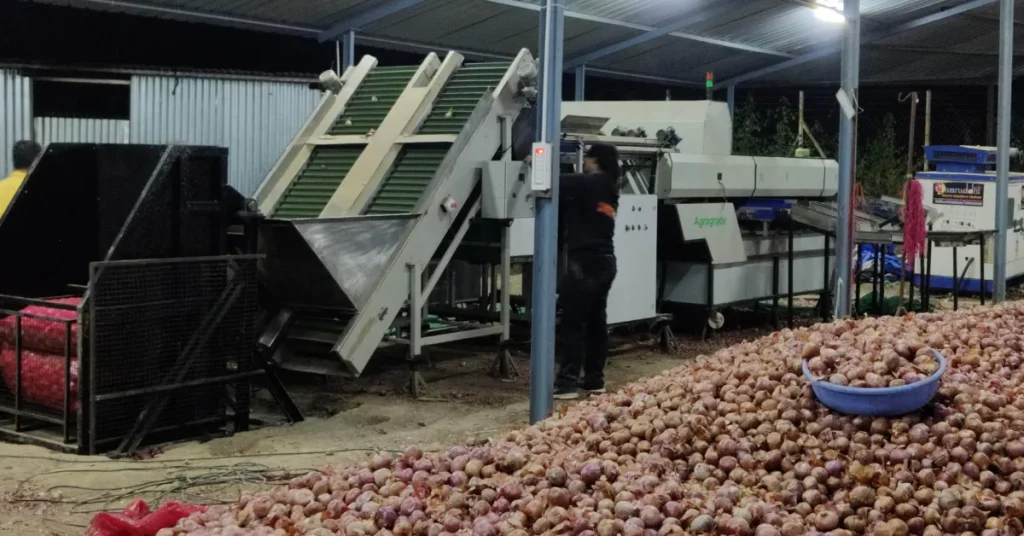
How AI is Cutting Post-Harvest Losses and Strengthen Agricultural Markets Across India
Agrograde uses artificial intelligence to address post-harvest quality assessment gaps in India’s agricultural markets. It deploys AI-based apps and sorting...
Read More