(Part II) AI for Urban Vigilance: Enforcement and Safety in the Age of Smart Governance
AI-powered traffic control systems are helping Indian cities anticipate congestion, streamline emergency access, and build responsive transport infrastructure. With adaptive traffic lights, flow prediction models, and smart routing systems, cities are deploying AI not just to manage movement—but to enhance mobility as a function of public safety and resilience.
Updated on: 16 July 2025

Sector

Solution

Technology

State of Origin
Impact Metrics
30% improvement
in peak-hour vehicle throughput.
10-25% reduction
in congestion and delays.
Enhanced emergency response times
and commuter safety across cities.
Predict and Prevent: AI for Traffic Flow, Congestion Intelligence, and Emergency Mobility
Artificial intelligence is reshaping how cities see, respond, and protect. Across India, urban governance is evolving from reactive enforcement to proactive vigilance, using AI-driven systems to monitor streets, regulate mobility, and safeguard citizens. This two-part series—AI for Urban Vigilance: Enforcement and Safety in the Age of Smart Governance—explores how cities are embedding intelligence into their very infrastructure.
Part I focuses on AI as an enforcer on the streets—detecting violations, tracing suspect vehicles, and creating a new civic security architecture through smart surveillance. Part II analyzes AI as a predictor and optimizer, using real-time analytics to ease congestion, enable emergency mobility, and make urban movement safer and more resilient.
Together, these case studies reveal a future where cities are not just managed—they are sensed, analyzed, and secured in real time.
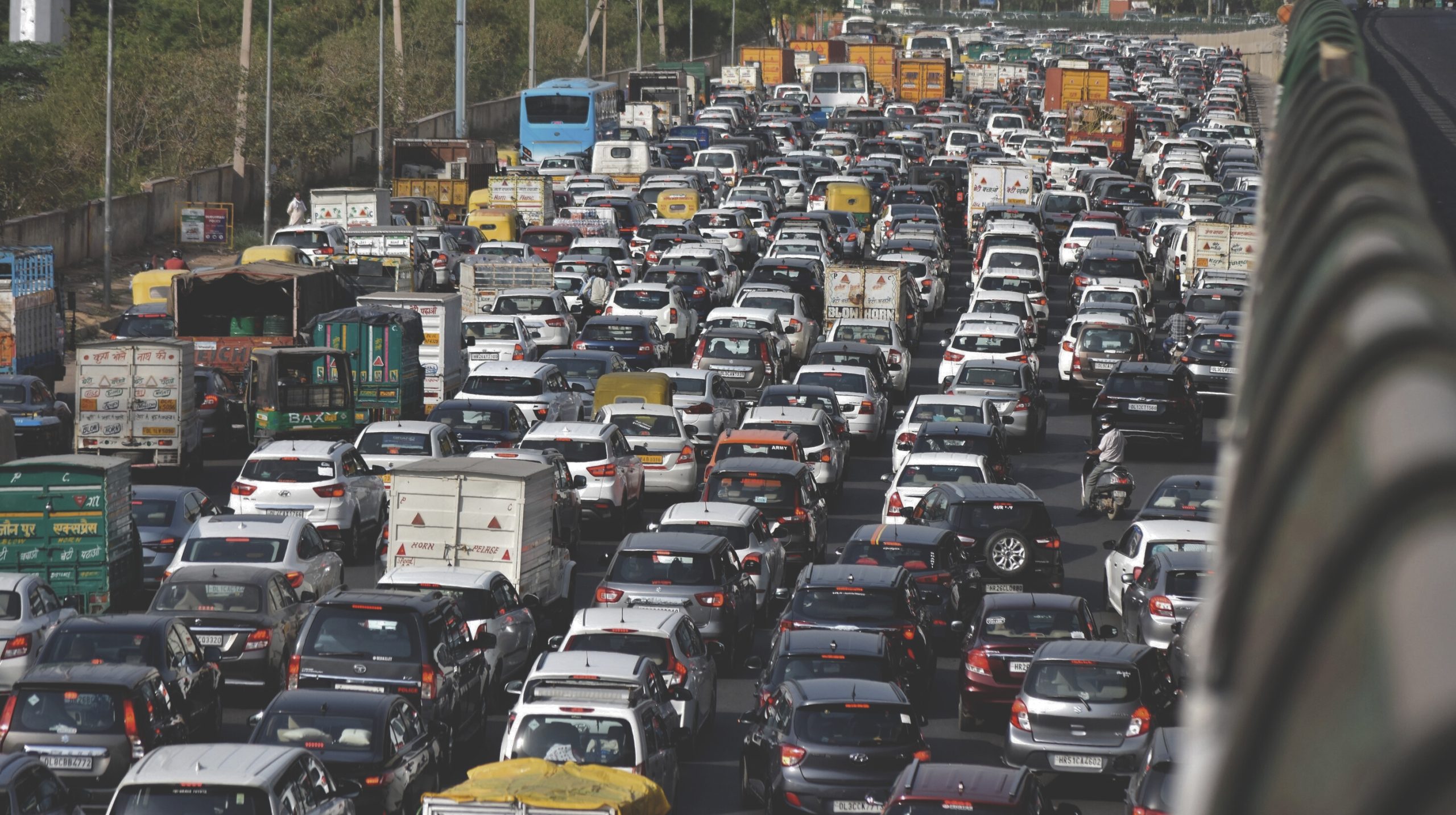
Urban India has long battled traffic congestion, unpredictable vehicle surges, and delays in emergency response. Traditional traffic signal systems—timed or manual—are ill-equipped to adapt to real-time movement patterns. In response, cities are now installing AI-enabled Adaptive Traffic Control Systems (ATCS) and predictive analytics platforms that transform how mobility is managed and safety is delivered.
The shift is quiet but profound: from pre-set timing loops to intelligent systems that read, analyze, and respond to traffic in real time. These platforms don’t just move vehicles—they free up ambulances, reduce gridlock, and minimize human intervention, creating a new layer of urban responsiveness.
Urban Mobility as a Safety Imperative
In the wake of rising urban population densities, climate-linked flooding events, and national security considerations, traffic management has evolved from a logistics challenge to a civil safety function. AI helps cities:
- Clear critical corridors faster
- Prevent pileups during major events
- Enable faster response times for law enforcement and health services
Cities like Agartala, Surat, Tumakuru, Visakhapatnam, Prayagraj, Varanasi, and Ranchi are leading this transition.
- Agartala deployed AI-based adaptive signals across 22 junctions, reducing peak-hour wait times and enabling faster lane clearance for VIP and emergency movement.
- Visakhapatnam installed a real-time ATCS that adjusts based on vehicular volume and integrates with its city transport analytics dashboard.
- Surat enhanced BRTS and city bus systems through AI-powered ridership prediction and route-level optimization—cutting delays and improving commuter safety.
- Tumakuru linked AI video analytics with adaptive traffic signals and ANPR under its Integrated Traffic Management System (ITMS).
- Prayagraj used AI to identify choke points and propose real-time diversions, especially during high-footfall events.
- Varanasi incorporated traffic flow prediction models to optimize lane allocation and reduce accidents near high-risk intersections.
- Ranchi, already operating RLVD and ANPR, now adds adaptive signalization that responds to congestion density data.
These efforts contribute directly to India’s National Urban Digital Mission, Mobility as a Service (MaaS) agenda, and Viksit Bharat @2047 goals for inclusive and safe urban development.
What the Data Shows
The results from these AI deployments are concrete:
- Agartala saw a 30% improvement in average vehicle throughput during peak hours.
- Surat’s BRTS system recorded 10% higher punctuality, and a 12% reduction in commuter complaints.
- Tumakuru reported 25% fewer congestion incidents at ITMS-enabled intersections.
- Visakhapatnam’s ATCS has allowed real-time signal adjustments at 65+ intersections, reducing idle time and fuel consumption.
- Ranchi documented a 15% drop in inter-junction response delays for emergency vehicle corridors.
In every city, AI isn’t just managing movement—it’s making mobility predictive, responsive, and citizen-centric.
From Movement Optimization to Disaster Readiness

These systems are designed to scale—across metros, tier-2 cities, and even hilly or coastal towns. Their AI cores can be trained on local patterns, and their physical infrastructure (smart poles, signal controllers) can integrate with:
- Emergency alert systems
- Flood or disaster evacuation planning
- Smart public transit coordination
- Surveillance feeds for real-time risk mapping
Their relevance extends to climate resilience, mass gathering management, and critical infrastructure access.
Rewriting the Rules of Urban Readiness
Where traffic once stood as a symbol of dysfunction, it now has the potential to represent foresight. These AI systems make cities more livable, secure, and organized, especially during unplanned surges or crisis events. They enable governance not just at the street level—but at the systems level.
By predicting before reacting, and adapting before gridlock sets in, these technologies are building cities that move with intelligence, and serve with foresight.
Share Your Story Today, Shape Viksit Bharat Tomorrow
Got an idea, innovation, or experience that's making a difference? Share your story now and ignite India's transformation because your voice can drive the future forward!
BUILD YOUR OWN

BUILD YOUR OWN
How can I implement this innovation effectively?
How is this innovation being adopted around the world?
Where else could this innovation make an impact?
Who has seen real results from using this innovation?
What insights do experts share about this innovation?
What policies support or influence this innovation?
How could this innovation evolve in the future?
Is this innovation accessible and inclusive for everyone?
How can I contribute to or participate in this innovation?
What resources can help me explore this innovation further?
If you would like to know more about this innovation, fill this form to contact the innovator.
Handpicked stories tailored just for you
Explore stories that inspire, inform, and ignite new ideas across tech, innovation, and real-world impact

Indigenous Wearable Tech Saves Thousands of High-Risk Newborns in India
NemoCare, founded by Manoj Sanker and Pratyusha Pareddy, is strengthening neonatal care in India through Raksha, a wearable monitoring device....
Read More