AI’s Expanding Footprint in Indian Healthcare: Beyond Ophthalmology
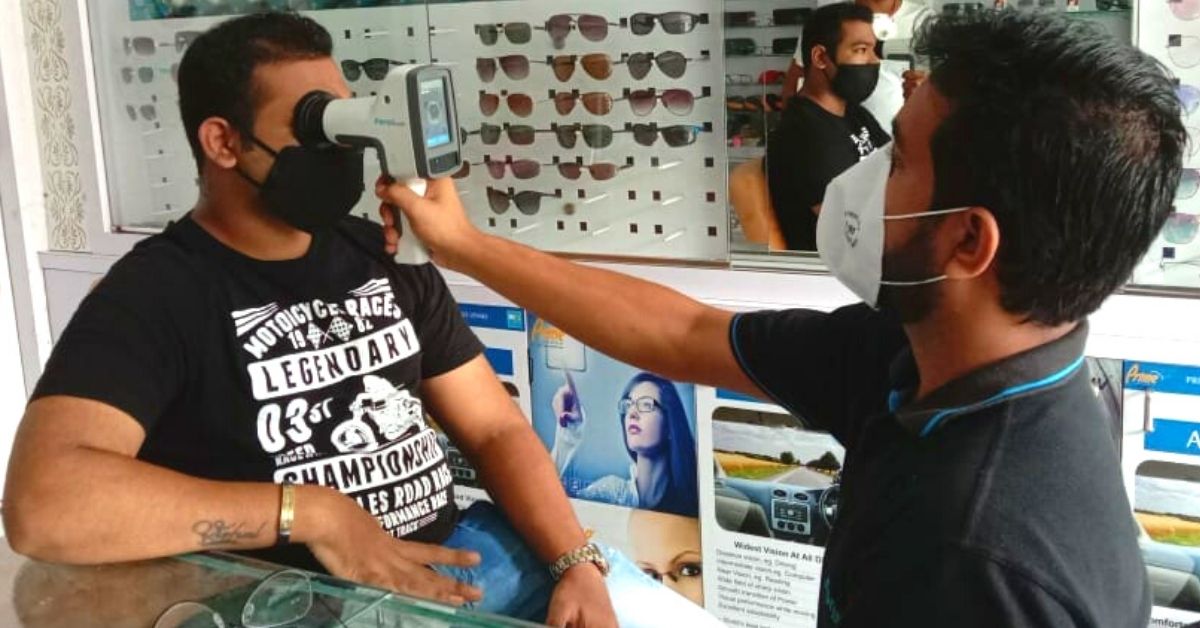
The groundbreaking success of AI-powered ophthalmic diagnostics such as 3Nethra has set a precedent for the integration of artificial intelligence across diverse healthcare domains in India. By demonstrating that affordable, portable, and user-friendly AI tools can bridge critical gaps in early detection and screening, particularly in resource-constrained settings, innovators and policymakers are now actively exploring analogous applications in other areas of public health. This momentum is reshaping India’s approach to disease surveillance, diagnostics, and care delivery, with ripple effects visible in tuberculosis control, cancer screening, and beyond.
AI-Driven Tuberculosis Screening: Transforming Public Health Surveillance
Tuberculosis (TB) remains one of India’s most pressing health challenges, with over 2.5 million cases reported annually. Recognizing the limitations of manual radiograph interpretation and the shortage of trained radiologists, the National TB Elimination Program (NTEP) has piloted AI-enabled chest X-ray analysis tools to support frontline health workers. These AI systems rapidly analyze digital X-rays, flagging presumptive TB cases for further evaluation and referral.
A notable example is the implementation of Qure.ai’s qXR platform in Mumbai’s municipal hospitals, where AI-assisted screening has improved case detection rates and reduced diagnostic delays. According to a 2022 NTEP report, pilot sites using AI tools achieved a 30% increase in early TB case identification compared to traditional workflows. This mirrors the task-shifting and decentralization model pioneered in ophthalmology, empowering community health workers to perform preliminary assessments and optimize referral pathways.
AI in Cancer Screening: Innovations for Early Detection
AI’s role in cancer screening is rapidly expanding, with Indian institutions and startups leveraging image-based algorithms to tackle diseases with high morbidity and mortality. The Tata Memorial Centre in Mumbai has developed AI-powered tools for oral cancer screening, particularly targeting rural Maharashtra, where oral cancer incidence is among the highest globally due to tobacco use. Community health workers, equipped with smartphone cameras and AI software, can now capture oral cavity images and receive instant risk assessments, enabling early intervention.
Similarly, Niramai, a Bengaluru-based startup, has pioneered a thermal imaging-based AI solution for breast cancer screening. Unlike conventional mammography, Niramai’s approach is non-invasive, radiation-free, and suitable for mass screening in low-resource settings. Their technology has been deployed in over 70 centers across India, including partnerships with state governments for public health camps.
These innovations align with the ethos of affordable and accessible diagnostics, as championed by Forus Health’s 3Nethra.
Academia-Industry Collaboration: Accelerating AI Research in Diagnostics
The synergy between academic institutions and industry partners is a driving force behind India’s AI healthcare revolution. The Indian Institute of Technology (IIT) Delhi, in collaboration with AIIMS New Delhi, has developed machine learning models for predicting cardiovascular risk using electronic health records and imaging data. These models are being piloted in tertiary care hospitals to assist clinicians in early risk stratification and personalized management.
Another example is the partnership between Forus Health and BITS Pilani, which has yielded AI algorithms for diabetic retinopathy detection now integrated into 3Nethra devices. Such collaborations are supported by government funding under the IndiaAI Mission, which prioritizes translational research and indigenous innovation.
Policy Support and National Missions: Enabling Scalable AI Adoption
Government initiatives play a pivotal role in scaling AI applications across healthcare. The IndiaAI Mission, with a budget exceeding Rs 10,000 crore, is building the digital and physical infrastructure necessary for AI innovation, including compute capacity, data platforms, and skilling programs. One of its pillars focuses on expanding AI education in Tier 2 and 3 cities, fostering a broader talent pipeline for healthcare AI development.
At the state level, health departments have begun integrating AI devices into public health programs. For example, the National Programme for Control of Blindness and Visual Impairment (NPCBVI) now funds the deployment of AI-based screening devices like 3Nethra in government hospitals and rural camps. These efforts are complemented by draft guidelines from the Ministry of Electronics and Information Technology (MeitY) on AI governance, which address transparency, bias, and data security.
Expert Perspectives: Indian Voices on AI’s Broader Impact
Indian experts emphasize the replicability and scalability of AI diagnostic models beyond ophthalmology. Dr. Shyam Vasudeva Rao, co-developer of 3Nethra, notes, “The principles of affordability, portability, and ease of use are universal. We are now seeing similar AI tools empower community health workers in TB and cancer screening, bringing quality diagnostics closer to the last mile.”
The Indian Institute of Public Health (IIPH) highlights that “task-shifting enabled by AI is critical for India’s vast rural landscape, but must be accompanied by robust training and certification to maintain quality.” Meanwhile, policy analysts at the Centre for Responsible AI (CeRAI) stress the importance of ethical deployment, calling for “transparent algorithms, data privacy safeguards, and continuous monitoring to ensure equitable access.”
These perspectives underscore that India’s AI healthcare journey is as much about technological innovation as it is about inclusive policy, capacity building, and ethical stewardship.
—
Collectively, these related applications illustrate how AI-powered diagnostics, first proven in ophthalmology, are catalyzing a broader transformation in Indian healthcare—anchored in affordability, accessibility, and responsible innovation.