Preventing Vascular Complications with AI: Bangalore Startup Transforms Circulation Screening
India faces a growing burden of diabetes and cardiovascular disease, yet vascular damage often goes undetected until severe complications arise. Aarca Research’s Peripheral Vascular Health (PVH) Program uses sensor-based screening and AI to identify early vascular dysfunction through a structured, non-invasive protocol, helping enable earlier intervention and expanding access to preventive vascular care beyond hospitals.
Updated on: 13 March 2026

Sector

Solution

Technology

State of Origin
Impact Metrics
5,000+ screened
through structured vascular risk assessments across Bengaluru and Hyderabad.
Single-session physiological screening
reducing the time required for preliminary vascular insights compared to fragmented multi-test hospital diagnostics.
100+ million people
living with diabetes in India can be potentially monitored for early risk.
The body does not fail without warning — long before strokes, heart attacks, and diabetic amputations occur, our biological systems begin sending out signals. But by the time vascular diseases become clinically obvious, the damage has already been unfolding for years.
Meanwhile, India carries one of the world’s highest burdens of diabetes, hypertension, and premature cardiovascular disease. But screening pathways remain symptom-driven and episodic, despite the fact that vascular dysfunction remains the physiological precursor to stroke, amputation, kidney disease, and cardiac events.
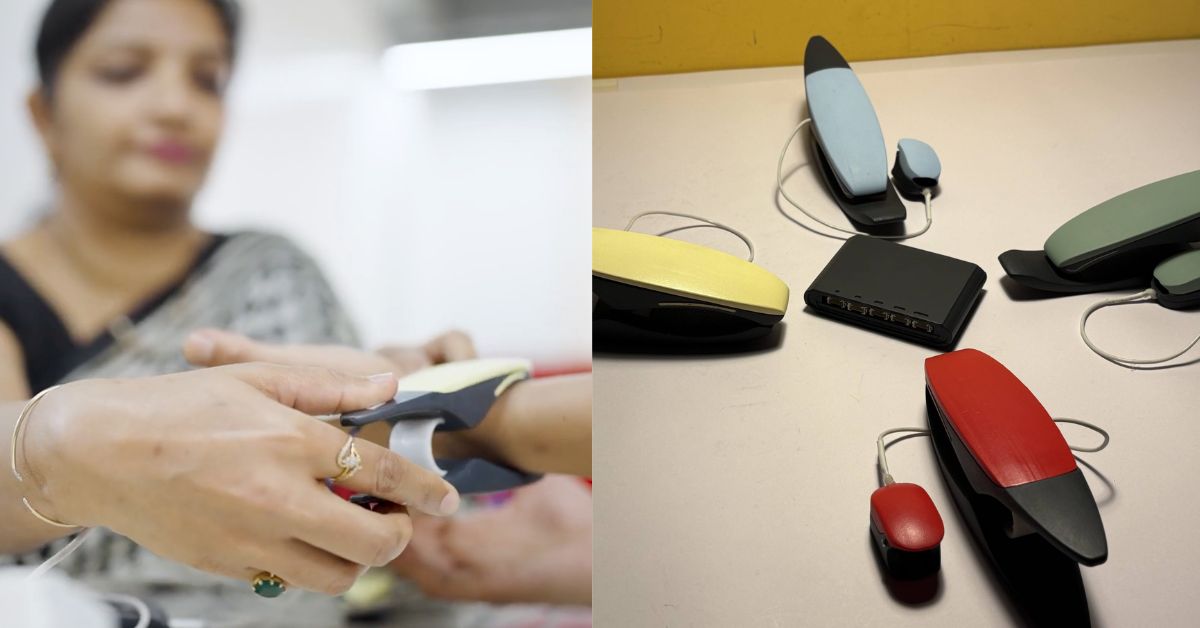
This is the complex challenge that Gayathri Choda, founder of Aarca Research India Pvt Ltd, has set out to solve. Founded in Karnataka, Aarca has developed the Peripheral Vascular Health (PVH) Program, an innovation that leverages sensor fusion and artificial intelligence to enable standardized, non-invasive, and decentralized early vascular screening. It’s a well-rounded approach to diagnostics, assistive health, biotechnology, and public health.
Fragmented and hospital-centric vascular diagnostics

Current vascular screening tools such as Doppler ultrasound, ankle-brachial index measurement, and nerve conduction studies are device-specific, operator-dependent, and fragmented across specialties. These tools are also typically confined to tertiary hospitals and are not designed for population-scale deployment in pharmacies, primary care clinics, outreach programs, or semi-urban and rural settings.
Moreover, early vascular dysfunction involves a multitude of systems — arterial stiffness, microcirculatory changes, autonomic imbalance, and neuropathic decline. Existing screening approaches evaluate these domains in isolation, which increases the likelihood of missed early warning signals.
What we also need, however, is a standardized, scalable physiological screening protocol, without which longitudinal vascular monitoring is impractical in decentralized environments.
So by the time clinicians encounter patients, complications have progressed; non-healing wounds, tissue necrosis, limb-threatening ischemia, or advanced cardiovascular events. For patients, early vascular decline remains largely invisible, as routine blood tests rarely capture functional vascular deterioration.
A simple 12-step health check to spot risk early
That’s where PVH comes in. It’s a structured 12-step screening process that checks how well your blood vessels and circulation are functioning, without any invasive tests.
Instead of looking at just one number (like blood pressure or cholesterol), this program studies multiple body signals together. It uses smart technology to detect small changes in how your body is working, often before any visible disease or damage shows up on scans.
The system looks at:
- How blood flows through your arteries (using waveform analysis powered by NerveVue)
- Temperature differences in different parts of the body
- Basic nerve-related indicators
- How well your blood vessels respond and function
Using sensors and AI, the platform reads patterns from signals like your pulse and blood flow in your hands and feet. This helps identify early warning signs of vascular problems, long before permanent damage happens.
Importantly, the entire process is built into a simple, step-by-step workflow.
This means it can be used reliably even outside big hospitals; in pharmacies, diagnostic labs, community clinics, or telehealth centres, Gayathri highlights. The system reduces human error and ensures consistent results, making advanced vascular screening accessible in everyday healthcare settings.
Overcoming real-world challenges across medicine and technology
Building something as comprehensive as the PVH framework requires coordinated problem-solving across technical, clinical, and operational domains. Integrating diverse physiological signals — such as pulse wave patterns, temperature differentials, and neurological indicators — into a single, standardized workflow means that a sustained engineering refinement is required, one that ensures accuracy, reliability, and minimal operator dependency.
Gayathri notes that clinical validation also presents a challenge. When the framework focuses on early functional changes rather than visible structural damage, existing benchmarks for imaging become insufficient. Aarca’s team worked closely with doctors to identify meaningful health indicators, ensure the results matched established medical understanding, and make sure the findings could be easily used in patient care decisions.
The team has also built the system in a way that combines clinical accuracy with ease of use in real-world settings. Training modules, simple step-by-step workflows, and built-in quality checks help ensure reliable results even in decentralized locations such as pharmacies, diagnostic centres, and community clinics.
As the program expands, notes Gayathri, key priorities include meeting regulatory requirements, integrating with electronic health record systems, managing long-term patient data, and keeping the technology affordable so it can be widely used in public health programs.
Scale, reach, and measurable impact

The PVH Program is currently deployed across Bengaluru and Hyderabad through diagnostic and clinical partnerships, with Mumbai planned for launch within the year. Over the next 12 to 18 months, Aarcha plans to expand across major metro cities and Tier 1 urban centers via diagnostic network integrations and decentralized screening partnerships.
So far, around 5,000 people have undergone vascular risk screening through the program. In the near term, Aarca expects this number to grow to about 20,000–40,000 screenings each year through clinics, pharmacies, and telehealth networks. Over time, wider adoption of such decentralized screening could help identify vascular risks earlier for many at-risk individuals across India — especially among the country’s 100+ million people living with diabetes and a similar number managing hypertension.
The program has ensured:
- Early identification of vascular risk indicators before symptom onset
- Reduced time to preliminary vascular insights from weeks to a single screening session
- Improved triaging of high-risk individuals
- Standardized assessments that reduce operator variability
- Reduced dependency on hospital-based diagnostics
From a healthcare systems perspective, earlier detection can help prevent severe complications such as amputations, strokes, and major cardiovascular events — conditions that often lead to costly treatment, long recovery periods, and lasting disability. By identifying vascular risk sooner, the program allows patients to be referred earlier and managed before complications escalate. Over time, this shifts vascular care away from emergency intervention and toward more preventive, long-term monitoring.
Social and economic relevance
Beyond clinical outcomes, the PVH Program also carries broader social implications. Detecting vascular dysfunction early can help prevent avoidable amputations, preserve mobility, and reduce long-term disability, particularly among working-age individuals. In many cases, these complications lead not only to prolonged medical treatment but also to lost income, reduced productivity, and long-term dependence on care.
For individuals, the impact is often immediate. Several beneficiaries report discovering vascular risk despite having normal routine lab results, prompting earlier consultations and more proactive disease management. For people living with diabetes in particular, the program offers a more complete picture of vascular health — extending monitoring beyond glucose levels alone.
At a population level, standardized screening protocols can also generate structured physiological datasets. Over time, such datasets could support more informed approaches to non-communicable disease prevention and vascular health management.
Looking ahead
As India places greater emphasis on preventive healthcare and digital health integration, models like PVH offer a way to bring vascular screening closer to everyday healthcare settings. Because the protocol is non-invasive and structured, it can be deployed through primary care networks, diagnostic centers, and telehealth platforms — extending early detection beyond tertiary hospitals.
The innovation has already received national recognition, including the Pfizer INDovation Award 2024 and OPPI Healthcare Startup of the Year 2025, reflecting its growing credibility within India’s healthcare innovation ecosystem.
As decentralized screening models expand, initiatives like PVH could play an important role in shifting vascular care toward earlier detection and preventive management — helping identify risks long before they become life-altering complications.
Share Your Story Today, Shape Viksit Bharat Tomorrow
Got an idea, innovation, or experience that's making a difference? Share your story now and ignite India's transformation because your voice can drive the future forward!
Handpicked stories tailored just for you
Explore stories that inspire, inform, and ignite new ideas across tech, innovation, and real-world impact

How AI is Cutting Post-Harvest Losses and Strengthen Agricultural Markets Across India
Agrograde uses artificial intelligence to address post-harvest quality assessment gaps in India’s agricultural markets. It deploys AI-based apps and sorting...
Read More