Rewriting Survival Rates: Treating Over 2 Lakh Indians, These MedTech Devices Are Reshaping Public Hospitals
InnAccel is advancing India’s medtech innovation by building medical devices for low-resource healthcare settings, not ideal systems. Deployed across 700 hospitals, its technologies have treated over 2.75 lakh patients, improving neonatal survival rates and reducing ICU infections. The model signals a shift in Indian healthcare technology from cost-driven access to outcome-driven, context-first care.
Updated on: 19 March 2026

Sector

Solution
Neonatal Care

Technology

State of Origin
Impact Metrics
2,75,000+ patients
treated using InnAccel’s medical devices across India, expanding access to advanced critical care.
700 hospitals
equipped with 3,000+ devices, enabling infrastructure-independent critical care across diverse geographies.
50%-80% increase
in newborn survival rates within one year of Saans deployment in Northeast district hospitals.
More critically ill newborns treated
locally, with referral rates dropping from about 20% to under 10%.
This story was submitted under our programme Frontier Voices of India. If you have an innovation that’s solving critical challenges in India, we want to hear from you. Register using this link, or write to us at frontiertech@thebetterindia.com.
India’s medtech story is often told as one of scale, of a system racing to keep up with one of the world’s largest and most complex disease burdens. Over the past decade, it has made undeniable strides. Yet, there’s a pressing constraint – when it comes to advanced medical devices, the ecosystem is held back by gaps in supply chains, high-tech infrastructure, and specialised manufacturing.
Across our hospitals, this reality plays out in a familiar way. Our most critical devices are either imported, or domestically produced as affordable versions of foreign technologies. Access improves, but the underlying design remains built for healthcare systems that look very different from India’s.
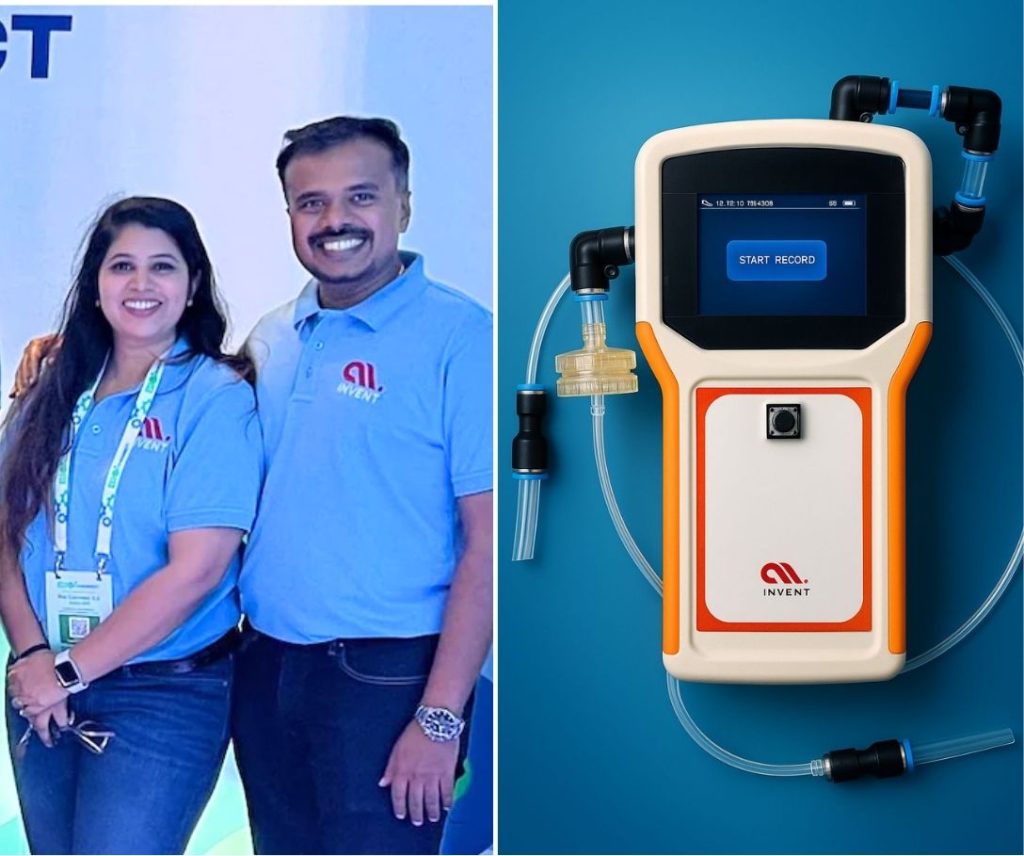
Siraj Dhanani, founder of InnAccel, adds another layer to this insight – that even if Indian companies do manufacture high-end devices, they mostly remain low-cost versions of foreign technologies. That’s the precise gap that InnAccel is looking to fill.
InnAccel was launched in 2015 with the aim to innovate medical devices that delivered intelligent healthcare solutions that identify challenges faced by hospitals in India, build new technologies for those specific contexts, and focus on innovation rather than simple, low-cost replication.

Why country-wise comparison of healthcare systems is not enough
Dhanani notes that devices such as stents, sutures, ECG machines, or imaging systems are often manufactured domestically with the primary goal of reducing price and improving access.
While this approach has helped expand availability, it has rarely addressed a deeper structural problem: many medical devices used in India are originally designed for healthcare systems in Western countries. These systems typically operate with stronger infrastructure, more specialised personnel, and standardised hospital environments. When such devices are introduced into the Indian healthcare system, even at lower cost, they may not function effectively because they assume infrastructure or operational conditions that do not exist in many hospitals.
The central challenge is not simply cost, but a combination of limited infrastructure and uneven availability of trained healthcare personnel.
The mismatch between device design and healthcare system realities creates a situation where improving access through cost reduction alone does not fully solve the problem.
Where InnAccel changes the game
InnAccel’s devices reduce dependence on specialised equipment and infrastructure and intensive manual monitoring — two prominent challenges in India’s healthcare ecosystem. They have three devices:
- VapCare, an automated oral hygiene management system that addresses the challenge of Ventilator Associated Pneumonia, a serious lung infection that can develop after more than 48 hours of ventilation caused by bacteria entering the lungs from the mouth or stomach. The device automates the suctioning and clearance of these tubes to significantly reduce mortality, as well as patient-caregiver interaction and bedside time.
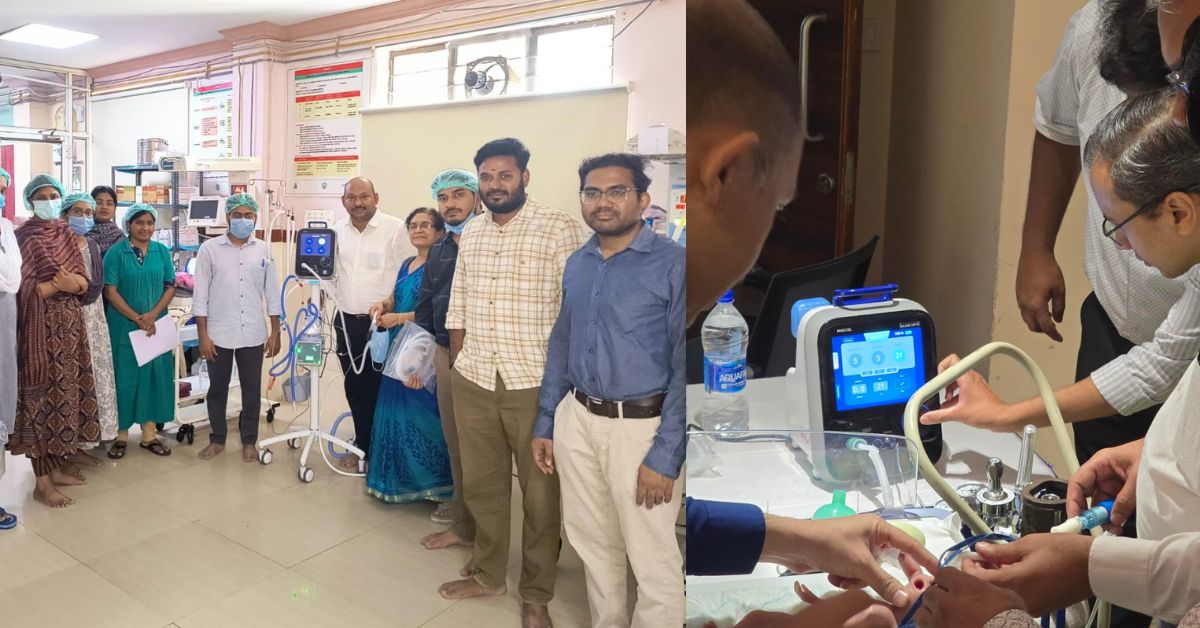
- Saans, an infrastructure-independent, multi-therapy system for newborns to provide them non-invasive breathing support. Owing to in-built air sources and in-built battery back ups, Saans is suitable for hospital as well as transport settings.
- Fetal Lite, an AI-powered fetal monitor that addresses the lack of efficient fetal monitors beyond well-equipped hospitals. This is portable and wireless to expand access to low-resource settings.
These have led to the treatment of over 2,75,000 patients, including 2,00,000 newborn babies with Saans. Deploying over 3,000 of its devices across 700 Indian hospitals, the company has also partnered directly with state governments and public health programmes to integrate its devices into hospital systems, allowing healthcare facilities with limited infrastructure to provide advanced treatment that was previously unavailable outside specialised centres.
Specific deployments, too, have shown significant improvements in clinical outcomes.

In a large-scale deployment of Saans across district hospitals in Northeast India, hospital survival rates for newborns increased from around 52–53% to 86% within one year, while in-hospital death rates dropped from 27% to 6%.
The number of critically ill babies being referred to other hospitals also fell from about 20% to single digits, meaning more babies could be treated locally rather than being transferred long distances.
VapCare helped with an 80% reduction in ventilator-associated lung infections in a clinical trial conducted at a leading hospital, with further validation from research at NIMHANS.
Together, these outcomes are important case studies in the improvement of survival rates and expanding access to critical care through technologies designed specifically for resource-constrained healthcare environments.
A systematic review of India’s healthcare ecosystem
InnAccel’s innovation process is guided by the methodology of the Stanford Biodesign Program developed at Stanford University. The company follows this need-driven approach closely, placing innovation teams inside hospital environments for extended periods of time. These teams spend roughly six to nine months embedded in care settings, observing clinical workflows and identifying gaps where technology could meaningfully improve patient care.
After collecting data and systematically evaluating multiple problems, the teams narrow down the most pressing need and develop a technology specifically designed to address that challenge. This process ensures that the devices developed by InnAccel emerge directly from real clinical environments rather than being adaptations of existing technologies.
Despite these outcomes, Dhanani argues that policy barriers still limit the wider adoption of innovative medical technologies. Because public health systems account for a large share of medical equipment procurement in India, government purchasing rules play a decisive role in determining which devices reach hospitals.
However, procurement systems typically require multiple bidders and prioritise the lowest-priced option, making it difficult for patented, single-source innovations to be purchased even when they demonstrate strong clinical outcomes.

This creates a paradox where government programmes fund innovation through initiatives such as grants, but the same public health systems struggle to procure those technologies. He suggests that a centralised mechanism to certify innovative medical technologies and allocate dedicated procurement budgets could help resolve this bottleneck, allowing states to adopt proven innovations without administrative risk and accelerating the scale-up of new healthcare solutions.
An analytical approach, more access
Taken together, InnAccel’s journey reflects a broader shift underway in India’s medical technology landscape; one where innovation is not simply about lowering costs, but about designing technologies that respond directly to the realities of the healthcare system.
This need-driven approach to innovation expands access to advanced care, while improving clinical outcomes. And so, as India continues to strengthen its domestic medtech ecosystem, such approaches highlight the importance of building technologies from the ground up for local contexts rather than adapting solutions designed elsewhere.
InnAccel’s model has potential to accelerate the development of globally relevant medical technologies from India, while ensuring that life-saving care reaches more hospitals, more clinicians, and ultimately, more patients.
Share Your Story Today, Shape Viksit Bharat Tomorrow
Got an idea, innovation, or experience that's making a difference? Share your story now and ignite India's transformation because your voice can drive the future forward!
Handpicked stories tailored just for you
Explore stories that inspire, inform, and ignite new ideas across tech, innovation, and real-world impact

How AI is Cutting Post-Harvest Losses and Strengthen Agricultural Markets Across India
Agrograde uses artificial intelligence to address post-harvest quality assessment gaps in India’s agricultural markets. It deploys AI-based apps and sorting...
Read More