
Sentinels in the System: AI-Powered Surveillance for Urban Safety and Civic Security
Cities across India are leveraging AI for real-time surveillance, crowd analysis, and anomaly detection to strengthen public safety. From intrusion alerts and suspicious activity tracking to automated patrol planning, these technologies are reshaping how urban spaces anticipate and respond to threats—creating secure, intelligent civic environments.
Updated on: 16 July 2025

Sector

Solution

Technology

State of Origin
Impact Metrics
24/7 autonomous surveillance
resulting in improved emergency and crowd management.
Up to 40% reduction
in manual patrol burden and response times.
Intelligence in the Public Realm
The future of urban safety does not rely solely on physical presence—it is increasingly underpinned by invisible systems of AI-driven vigilance. As Indian cities grow denser and more complex, municipal and law enforcement bodies are adopting AI-powered surveillance to detect threats, manage crowds, track anomalies, and optimize patrol deployment in real time.
This shift reflects a recognition that security must now be proactive, data-informed, and autonomous. Cities like Kalyan-Dombivli, Pimpri Chinchwad, New Town Kolkata, Varanasi, and Visakhapatnam have embedded AI into their civic infrastructure, deploying computer vision, predictive mapping, and intelligent alerts to reduce risk and enhance public trust.
Replacing Reaction with Real-Time Readiness
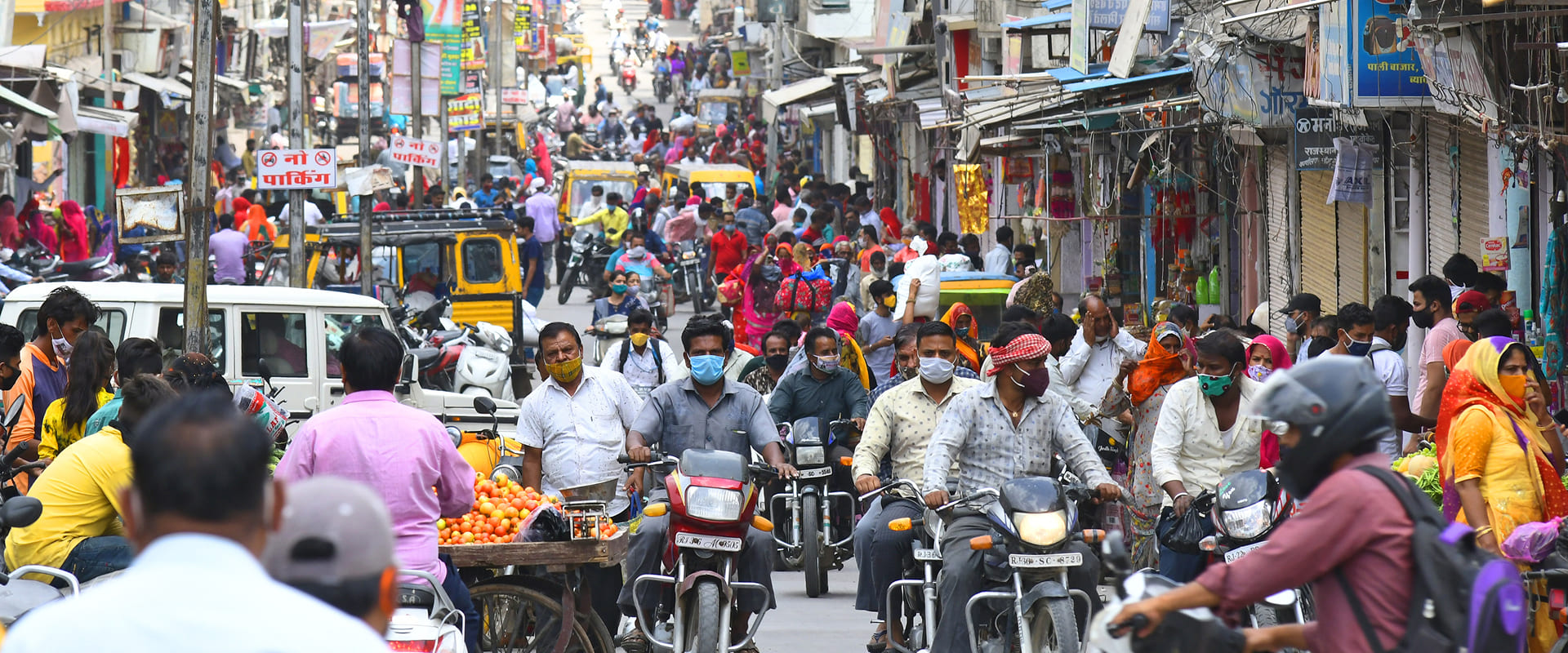
Public spaces today must handle diverse challenges: unauthorized access, unattended baggage, mass gatherings, and perimeter breaches—all while ensuring civil liberties and administrative efficiency. Traditional CCTV systems, while widespread, are often retrospective in value. AI-enabled systems, in contrast, process video feeds dynamically, flag suspicious behavior, and reduce human error in decision-making.
- Kalyan-Dombivli uses AI-powered crime heat mapping to identify incident hotspots and optimize police patrol routes, increasing coverage in high-risk zones.
- New Town Kolkata integrated AI for mask detection and automated audio warnings during the pandemic, reinforcing behavioral protocols through public messaging.
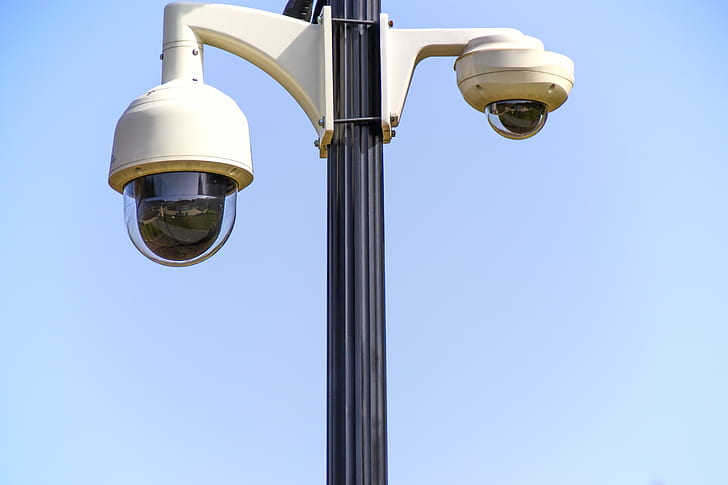
- Pimpri Chinchwad deployed AI to track unattended objects, intrusion attempts, and perimeter breaches using fixed surveillance nodes and video analytics.
- Varanasi’s Cantonment Board installed a multi-point AI surveillance system for critical assets like police headquarters and military zones.
- Varanasi also used crowd analytics to enforce physical distancing and detect congregation patterns during COVID-19 surges.
- Visakhapatnam implemented AI video analytics to detect unusual crowd behavior, object placement, and perimeter crossing in commercial and sensitive zones.
- Pimpri Chinchwad leveraged ANPR data for urban safety—tracking suspect vehicles in high-alert areas and integrating feeds with law enforcement databases.
Impact: From Command Centres to Community Assurance
These AI systems enable:
- 24/7 autonomous surveillance of public infrastructure and gathering points
- Reduction in manual patrolling burden and response times by up to 40%
- Anomaly detection accuracy exceeding 85%, particularly for object abandonment and motion violations
- Improved management of emergency events, VIP movement, and religious processions
- Automated escalation to Integrated Command and Control Centres (ICCCs), reducing latency in threat response
In Kalyan-Dombivli, patrol response patterns were redesigned based on AI heatmaps, improving incident resolution rates and community-police coordination. In Varanasi, crowd density thresholds triggered alerts during religious events, reducing overcrowding and improving disaster readiness.
Adaptable Blueprints for Civic Intelligence
These AI surveillance systems are designed to scale. Their applications span:
- Critical infrastructure monitoring (e.g., railway stations, airports, data centers)
- Smart tourism corridors requiring non-intrusive public oversight
- Industrial zones, ports, and SEZs for access control
- School and hospital security perimeters
- Disaster-prone areas for movement analysis during evacuations
Their modular architecture—built on existing camera infrastructure and edge computing—makes them cost-effective for Tier 2 and Tier 3 cities, not just metros.
Building Trust Through Predictive Eyes
What these examples demonstrate is a quiet but decisive evolution: from surveillance as passive documentation to surveillance as intelligent anticipation. These systems are not designed to watch indiscriminately—but to respond selectively, protect intentionally, and govern efficiently.
By embedding artificial intelligence into the public eye, Indian cities are fortifying both their civic infrastructure and their social contract. These tools do not replace human judgment—they augment it, with speed, scale, and precision.
As urban risks grow more dynamic, AI-enabled surveillance stands not as an intrusion—but as an assurance: that cities can be both smart and safe.
Share Your Story Today, Shape Viksit Bharat Tomorrow
Got an idea, innovation, or experience that's making a difference? Share your story now and ignite India's transformation because your voice can drive the future forward!
BUILD YOUR OWN

BUILD YOUR OWN
How can I implement this innovation effectively?
How is this innovation being adopted around the world?
Where else could this innovation make an impact?
Who has seen real results from using this innovation?
What insights do experts share about this innovation?
What policies support or influence this innovation?
How could this innovation evolve in the future?
Is this innovation accessible and inclusive for everyone?
How can I contribute to or participate in this innovation?
What resources can help me explore this innovation further?
If you would like to know more about this innovation, fill this form to contact the innovator.
Handpicked stories tailored just for you
Explore stories that inspire, inform, and ignite new ideas across tech, innovation, and real-world impact


How IIT Mandi’s AI Predicts Landslides Hours Before They Hit The Himalayas
An AI-powered early warning system developed at IIT Mandi can predict landslides up to three hours in advance. Using sensors,...
Read More