Smarter Roads, Safer Lives: How AI and GNSS Are Powering India’s Next Mobility Infrastructure Shift
Reyansh Technologies is building an AI-powered GNSS platform to integrate road safety, tolling, enforcement, and emergency response into a unified, real-time system. By enabling instant accident detection, predictive risk analysis, and seamless mobility, the solution reduces fatalities, improves emergency response times, and enhances logistics efficiency—offering a scalable blueprint for safer, smarter transport infrastructure in India.
Updated on: 29 April 2026

Sector

Solution
Traffic Management

Technology
AI
& 1 other

State of Origin
Impact Metrics
40% reduction
in emergency response delays and ambulance arrival times through real-time alerts.
80% potential reduction
in road fatalities by 80%, significantly improving safety outcomes.
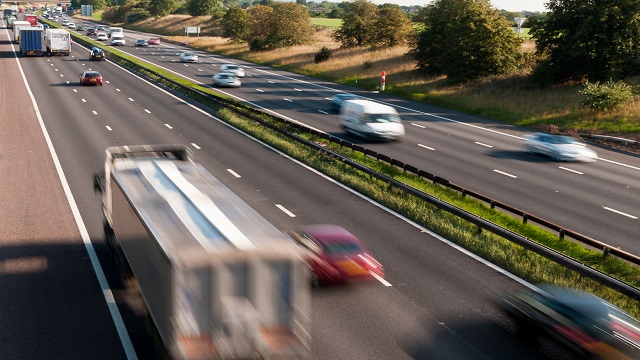
India’s road transport system sits at the intersection of mobility, public safety, and economic productivity. Yet, despite its scale and importance, it continues to be marked by fragmentation—across tolling systems, enforcement agencies, and emergency response networks. The consequences are visible and severe: high accident rates, delayed medical intervention during the critical “Golden Hour,” congested highways, and inefficient logistics.
It is within this landscape that Reyansh Technologies, founded in 2024 by Prashant Navinbhai Kanagd, is attempting to reimagine road safety and mobility through an integrated, technology-first approach. Its innovation—an AI-powered Global Navigation Satellite System (GNSS) platform—aims to transform disconnected systems into a unified, real-time mobility and safety ecosystem.
From Fragmentation to Integration
At the heart of India’s road safety challenge lies a lack of coordination. Accident detection, emergency response, tolling, and law enforcement operate largely in silos, with minimal data sharing or interoperability. This fragmentation delays response times, weakens enforcement, and limits the system’s ability to act proactively.
Reyansh Technologies addresses this by building a digitally integrated framework that connects vehicles, tolling infrastructure, emergency services, and enforcement agencies. Using GNSS for precise location tracking and layering it with artificial intelligence, the system converts raw positional data into actionable intelligence.
This shift—from passive tracking to active decision-making—enables real-time accident detection, predictive risk analysis, and automated alerts, ensuring that response mechanisms are triggered instantly rather than reactively.
AI Meets GNSS: Turning Data into Action
While GNSS provides location accuracy, its true potential is unlocked when combined with AI. The system developed by Reyansh Technologies uses AI models to interpret movement patterns, detect anomalies, and identify high-risk driving behaviour.
In the event of an accident, the system can automatically alert emergency responders, law enforcement, and nearby medical facilities. This directly addresses the Golden Hour dilemma, where delays in medical care often determine survival outcomes.
Beyond emergencies, the platform also enables predictive safety interventions. By identifying patterns such as overspeeding, erratic driving, or congestion hotspots, it allows authorities to intervene before accidents occur—shifting the focus from response to prevention.
Reimagining Mobility and Tolling
The innovation extends beyond safety into the broader mobility ecosystem. India’s tolling infrastructure, often characterised by manual processes and fragmented systems, contributes significantly to congestion and inefficiency.
By enabling seamless, contactless tolling through GNSS, the system eliminates physical bottlenecks and reduces travel time. For logistics operators, this translates into faster movement of goods, lower fuel consumption, and improved operational efficiency.
At a systemic level, the platform also reduces revenue leakage and enhances transparency, creating a more accountable and efficient tolling framework.
Impact Across Safety, Health, and Economy
The potential impact of this integrated approach is substantial. The system is projected to deliver an 80% reduction in road fatalities and a 64% decrease in accidents, fundamentally altering safety outcomes on Indian roads.
Emergency response is significantly strengthened, with ambulance arrival times reduced by up to 40% and delays effectively eliminated through automated alerts and coordination. This not only improves survival rates but also reduces the severity of long-term injuries.
The healthcare system also benefits, with an estimated 80% reduction in permanent injuries and a 15% decrease in the overall burden on medical infrastructure. For families, this translates into fewer life-altering consequences from road accidents.
Economically, the gains are equally significant. The system is expected to reduce transportation costs by 50% and cut GDP losses due to accidents by 75%, improving national productivity. Logistics operators and fleet owners benefit from reduced downtime, lower maintenance costs, and improved safety outcomes.
Strengthening Enforcement and Public Trust
Law enforcement agencies stand to gain from enhanced visibility and control. With real-time data and automated alerts, the system enables quicker interventions and more effective monitoring. Traffic violations are projected to decline by 96%, creating safer and more disciplined road environments.
At the same time, the integration of data across systems fosters greater transparency, addressing long-standing concerns around governance and accountability in the transport sector.
For citizens, the impact is both practical and psychological. Safer roads, faster emergency response, and reduced congestion contribute to a stronger sense of security and trust in public systems.
Pilots and the Path to Scale
The innovation has already demonstrated feasibility through pilot deployments in Rajkot and Surat, where collaboration with police authorities and regional transport offices enabled real-time testing of accident detection, lane-level positioning, and emergency alerts.
These pilots serve as proof of concept for a broader rollout across high-density corridors in Gujarat, Maharashtra, and Delhi NCR. With alignment from national bodies such as the Ministry of Road Transport and Highways, the model has the potential to scale across India’s highway network.
The system is designed for interoperability, allowing integration with national initiatives such as Smart Cities Mission and Digital India, and positioning it as a foundational layer for future mobility infrastructure.
A Systemic Shift in Road Safety
What distinguishes this innovation is its systemic approach. Rather than addressing individual problems—such as accidents, tolling, or enforcement—in isolation, it creates a connected ecosystem where each component reinforces the other.
By combining AI, GNSS, and institutional integration, Reyansh Technologies is not just improving road safety—it is redefining how mobility systems function. The result is a shift from fragmented, reactive processes to a coordinated, data-driven framework that prioritises prevention, efficiency, and accountability.
In a country where millions rely on road networks every day, such a transformation has far-reaching implications—not only for safety and efficiency, but for how citizens experience mobility itself.
Share Your Story Today, Shape Viksit Bharat Tomorrow
Got an idea, innovation, or experience that's making a difference? Share your story now and ignite India's transformation because your voice can drive the future forward!
Resources to Replicate This Idea
BUILD YOUR OWN INTERVENTION
Handpicked stories tailored just for you
Explore stories that inspire, inform, and ignite new ideas across tech, innovation, and real-world impact

Safe Access: India’s Community-Verified Digital Locator for HIV Prevention Services
Safe Access is a free, community-driven Indian platform that helps people locate verified PrEP and PEP providers nearby. By mapping...
Read More