
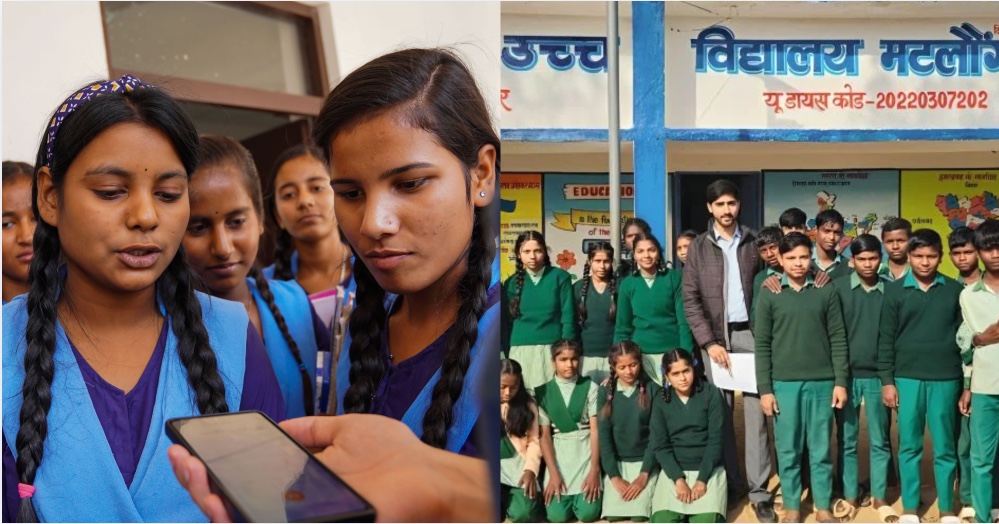
Solving India’s Learning Crisis at Scale: How AI Is Bringing Real-Time, Personalised Teaching to 2.8 Lakh Students
Sampurna Shiksha Kavach by Filo Edtech uses AI to connect students with subject experts for real-time, one-to-one academic support within 60 seconds. Reaching over 2.85 lakh students across multiple states, the model improves learning outcomes, boosts board exam performance, and strengthens equity by delivering personalised, on-demand teaching beyond classroom constraints.
Updated on: 29 April 2026

Sector

Solution
Rural Education

Technology

State of Origin
Impact Metrics
<60 seconds
to connect students to a relevant subject expert, enabling near-instant doubt resolution.
2.85 lakh+ students
reached across Jharkhand, Bihar, Rajasthan, and Himachal Pradesh.
24×7 personalised academic support
without increasing permanent teacher capacity in public systems.
Across India, access to schooling has expanded significantly over the past two decades. Classrooms are fuller, enrolment is higher, and policies like the National Education Policy 2020 have strengthened the foundation of “Education for All.” Yet, beneath this progress lies a persistent structural challenge: learning outcomes remain uneven. In a single classroom, students operate at vastly different conceptual levels, often carrying unresolved gaps from earlier grades. For many—especially in rural and underserved regions—there is little access to academic support beyond school hours.
It is within this context that Sampurna Shiksha Kavach (SSK), developed by Filo Edtech, is attempting to redefine how academic support is delivered at scale. Founded in 2020 and now operating across multiple states, the initiative uses artificial intelligence not to replace teachers, but to make high-quality, personalized human teaching instantly accessible to every student.
From Access to Outcomes: The Core Challenge
India’s education system has long grappled with a mismatch between access and learning. While students are present in classrooms, many struggle with foundational concepts—secondary school learners unable to perform basic arithmetic, for instance, which then affects their ability to grasp algebra, science, and higher-order problem-solving.
Traditional classroom models, constrained by time and student-teacher ratios, cannot address individual learning gaps. Outside school, the situation is often worse. Access to qualified tutors is limited, particularly in rural districts. Many students balance academic responsibilities with household or livelihood duties, while girls face additional mobility and safety constraints that restrict access to coaching centres.
The result is a systemic absence of real-time, personalized academic reinforcement—a gap that continues to widen learning disparities across socio-economic groups.

AI as an Enabler, Not a Replacement
Filo’s approach is built on a simple but powerful idea: combine the scalability of AI with the effectiveness of human teaching. Instead of relying on static content libraries or fully automated tutoring systems, the platform uses AI-driven matching to connect students with relevant subject experts in under 60 seconds.
This matching process considers subject requirements, grade level, and language preferences, ensuring that each student is paired with the most suitable teacher. Once connected, the session unfolds as a live, one-to-one interaction, where the teacher provides step-by-step explanations, addresses misconceptions, and adapts their approach based on the student’s understanding.
Crucially, AI operates in the background—optimizing allocation, ensuring quality, and enabling scale—while the human teacher remains at the centre of instruction. This hybrid model preserves pedagogical depth, contextual sensitivity, and emotional engagement, elements that purely automated systems often struggle to replicate.
Ensuring Quality at Scale
One of the biggest challenges in scaling such a model is maintaining instructional quality across a large teacher network. Filo addresses this through an AI-enabled onboarding and evaluation system, where teachers undergo rigorous screening before joining the platform.
Using simulated student-teacher interactions, the system evaluates candidates across 47 pedagogical parameters, including conceptual clarity, stepwise explanation, responsiveness, and curriculum alignment. This process, powered by a proprietary patented algorithm, ensures standardized quality benchmarks across thousands of educators.
Once onboarded, continuous AI monitoring and analytics dashboards track performance, session quality, and student engagement—creating a feedback loop that sustains consistency at scale.
Designed for India’s Realities
The platform is engineered to function within the constraints of India’s diverse education ecosystem. It is optimized for low-bandwidth environments, ensuring usability even on 2G networks and basic smartphones. Its flexible architecture allows students to access support anytime—during evenings, weekends, or exam preparation periods—accommodating irregular attendance patterns and varied schedules.
Importantly, the model integrates seamlessly with existing public education systems. Rather than replacing classroom teaching, it acts as supplementary academic infrastructure, extending learning beyond school hours without requiring additional permanent teacher recruitment.
Impact at Scale
The reach and outcomes of Sampurna Shiksha Kavach are significant. The program has supported over 2,85,000 studentsacross states including Jharkhand, Bihar, Rajasthan, and Himachal Pradesh.
In Jharkhand’s Dumka district, more than 100,000 minutes of live academic sessions were delivered within the first three months of implementation. Students were able to resolve doubts instantly, reducing delays that previously disrupted learning continuity.
The impact is most visible in board examination outcomes. In Dumka, Science pass percentages in SSK schools rose from 74.73% in 2023 to 88.38% in 2025, while non-SSK schools lagged significantly behind. Similar trends were observed across districts such as West Singhbhum, Khunti, and Godda, with performance gaps of up to 30 percentage points in favour of SSK schools.
Beyond averages, the intervention has strengthened outcomes across the performance spectrum. Students at the lower end of the distribution showed 13–20% improvements, indicating that the model is particularly effective for those most at risk of academic disengagement.
Equity gains are equally striking. Female students improved from 54% to 72%, while Scheduled Caste students saw a 31% increase in performance. These gains highlight the model’s ability to reduce disparities and support historically disadvantaged groups.
Beyond Scores: Retention and Confidence
In many government school systems, exam performance determines whether a student continues education or drops out. By improving pass rates, the intervention directly contributes to student retention, particularly for girls, who are often at higher risk of early exit from formal education.
Teachers report increased classroom participation and confidence among students, especially in subjects like mathematics and science. Parents note reduced dependence on private tuition and greater trust in their children’s academic preparedness.
A Scalable Blueprint for Learning Equity
Sampurna Shiksha Kavach demonstrates that the future of education lies not in replacing teachers with technology, but in augmenting human teaching through intelligent systems. By addressing the structural gap in personalized academic support, it transforms how learning reinforcement is delivered—making it immediate, accessible, and scalable.
As India continues to invest in educational infrastructure, models like SSK highlight a critical insight: access alone is not enough. Without targeted, real-time support, learning gaps persist. But when AI is used to connect students to the right human expertise at the right moment, it can fundamentally shift outcomes—turning access into achievement, and classrooms into truly inclusive learning environments.
Share Your Story Today, Shape Viksit Bharat Tomorrow
Got an idea, innovation, or experience that's making a difference? Share your story now and ignite India's transformation because your voice can drive the future forward!
Resources to Replicate This Idea
BUILD YOUR OWN INTERVENTION
Handpicked stories tailored just for you
Explore stories that inspire, inform, and ignite new ideas across tech, innovation, and real-world impact

How AI Diagnostics Are Reaching India’s Frontline Health Workers
AffEx equips rural health workers with an AI-powered point-of-care screening kit — testing hemoglobin, blood pressure, ECG, and cardiac and...
Read More