
Sustainable Agriculture for Small Farmers: How Microbial Capsules Are Boosting Crop Yield by 15–35%
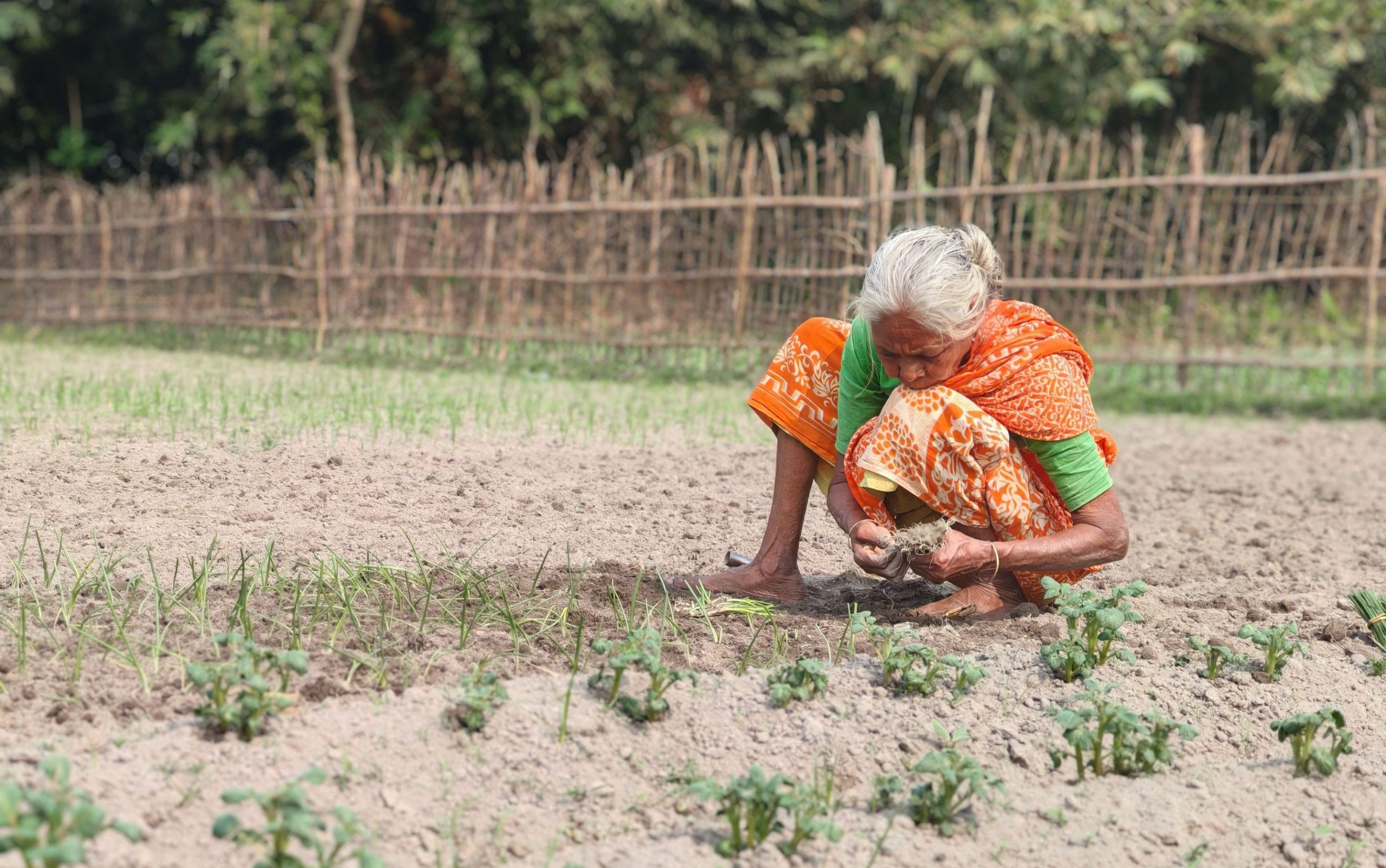
As climate change intensifies, agriculture grows more economically precarious in India. Aiming to improve farmer livelihoods, Bengaluru-based startup Capsber offers various microbial capsules to improve the efficiency of nutrient intake by crops.
Updated on: 26 July 2026

Sector

Solution

Technology

State of Origin
Impact Metrics
~5 lakh farmers benefiting
from increased crop health.
60–70% higher incomes
for farmers using microbial capsules.
~30% reduction in fertilizer usage
due to usage of microbial capsules.
Up to 75% of soil nutrients
unlocked after application of microbial capsules.
Farming is a core component of the Indian economy. However, rising costs of production—including the costs of not only labor but also farming inputs—are pushing millions of farmers to abandon the profession, migrating instead to cities to work as industrial laborers.
Policymakers have largely addressed these problems through welfare programs such as subsidies. However, there is a gap in terms of technology provision, with many of the chemical components—such as fertilizers—being imported from abroad. This means that even with government support, India’s farmers remain vulnerable to global supply shocks.
Capsber Agriscience represents an attempt to fill this gap. Founded in 2017 by Manoj Kumar Rupa, Dr Priti Khalkho, and Gavaskar Jayakanthan, this agritech startup has developed microbial capsules that can improve various aspects of crop health. With a high cost-to-benefit ratio and geographical specificity, these strains are helping make sustainable agriculture both accessible as well as profitable in India.
Challenges with mainstream farming inputs
Over the decades, several chemical inputs have been developed to boost crop yield across the world. These inputs, which include fertilizers, pesticides, and weedicides, are increasingly used to safeguard national agriculture in the face of climate change.
Unfortunately, several of these cause health problems. For example, carbofuron, used to kill nematodes in the soil, can cause neural disorders in human beings if used in high quantities. As a result, many countries have legislated against its usage and push a global ban. Similar calls are being raised for mancozeb, used to control fungal infections in grapes.
While the arguments for these bans are scientifically sound, most farmers continue to use the target chemicals on their produce. This is because these chemicals have few affordable alternatives—and in a developing country such as India, short-term economic pressures can override long-term health concerns.
Capsber’s solution for crop health
Rather than injecting nutrients into the soil directly, Capsber develops microbial strains that can achieve the same function. Each strain targets a specific agricultural requirement, whether it is controlling a disease affecting crops or eliminating a particular weed. The microbial component of Capsber’s solution is called BiointelX.
Microbes from one region of the country may not be able to adapt to the soil conditions of another, and storing a unique microbe to address each regional requirement would be unfeasible. Thus, for every client, Capsber draws from a common database of microbes, but it then adds a unique set of metabolites—the CapsElicit component—that helps the selected microbes adapt to the target soil conditions.
The final component of the solution is CapsulX, a biochemical capsule that contains the microbes and their associated metabolites. These three components are sold together to farmers, sometimes coated on familiar fertilizer granules.
In its first year of operation, Capsber aimed to reach 20–50 farmers, but went on to exceed this target with ~500 farmers. The company now consists of ~90 employees, of whom 15 are PhD scholars with expertise in agriscience.
How effective is this solution?
As of 2026, Capsber’s customers include approximately 5 lakh farmers spread across 20 Indian states. These farmers report that Capsber’s microbial capsules can cause increases of 100% in nutrient use efficiency and 15–35% in yield across a variety of crops. These microbes can make up to 75% of all nutrients in soil available for usage by plants—an increase from 10–15%.
Naturally, these changes have been accompanied by economic benefits, with farmers now seeing 60–70% higher incomes. A major reason for this is because Capsber’s solution reduces the need for fertilizer usage by nearly 30%.
Applying Capsber’s capsules to one acre of land costs less than INR 1,500, with every rupee spent creating around 15 rupees of revenue. Moreover, each capsule may be stored for up to 18 months without any spoilage, as opposed to the 3–6 months common for most market competitors. This ensures that bulk purchases by farmers do not face significant value loss over time.
Taking the solution forward
Capsber’s work has received recognition both domestically and internationally. Beyond its presence in India, it is currently negotiating to build a presence in the US, South America, and Africa. Some of the startup’s partners include BioRec, the Centre for Cellular and Molecular Platforms (C-CAMP), IKP Knowledge Park, the Gates Foundation, and the Indian Farmers Fertilizer Cooperative Limited (IFFCO).
According to Manoj Kumar Rupa, the main challenge left to be addressed is related to credit access. While banks are willing to provide financial packages for multinational corporations with venture capital, they hesitate to do the same for startups, perceiving greater risk. State governments could address this by creating more loan schemes for startups such as Capsber that are creating tangible economic outcomes.
A secondary challenge concerns the designation of agriculture as a state subject in Indian law. This legislation means that in order to sell the same capsules in different states, Capsber needs to navigate multiple rounds of certification and registration. Were these bureaucratic processes centralized, the national government could reduce operational inefficiency and create more rewards for innovation.
Ultimately, policy-level support would demonstrate that it is possible to prioritize sustainability and healthy practices in agriculture while also centering farmer needs.
Share Your Story Today, Shape Viksit Bharat Tomorrow
Got an idea, innovation, or experience that's making a difference? Share your story now and ignite India's transformation because your voice can drive the future forward!
Resources to Replicate This Idea

BUILD YOUR OWN
Do you want to know how this innovator scaled their idea, how much it cost them, and what resources/partnerships they deployed?
Handpicked stories tailored just for you
Explore stories that inspire, inform, and ignite new ideas across tech, innovation, and real-world impact

Maharashtra’s First 3D-Printed School Cuts Construction Time By 6X, Waste By 95%
Cretebots, an Indian startup, uses robotic 3D construction printing to build structures layer by layer on-site — completing buildings 6...
Read More