
The AI Tools Managing Admin Work for 55,000+ Physicians
Medical professionals face high pressure and administrative slowdowns from manual paperwork. AI-powered voice recognition and transcription could make this easier by automating prescriptions and medical record management.
Updated on: 30 September 2026

Sector

Solution

Technology

State of Origin
Disclaimer:
Features ‘as is’ submissions and neither constitutes endorsement, certification, recommendation, or validation by NITI Aayog nor makes NITI Aayog liable in any manner.
Impact Metrics
12 seconds taken
to transcribe any medical consultation.
90% transcription accuracy
for prescriptions given by doctors.
India-specific medical dataset
built with data sovereignty in mind.
Countries across the world are now recognizing the value of digitization in the health sector. Not only does it make data access easier and faster but it also lowers the chances of patients taking the same tests repeatedly. This means lower medical costs for them, making digitization especially promising in developing countries such as India.
However, converting medical records into digital formats can itself be time-consuming. Doctors and other medical professionals already work in high-pressure environments, and such administrative tasks would only slow them down further.
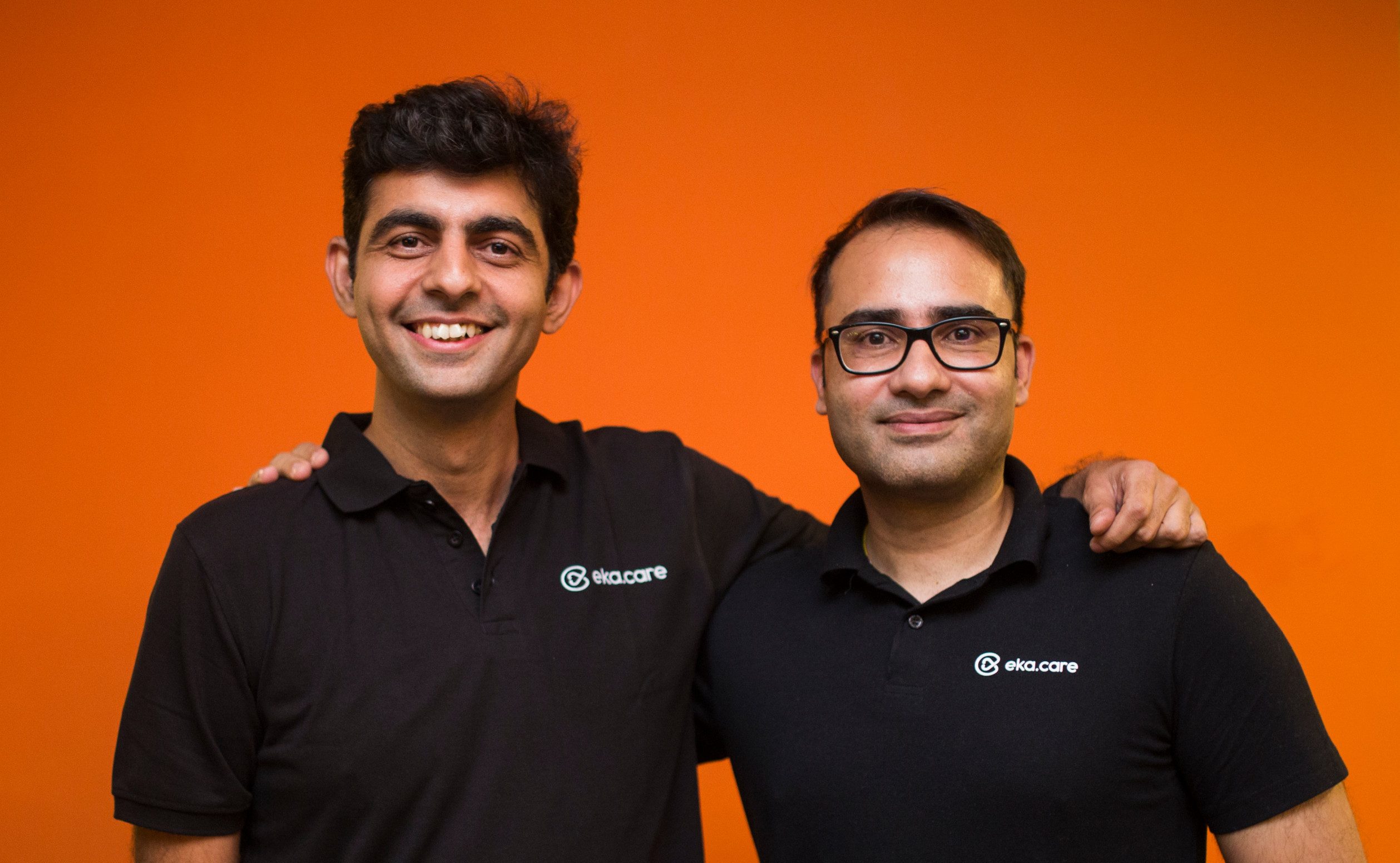
What if today’s AI tools could solve this problem? Bengaluru-based Eka Care believes this is possible. Founded by Deepak Tuli and Vikalp Sahni in 2020, this healthtech startup has developed a digital platform that reduces the time spent on medical paperwork. Harnessing the capabilities of AI in voice recognition, image-to-text transcription, and data analytics, it is helping thousands of physicians work more efficiently in clinics and hospitals.
Exploring the platform’s features
On the frontend, Eka Care offers two mobile applications custom-made for patients and physicians. These are hosted on Amazon Web Services and built on Python, Node.js, and other modern programming environments. The backend component of the platform contains a database of all patients linked to a given clinic.
In simple terms, the physician app’s main functions are to enable doctors to access more detailed insights about patients while also playing the role of a medical assistant. First, it can extract information from photographs of medical reports, then organize it into easily interpretable formats. Second, it can record all conversations between doctors and patients, identify any drugs suggested to address symptoms, and generate standardized prescriptions for printing. Third, it can analyze patient medical data for useful insights.
Unlike most of its competitors, the Eka Care platform uses AI models that have largely been trained on Indian datasets. This allows it to accurately transcribe and interpret medical terms specific to India regardless of how they are pronounced during consultations—giving it an edge over mainstream LLMs such as ChatGPT or Claude.
The patient-facing app, on the other hand, offers patients the opportunity to view their medical history and arrange future consultations with registered doctors.
Advantages of using the platform
A total of approximately 55,000 physicians from across India use the Eka Care platform. They come not only from major cities such as Bengaluru, Mumbai, Delhi, and Hyderabad but also Tier-2 and Tier-3 cities, which have the greatest need for more efficiency in medical workflows.
Thanks to the voice-based prescription feature on the physician-facing app, doctors do not need to spend any time on writing prescriptions or making notes. Within 12 seconds of a consultation, the app can transcribe the conversation with the patient and identify all the medication suggested—with an accuracy of 90%. This means that medical professionals can devote more attention to diagnosis and treatment rather than administrative responsibilities.
Who are the platform’s partners?
In 2021, Eka Care raised about $4.5 million via seed funding. The next year, it raised close to $15 million in Series A funding from investors who included Hummingbird VC, 3one4 Capital, Mirai Investors, and Aditya Birla Capital.
Additionally, the startup receives support from the National Health Authority (NHA) and Gates Foundation through multiple programs.
Supporting digitization in healthcare
The Indian government has already acknowledged the need for greater data mobility in the medical sector. One of the results of this was the Ayushman Bharat Digital Mission, the nation-wide infrastructure facilitating the transfer of patient records between patients and hospitals.
The next step would be to increase support for more specific solutions within digital health management—such as Eka Care. In the specific case of this startup, founder Deepak Tuli suggests that policymakers issue standardized formats for medical prescriptions and encourage doctors to type them rather than write them. With such standardization, and greater emphasis on safeguarding medical data collected in India, the country can not only improve administrative workflows in hospitals but also compile valuable datasets for future intelligence training.
Share Your Story Today, Shape Viksit Bharat Tomorrow
Got an idea, innovation, or experience that's making a difference? Share your story now and ignite India's transformation because your voice can drive the future forward!
Disclaimer:
Features ‘as is’ submissions and neither constitutes endorsement, certification, recommendation, or validation by NITI Aayog nor makes NITI Aayog liable in any manner.
Resources to Replicate This Idea
BUILD YOUR OWN INTERVENTION
Handpicked stories tailored just for you
Explore stories that inspire, inform, and ignite new ideas across tech, innovation, and real-world impact


Pilotless Cargo Flights with Zero Failures: Reimagining Diagnostic Logistics in Indian Cities
An energy-efficient autonomous aircraft combining vertical take-off with fixed-wing cruise has completed over 1,000 flights carrying diagnostic samples between hospitals,...
Read More