
This AI Tool Analyzes Hardware Components and Generates Domain-Specific Code
When writing code for hardware, AI tools can produce errors and ‘hallucinate’, risking critical failure. This problem can be avoided by first analyzing the hardware and then building the appropriate code.
Updated on: 30 September 2026

Sector

Solution

Technology

State of Origin
Disclaimer:
Features ‘as is’ submissions and neither constitutes endorsement, certification, recommendation, or validation by NITI Aayog nor makes NITI Aayog liable in any manner.
Impact Metrics
40% reduction in debugging time
for systems engineers.
50–60% cost savings
on AI credits and resources.
Artificial intelligence is increasingly being integrated into professional workflows. In addition to standalone digital applications, it also exists to support preexisting systems and workflows, such as by generating code to control intricate hardware components.
However, this code—much like that produced by large language models—tends to contain several errors and ‘hallucinations’. For high-stakes hardware sectors such as semiconductors, defense, or aerospace, such errors can lead to critical failure and widespread losses.
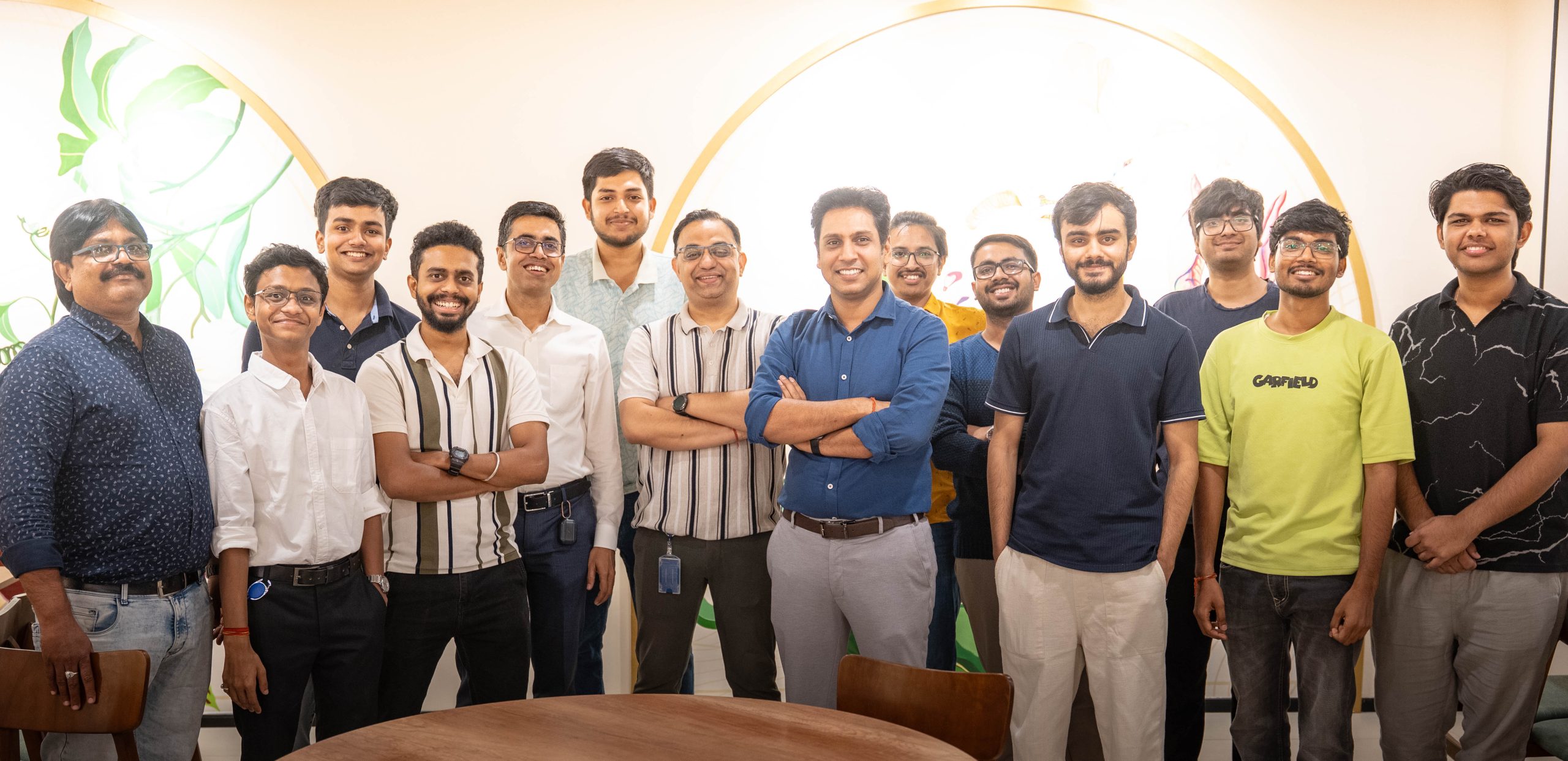
H2LooP, based in Bengaluru, is addressing this problem at the source. Founded in 2025 by Sairanjan Mishra and Pulkit Agrawal, this AI research lab is working closely with systems engineers to improve AI integration in hardware. Not only does it support domain-specific code generation but it also supports early error detection and vulnerability testing.
How does this innovation work?
The primary limitation of using mainstream large language models (LLMs) such as ChatGPT or Claude in coding is that they are not domain-specific. Since they have been trained on broad datasets, the code they produce can be generic and require extensive human prompting for customization. This raises not only expenditure on AI tokens but also the time spent by systems engineers on debugging.
Rather than taking preexisting AI-written code and customizing it, H2LooP aims to first understand the limitations of the hardware and then build code to operate it. The startup’s flagship product, Hydron, achieves precisely this.
A coding assistant for systems engineers, this tool can analyze the specifications and constraints of any AI-enabled hardware component (e.g., a chipset). It can also categorize any preexisting legacy code. Following the analysis, it identifies the programming functions most compatible with this component. Finally, it draws on in-house AI models to generate the identified code in the target programming language. All the code produced is clearly documented at every step, allowing systems engineers to easily notice potential bugs or vulnerabilities that could hamper the deployment of the hardware.
State of development
Currently, H2LooP is operational in the Bengaluru area. Hydron has already been marketed and deployed to various clients including defense labs, government labs, and semiconductor companies. In the coming years, the startup may collaborate with educational institutions to help new systems engineers understand AI in the skill development stage. It also seeks partnerships with major hardware companies in sectors other than aerospace, defense, and semiconductors.
According to H2LooP’s own reports over the past year, using Hydron has yielded considerable benefits in terms of resource efficiency. Clients have attested to a 40% reduction in time spent by systems engineers on coding and debugging. Overall, by lowering expenditure on AI credits, Hydron may allow cost savings of 50–60%. Of course, these promising results remain to be further validated by future case studies.
Partners and recognition
When launched, H2LooP had an initial investment of ~ INR 4 crore. Incubation support came from the Google for Startups accelerator program, and Infineon Technologies, Samsung Solutions, and Nvidia played key roles in early adoption. The startup has also been supported by the India Electronics and Semiconductor Association (IESA) and IISc Bangalore. These partnerships have provided it with much-needed mentoring, funding, and research collaboration.
In 2026, H2LooP raised approximately $2 million in seed funding through Speciale Invest and 3one4 Capital.
How policy could support this innovation
According to the H2LooP team, the startup is appreciative of the existing government schemes for research support, networking, and funding.
However, it notes that there is a dearth of legislation on AI applications in hardware. This has meant that compliance requirements are unclear, making clients hesitate to adopt innovations in the field.
Through the release of clear regulatory frameworks, policymakers could hasten the process of commercialization, allowing innovators such as H2LooP to create broader impact.
Share Your Story Today, Shape Viksit Bharat Tomorrow
Got an idea, innovation, or experience that's making a difference? Share your story now and ignite India's transformation because your voice can drive the future forward!
Disclaimer:
Features ‘as is’ submissions and neither constitutes endorsement, certification, recommendation, or validation by NITI Aayog nor makes NITI Aayog liable in any manner.
Resources to Replicate This Idea
BUILD YOUR OWN INTERVENTION
Handpicked stories tailored just for you
Explore stories that inspire, inform, and ignite new ideas across tech, innovation, and real-world impact


Turning Chemistry Into Code: The Technology Making Complex Diagnostics Faster and More Precise
Algorithmic Biologics is turning chemistry into code, using programmable DNA molecules to simplify complex diagnostic testing. Its technology could enable...
Read More