
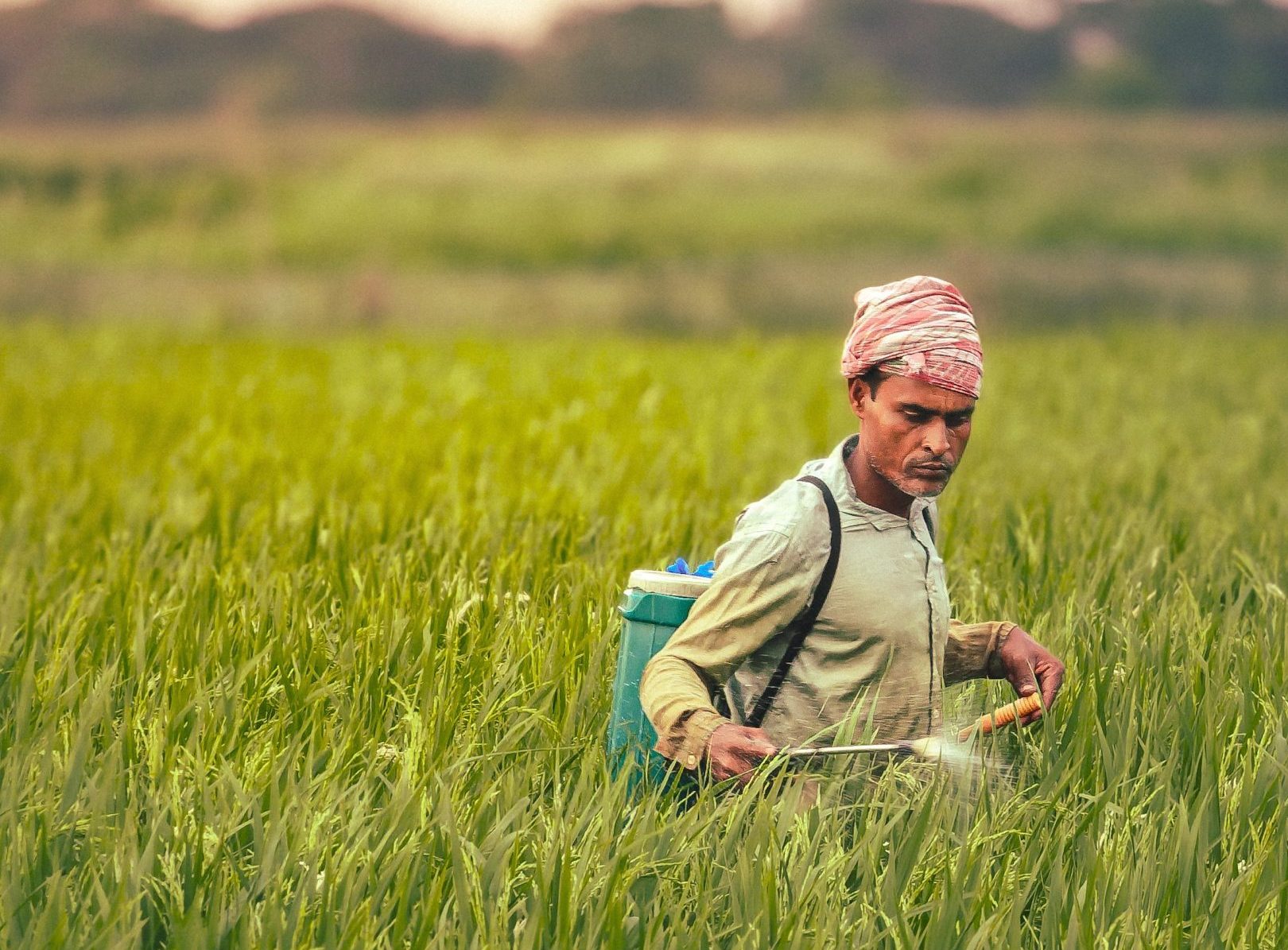
This Digital Platform is Predicting Pest and Disease Risk for Farms in 80 Indian Districts
Traditional pest and disease management in agriculture is reactive and relies on excessive pesticide use, endangering consumer health. An AI-based mobile platform is analyzing geospatial, satellite, and weather data to offer preventive measures instead.
Updated on: 30 September 2026

Sector

Solution

Technology

State of Origin
Disclaimer:
Features ‘as is’ submissions and neither constitutes endorsement, certification, recommendation, or validation by NITI Aayog nor makes NITI Aayog liable in any manner.
Impact Metrics
20 Indian crops
covered by the digital platform.
20–30% reduction in spraying
of prophylactic acid on crops.
17 lakh farmers
benefited directly or indirectly.
~34.8% boost in income
for farmers.
Traditionally, India’s approach to pest and disease management in agriculture has been reactive rather than anticipatory. These threats can cause heavy losses in an already strained economic sector. Unable to detect them early on, or to evaluate the scale of potential damage, millions of farmers resort to using pesticides as a default response to all crop infestations.
Unfortunately, this too has major negative effects. Not only does it increase expenditure on agricultural inputs and labor but it also endangers the health of consumers. There is thus a need to minimize crop losses from pests and diseases without excessive reliance on chemicals.
Niruthi Climate & Ecosystems Pvt. Ltd. of Hyderabad, Telangana offers a solution that fills this gap. Under founder Dr Ramakrishna Nemani, this climate startup has developed an AI-based digital platform that analyzes geospatial data to predict pest and disease risk. Since its launch in 2023, this platform—InfestSnap—has already boosted farmer incomes across India.
What does the platform offer?
Multiple data points can act as predictors of crop infestation by pests or diseases. These include ground observations, satellite data, crop-specific information, and weather data. By analyzing these over time, one may form informed guesses on which agricultural areas are most vulnerable, as well as on when infestations will occur and how they will spread.
InfestSnap incorporates precisely this analysis feature. Designed as a user-friendly mobile application, it allows users to enter whatever data they have available and then, using AI processing, provides week-by-week projections of crop health and potential threats.
Once a threat has been identified, the app notifies the user. It also offers product recommendations to help address the threat, making it possible for farmers to make plans and purchase any requisite materials in advance.
The data collected by the app can also be shared with policymakers, agrochemical companies, and other stakeholders to improve crop monitoring and make necessary interventions in an efficient manner. This innovation enables all parties to make informed decisions in terms of the use of pesticides and other chemicals, consequently boosting resource use efficiency.
Impact created by InfestSnap
Although InfestSnap was founded in 2023, the parent company, Niruthi, had existed since 2009. This meant that much of the infrastructure needed for commercializing the platform was already in place.
In the pilot phase, involving paddy crop analysis in Karnataka and Andhra Pradesh (2023–24), InfestSnap demonstrated positive results. As a result, it was adopted in 80 districts across India in the following year, providing its threat detection features for not only paddy but also apple, cotton, and maize. In 2025–26, with the support of the Gates Foundation, it expanded further to all 30 districts of Odisha. Funding from Dr Reddy’s Foundation also brought it to Srikakulam in Andhra Pradesh.
Today, the platform covers approximately 20 crops and has directly or indirectly benefited more than 17 lakh farmers through its analytical insights. After using InfestSnap, these farmers have reduced their spraying of prophylactic acid on crops by 25–30%. Overall, they have seen their incomes raised by ~34.8%, likely due to cost savings on inputs and labor.
How can this innovation be scaled?
Scaling the impact of InfestSnap further would require greater access to field data, which form the foundation of all crop infestation predictions. State governments could help make this data more easily available by facilitating partnerships between Niruthi and farmers, research teams, and Krishi Vigyan Kendras (KVKs). By continuously comparing its insights to real-world data, InfestSnap’s developers could increase the accuracy of threat detection, as well as identify more incisive means of targeting each threat.
As the platform’s AI algorithms improve, losses can drop significantly in agriculture, bringing both increased food security for consumers as well as higher economic stability for farmers. By adopting such platforms themselves, policymakers can demonstrate the government’s confidence in agritech and thus encourage greater innovation in the sector.
Share Your Story Today, Shape Viksit Bharat Tomorrow
Got an idea, innovation, or experience that's making a difference? Share your story now and ignite India's transformation because your voice can drive the future forward!
Disclaimer:
Features ‘as is’ submissions and neither constitutes endorsement, certification, recommendation, or validation by NITI Aayog nor makes NITI Aayog liable in any manner.
Resources to Replicate This Idea
BUILD YOUR OWN INTERVENTION
Handpicked stories tailored just for you
Explore stories that inspire, inform, and ignite new ideas across tech, innovation, and real-world impact


Powering India’s Digital Future Through AI, Semiconductor Innovation, and Human-Centred Governance
NagpurAI Infrastructure Labs is building an indigenous frontier-tech ecosystem spanning AI computing, semiconductor design, and aerospace manufacturing. Through its AP-DGI...
Read More