Transforming Rural Education: Space Science Labs in Himachal Pradesh Inspire Future STEM Leaders
In Bilaspur, Himachal Pradesh, IAS officer Dr. Nidhi Patel has launched the district’s first space science lab to engage rural students in robotics, astronomy, and 3D printing. This one-of-a-kind initiative is turning classrooms into launchpads for scientific curiosity and future careers in STEM.
Updated on: 19 June 2025

Sector

Solution

Technology

State of Origin
Impact Metrics
900+ students
learnt STEM-related topics through the space labs.
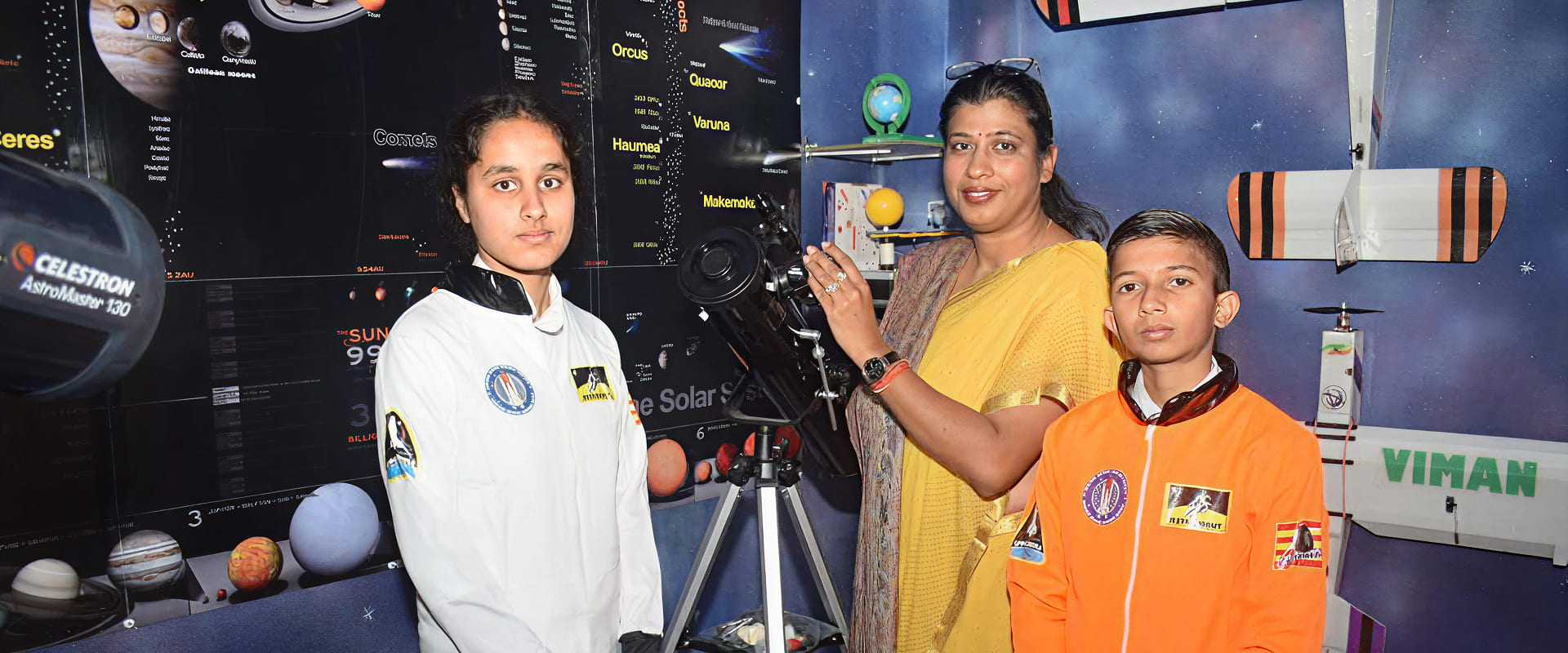
In the picturesque yet remote district of Bilaspur, Himachal Pradesh, a transformative educational initiative is unfolding. Spearheaded by Dr. Nidhi Patel, the Additional Deputy Commissioner, the district has inaugurated its first space lab at a government senior secondary school in Ghumarwin. This pioneering project is not just about introducing students to the wonders of space science; it is about reshaping the educational landscape for rural children who often find science abstract and inaccessible.
Fueled by Chandrayaan dreams
The inception of the space lab was inspired by the success of India’s Chandrayaan-3 mission and ISRO’s YUVIKA programme, which aims to familiarize young students with space technology. Dr. Patel, a 2018 batch IAS officer, was motivated by similar initiatives in other states and saw an opportunity to bring this innovative approach to her district. The lab, equipped with telescopes, drones, 3D printers, and models of significant Indian space missions, serves as a beacon of inspiration for students, aligning with India’s broader goals of fostering scientific temper and innovation.
The space lab offers a unique, hands-on learning experience that is rare in rural educational settings. Students engage with technologies such as obstacle-avoiding robots and light-tracking robots, making science tangible and exciting. This approach addresses the challenge of low school attendance and lack of motivation among rural students, as noted by Dr. Patel. By making subjects like geography and science more engaging, the initiative aims to retain students in school and inspire them to pursue careers in STEM fields.

Planting STEM roots in remote classrooms
This initiative is a strategic alignment with India’s vision of Atmanirbhar Bharat (self-reliant India) and Viksit Bharat (developed India). By cultivating interest in STEM fields among rural students, the project contributes to building a future workforce capable of driving technological and scientific advancements. The district administration’s allocation of Rs 10 lakh to establish the lab underscores the commitment to this vision, with plans to expand the initiative to more schools through CSR funding.
The measurable impact of the space lab is evident in the enthusiasm and aspirations of students like Shaurya, who dreams of becoming an aeronautical engineer. With over 900 students having visited the lab, the initiative has sparked a significant shift in attitudes towards science education. The district’s plan to set up additional labs and facilitate annual visits to ISRO for students further enhances the project’s potential for replication across India.

Why this could be the start of something bigger
The space lab in Bilaspur is more than an educational facility; it is a catalyst for change, offering rural students a glimpse into the possibilities of science and technology. By fostering a culture of curiosity and innovation, this initiative not only transforms individual lives but also contributes to India’s journey towards becoming a global leader in space exploration and technology. As more districts adopt similar models, the ripple effect could position India as a nation where every child, regardless of their geographical location, has the opportunity to reach for the stars.
Share Your Story Today, Shape Viksit Bharat Tomorrow
Got an idea, innovation, or experience that's making a difference? Share your story now and ignite India's transformation because your voice can drive the future forward!
BUILD YOUR OWN

BUILD YOUR OWN
How can I implement this innovation effectively?
How is this innovation being adopted around the world?
Where else could this innovation make an impact?
Who has seen real results from using this innovation?
What insights do experts share about this innovation?
What policies support or influence this innovation?
How could this innovation evolve in the future?
Is this innovation accessible and inclusive for everyone?
How can I contribute to or participate in this innovation?
What resources can help me explore this innovation further?
If you would like to know more about this innovation, fill this form to contact the innovator.
Handpicked stories tailored just for you
Explore stories that inspire, inform, and ignite new ideas across tech, innovation, and real-world impact

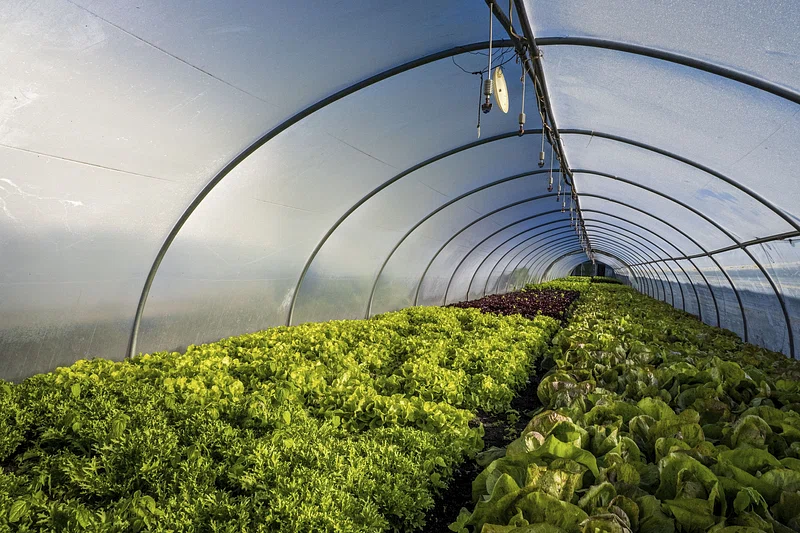
800,000 Sq Ft of Farms Now Run on AI-Driven Indoor Farming Systems
4CLIMATE is an Indian agri-tech company automating indoor farms using AI, IoT sensors, and cloud-based control systems. From climate and...
Read More