AI-Graded, Tissue-Culture-Backed Plant Straws: A Farmer-Linked Alternative to Single-Use Plastic
A straw made from naturally hollow plant stems offers an alternative to single-use plastic, using AI vision for quality grading, tissue culture for uniform planting stock and custom automation. Over 60,000 have been sold across India and abroad.
Updated on: 23 September 2026

Sector

Solution

Technology
AI

State of Origin
Disclaimer:
Features ‘as is’ submissions and neither constitutes endorsement, certification, recommendation, or validation by NITI Aayog nor makes NITI Aayog liable in any manner.
Single-use plastic packaging is a persistent pollutant of India’s water systems. Ajay Kumar, founder of Nava Prayoga Labs, describes seeing discarded packaging dumped into canals after village gatherings, where it breaks down into microplastics that reach fish, food and eventually people. The health effects are not yet fully documented, but microplastics are already in our bodies. Most substitutes still depend on factory processing and generate effluent.
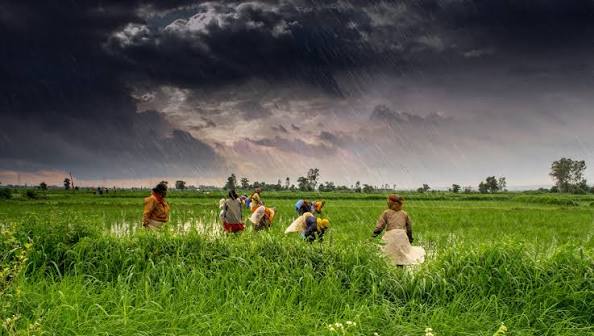
A second problem sits on the land. In perennially waterlogged and flood-affected regions, such as parts of Bihar and Kerala, traditional paddy yields are low and barely profitable, so large patches of land go underused.
The Intervention
After nine years as a senior data scientist, Ajay moved into product innovation, drawing on a long-standing maker culture. His inspiration was the banana leaf: a natural material that needs only water to clean and decomposes in soil. He applied that principle to the straw and looked for the closest thing nature offers, which is hollow plant stems.
Two years of field research across multiple species identified five candidates. Prototyping narrowed these to one species, with others earmarked for later. Nava Prayoga has produced a pilot batch and sold it to paying early customers, who were pleased with the experience and quality. The straws are used after cleaning with water and, as the founder puts it, can be thrown on soil to decompose.
How the Technology Works
The core innovation is the selection and use of the plant itself. Frontier technologies are being layered in to make it scalable and affordable:
- AI vision for quality grading. Machine vision grades the finished straws, replacing manual sorting and keeping quality consistent.
- Tissue culture. Plant material is multiplied in the lab so farmers receive uniform planting stock.
- Custom industrial automation. Off-the-shelf machinery does not exist for natural stems, so equipment is being built for this use case to reach a capacity target of 10 lakh straws a day.
- Farmer-linked supply chain. The model mirrors the contract farming behind paper, where farmers grow the raw material, which is then graded and processed.
Impact to Date
The company is still at pilot scale, and its numbers are modest. It has sold 60,000 straws, including 10,000 to a London-based restaurant supplier. Customers span Karnataka, Kerala, Goa, Rajasthan, Delhi, Mumbai and the Andaman Islands, and samples have gone to Mauritius and the UAE.
Relevance and Importance
Replacing plastic with a naturally hollow, soil-degradable material attacks pollution at its source, without the factory footprint of substitutes. The model also creates a new crop for land that conventional farming struggles to use. If it scales, the same hollow-stem approach could extend to other packaging applications.
Alignment with India’s Development Goals
- Plastic reduction and clean water: The product supports India’s drive to phase out single-use plastics and protect rivers and canals.
- Farmer livelihoods: A climate-resilient crop for waterlogged and flood-prone land aligns with the goal of raising farm incomes.
- Sustainable production (SDG 12) and climate action (SDG 13): Minimal-processing materials cut effluent and industrial emissions.
- Startup India and deep-tech: Support from TIDE 2.0 and an application to the Startup India Seed Fund show the startup pipeline at work.
- Exports: Demand from the diaspora and a London distributor shows potential for Indian green products abroad.
Challenges and Way Forward
Ajay’s biggest obstacle has been the lack of shared facilities. Biotech and tissue culture labs that are friendly to startups are scarce. Academic labs serve students and commercial labs serve commercial clients, leaving startups “lost in the middle”. His research stalled for about five months for lack of access. Attempts to partner with universities have so far not been fruitful. He points to prototyping hubs like T-Works as the model that biotech needs. The next step is scale: funding for plantation growth and automation, with the Genesis scheme as a hoped-for route.
Share Your Story Today, Shape Viksit Bharat Tomorrow
Got an idea, innovation, or experience that's making a difference? Share your story now and ignite India's transformation because your voice can drive the future forward!
Disclaimer:
Features ‘as is’ submissions and neither constitutes endorsement, certification, recommendation, or validation by NITI Aayog nor makes NITI Aayog liable in any manner.
Resources to Replicate This Idea
BUILD YOUR OWN INTERVENTION
Handpicked stories tailored just for you
Explore stories that inspire, inform, and ignite new ideas across tech, innovation, and real-world impact

Pilotless Cargo Flights with Zero Failures: Reimagining Diagnostic Logistics in Indian Cities
An energy-efficient autonomous aircraft combining vertical take-off with fixed-wing cruise has completed over 1,000 flights carrying diagnostic samples between hospitals,...
Read More