AI Robots Cut Pesticide Use and Costs with Precision Spraying for Indian Farmers
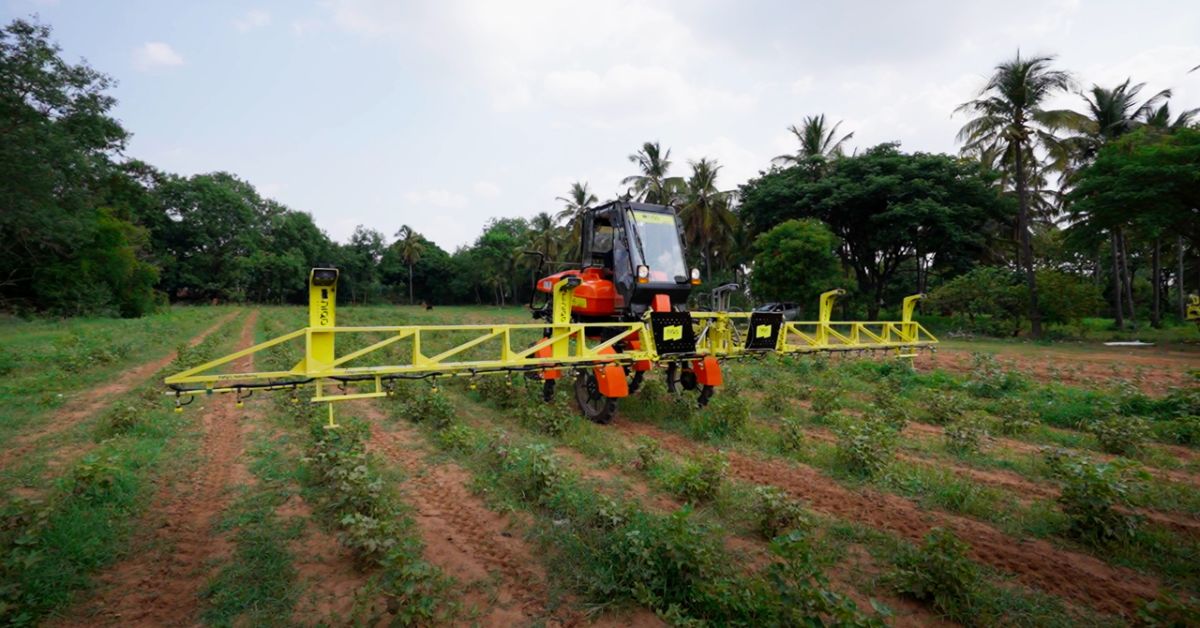
Niqo Robotics, founded by engineer Jaisimha Rao, uses AI-powered robots with day-and-night vision cameras to spray pesticides only where needed, reducing chemical use and improving soil health. Already serving 500+ farmers in Karnataka and Maharashtra, this ₹350-per-acre precision service cuts pesticide costs by up to 60%, making sustainable, affordable precision agriculture a reality for Indian farms.
Share



Sector

Solution

Technology

State of Origin
Disclaimer:
- Features ‘as is’ submissions and neither constitutes endorsement, certification, recommendation, or validation by NITI Aayog nor makes NITI Aayog liable in any manner.
- Features ‘as is’ submissions and neither constitutes endorsement, certification, recommendation, or validation by NITI Aayog nor makes NITI Aayog liable in any manner.
- Features ‘as is’ submissions and neither constitutes endorsement, certification, recommendation, or validation by NITI Aayog nor makes NITI Aayog liable in any manner.
- Features ‘as is’ submissions and neither constitutes endorsement, certification, recommendation, or validation by NITI Aayog nor makes NITI Aayog liable in any manner.
Impact Metrics
50-60% reduction
in pesticide use.
3,000+ farmers
empowered across India and the US.
140,000 acres
with better soil health and lower input costs.
Resources to Replicate This Idea
BUILD YOUR OWN INTERVENTION
Additional Research
How can I implement this innovation effectively?
How is this innovation being adopted around the world?
Where else could this innovation make an impact?
Who has seen real results from using this innovation?
What insights do experts share about this innovation?
What policies support or influence this innovation?
How could this innovation evolve in the future?
Is this innovation accessible and inclusive for everyone?
How can I contribute to or participate in this innovation?
What resources can help me explore this innovation further?
From Field Trials to Scale: Unpacking the Realities of AI-Driven Spot Spraying in Indian Agriculture
The integration of AI-powered spot spray robots, such as those pioneered by Niqo Robotics, is redefining the landscape of Indian agriculture. Moving away from conventional blanket pesticide application, these technologies promise precision, sustainability, and cost-effectiveness. Yet, their successful implementation hinges on a nuanced understanding of India’s agricultural diversity, infrastructural constraints, and the socio-economic realities of smallholder farmers. Drawing on recent deployments, policy frameworks, and expert analysis, this section explores the critical factors shaping the adoption and scaling of AI spot spraying in India.
Farmer-Centric Design: Bridging Technology and Rural Realities
A cornerstone of Niqo Robotics’ approach is its compatibility with existing tractor-mounted sprayers, a feature that directly addresses the financial limitations of India’s predominantly small and marginal farmers. By eliminating the need for expensive new machinery, Niqo’s robots lower the entry barrier for technology adoption. This design choice is particularly impactful in states like Maharashtra and Karnataka, where over 3,000 farmers have reported pesticide reductions of 50–60% and notable cost savings since integrating the robots into their operations. The robots’ ability to function in both daylight and darkness, coupled with intuitive interfaces requiring minimal training, further enhances accessibility for users with limited digital literacy. These real-world outcomes underscore the importance of localized, farmer-first innovation—a principle echoed in the National Mission on Sustainable Agriculture (NMSA), which prioritizes eco-friendly and scalable solutions for Indian conditions.
Institutional Support and Innovative Business Models: Catalysts for Adoption
The role of institutional partnerships is pivotal in accelerating the diffusion of AI spot spraying. Collaborations between Niqo Robotics and state agricultural departments, as well as pilot programs with agricultural universities, have demonstrated the value of hands-on training and demonstration plots. For instance, Maharashtra’s Department of Agriculture has facilitated field trials and farmer awareness sessions, fostering trust and knowledge transfer. Additionally, Niqo’s planned rental and service partner models convert capital expenditure into manageable operational costs, making advanced robotics accessible to smallholders. This mirrors the success of custom hiring centers promoted under the Sub-Mission on Agricultural Mechanization (SMAM), which have expanded access to modern equipment through shared services.
Policy Alignment and Data Governance: Building an Enabling Ecosystem
The broader policy landscape is increasingly supportive of AI-driven agricultural innovation. The IndiaAI Mission, with a budget exceeding Rs 10,000 crore, aims to strengthen AI infrastructure, promote responsible adoption, and foster public-private collaboration. Complementary schemes such as the Paramparagat Krishi Vikas Yojana (PKVY) and the Digital India Land Records Modernization Programme (DILRMP) provide a framework for integrating precision technologies with sustainable and digital agriculture goals. However, as AI systems collect and process vast amounts of farm data, concerns around data privacy and security are rising. The Ministry of Electronics and Information Technology (MeitY) is developing AI governance frameworks to ensure transparency, farmer consent, and ethical use of data. Alignment with these frameworks is essential for building farmer trust and ensuring long-term sustainability.
Expert Perspectives: Contextualizing Implementation Challenges and Opportunities
Indian experts emphasize that technology alone is insufficient—contextual adaptation and ecosystem support are critical. Dr. Ramesh Chand, Member of NITI Aayog, notes, “Precision agriculture tools like AI spot spray robots can transform input efficiency and environmental outcomes, but their impact depends on robust extension services and farmer education.” The Centre for Responsible AI (CeRAI) advocates for inclusive design and transparent data practices, highlighting the need for AI solutions that are both effective and equitable. Academic collaborations, such as those between the Indian Council of Agricultural Research (ICAR) and leading IITs, have yielded AI models tailored for diverse Indian crops and agro-climatic zones, reinforcing the importance of localized research and capacity building.
Scaling Up: Infrastructure, Training, and Financial Innovation
For AI spot spraying to achieve national scale, several practical considerations must be addressed. Reliable rural power supply and maintenance networks are prerequisites for sustained robot operation. Localized, language-appropriate training materials—delivered through extension services and digital platforms—are vital for widespread adoption, especially among digitally underserved communities. Financially, affordable leasing and pay-per-use schemes can democratize access, as evidenced by the success of similar models in the custom hiring sector. Policy alignment with government initiatives promoting sustainable agriculture and digital inclusion will further ease the path to scale.
India’s journey with AI-powered spot spraying is emblematic of its broader digital agriculture transformation: success depends not just on technological innovation, but on thoughtful integration with local realities, institutional support, and enabling policy.
A World of Innovation: How Nations Shape the Future of AI-Powered Precision Agriculture
The global landscape of precision agriculture is rapidly evolving, with artificial intelligence (AI) and robotics at its core. Countries are charting distinct paths, influenced by their agricultural structures, policy priorities, and technological capabilities. India’s Niqo Robotics stands as a compelling example of how local realities drive unique innovations, especially when contrasted with models from the United States, Europe, and China. Understanding these varied approaches offers critical insights for shaping India’s policy and technology trajectory.
Divergent Models: Comparing the U.S., Europe, China, and India
In the United States, firms like Blue River Technology—now part of John Deere—have set benchmarks with AI-driven spot spraying robots. These machines use advanced computer vision to identify and target weeds, achieving up to 90% reductions in herbicide use for crops such as cotton and soybeans. However, their high cost and large-scale design align with the U.S.’s expansive commercial farms, supported by robust venture capital and a regulatory environment that encourages agri-tech innovation.
Europe, particularly the Netherlands and Germany, emphasizes sustainability through precision agriculture, underpinned by strong government subsidies and research partnerships. The European Union’s Common Agricultural Policy (CAP) not only incentivizes the adoption of environmentally friendly technologies—including AI-powered spot spraying—but also integrates these goals with direct income support for farmers. This policy-driven ecosystem has accelerated the uptake of precision tools, as seen in Dutch greenhouse automation and German field robotics.
China’s approach is characterized by state-led, top-down initiatives focused on food security and rural modernization. The government has deployed AI-powered drones and robots at scale, particularly for pest control and yield monitoring, as part of its “Digital Agriculture and Rural Development Plan.” This model leverages centralized funding and policy direction, but contrasts with India’s more decentralized, farmer-centric landscape.
India, by contrast, adapts AI and robotics to its predominantly smallholder farming system. Niqo Robotics’ ground-based, tractor-compatible spot spray robots are designed for India’s diverse crops and fragmented landholdings. This contextual innovation reflects both economic necessity and policy evolution.
Policy Lessons: Integrating Precision Agriculture into Broader Agendas
Global experiences highlight the importance of embedding precision agriculture within comprehensive policy frameworks. The EU’s CAP and China’s rural modernization plans offer instructive models for India. Integrating AI-powered precision tools into national sustainability, food security, and rural development schemes could amplify their impact.
Indian policymakers are beginning to move in this direction. The promote reduced chemical use and eco-friendly practices, providing fertile ground for precision spraying technologies. However, experts argue that further alignment—such as direct incentives for AI adoption and public-private partnerships—could accelerate progress.
Real-World Impact: Case Studies from India and Abroad
The practical benefits of AI-driven precision agriculture are increasingly evident. In India, Niqo Robotics’ deployments in Maharashtra and Karnataka have enabled farmers to reduce pesticide costs by over 50%, while improving crop health and minimizing environmental harm. For example, Ramesh Patil, a farmer in Ahmednagar, reported healthier crops and significant savings after adopting Niqo’s robot.
In the U.S., large-scale adoption of Blue River’s See & Spray technology has led to dramatic reductions in chemical usage and operational costs for commercial growers. Similarly, Dutch tomato growers have leveraged AI-powered robots to optimize nutrient delivery and pest management, contributing to the Netherlands’ status as a global leader in agricultural productivity.
Expert Perspectives: Indian Voices on Responsible AI Adoption
Indian thought leaders emphasize the need for context-aware, inclusive, and responsible AI deployment. Dr. Ramesh Chand, Member of NITI Aayog, has stated, “Precision agriculture technologies can transform Indian farming, but their success hinges on integration with extension services, farmer education, and supportive policy.” The at IIT Madras advocates for transparent, ethical AI governance, highlighting the importance of data privacy and farmer rights.
Academic collaborations, such as those between the Indian Council of Agricultural Research (ICAR) and IITs, have yielded AI models for early pest and disease detection tailored to Indian crops. These efforts underscore the value of homegrown research and capacity building.
Pathways Forward: International Collaboration and Capacity Building
India stands to benefit from global partnerships and knowledge exchange. Initiatives like the aim to enhance AI infrastructure and policy alignment, supporting technology transfer and innovation. Additionally, the provide a comparative lens on global trends, offering valuable guidance for Indian policymakers and innovators.
To maximize the potential of AI-powered precision agriculture, India must continue to foster public-private partnerships, invest in farmer-centric training, and align technology adoption with broader sustainability and rural development goals. By learning from global models while prioritizing local realities, India can chart a path toward more productive, sustainable, and inclusive agriculture.
AI-Driven Innovations: Expanding the Horizons of Indian Agriculture
Artificial intelligence and robotics are rapidly transforming Indian agriculture, moving beyond isolated pilot projects to become integral tools in the sector’s modernization. From precision spraying to digital land records, AI-powered applications are addressing longstanding challenges—such as resource inefficiency, market access, and environmental sustainability—while opening new avenues for farmer empowerment and rural development. The following sections explore the breadth of these applications, highlighting research-backed innovations, policy linkages, and real-world impact across India.
Precision Agriculture: From Drones to Ground Robots
AI-enabled precision agriculture technologies are revolutionizing how Indian farmers manage crops and resources. In Punjab and Haryana, AI-powered drones are deployed for aerial crop monitoring and targeted spraying, enabling early detection of pest infestations and nutrient deficiencies. These drones generate high-resolution imagery, allowing for timely interventions that can prevent crop losses. However, as Sreeshankar Nair, founder of Niqo Robotics, points out, “India’s fragmented landholdings and diverse terrains often limit the scalability of aerial drones, making ground-based robotics a necessary complement.” Niqo’s spot spray robots, designed to navigate small and irregular plots, exemplify this adaptation—delivering pesticides only where needed and reducing chemical usage by up to 60% in field trials.
AI in Farm and Dairy Management: Private Sector Innovations
Indian agri-tech startups are at the forefront of integrating AI into farm and livestock management. CropIn, for example, leverages AI to analyze satellite and field data, providing farmers with actionable insights on input optimization, yield prediction, and risk management. Their platform has been adopted by over 200 agribusinesses and government agencies, impacting millions of farmers nationwide. In the dairy sector, Stellapps employs AI and Internet of Things (IoT) technologies to monitor cattle health, milk quality, and supply chain logistics. By automating data collection and analysis, Stellapps has helped dairy cooperatives in states like Karnataka and Tamil Nadu improve productivity and traceability, directly benefiting smallholder farmers. These innovations underscore the private sector’s role in scaling AI solutions tailored to India’s unique agricultural landscape.
Government-Led Digital Transformation: Policy and Platforms
The Indian government has recognized AI’s transformative potential and embedded it within flagship initiatives. The Digital India Land Records Modernization Programme (DILRMP) utilizes AI to digitize and verify land records, reducing disputes and improving access to credit for farmers. Meanwhile, the National Agriculture Market (e-NAM) platform incorporates AI algorithms to match buyers and sellers, optimize logistics, and provide real-time price discovery, enhancing market access for over 1.7 crore farmers. The broader IndiaAI Mission, with a budget exceeding Rs 10,000 crore, aims to build AI infrastructure, support startups, and develop governance frameworks for responsible AI adoption in agriculture and beyond. These policy initiatives create an enabling environment for the integration and scaling of AI technologies across the sector.
Academic and Research Contributions: Bridging Science and Practice
Indian academic institutions are pivotal in developing and validating AI applications for agriculture. The Indian Council of Agricultural Research (ICAR), in partnership with leading IITs, has launched AI-driven projects for pest detection, soil health monitoring, and disease forecasting. For instance, collaborative research between ICAR and IIT Kharagpur has yielded AI models capable of early detection of rice and wheat diseases, reducing crop losses and pesticide misuse. The National Institute of Agricultural Extension Management (MANAGE) and the Centre for Sustainable Agriculture regularly document and assess the impact of such pilot projects, providing evidence-based recommendations for policymakers and practitioners. These efforts ensure that AI solutions are grounded in local agronomic realities and are accessible to smallholder farmers.
Expert Perspectives: Indian Voices on Responsible AI Adoption
Indian experts consistently emphasize the need for context-aware, inclusive, and ethical AI deployment in agriculture. Dr. Ramesh Chand, Member of NITI Aayog, asserts, “Precision technologies like AI-powered spot spray robots can significantly lower input costs and environmental harm, but their success hinges on robust extension services and farmer training.” The Centre for Responsible AI (CeRAI) advocates for transparent, equitable AI systems, highlighting the importance of data privacy and farmer rights. Academic leaders from IIT Bombay and the Indian Agricultural Research Institute (IARI) have contributed to the development of AI-based crop and weed identification tools, reinforcing the scientific rigor behind these innovations. Their collective insights underscore the necessity of embedding AI within a supportive ecosystem of policy, finance, and capacity building.
—
By integrating AI and robotics across multiple domains—from precision spraying and digital records to dairy management and market access—India is charting a path toward more sustainable, efficient, and inclusive agriculture. These related applications not only complement technologies like Niqo Robotics’ spot spray system but also demonstrate the sector-wide potential of AI to transform rural livelihoods and food systems.
Transforming Indian Agriculture: Real Stories of AI-Driven Change
Across India’s diverse agricultural landscape, the introduction of Niqo Robotics’ AI-powered spot spray robots is catalyzing a profound shift in how farmers manage crops, resources, and livelihoods. From the fields of Maharashtra to the coffee estates of Karnataka, these technologies are not only enhancing productivity but also addressing long-standing challenges related to health, cost, and sustainability. The following impact stories, grounded in real-world experiences and supported by policy and research, illustrate the multifaceted benefits and transformative potential of AI in Indian agriculture.
Precision Spraying: Economic Relief and Environmental Gains
In Ahmednagar district, Maharashtra, the adoption of Niqo Robotics’ spot spray robots has yielded measurable economic and ecological benefits. Ramesh Patil, a smallholder farmer, reported a 55% reduction in pesticide expenditure after transitioning from blanket spraying to targeted application. “Previously, we sprayed the entire field, wasting chemicals and harming the soil. Now, the robot sprays only where needed, and my crops are visibly healthier,” Patil shared in a local news feature. The savings have enabled him to reinvest in quality seeds and improved irrigation, directly boosting farm productivity.
This experience aligns with findings from the Centre for Sustainable Agriculture, which highlights that precision spraying not only curbs input costs but also mitigates soil and water contamination—a critical concern in regions grappling with agrochemical overuse. Such outcomes support national policy objectives under the National Mission on Sustainable Agriculture (NMSA), which prioritizes reduced chemical inputs and eco-friendly practices.
Health and Safety: Protecting Agricultural Workers
The health implications of AI-driven precision spraying are particularly evident in Karnataka’s coffee plantations near Coorg, where manual pesticide application has long exposed workers to hazardous chemicals. Plantation manager Anjali Rao observed, “The robot’s accuracy means fewer chemicals are released into the environment and our workers face less exposure. It also navigates hilly terrain where manual spraying is risky and inefficient.”
This reduction in chemical exposure directly addresses occupational health risks documented by the Indian Council of Medical Research (ICMR), which has called for safer agricultural practices in high-risk zones. The robots’ ability to operate in challenging landscapes further expands their relevance to India’s varied agro-ecological regions, supporting the government’s commitment to sustainable and safe agriculture.
Lowering Barriers: Accessibility and Ease of Adoption
A significant factor driving the uptake of Niqo Robotics’ technology is its user-centric design. Farmers consistently report that the robots require minimal training and are compatible with existing tractors, reducing the learning curve and initial investment. This accessibility is crucial for small and marginal farmers, who often lack the resources for complex mechanization.
NGOs such as the Centre for Sustainable Agriculture and the National Institute of Rural Development and Panchayati Raj (NIRDPR) have documented how these features facilitate broader adoption, particularly among women and marginalized groups who traditionally face barriers to technology access. Digital literacy initiatives under the Digital India program further empower these communities, ensuring that the benefits of AI reach the grassroots.
Expert Perspectives: Indian Thought Leadership on AI in Agriculture
Indian experts and institutions are at the forefront of evaluating and guiding the responsible deployment of AI in agriculture. Dr. Ramesh Chand, Member of NITI Aayog, emphasizes that “AI-powered solutions like spot spray robots can reduce input costs and environmental damage, but their impact will be maximized only through integration with extension services and robust farmer education.”
The Centre for Responsible AI (CeRAI) advocates for transparent, inclusive, and ethical AI adoption, underscoring the need for governance frameworks that protect farmer rights and environmental interests. Researchers at IIT Bombay and the Indian Agricultural Research Institute (IARI) have contributed to the development of AI models for crop and weed identification, providing the scientific foundation for precision technologies.
These perspectives converge on the necessity of embedding AI solutions within a supportive ecosystem—one that combines policy, finance, and capacity-building to ensure that technology serves the needs of India’s diverse farming communities.
Policy Alignment: Enabling Sustainable Innovation
The Indian government’s proactive policy environment has played a critical role in fostering AI adoption in agriculture. The IndiaAI Mission, with a budget exceeding Rs 10,000 crore, is building national AI infrastructure and supporting agri-tech innovation through funding, skilling, and data access. The Ministry of Electronics and Information Technology (MeitY) is simultaneously developing AI governance frameworks to address ethical, privacy, and security concerns.
Agricultural policies such as the NMSA and PKVY provide a policy context that encourages reduced chemical use and sustainable practices—objectives directly advanced by precision spraying technologies. Complementary digital initiatives like the Digital India Land Records Modernization Programme (DILRMP) and the e-NAM platform further integrate AI into the broader agricultural ecosystem.
—
References:
–
–
–
–
–
–
Harnessing Expertise: Indian Thought Leadership on AI in Agriculture
India’s agricultural transformation is increasingly shaped by the insights and guidance of leading experts and institutions, who advocate for the responsible and context-sensitive deployment of artificial intelligence. Their perspectives underscore not only the immense promise of AI-driven solutions—such as precision spraying robots—but also the critical need for robust policy frameworks, farmer-centric design, and ethical governance. Drawing from the work of policymakers, researchers, and advocacy groups, this section explores how Indian expertise is charting the course for AI’s integration into the nation’s agricultural landscape.
Precision Agriculture: Economic and Environmental Imperatives
Dr. Ramesh Chand, Member of NITI Aayog and a prominent agricultural economist, has repeatedly emphasized the dual benefits of precision agriculture technologies in India: raising farm incomes and advancing sustainability. In a recent policy dialogue, Dr. Chand noted, “AI-powered solutions like spot spray robots can reduce input costs and environmental damage, but scaling requires integration with extension services and farmer education.” This perspective is reflected in pilot projects across Punjab and Maharashtra, where AI-enabled spot spraying has led to input cost reductions of up to 30% and measurable decreases in chemical runoff.
Such outcomes align with national policy priorities, including the National Mission on Sustainable Agriculture (NMSA), which promotes eco-friendly practices and reduced chemical usage. These initiatives provide fertile ground for the adoption of AI-driven precision tools, reinforcing the economic and environmental rationale articulated by leading Indian experts.
Responsible AI: Governance, Ethics, and Farmer Rights
The Centre for Responsible AI (CeRAI) at the Indian Institute of Technology Madras has emerged as a thought leader in advocating for safe, transparent, and inclusive AI adoption in agriculture. CeRAI’s research highlights the necessity of robust governance frameworks that balance innovation with the protection of farmer rights and environmental safeguards. Their policy briefs stress the importance of data privacy, algorithmic transparency, and participatory design—ensuring that AI systems do not exacerbate existing inequities or undermine trust among rural communities.
CeRAI’s recommendations have informed the Ministry of Electronics and Information Technology’s (MeitY) draft AI governance frameworks, which call for sector-specific ethical guidelines and farmer consent protocols.
Scientific Innovation: From Lab to Field
Academic institutions such as the Indian Institute of Technology (IIT) Bombay and the Indian Agricultural Research Institute (IARI) have played a pivotal role in developing and validating AI models tailored to Indian agriculture. Researchers at IIT Bombay have pioneered deep learning algorithms for crop and weed identification, which underpin the technological foundation of commercial solutions like Niqo Robotics’ spot spray robots. Field trials conducted in partnership with state agricultural universities have demonstrated high accuracy rates in weed detection across diverse cropping systems, from paddy fields in West Bengal to cotton farms in Telangana.
These scientific advancements are disseminated through platforms like the IndiaAI portal and peer-reviewed publications, fostering collaboration between academia, industry, and government. Such partnerships ensure that AI innovations remain grounded in the realities of Indian agriculture, addressing region-specific challenges and crop diversity.
Farmer-Centric Design and Capacity Building
A recurring theme among Indian experts is the imperative for AI technologies to be farmer-centric and accessible. Dr. Suman Sahai, founder of the Gene Campaign, has argued that “technology must be demystified and adapted to the needs of smallholders, who form the backbone of Indian agriculture.” This ethos is reflected in the design of AI-powered tools compatible with existing tractors and operable with minimal training—features that lower adoption barriers for small and marginal farmers.
Capacity building is equally crucial. Extension services, digital literacy initiatives under the Digital India program, and targeted training for women farmers are cited as essential components for equitable AI adoption. The success of these efforts is evident in pilot programs in Andhra Pradesh, where community-based training has led to increased uptake of precision spraying technologies among women-led farmer producer organizations.
Convergence of Policy, Research, and Practice
Indian expert perspectives converge on the necessity of embedding AI in agriculture within a supportive ecosystem—one that integrates policy, finance, research, and grassroots engagement. The collaborative approach adopted by institutions like NITI Aayog, CeRAI, IITs, and farmer organizations exemplifies this convergence, fostering an environment where technological innovation is matched by ethical stewardship and farmer empowerment.
Catalyzing Agricultural Transformation: India’s Policy Landscape for AI Adoption
India’s agricultural sector stands at a pivotal juncture, with artificial intelligence (AI) poised to revolutionize productivity, sustainability, and rural livelihoods. The government has responded with a suite of forward-thinking policies that not only encourage AI innovation but also ensure its responsible, inclusive, and impactful deployment. From flagship missions to targeted agricultural schemes, these policies create a robust ecosystem for technologies like Niqo Robotics’ spot spray system to thrive, addressing both national priorities and global sustainability commitments.
Building a National AI Ecosystem: The IndiaAI Mission
The IndiaAI Mission, approved with an allocation exceeding ₹10,000 crore, forms the backbone of India’s AI strategy. Spearheaded by the Ministry of Electronics and Information Technology (MeitY), this mission aims to establish world-class AI infrastructure, foster innovation, and promote ethical AI adoption across sectors—including agriculture. Key pillars include:
– Compute Capacity: Establishment of high-performance computing infrastructure accessible to startups and researchers, enabling the development of advanced agri-tech solutions.
– Data Access: Creation of repositories for non-personal agricultural datasets, facilitating the training of AI models for crop health monitoring, pest detection, and yield prediction.
– Startup Support: Funding and skilling initiatives designed to accelerate AI entrepreneurship, with a focus on rural and agricultural applications.
For instance, Niqo Robotics has leveraged these policy supports to pilot and scale its precision spraying technology, which targets weeds with minimal chemical use—aligning with both innovation and sustainability goals.
Policy Synergy: Sustainable Agriculture and Digital Integration
India’s agricultural policy framework actively encourages the adoption of eco-friendly and technology-driven practices. The Paramparagat Krishi Vikas Yojana (PKVY) and the National Mission on Sustainable Agriculture (NMSA) prioritize reduced chemical inputs and sustainable methods, creating fertile ground for precision AI tools. Niqo Robotics’ spot spray system, which minimizes herbicide use, directly supports these policy objectives.
Digital integration is further advanced through initiatives like the Digital India Land Records Modernization Programme (DILRMP) and the e-NAM (National Agriculture Market) platform. These programs digitize land records and streamline market access, making it easier for AI-powered solutions to integrate with existing agricultural workflows.
Responsible AI: Governance, Ethics, and Citizen Trust
Recognizing the transformative power of AI, Indian policymakers are proactively addressing concerns around ethics, privacy, and security. MeitY’s recent policy reports outline frameworks for AI governance, emphasizing transparency, accountability, and citizen rights. The Centre for Responsible AI (CeRAI) at IIT Madras collaborates with government agencies to develop guidelines that balance innovation with safeguards.
These frameworks are not merely aspirational. For example, pilot projects deploying AI in agriculture undergo rigorous data privacy assessments and community consultations. This approach builds trust among farmers and rural communities, a critical factor for widespread adoption.
Inclusive Access: Bridging the Digital Divide
Ensuring that AI-powered agricultural technologies benefit all segments of society is a central policy concern. The Digital India initiative and the skilling components of the IndiaAI Mission target rural and marginalized communities, offering digital literacy programs and hands-on training. Niqo Robotics’ user-friendly design—compatible with existing tractors and operable with minimal training—addresses accessibility barriers for smallholders and women farmers.
Expert Perspectives: Indian Leadership in AI-Driven Agriculture
Indian experts and institutions are at the forefront of shaping AI policy for agriculture. Dr. Anil K. Gupta, founder of the Honey Bee Network, emphasizes, “India’s policy environment is uniquely positioned to harness grassroots innovation and advanced AI, creating scalable solutions for diverse agro-ecological zones.” Collaborative platforms such as the India-U.S. TRUST Initiative are expanding computational resources and fostering international best practices.
—
By integrating innovation, sustainability, ethical governance, and inclusivity, India’s policy framework is setting the stage for a transformative leap in agricultural productivity and rural prosperity—demonstrating how targeted policy can catalyze technological adoption at scale.
Charting the Next Frontier: AI’s Transformative Potential in Indian Agriculture
As India’s agricultural sector embraces digital transformation, the convergence of artificial intelligence (AI), robotics, and data-driven insights is poised to redefine how food is grown, managed, and distributed. The evolution of precision agriculture—exemplified by innovations like Niqo Robotics’ spot spray robots—signals a shift toward integrated, intelligent farm management systems. These advancements promise not only greater efficiency and sustainability but also the democratization of technology for India’s diverse farming communities. The following analysis explores the research-backed possibilities shaping the future of AI in Indian agriculture.
Integrated Farm Management: From Spot Spraying to Holistic Solutions
The next generation of AI-powered agricultural technologies is moving beyond single-function tools toward comprehensive farm management platforms. Niqo Robotics’ spot spray robots, initially designed for targeted pest control, are now being developed to integrate nutrient management and yield prediction. By leveraging AI models capable of multi-crop and multi-pest detection, these systems can adapt to the complexity of India’s agro-ecological zones—from Punjab’s wheat fields to Kerala’s spice plantations.
Integration with Internet of Things (IoT) sensors and satellite imagery is enabling real-time, field-level insights. For example, the Indian Space Research Organisation (ISRO) collaborates with agri-tech startups to provide satellite-based crop health monitoring, which, when combined with AI analytics, can optimize irrigation, fertilization, and pest management strategies. This holistic approach aligns with the government’s Digital Agriculture Mission, which seeks to harness data and emerging technologies for smarter, more resilient farming.
Democratizing Access: Rental Models and Cooperative Partnerships
One of the most significant challenges in deploying advanced agri-tech is ensuring accessibility for India’s 120 million smallholder farmers. Research from the Centre for Sustainable Agriculture highlights that high upfront costs and fragmented landholdings often hinder technology adoption. To address this, rental and service-based models are gaining traction. Niqo Robotics, for instance, partners with Farmer Producer Organizations (FPOs) to offer spot spray robots as a pay-per-use service, reducing financial barriers and enabling collective adoption.
This approach is supported by government initiatives such as the Sub-Mission on Agricultural Mechanization, which incentivizes custom hiring centers and cooperative models. By pooling resources, smallholders can access cutting-edge AI tools without incurring prohibitive expenses.
Building AI Infrastructure: National Missions and Global Collaborations
Robust digital infrastructure is foundational to the widespread deployment of AI in agriculture. The IndiaAI Mission, launched by the Ministry of Electronics and Information Technology (MeitY), is investing in high-performance computing, data platforms, and AI research hubs to support innovation across sectors, including agriculture. The India-U.S. TRUST Initiative further strengthens this ecosystem by fostering international collaboration on AI infrastructure, policy, and funding.
These efforts are complemented by public-private partnerships with Indian research institutions such as the Indian Council of Agricultural Research (ICAR) and the Centre for Responsible AI (CeRAI), which are developing ethical frameworks and best practices for responsible AI deployment in rural contexts. The synergy between national missions and global alliances is expected to accelerate the translation of AI research into scalable, field-ready solutions.
Advancing Sustainability and India’s SDG Commitments
AI-driven precision agriculture holds significant promise for advancing India’s commitments under the United Nations Sustainable Development Goals (SDGs), particularly SDG 2 (Zero Hunger) and SDG 12 (Responsible Consumption and Production). By enabling targeted application of agrochemicals, these technologies can reduce input waste, minimize environmental pollution, and improve soil health. A 2023 pilot in Maharashtra demonstrated a 30% reduction in pesticide use and a measurable increase in crop yields following the adoption of AI-guided spraying systems.
Moreover, data-driven decision-making empowers farmers to adapt to climate variability, mitigate risks, and enhance productivity—key factors for improving rural livelihoods and food security.
Expert Perspectives: Indian Thought Leadership on AI in Agriculture
Indian experts emphasize the need for context-sensitive innovation and inclusive policy frameworks. Dr. Shailendra Rajan, Director of the ICAR-Central Institute for Subtropical Horticulture, notes, “AI solutions must be tailored to local cropping patterns and socio-economic realities. Collaborative research and farmer-centric design are critical for meaningful impact.” The Centre for Responsible AI (CeRAI) advocates for transparent, accountable AI systems that safeguard farmer data and promote equitable access.
Policy think tanks such as NITI Aayog and the Indian School of Business (ISB) are actively shaping the discourse on AI governance, emphasizing the importance of public engagement, ethical standards, and capacity building. Their research highlights that the future of AI in Indian agriculture will depend not only on technological innovation but also on sustained investment in digital literacy, infrastructure, and inclusive policy design.
In sum, the trajectory of AI-powered agriculture in India is being defined by a confluence of technological breakthroughs, collaborative models, and visionary policy initiatives. As these elements align, the sector stands on the cusp of a transformation that could secure food systems, empower rural communities, and set new global benchmarks for sustainable farming.
Bridging the Digital Divide: Making AI in Agriculture Truly Inclusive
As India accelerates its adoption of AI-powered agricultural technologies, ensuring that these innovations are accessible to rural, gender-diverse, and marginalized communities is not just a matter of technological progress—it is a prerequisite for equitable and sustainable development. Without deliberate efforts to address barriers related to affordability, digital literacy, and socio-cultural norms, the benefits of AI risk bypassing those who need them most.
Designing for Smallholders: Practical Solutions in the Field
India’s agricultural landscape is dominated by small and marginal farmers, many of whom lack access to advanced machinery and digital tools. Niqo Robotics, an Indian agri-tech startup, exemplifies how thoughtful product design can enhance accessibility. Their AI-driven robots are compatible with standard tractors, require minimal training, and can operate in diverse lighting conditions—features that directly address the needs of smallholders, including women farmers who are often excluded from mechanized agriculture due to limited access and training.
This approach mirrors the recommendations of the Centre for Sustainable Agriculture, which emphasizes the need for context-specific innovations that do not demand high upfront investments or specialized skills. By focusing on adaptability and ease of use, such solutions lower the threshold for technology adoption among marginalized groups.
Policy Frameworks for Digital Equity
Government policies play a pivotal role in shaping the accessibility of AI in agriculture. The Ministry of Electronics and Information Technology (MeitY) and the Ministry of Rural Development have both articulated frameworks to promote digital inclusion. The Digital India initiative, for instance, has rolled out digital literacy programs targeting rural populations, while the IndiaAI Mission includes dedicated skilling and outreach components.
The National Institute of Rural Development and Panchayati Raj (NIRDPR) has documented successful pilots where AI-driven advisory services were integrated with existing rural extension networks, demonstrating the potential for scale when policy and grassroots implementation align. These efforts are further supported by guidelines that encourage the use of local languages and culturally relevant content, making digital tools more approachable for diverse user groups.
Gender-Inclusive Approaches: Overcoming Socio-Cultural Barriers
Women constitute nearly 33% of India’s agricultural workforce, yet they face persistent barriers to technology access due to entrenched gender norms and limited control over resources. Gender-sensitive extension services—such as women-only training sessions and female-led demonstration projects—have proven effective in increasing women’s participation in digital agriculture.
Community-based organizations, such as the Self Employed Women’s Association (SEWA), have successfully piloted rental models for AI-enabled equipment, allowing women to access advanced tools without prohibitive upfront costs.
Innovative Access Models: Rental and Service Partnerships
Affordability remains a critical barrier for resource-poor farmers. Rental models and service partner networks—where technology is shared or provided as a service—are gaining traction across India. For example, the Custom Hiring Centres promoted by state governments enable smallholders to rent AI-enabled machinery on a pay-per-use basis, democratizing access to cutting-edge tools.
Niqo Robotics has partnered with local entrepreneurs to establish service hubs in Maharashtra and Karnataka, where farmers can access AI-powered weeders and sprayers without purchasing them outright.
Expert Perspectives: Insights from Indian Institutions
Indian experts consistently stress the importance of inclusive design and participatory deployment. Dr. Vandana Shiva, environmentalist and founder of Navdanya, argues that “technology must be rooted in local realities and empower, not displace, small farmers—especially women and marginalized communities.”
The Centre for Sustainable Agriculture and NIRDPR have both called for robust impact assessments and continuous feedback loops to ensure that AI solutions remain responsive to the evolving needs of rural users. These institutions advocate for multi-stakeholder collaborations—bringing together government, industry, academia, and civil society—to co-create accessible and contextually relevant AI tools.
—
By embedding accessibility considerations into every stage of AI development and deployment, India can ensure that technological progress in agriculture translates into real-world benefits for all—especially those who have historically been left behind.
Unlocking Pathways: How Indians Can Shape the Future of AI in Agriculture
India stands at the cusp of an agricultural transformation powered by artificial intelligence (AI). The active participation of citizens, farmers, research institutions, and entrepreneurs is crucial to ensure these innovations are inclusive, effective, and sustainable. As government initiatives like the IndiaAI Mission and the Digital India programme accelerate the adoption of AI, a diverse range of engagement opportunities is emerging for stakeholders across the country.
Empowering Farmers Through Technology Adoption and Feedback
Direct engagement with AI-driven tools is reshaping the daily realities of Indian farmers. For instance, the deployment of Niqo Robotics’ AI-powered weeders in states like Maharashtra and Punjab has enabled smallholders to access precision farming without prohibitive upfront costs. Cooperative rental models—such as those piloted by the Centre for Sustainable Agriculture—allow groups of farmers to share advanced equipment, making technology adoption more affordable and scalable.
Crucially, farmers are not just passive recipients but active co-creators. Feedback loops, facilitated by digital platforms and extension services, enable farmers to report on-ground challenges and suggest improvements. This iterative approach ensures that AI solutions are contextually relevant and responsive to local needs.
Academic Collaboration: Driving Evidence-Based Innovation
India’s academic and research ecosystem plays a pivotal role in advancing AI for agriculture. Institutions such as the Indian Institutes of Technology (IITs) and the Indian Council of Agricultural Research (ICAR) are partnering with technology firms to develop, test, and refine AI models tailored to Indian agro-climatic conditions. Field trials and impact assessments, conducted in collaboration with local universities and farmer producer organizations, generate data-driven insights that inform policy and practice.
Startup and Entrepreneurial Engagement: Harnessing Government Support
The Indian startup ecosystem is increasingly vibrant in the agri-tech space, fueled by targeted government support. The IndiaAI Startup Financing pillar provides grants, mentorship, and incubation for entrepreneurs developing AI-powered solutions for Indian agriculture. Startups like CropIn and DeHaat have leveraged such support to scale digital advisory platforms and supply chain analytics tools, directly benefiting millions of farmers.
Policy frameworks such as the National Strategy for Artificial Intelligence prioritize agri-tech innovation and facilitate public-private partnerships. These initiatives not only lower entry barriers for new ventures but also foster a culture of responsible and inclusive innovation.
Community Engagement: Volunteering, Training, and Digital Literacy
Widespread adoption of AI in agriculture hinges on grassroots capacity-building. NGOs and government extension agencies are rolling out training programs to boost digital literacy among rural communities. The Digital India initiative has launched mobile-based learning modules and field workshops, equipping farmers with the skills to navigate AI-powered tools.
Volunteer-driven initiatives mobilize students, professionals, and local leaders to support farmer education and technology adoption. These programs not only bridge the digital divide but also foster a sense of community ownership over technological change.
Policy Participation: Shaping Governance and Ethical Standards
Active engagement in policy formulation is vital to ensure that AI in agriculture aligns with public interest and ethical norms. The Ministry of Electronics and Information Technology (MeitY) and NITI Aayog regularly host consultations, public forums, and online surveys to gather stakeholder input on AI governance, data privacy, and agricultural technology standards.
Platforms provide accessible channels for citizens, experts, and civil society organizations to contribute to policy debates.
—
By embracing these diverse participation opportunities, Indian stakeholders can collectively shape a future where AI-driven agriculture is not only technologically advanced but also socially just and sustainable.
Niqo Robotics – https://niqorobotics.com
Niqo Robotics aims to help smallholders lead in AI farming – https://agfundernews.com/with-a-fresh-13m-niqo-robotics-aims-to-help-smallholders-lead-the-innovation-curve-in-ai-farming
Robots on a farm: Niqo brings AI tech to Indian farmers | YourStory – https://yourstory.com/2024/06/robots-farm-niqo-brings-ai-tech-indian-farmers-tartensense-funding-omnivore
AI starts to help India’s struggling farms – Phys.org – https://phys.org/news/2025-02-ai-india-struggling-farms.html
The Rise of AgriBots – Indian Agricultural Research Institute (PDF) – https://www.iari.res.in/images/divisions/ZTM-and-BPD-UNIT/The_Rise_of_AgriBots_Content_v2_09042025.pdf
Handpicked stories tailored just for you
Explore stories that inspire, inform, and ignite new ideas across tech, innovation, and real-world impact