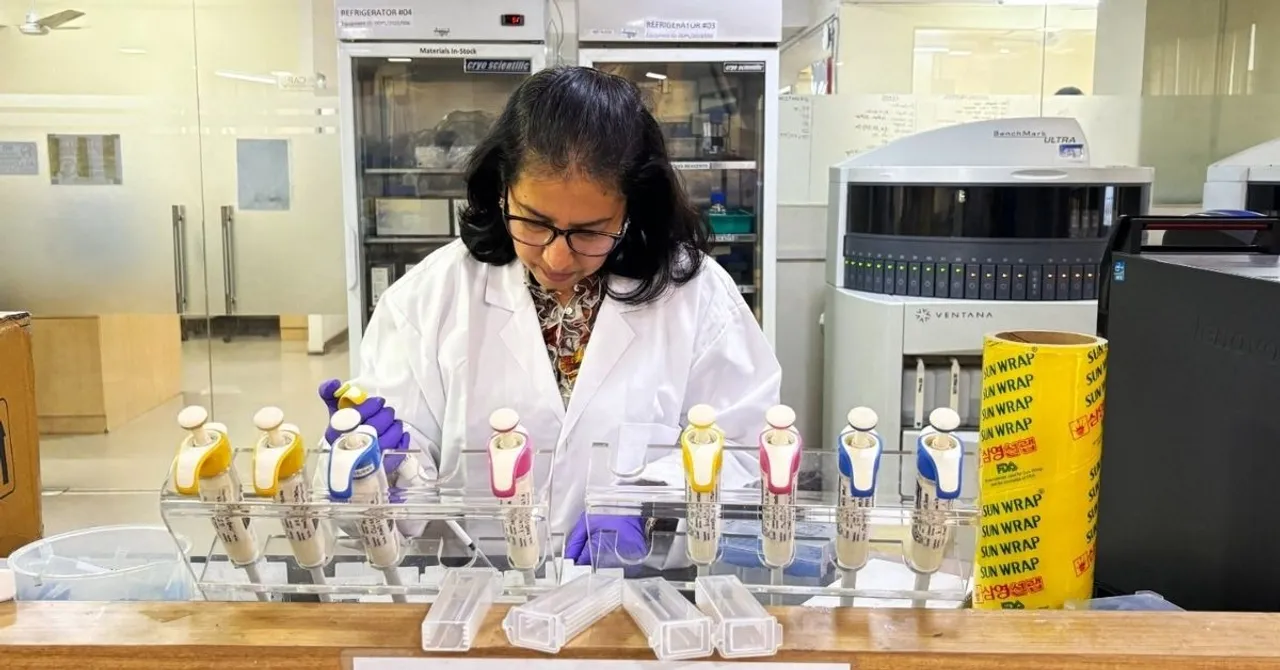

AI Takes on Malnutrition: Ensuring Safer, Healthier Meals for School Children
In Gadchiroli, Maharashtra, over 25% of tribal schoolchildren were malnourished despite midday meals. The administration deployed UdyogYantra, an AI-powered device that monitors nutritional content, temperature, and quantity of meals while tracking students’ BMI for early malnutrition detection. Within months, malnutrition dropped to 9%, and the pilot is expanding to more schools, showing how AI can ensure child nutrition at scale.
Share



Sector

Solution

Technology

State of Origin
Disclaimer:
Features ‘as is’ submissions and neither constitutes endorsement, certification, recommendation, or validation by NITI Aayog nor makes NITI Aayog liable in any manner.
Impact Metrics
Malnutrition rate reduced
through monitoring and improving meal quality.
Improved BMI
and better nutrition compliance.
Resources to Replicate This Idea
BUILD YOUR OWN INTERVENTION
Additional Research
How can I implement this innovation effectively?
How is this innovation being adopted around the world?
Where else could this innovation make an impact?
Who has seen real results from using this innovation?
What insights do experts share about this innovation?
What policies support or influence this innovation?
How could this innovation evolve in the future?
Is this innovation accessible and inclusive for everyone?
How can I contribute to or participate in this innovation?
What resources can help me explore this innovation further?
From Vision to Practice: Lessons from Maharashtra’s AI-Driven Nutrition Monitoring
The integration of artificial intelligence into Maharashtra’s tribal school nutrition programs marks a significant leap in leveraging technology for public good. The Etapalli district pilot, led by IAS officer Shubham Gupta, offers a compelling blueprint for how AI can be woven into existing government frameworks to address entrenched challenges like malnutrition. This section explores the nuanced realities of implementing such innovations, drawing on research, policy, and real-world examples to illuminate pathways for effective adoption and scale.
Data-Driven Oversight: Transforming Monitoring with AI
A cornerstone of the Maharashtra initiative was its shift from subjective, manual meal inspections to objective, real-time quality monitoring. The AI-enabled machine at Todsa Ashram School utilized image recognition and sensor analytics to assess over 2,100 data points per meal, capturing variables such as temperature, color, and portion size. This automated scrutiny enabled the early detection of deviations from prescribed menus and food spoilage—issues that previously went unnoticed due to inconsistent manual checks.
Such precision is critical in resource-constrained settings, where staff turnover and limited training can undermine program fidelity. The Indian government’s Poshan Abhiyaan similarly emphasizes the use of technology for real-time monitoring, underscoring a broader policy shift toward data-driven governance in nutrition. As Dr. R. Hemalatha, Director of the National Institute of Nutrition, notes, “Objective, technology-enabled monitoring is essential for timely interventions and accountability, especially in underserved areas.”
Multi-Stakeholder Collaboration: Building Sustainable Ecosystems
The Maharashtra pilot’s success hinged on a robust partnership model. Government officials, NGOs like Feeding India, and technology firms such as Udyog Yantra co-developed and deployed the AI system, ensuring it was tailored to the unique needs of tribal schools. This collaborative approach not only facilitated resource pooling but also fostered local ownership—a key factor for sustainability.
India’s National Digital Health Mission and Mission Saksham Anganwadi both advocate for such multi-stakeholder engagement, recognizing that technological interventions are most effective when grounded in community realities. The phased rollout—beginning with a pilot, followed by iterative scaling—mirrors global best practices.
Navigating Infrastructure and Capacity Barriers
Despite its promise, AI adoption in rural India faces formidable challenges. Limited internet connectivity, unreliable power supply, and low digital literacy can impede deployment and usage. The Maharashtra pilot addressed these by selecting schools with basic infrastructure and providing targeted training to staff. However, broader scale-up will require systemic investments in digital infrastructure.
Capacity building is equally crucial. The pilot included hands-on workshops for school staff and local officials, demystifying AI tools and fostering trust. These efforts align with India’s National Digital Literacy Mission and the Accessible India Campaign, which seek to bridge digital divides.
Policy Alignment and Regulatory Safeguards
Successful implementation is underpinned by a supportive policy environment. The Maharashtra initiative dovetails with national missions like Poshan Abhiyaan and the emerging AI policy framework from MeitY, which emphasizes responsible AI deployment, data privacy, and transparency. Clear protocols for data governance—covering consent, storage, and use—are essential to protect beneficiaries and build public trust.
Insights from Indian Experts and Institutions
Indian thought leaders underscore the transformative potential of AI in public health, while cautioning against one-size-fits-all approaches. Prof. P. Anandan, founder of Wadhwani AI, observes, “The Maharashtra pilot demonstrates that AI’s real power lies in its ability to adapt to local contexts and empower frontline workers.” Institutions like the Indian Council of Medical Research (ICMR) and the Public Health Foundation of India (PHFI) stress the importance of integrating AI with existing health programs for maximum impact.
—
By grounding AI interventions in robust data, fostering cross-sector partnerships, addressing infrastructural and capacity challenges, and aligning with progressive policy frameworks, Maharashtra’s experience offers actionable insights for scaling AI-driven nutrition monitoring across India. The journey from pilot to policy is complex, but with sustained investment and inclusive design, AI can become a cornerstone of India’s fight against malnutrition.
AI and Global Nutrition: Lessons from Worldwide Innovations
As India pioneers AI-driven interventions to combat malnutrition in tribal schools, it joins a dynamic international movement harnessing artificial intelligence for public health and nutrition. A comparative analysis of global approaches reveals both shared strategies and unique adaptations, offering India valuable insights for policy refinement and scalable impact. By examining diverse models—from Kenya’s grassroots engagement to Brazil’s data-driven welfare programs—India can tailor its AI initiatives to address local challenges while aligning with global best practices.
AI-Powered Nutrition Monitoring: Global Case Studies
Across continents, countries are leveraging AI to address malnutrition, each with context-specific models:
– Kenya: In rural Kenya, AI-enabled mobile applications empower community health workers to monitor child growth and dietary intake. Tools like ChildCount+ utilize image recognition and predictive analytics to flag early signs of malnutrition, facilitating prompt interventions. The Kenyan government, in collaboration with NGOs such as Amref Health Africa and technology partners, prioritizes community engagement and capacity building. This approach has improved early detection rates and fostered local ownership.
– Brazil: The Bolsa Família program stands out for integrating AI analytics into its vast social welfare network. By analyzing health and social data, AI models identify at-risk children, optimize resource distribution, and refine program targeting. Brazil’s strategy is notable for its robust data privacy regulations and the seamless fusion of AI with established welfare infrastructure, ensuring both efficacy and public trust.
– United States: In the U.S., AI technologies are increasingly embedded in school meal programs. Districts in states like California and Texas deploy AI-powered cameras and sensors to monitor meal quality and consumption, feeding real-time data into administrative dashboards. Regulatory frameworks emphasize transparency, data security, and ethical AI deployment, with oversight from agencies such as the USDA.
Policy Approaches: Contrasts and Convergences
India’s AI initiatives, particularly pilot programs in tribal schools under the Poshan Abhiyaan, reflect a blend of innovation and targeted intervention. Unlike Brazil’s nationwide integration or the U.S.’s regulatory-heavy model, India’s approach is characterized by pilot-driven experimentation and alignment with national missions. Kenya’s emphasis on frontline worker empowerment offers a compelling lesson for India: technology adoption is most effective when grounded in community participation and tailored to resource-constrained environments.
India’s evolving AI regulatory framework is attracting international attention. The Ministry of Electronics and Information Technology (MeitY) employs regulatory sandboxes, mandates transparency, and enforces data privacy protections—striking a balance between fostering innovation and ensuring ethical safeguards.
Integrating AI with Social Welfare: The Indian Context
A key insight from global models is the importance of embedding AI within existing social welfare and health programs. In India, integrating AI tools with schemes like the Integrated Child Development Services (ICDS) and Mission Saksham Anganwadi can amplify systemic impact. For example, AI-driven analytics at Anganwadi centers could monitor nutritional status, food quality, and service delivery, mirroring Brazil’s data-driven targeting but adapted for India’s scale and diversity.
Moreover, leveraging international partnerships—such as collaborations with UNICEF or the World Food Programme—can facilitate knowledge exchange, technical support, and capacity building. These alliances have proven instrumental in Kenya and Brazil.
Expert Perspectives: Indian Voices on Global Adaptation
Indian experts underscore the necessity of contextual adaptation. Dr. R. Hemalatha, Director of the National Institute of Nutrition, notes, “Global AI models offer valuable frameworks, but successful implementation in India hinges on community engagement and culturally sensitive design.” Prof. P. Anandan, founder of Wadhwani AI, highlights that “India’s regulatory approach—balancing innovation with ethical oversight—could set a benchmark for other emerging economies.”
Institutions such as the Indian Council of Medical Research (ICMR) and the Public Health Foundation of India (PHFI) advocate for integrating AI with existing health programs, emphasizing scalability and sustainability.
Policy Implications and Pathways Forward
India’s AI-driven nutrition initiatives are well-aligned with national policies, including Poshan Abhiyaan, Mission Saksham Anganwadi, and the National Digital Health Mission. These frameworks provide a robust foundation for scaling AI interventions, ensuring digital infrastructure, and upholding ethical standards.
To maximize impact, India should:
– Prioritize frontline worker training and community engagement, drawing from Kenya’s success.
– Integrate AI solutions with existing welfare programs for systemic reach, as exemplified by Brazil.
– Develop and enforce clear ethical and data privacy frameworks to foster trust.
– Pursue international partnerships for technical support and shared learning.
By synthesizing global best practices with local innovation, India is poised to lead in the responsible and impactful application of AI for nutrition and public health.
AI’s Expanding Role in India’s Health and Nutrition Landscape
The deployment of artificial intelligence (AI) to monitor school nutrition in Maharashtra has demonstrated the transformative potential of digital innovation in public health. This success story is not an isolated case; it signals a broader shift towards data-driven governance and precision interventions across India’s health, education, and social welfare sectors. As policymakers and practitioners seek scalable solutions to persistent challenges such as malnutrition, disease surveillance, and service delivery gaps, AI-powered applications are emerging as critical tools for both government and non-government actors.
AI-Driven Monitoring in Anganwadi and School Health Programs
AI’s application in Anganwadi centers—core to India’s early childhood nutrition and care infrastructure—has gained momentum under Mission Saksham Anganwadi. By integrating image recognition and sensor-based monitoring, AI systems can objectively assess the quality and quantity of meals served, detect deviations from prescribed nutritional standards, and flag service delivery lapses. For example, pilot projects in Madhya Pradesh and Karnataka have used AI-enabled cameras to monitor meal distribution and child attendance, leading to improved compliance and transparency.
In school health programs, AI extends beyond nutrition to support comprehensive child health monitoring. Automated systems can track immunization records, growth metrics, and absenteeism, creating holistic health profiles that inform targeted interventions. The Ministry of Education’s School Health Programme, in partnership with the Ministry of Health and Family Welfare, is exploring AI integration to streamline data collection and enable early detection of health risks.
Public Health Surveillance and Disease Early Warning
AI-powered analytics are revolutionizing public health surveillance by synthesizing diverse data streams—ranging from nutrition and morbidity to environmental factors. The Integrated Disease Surveillance Programme (IDSP) has begun piloting AI algorithms to predict outbreaks and identify at-risk populations by correlating nutritional deficits with disease incidence. For instance, AI models developed by the Indian Council of Medical Research (ICMR) have been used to forecast anemia hotspots among adolescent girls, enabling more efficient resource allocation and intervention planning.
The AI4Bharat initiative at IIT Madras exemplifies this approach, developing open-source AI tools for healthcare diagnostics and nutrition monitoring tailored to Indian contexts. Their work has informed state-level strategies for combating micronutrient deficiencies and improving maternal and child health outcomes.
Private Sector Innovations and Academic Partnerships
The private sector and academia are pivotal in advancing AI applications for nutrition and health. Startups such as HealthifyMe and Nutrify India have pioneered AI-driven platforms that analyze individual dietary habits and recommend personalized interventions. While these tools primarily target urban consumers, their underlying algorithms are being adapted for use in public sector programs, particularly in rural and underserved regions.
Academic institutions, notably IIT Bombay and the Indian Institute of Public Health (IIPH), are conducting rigorous research on AI’s role in nutrition surveillance and intervention design. Their studies have provided evidence-based frameworks for integrating AI into government schemes like Poshan Abhiyaan, ensuring that technological adoption is grounded in local realities and scientific rigor.
Case Studies: From Maharashtra to National Scale
The Maharashtra pilot in Etapalli’s tribal schools stands as a model for AI-enabled nutrition monitoring, but similar initiatives are gaining traction nationwide. The National Institute of Nutrition (NIN), in collaboration with state governments, has launched projects using AI to analyze dietary patterns and detect micronutrient deficiencies across diverse populations. In Andhra Pradesh, AI-assisted data collection in Anganwadi centers has led to a measurable reduction in child malnutrition rates.
Media and NGO reports, such as those from Feeding India, have highlighted the scalability of these interventions, noting increased community trust and improved health outcomes. These case studies underscore the potential for AI to complement government schemes with data-driven precision and accountability.
Expert Perspectives: Indian Voices on AI for Nutrition
Indian experts and institutions have consistently advocated for responsible and context-sensitive AI deployment in public health. Dr. R. Hemalatha, Director of NIN, asserts that “AI’s ability to provide real-time, objective data can revolutionize nutritional surveillance, especially in marginalized communities.” Prof. P. Anandan, founder of Wadhwani AI, emphasizes the importance of coupling AI with strong governance and community engagement to overcome traditional barriers in service delivery.
The Ministry of Electronics and Information Technology’s (MeitY) 2025 AI Governance Report calls for embedding principles of fairness, transparency, and accountability in all public sector AI deployments, a stance echoed by the Public Health Foundation of India (PHFI) and ICMR. These institutions advocate for integrating AI with existing health programs to maximize scalability and ensure ethical outcomes.
—
The convergence of government initiatives, private innovation, and academic research is rapidly expanding the scope of AI applications in India’s health and nutrition sectors. As demonstrated by Maharashtra’s pioneering efforts and reinforced by national policy frameworks, AI stands poised to drive a new era of evidence-based, equitable, and impactful public health interventions.
Transforming Tribal Nutrition: Real Stories from Maharashtra’s AI Revolution
The introduction of artificial intelligence in Etapalli’s tribal schools marks a pivotal shift in India’s fight against child malnutrition. By leveraging data-driven insights, the initiative has not only improved nutritional outcomes but also fostered trust, accountability, and community participation. These impact stories illuminate the human dimension behind the statistics, demonstrating how technology, when thoughtfully deployed, can empower some of India’s most marginalized communities.
Data-Driven Change in Etapalli: From Crisis to Progress
Etapalli, a remote tribal block in Maharashtra’s Gadchiroli district, has long struggled with high rates of child malnutrition, compounded by poverty, food insecurity, and limited access to health services. Prior to the AI intervention, the Todsa Ashram School reported a malnutrition rate of 27% among its predominantly tribal student population. The deployment of an AI-powered monitoring system—designed to track meal quality, child health indicators, and vendor compliance—enabled real-time identification of nutritional gaps.
For instance, Raju, a 10-year-old student, was flagged by the system as undernourished during routine digital health assessments. With targeted improvements in meal composition and adherence, Raju’s weight and energy levels improved significantly, leading to better school attendance and engagement. School staff, equipped with AI-generated compliance reports, took swift corrective action—such as adding fruits and protein-rich foods previously missing from menus—demonstrating the system’s capacity to drive tangible, individualized change.
Building Accountability and Trust: Community and Institutional Responses
The AI intervention catalyzed a culture of accountability among meal vendors and school administrators. Automated alerts and transparent reporting systems prompted immediate rectification of lapses in meal quality. Parents, who had previously expressed skepticism about the efficacy of school meal programs, began to notice visible improvements in their children’s health. As one parent shared, “We now trust the meals our children receive. They look healthier and are more active.”
This trust was further reinforced by the involvement of local officials, who used AI-generated dashboards to make informed decisions and allocate resources more efficiently. The initiative’s success has been documented by NGOs, which highlighted the program as a scalable model for other tribal and rural contexts. Regional media coverage amplified the impact, sparking interest from neighboring districts and policymakers.
Expert Perspectives: Indian Thought Leaders on AI and Nutrition
Indian experts and institutions have lauded the Maharashtra pilot as a breakthrough in public health innovation. Dr. R. Hemalatha, Director of the National Institute of Nutrition, underscores the value of AI in nutritional surveillance: “AI enables us to move beyond periodic surveys to real-time, objective data collection, allowing for rapid, targeted interventions in underserved regions.”
Prof. P. Anandan, founder of Wadhwani AI, points to the importance of community engagement: “The Maharashtra experience shows that AI, when combined with local governance and grassroots participation, can overcome longstanding barriers in public health delivery.”
Institutions such as the Indian Council of Medical Research (ICMR) and the Public Health Foundation of India (PHFI) advocate for integrating AI with existing health programs to enhance scalability and impact, reinforcing the need for responsible and context-sensitive innovation.
Policy Synergy: Aligning with National Nutrition and Digital Initiatives
The Etapalli AI intervention aligns closely with flagship Indian government programs aimed at eradicating malnutrition and leveraging technology for public good. The Poshan Abhiyaan (National Nutrition Mission) prioritizes the convergence of nutrition schemes and the use of technology for monitoring and evaluation. Mission Saksham Anganwadi and the National Digital Health Mission (NDHM) further strengthen the digital backbone required for such interventions.
The Digital India Initiative and emerging AI policy frameworks from MeitY provide the infrastructure and regulatory environment necessary for ethical, scalable AI adoption in rural and tribal areas. These policies collectively create a supportive ecosystem for AI-driven nutrition monitoring, ensuring sustainability and replicability across India.
Scaling Impact: Lessons for the Future
The success of the Maharashtra pilot offers a blueprint for nationwide expansion. By integrating AI systems with mobile health applications and digital health records, India can establish a comprehensive nutritional surveillance network. Predictive analytics could help forecast malnutrition hotspots, while natural language processing tools could facilitate community feedback in local languages, enhancing program responsiveness.
Continued collaboration among government, academia, and the private sector will be essential to refine AI models, address algorithmic biases, and ensure inclusivity—particularly for marginalized groups. As India advances toward its Atmanirbhar Bharat vision, these impact stories underscore the transformative potential of indigenous AI innovation in achieving equitable health outcomes.
Leading Voices: How Indian Experts Shape AI-Driven Nutrition Policy
The integration of artificial intelligence into India’s public health and nutrition landscape is not just a technological leap—it is a movement shaped by the insights and leadership of Indian experts and institutions. Their perspectives underscore the critical role of AI in bridging persistent gaps in nutritional surveillance, program delivery, and ethical governance, particularly for marginalized communities. Drawing on real-world pilots, policy frameworks, and institutional advocacy, these voices illuminate both the promise and the challenges of deploying AI for public good.
Transforming Nutritional Surveillance: Insights from the National Institute of Nutrition
Dr. R. Hemalatha, Director of the National Institute of Nutrition (NIN), highlights the transformative potential of AI in nutritional monitoring. According to Dr. Hemalatha, “AI can revolutionize nutritional surveillance by providing real-time, objective data that enables targeted interventions, especially in underserved tribal regions.” This perspective is grounded in NIN’s ongoing research and fieldwork, which demonstrate that traditional data collection methods often suffer from delays and inaccuracies, hampering timely action. The deployment of AI-powered image analysis in Maharashtra’s tribal schools, for example, has enabled frontline workers to rapidly assess children’s nutritional status and trigger immediate support. Such innovations are aligned with NIN’s broader mission to leverage technology for evidence-based policymaking.
Bridging Implementation Gaps: Lessons from the Maharashtra AI Pilot
Prof. P. Anandan, founder of Wadhwani AI, draws attention to the practical challenges and breakthroughs observed in the Maharashtra pilot project. He notes, “The Maharashtra pilot exemplifies how AI, when combined with strong governance and community engagement, can overcome traditional barriers in public health delivery.” The pilot, conducted in partnership with the state government and local Anganwadi workers, used AI algorithms to analyze photographs of children and detect early signs of malnutrition. This approach not only improved the accuracy of assessments but also fostered local ownership by training community health workers in digital tools. The pilot’s success has prompted discussions about scaling similar models across other states, reinforcing the importance of context-specific design and robust stakeholder collaboration.
Embedding Ethics and Accountability: The MeitY 2025 AI Governance Report
The Ministry of Electronics and Information Technology (MeitY) has been at the forefront of developing policy frameworks to guide responsible AI adoption in the public sector. The 2025 AI Governance Report emphasizes that embedding principles of fairness, transparency, and accountability is essential for building public trust and ensuring ethical outcomes. The report cites the Maharashtra nutrition pilot as a case study in responsible deployment, noting the importance of clear data governance protocols and community consent. These guidelines are increasingly being integrated into national initiatives such as the National Digital Health Mission and Poshan Abhiyaan, setting benchmarks for future AI projects in health and nutrition.
Institutional Advocacy: Scaling AI through Programmatic Integration
Leading public health institutions such as the Indian Council of Medical Research (ICMR) and the Public Health Foundation of India (PHFI) have consistently advocated for integrating AI into existing health and nutrition programs. ICMR’s research on digital health interventions underscores the scalability of AI-powered solutions when embedded within established service delivery frameworks. PHFI, through its collaborations with state governments, has piloted AI-driven analytics to optimize resource allocation for nutrition programs, demonstrating measurable improvements in efficiency and reach. These institutions stress the need for continuous capacity building among frontline workers and the importance of adapting AI tools to local languages and contexts.
Real-World Impact: Policy Alignment and Community Outcomes
The convergence of expert insights and institutional action is reflected in India’s evolving policy landscape. Initiatives such as Poshan Abhiyaan and Mission Saksham Anganwadi explicitly call for the use of technology—including AI—to enhance monitoring and service delivery. The Maharashtra pilot’s success has informed updates to these programs, encouraging other states to explore AI-based nutritional surveillance. Furthermore, the integration of AI with the National Digital Health Mission’s data infrastructure is paving the way for personalized nutrition interventions and early warning systems for malnutrition hotspots. These developments illustrate how expert perspectives are translating into tangible improvements in child health outcomes and systemic resilience.
Harnessing Policy for AI-Driven Nutrition: India’s Strategic Framework
India’s ambitious drive to combat malnutrition is increasingly intertwined with digital innovation, particularly artificial intelligence (AI). A suite of national policies and initiatives now converges to create a robust foundation for deploying AI-based nutritional monitoring and intervention, especially in underserved communities. This policy landscape not only supports technological adoption but also ensures ethical, inclusive, and sustainable implementation. Below, we examine the critical pillars of India’s policy ecosystem, real-world applications, and expert perspectives shaping the future of AI in public health nutrition.
Integrating Technology with Nutrition: The Backbone of Poshan Abhiyaan
The flagship Poshan Abhiyaan (National Nutrition Mission) exemplifies India’s commitment to leveraging technology for improved nutritional outcomes. Launched in 2018, the mission targets the reduction of stunting, undernutrition, anemia, and low birth weight among children and women. Central to its strategy is the use of technology for real-time monitoring and data-driven decision-making. The Integrated Child Development Services-Common Application Software (ICDS-CAS) platform, for instance, enables Anganwadi workers to track growth metrics and flag at-risk children using mobile devices.
A notable example is the integration of AI-powered analytics in select districts, where predictive models help identify malnutrition hotspots and prioritize interventions.
Digital Infrastructure and Health Ecosystem: Enablers for Scale
India’s Digital India Initiative and the National Digital Health Mission (NDHM) provide the essential infrastructure for scaling AI interventions. Digital India’s focus on connectivity, digital literacy, and e-governance has expanded internet access to rural and tribal regions, laying the groundwork for technology-driven health programs.
The NDHM, launched in 2020, aims to create a unified digital health ecosystem, including electronic health records and interoperable data systems. This facilitates seamless integration of AI tools for nutritional surveillance and personalized care. In Maharashtra’s tribal schools, for example, AI-based applications are being piloted to monitor children’s growth patterns and generate tailored nutrition plans, leveraging NDHM’s data standards for interoperability.
Regulatory Frameworks: Balancing Innovation, Ethics, and Privacy
The Ministry of Electronics and Information Technology (MeitY) is at the forefront of shaping India’s AI policy. Its draft frameworks emphasize responsible AI development, focusing on transparency, data privacy, and accountability. The “National Strategy for Artificial Intelligence” (NITI Aayog, 2018) and MeitY’s ongoing consultations underscore the need for ethical guardrails, particularly when deploying AI in sensitive domains like child health.
Dr. Neeta Verma, former Director General of NIC, highlights, “India’s approach to AI governance is pragmatic—encouraging innovation while instituting checks to protect vulnerable groups.” The policy push for explainable AI and consent-driven data usage is especially relevant in nutrition programs, where community trust is paramount.
Strengthening Service Delivery: Mission Saksham Anganwadi and Beyond
Mission Saksham Anganwadi, launched in 2021, aims to modernize and digitize Anganwadi centers, which are the frontline of child nutrition services. The initiative equips workers with smartphones and digital tools to enhance service delivery, monitoring, and reporting. In states like Madhya Pradesh and Odisha, pilot projects have demonstrated that digital record-keeping and AI-enabled dashboards improve the identification of malnourished children and streamline resource allocation.
The convergence of Saksham Anganwadi with AI initiatives is evident in Maharashtra’s pilot, where frontline workers use AI-assisted applications to capture anthropometric data and receive automated recommendations for intervention. This model is being considered for replication in other states, reflecting the scalability envisioned by policymakers.
Expert Perspectives: Indian Voices on Policy and Practice
Indian experts and institutions are vocal advocates for the thoughtful integration of AI in nutrition policy. Dr. Soumya Swaminathan, former Chief Scientist at the World Health Organization and a leading Indian public health expert, notes, “AI can amplify the reach and impact of nutrition programs, but its success hinges on robust policy frameworks and community engagement.”
The Indian Institute of Public Health (IIPH) has called for participatory design processes, ensuring that AI tools are contextually relevant and culturally sensitive. Their research underscores the importance of continuous policy evaluation, especially as AI models evolve and new ethical challenges emerge.
Conclusion
India’s policy architecture for AI-driven nutrition is both comprehensive and dynamic, reflecting a blend of technological ambition and social responsibility. By integrating digital infrastructure, regulatory safeguards, and frontline service modernization, India is setting a precedent for scalable, ethical, and impactful AI interventions in public health. The Maharashtra pilot serves as a microcosm of this broader vision, illustrating how policy can translate innovation into tangible improvements for the nation’s most vulnerable children.
Charting the Next Frontier: AI’s Expanding Role in India’s Public Health and Nutrition
The successful deployment of AI-powered nutritional monitoring in Maharashtra’s tribal schools marks a pivotal moment for India’s public health landscape. This initiative not only demonstrates the feasibility of leveraging advanced technology to address malnutrition but also sets the stage for a transformative, data-driven approach to public welfare. As India aspires to scale such innovations nationwide, the convergence of AI, policy, and community engagement could redefine the future of health and education for millions, particularly in underserved regions.
Building a Nationwide Nutritional Intelligence Network
Research from the Indian Council of Medical Research (ICMR) and NITI Aayog underscores the urgent need for real-time, granular data to combat malnutrition effectively. Expanding Maharashtra’s AI system to encompass all tribal and rural schools could establish a robust, nationwide nutritional surveillance network. By integrating AI platforms with mobile health (mHealth) applications and the Ayushman Bharat Digital Mission’s health records, authorities can generate personalized nutrition plans and enable early detection of at-risk children. The Ministry of Women and Child Development’s POSHAN Abhiyaan already leverages digital tools for monitoring; AI integration would amplify its reach and precision. Such a system could also facilitate targeted interventions during emergencies, as seen during the COVID-19 pandemic, when data-driven approaches enabled rapid resource allocation in states like Kerala.
AI-Driven Innovations: From Supply Chains to Community Voices
Beyond monitoring, AI holds promise for optimizing the entire nutrition delivery ecosystem. For instance, AI-enabled supply chain management—piloted in Andhra Pradesh’s public distribution system—has improved the timely delivery of food grains and reduced leakages. Predictive analytics can identify emerging malnutrition hotspots, allowing policymakers to preemptively allocate resources where they are needed most. Additionally, natural language processing (NLP) tools can analyze feedback from parents, teachers, and community health workers in local languages, ensuring that programs remain responsive to ground realities.
Embedding AI in India’s Digital Health Vision
The integration of AI into India’s broader digital health ecosystem aligns with the government’s Atmanirbhar Bharat (self-reliant India) vision, emphasizing indigenous innovation for sustainable development. The Digital India initiative and the National Digital Health Blueprint advocate for interoperable, secure, and citizen-centric digital health infrastructure. According to Dr. R.S. Sharma, CEO of the National Health Authority, “AI can help shift our approach from reactive to proactive public health management, enabling early interventions and better outcomes.” Embedding AI in flagship programs like the Integrated Child Development Services (ICDS) could drive a paradigm shift from sporadic, manual data collection to continuous, automated surveillance—empowering frontline workers with actionable insights and reducing administrative burdens.
Ensuring Equity and Inclusion in AI-Driven Nutrition Programs
While AI offers immense potential, ensuring that its benefits reach India’s most marginalized populations is paramount. The Maharashtra pilot’s focus on tribal schools is a step toward addressing geographic and social exclusion, but challenges persist in digital literacy, infrastructure, and language accessibility. Gender disparities in nutrition—highlighted in the National Family Health Survey (NFHS-5)—necessitate AI systems that capture gender-disaggregated data and support targeted interventions for girls and women. Transparent algorithms, community participation in system design, and regular audits are essential to mitigate biases and prevent the exclusion of marginalized castes or communities. As Dr. Soumya Swaminathan, former Chief Scientist at WHO, notes, “Equitable AI deployment requires a deliberate focus on social determinants and active involvement of local stakeholders.”
Catalyzing Participation and Innovation
Sustained progress hinges on broad-based participation and cross-sector collaboration. Local volunteers, including Anganwadi workers and community health activists, can play a critical role in data collection, awareness campaigns, and program monitoring. Educational institutions are increasingly incorporating AI and nutrition modules—such as the AI for Youth initiative by CBSE and Intel—fostering grassroots innovation and capacity building. Public-private partnerships and philanthropic funding, exemplified by Tata Trusts’ support for digital health pilots, can accelerate scaling and sustainability. Engagement platforms such as the National Digital Health Mission portal provide avenues for stakeholders to contribute ideas, feedback, and expertise.
—
India stands at the cusp of a transformative era in public health and nutrition, with AI poised to bridge longstanding gaps in data, delivery, and equity. The lessons from Maharashtra’s pilot, coupled with strategic policy alignment and inclusive innovation, could pave the way for a healthier, more resilient nation—where no child is left behind.
Bridging the Digital Divide: Making AI Nutrition Interventions Accessible to All
The promise of artificial intelligence (AI) in tackling malnutrition hinges on its accessibility and inclusivity, especially within India’s complex socio-economic fabric. As digital solutions proliferate, ensuring that marginalized groups—rural populations, tribal communities, women, and disadvantaged castes—are not left behind is both a moral imperative and a policy priority. The Maharashtra pilot targeting tribal schools exemplifies the opportunities and challenges of deploying AI in diverse settings. This section explores the nuanced accessibility considerations that must shape AI-driven nutrition interventions in India.
Addressing Rural and Tribal Disparities: Infrastructure and Linguistic Barriers
India’s rural and tribal regions, home to over 65% of the population, often grapple with limited digital infrastructure and connectivity. The Maharashtra pilot, which introduced AI-based nutrition monitoring in tribal schools, revealed persistent gaps in internet access, device availability, and electricity supply. According to a 2022 report by the Internet and Mobile Association of India, rural internet penetration stands at just 37%, compared to 69% in urban areas. Language diversity further complicates access: with over 22 official languages and hundreds of dialects, AI tools must be localized to ensure comprehension and usability.
A case in point is the eVIN (Electronic Vaccine Intelligence Network) system, which adapted its interface for local languages and offline functionality to support rural health workers. Similar localization and infrastructure investments are essential for nutrition-focused AI systems.
Gender-Responsive AI: Tackling Disparities in Nutrition and Access
Gender disparities in nutrition and digital access are well-documented in India. Girls and women are disproportionately affected by malnutrition, yet often have less access to digital tools and information. AI interventions must be intentionally designed to address these gaps. For example, the Poshan Abhiyaan (National Nutrition Mission) mandates the collection of gender-disaggregated data to inform targeted interventions for adolescent girls and pregnant women.
Dr. Shweta Singh, a nutrition policy expert at the Public Health Foundation of India, notes, “AI systems that fail to account for gendered patterns in malnutrition risk perpetuating existing inequities. Embedding gender sensitivity into algorithm design and data collection is critical for effective targeting.”
Combating Algorithmic Bias and Promoting Social Equity
Algorithmic bias poses a significant threat to the equitable deployment of AI in nutrition programs. If left unchecked, AI systems can inadvertently reinforce social hierarchies, excluding marginalized castes or communities from benefits. Transparent algorithm design, regular audits, and participatory approaches are essential safeguards.
The Ministry of Electronics and Information Technology (MeitY) has issued guidelines on responsible AI, advocating for explainability and fairness in public sector algorithms. In practice, the Andhra Pradesh government’s use of AI in the Aadhaar-linked Public Distribution System incorporated community feedback loops to identify and rectify exclusion errors affecting Scheduled Castes and Scheduled Tribes. Such participatory mechanisms are vital for building trust and ensuring that AI serves all segments of society.
Policy Frameworks for Inclusive AI: National Initiatives and Legal Mandates
India’s policy landscape provides a robust foundation for accessible AI, but implementation remains uneven. The Digital India programme and National Digital Literacy Mission are central to expanding digital access, while the Accessible India Campaign mandates barrier-free technology for persons with disabilities. The Rights of Persons with Disabilities Act, 2016, further enshrines the right to accessible information and communication technologies.
The NITI Aayog’s “National Strategy for Artificial Intelligence” underscores the importance of inclusive AI, recommending targeted investments in rural connectivity, local language computing, and digital literacy. However, experts caution that policy intent must translate into on-the-ground action, with adequate funding, monitoring, and accountability.
Expert Perspectives: Indian Thought Leadership on Inclusive AI
Indian experts and institutions are at the forefront of advocating for accessible AI. Professor Rajat Moona, Director of the Indian Institute of Technology Bhilai, emphasizes, “True digital inclusion requires not just technological solutions, but also community engagement and capacity building at the grassroots.”
The Maharashtra pilot’s collaboration with local NGOs and tribal leaders is a promising model, demonstrating the value of co-creation and contextual adaptation. As India scales AI-driven nutrition interventions, sustained dialogue with communities, civil society, and technical experts will be crucial to ensure that no one is left behind.
—
By foregrounding these accessibility considerations, India can harness the full potential of AI to combat malnutrition—transforming not only tribal schools in Maharashtra, but also setting a benchmark for inclusive, equitable digital health solutions nationwide.
Unlocking Inclusive Engagement: Pathways for Participation in AI-Driven Nutrition Initiatives
Active participation by citizens, institutions, and communities is vital to the success of AI-powered nutrition programs in India. By fostering diverse modes of engagement, these initiatives can harness local knowledge, ensure contextual relevance, and drive sustainable impact. The following avenues illustrate how stakeholders can meaningfully contribute to and benefit from AI-driven nutrition solutions, with a focus on research-backed strategies, policy alignment, and real-world examples.
Community-Led Data Collection and Monitoring
Grassroots involvement is crucial for effective data gathering and program oversight. Local volunteers, including Anganwadi workers and school teachers, play a pivotal role in collecting accurate nutrition and health data, which feeds into AI models for real-time analysis and intervention. For instance, the POSHAN Abhiyaan (National Nutrition Mission) leverages community participation through its Jan Andolan (People’s Movement) approach, encouraging citizens to monitor child growth and report malnutrition cases via mobile apps and local committees. Research from the Indian Council of Medical Research (ICMR) highlights that community-based monitoring not only improves data quality but also fosters accountability and trust in digital health interventions.
Integrating AI and Nutrition Education in Academic Curricula
Embedding AI and nutrition modules within school and university programs cultivates a new generation of informed and skilled participants. The Central Board of Secondary Education (CBSE) has introduced AI as an elective subject in secondary schools, while institutions like the Indian Institute of Technology (IIT) Bombay offer interdisciplinary courses on AI in healthcare. These educational efforts are complemented by initiatives such as the Atal Innovation Mission’s Tinkering Labs, which encourage students to develop tech-based solutions for social challenges, including malnutrition.
Innovation Challenges and Hackathons: Catalyzing Localized Solutions
Government bodies and private organizations are increasingly organizing innovation challenges to crowdsource AI-driven tools tailored to India’s unique nutritional landscape. The Ministry of Electronics and Information Technology (MeitY), in collaboration with NITI Aayog, regularly hosts the “AI for Social Impact” hackathons, inviting students, startups, and NGOs to design solutions for rural health and nutrition. A notable example is the 2022 Smart India Hackathon, where participants developed AI-powered mobile applications for dietary assessment in tribal schools. These platforms not only generate context-specific innovations but also foster cross-sectoral partnerships and capacity building.
Funding Mechanisms and Multi-Stakeholder Partnerships
Sustainable scaling of AI nutrition initiatives requires robust financial and collaborative frameworks. Philanthropic foundations such as the Tata Trusts and Azim Premji Foundation have supported pilot projects integrating AI with community nutrition programs in Maharashtra and Odisha. Corporate Social Responsibility (CSR) funds, guided by the Companies Act 2013, are increasingly directed toward digital health and nutrition projects. Public-private partnerships, as advocated in the National Digital Health Blueprint, facilitate technology transfer, resource pooling, and rapid deployment of AI solutions in underserved regions.
Digital Platforms for Stakeholder Collaboration
Centralized digital platforms serve as vital hubs for information sharing, collaboration, and feedback. The IndiaAI portal offers resources, case studies, and participation opportunities for researchers, practitioners, and the public. Similarly, the National Digital Health Mission (NDHM) provides an open-access ecosystem for healthcare providers, policymakers, and citizens to co-create digital health solutions. These platforms facilitate transparent communication, enable crowdsourced problem-solving, and democratize access to AI tools and data.
—
By leveraging these multifaceted participation opportunities, India can ensure that AI-driven nutrition initiatives are grounded in local realities, informed by diverse expertise, and sustained through collaborative action. This participatory approach not only enhances the effectiveness of interventions in tribal schools but also sets a precedent for scalable, equitable, and community-centered public health innovation nationwide.
How the tribal school of Maharashtra uses AI to make nutrition assessments for students – https://indiaai.gov.in/news/how-the-tribal-school-of-maharashtra-uses-ai-to-make-nutrition-assessments-for-students
Revolutionizing Nutrition in Tribal Education: AI-Based Machine Enhances Food Quality for Gadchiroli Children – https://medicircle.in/revolutionizing-nutrition-in-tribal-education-aibased-machine-enhances-food-quality-for-gadchiroli-children
AI to make nutrition assessment of tribal students in Maharashtra school – https://digitallearning.eletsonline.com/2023/04/ai-to-make-nutrition-assessment-of-tribal-students-in-maharashtra-school/
Child Growth Monitor: Using AI to solve world hunger and malnutrition – https://news.microsoft.com/en-in/features/child-growth-monitor-malnutrition-india-microsoft-ai/
AI-based machine checks food quality for tribal students in Maharashtra school – https://www.moneycontrol.com/news/trends/ai-based-machine-checks-food-quality-tribal-students-maharashtra-school-10475341.html
Handpicked stories tailored just for you
Explore stories that inspire, inform, and ignite new ideas across tech, innovation, and real-world impact