
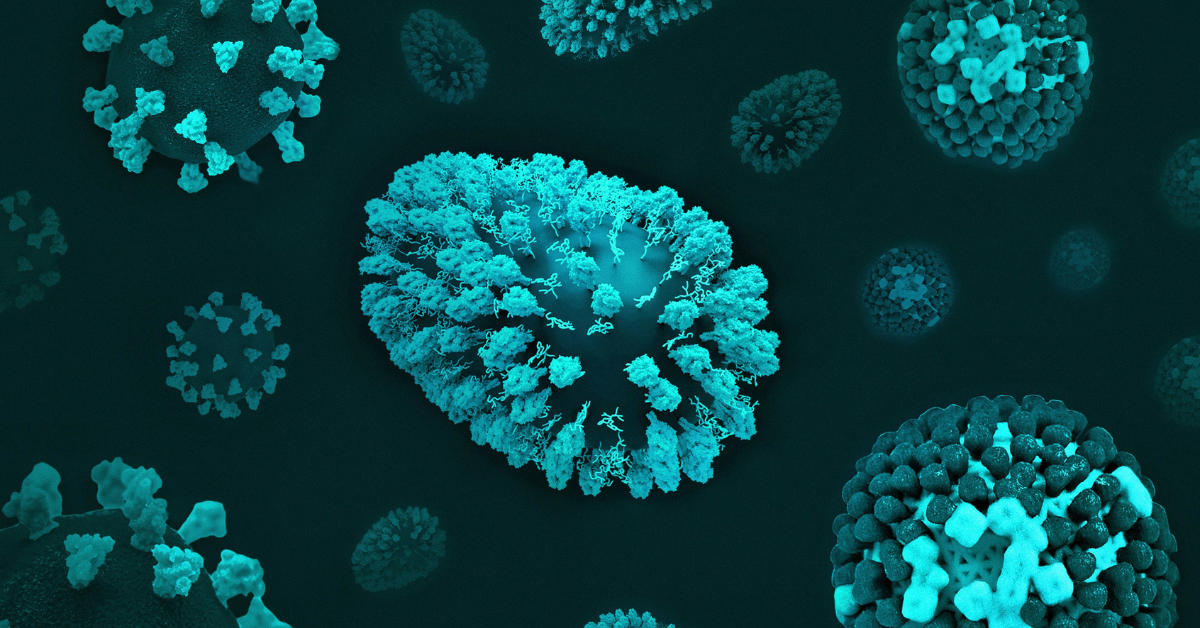
>99.999% Pathogen Destruction: India’s Frontier Technology for Safer Healthcare
Biomoneta’s patented ZeBox™ technology uses 3D-textured electrodes coated with microbicidal agents to destroy over 99.999% of targeted airborne microorganisms through electric and chemical forces. Designed for continuous operation without disposable filters or UV lamps, this Indian deep-tech innovation aims to advance infection prevention and air safety across healthcare environments.
Updated on: 27 October 2026

Sector

Solution

Technology

State of Origin
Disclaimer:
Features ‘as is’ submissions and neither constitutes endorsement, certification, recommendation, or validation by NITI Aayog nor makes NITI Aayog liable in any manner.
Impact Metrics
>99.999% pathogen destruction
Achieved by Biomoneta’s ZeBox™ technology using 3D-textured electrodes coated with microbicidal agents that act through electric and chemical forces.
11 granted patents
Protecting Biomoneta’s deep-tech innovation across key jurisdictions and supporting the development of an Indian-origin air-decontamination platform.
US FDA 510(k) clearance
Avata Rx™ has received clearance through the FDA’s 510(k) pathway for use in high-risk healthcare environments, supporting its entry into regulated medical-device markets.
Real-time airborne microbial monitoring
qAMI™ provides quantitative monitoring of airborne microbial concentrations, helping healthcare teams make data-driven infection-control decisions.
Research indicates that hospital-acquired infections (HAIs) affect an estimated 10% to 20% of all hospital admissions in India. Globally, they impose enormous economic and social costs.
Existing air-cleaning technologies, from HEPA filters to UV-C lamps, are passive, reactive, and heavy on consumables. So, the founding team at Bengaluru-headquartered Biomoneta asked: what if you could actively and continuously eliminate airborne pathogens — bacteria, fungi, viruses — without filters, without harmful radiation, and without generating secondary pollutants?
That question became the founding thesis of this startup.
Over the next several years, the team developed a first-of-its-kind non-ionising electric field (NEF) platform — ZeBox™ technology — that physically destroys microbial cell membranes upon contact, offering continuous, real-time bioaerosol decontamination.
A proprietary active bioaerosol decontamination technology
ZeBox™ operates by generating a precisely calibrated non-ionising electric field within a reaction chamber. When airborne microorganisms — bacteria, fungi, mould spores, and viruses — are drawn into this field, the electric forces disrupt and rupture their cell membranes.
This mechanical destruction is non-thermal and non-chemical, meaning pathogens are eliminated through a physical mechanism rather than by heat, UV radiation, or biocidal chemicals. The process does not produce ozone, ions, or harmful by-products, making it safe for continuous operation in occupied spaces, including ICUs, operating theatres, and neonatal units.
Imagine a miniaturised electric ‘trap’ through which the air in a room continuously passes. Any microbe, such as a virus particle, a bacterial cell, or a fungal spore that enters this trap encounters an invisible force field that physically bursts it apart like a bubble. The air that exits is measurably cleaner. There are no filters to replace, no UV lamps to dispose of, and no chemicals involved. The device runs continuously, silently, and safely even when people are present in the room.
How is this frontier technology better?
Conventional air decontamination technologies have several limitations: HEPA filters trap airborne particles but do not inherently inactivate pathogens, while UV-C systems require appropriate exposure and system design to achieve effective disinfection.
They lose effectiveness as lamps age, while ionisers and ozone generators can introduce secondary pollutants that pose respiratory health risks.
Chemical fogging provides episodic decontamination rather than continuous air treatment and may require spaces to remain unoccupied during application and until re-entry safety requirements are met. These constraints, along with chemical-specific safety considerations, limit the practicality of conventional fogging as a continuous air-cleaning solution in occupied environments.
ZeBox™ offers a fundamentally different approach through active, continuous decontamination that destroys airborne contaminants rather than merely filtering or collecting them.
It requires no consumables, eliminating the need to replace or dispose of filters, UV lamps, or chemicals, and is designed for safe, continuous operation in occupied clinical environments. Furthermore, its qAMI™ technology enables real-time, quantitative monitoring of airborne microbial load, a capability unique in the Indian market, while its efficacy has been validated against a broad spectrum of pathogens, including drug-resistant bacteria and airborne fungi.
Frontier technology that cleans air
Avata Air™ is a consumer and institutional air cleaner designed for homes, clinics, and commercial spaces, while Avata Rx™ is a clinical-grade device cleared by the US FDA under the 510(k) pathway, intended for high-risk healthcare environments such as intensive care units (ICUs), operation theatres, transplant units, and neonatal intensive care units (NICUs).
Complementing these solutions, qAMI™ is a real-time Quantitative Airborne Microbial Index monitor designed to provide continuous readings of airborne microbial concentrations, enabling data-driven infection control decisions.
Achieving US FDA 510(k) clearance for Avata Rx™ was one of the most demanding and defining milestones in Biomoneta’s journey, requiring rigorous biocompatibility testing, electrical safety validation, electromagnetic compatibility studies, and substantiation of clinical performance to demonstrate that the device is at least as safe and effective as a legally marketed predicate device.
Deployed across healthcare sectors
Biomoneta’s technologies are commercially deployed across healthcare and adjacent sectors in India, including hospital operating theatres, ICUs, and NICUs; pharmaceutical and biotechnology cleanrooms; food and dairy processing facilities; tissue culture and stem cell research laboratories; and residential and commercial spaces through Avata Air™.
A recently concluded clinical monitoring study in IVF operating theatres using qAMI™ and Avata Air™ demonstrated a measurable and sustained reduction in airborne microbial load. Underpinning these innovations is a strong intellectual property portfolio comprising 11 granted patents across key jurisdictions.
Biomoneta also delivers significant economic, environmental, and social impact by creating skilled deep-tech employment in Bengaluru across research and development, regulatory affairs, manufacturing, and commercialisation; strengthening India’s global intellectual property standing; and opening export opportunities in the global indoor air quality and bio-decontamination market, estimated at approximately USD 22 billion.
In line with the Make in India vision, the company demonstrates how indigenous scientific innovation can be patented, manufactured, and validated to international standards. Environmentally, ZeBox™ eliminates the need for consumables such as HEPA filters, UV lamps, and chemical reagents, reducing waste associated with their manufacture, transportation, use, and disposal, while its energy-efficient, low-power operation supports continuous decontamination with a reduced environmental footprint.
Socially, Biomoneta’s technology aims to reduce patients’ exposure to airborne pathogens during surgery, intensive care, and neonatal treatment, while helping protect healthcare workers from infectious aerosols. Its qAMI™ platform enables hospital administrators to monitor airborne microbial risks in real time and make proactive, data-driven infection control decisions.
More broadly, Biomoneta offers a scalable, infrastructure-compatible approach to addressing healthcare-associated infections (HAIs), which place a substantial burden on patients, families, and healthcare systems.
Revolutionising healthcare in India
If scaled across India’s healthcare ecosystem, Biomoneta’s technology could transform infection prevention by enabling continuous, active air decontamination in hospitals, ICUs, operation theatres, NICUs, and other high-risk clinical environments.
ZeBox™ could help reduce exposure to airborne pathogens, supporting efforts to prevent healthcare-associated infections (HAIs), improve patient safety, and protect healthcare workers. Its integration with qAMI™ could shift infection control from periodic assessments to real-time, data-driven monitoring, enabling hospitals to identify airborne microbial risks and respond proactively.
Because the technology operates without disposable filters or chemical consumables, it could also reduce biomedical waste and recurring maintenance requirements, potentially making continuous air decontamination more practical across diverse healthcare settings, including resource-constrained hospitals.
Beyond hospitals, deployment in diagnostic laboratories, pharmaceutical manufacturing, and other critical environments could strengthen infection prevention and contamination control across the wider healthcare supply chain. At a national level, scaling an Indian-developed, internationally validated technology could strengthen India’s medtech manufacturing capabilities, create skilled employment, and expand export opportunities.
Ultimately, Biomoneta could help make cleaner, continuously monitored air a more accessible component of healthcare infrastructure in India—with the potential to improve patient safety and support more sustainable infection prevention, provided large-scale clinical outcomes, cost-effectiveness, and real-world performance continue to be demonstrated.
Share Your Story Today, Shape Viksit Bharat Tomorrow
Got an idea, innovation, or experience that's making a difference? Share your story now and ignite India's transformation because your voice can drive the future forward!
Disclaimer:
Features ‘as is’ submissions and neither constitutes endorsement, certification, recommendation, or validation by NITI Aayog nor makes NITI Aayog liable in any manner.
Resources to Replicate This Idea
BUILD YOUR OWN INTERVENTION
Handpicked stories tailored just for you
Explore stories that inspire, inform, and ignite new ideas across tech, innovation, and real-world impact

Indra Water’s Frontier Electrox Technology Recycles 5.3 Billion Litres of Water, Cuts Toxic Sludge by 16,000 Tonnes
Indra Water’s patented ElectroX technology is transforming industrial wastewater treatment through compact, electrically driven systems that reduce chemical use, sludge...
Read More