Electric Vehicles, But 75% Cheaper: The Kits Converting Traditional Vehicles into EVs
Electric vehicles (EVs) are important components of any country’s move towards sustainability, especially in the face of climate change. However, most Indians cannot afford them. ReVithalize is sidestepping this barrier by converting existing fuel-based two-wheelers into EVs.
Updated on: 31 August 2026

Sector

Solution

Technology

State of Origin
Impact Metrics
7–14 days for conversion
of any two-wheeler into an electrical vehicle.
~INR 8,000/month saved
in petrol costs.
Sensors and dashboard
displaying vehicular health on an app.
Road transport is one of the main sources of greenhouse gas emissions in India. This means that countering global warming on a national level will require scaling down the usage of fossil fuel-based vehicles. Doing this will also save commuters the high costs they spend on petrol and diesel.
However, purchasing new electric vehicles can be highly expensive for the average Indian, even those operating small businesses. At the same time, a shift away from conventional vehicles will mean discarding these, contributing to component wastage.
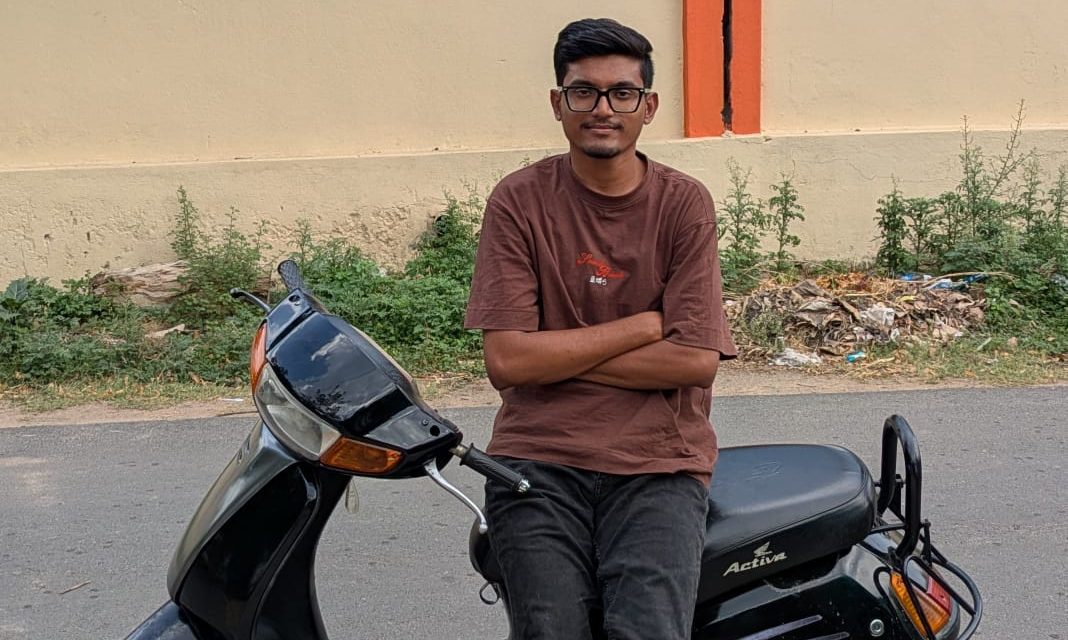
But what if existing fuel-based vehicles could be converted into electric vehicles? This is the approach taken by ReVithalize Mobility Pvt. Ltd., a Warangal-based startup founded in 2025 by Saikoushik Nalubola. Through modular kits compatible with many petrol-based two-wheelers, ReVithalize offers citizens affordable and quick access to green transport.
How do ReVithalize’s EV kits work?
ReVithalize’s kits are modular in nature, allowing them to be customized over time as per the customer’s requirements or any advancements in technology. By default, they include a 48 V/1.5 kW motor, a 51.2V/45Ah LFP battery that takes 4–6 hours to be fully charged, and IP65 water-resistant casing. The total cost of installing all these components is ~INR 50–60,000 per vehicle. During installation, the vehicle’s internal combustion system is fully replaced with electric counterparts but the overall structure and appearance remain the same.
Each kit also comes with IoT-enabled sensors that provide information on the overall health of the electric vehicle. This information—on battery health, energy consumption, charging behavior, maintenance requirements, and so on—is transmitted to an AI-powered dashboard, which vehicle users can directly monitor.
How was the technology developed?
The core intellectual properties and technology behind the innovation were developed in-house by ReVithalize. However, for the later stages of development, i.e., prototyping and pilot validation, the startup received support via funding from a number of entities.
This funding included a Prototype Grant (INR 30,000) from the Mercedes-Benz Research and Development India (MBRDI) Climate Tech Incubator, a MeitY TIDE 2.0 Entrepreneur-in-Residence (EiR) Programme grant (INR 3,00,000), and a Startup India Seed Fund Scheme (SISFS) grant (INR 10,00,000). The latter two grants were facilitated via SR Innovation Exchange (SRiX), a tech incubator at SR University in Warangal.
All of these funders played important roles in technical mentorship, as well as helping chart out future plans for commercialization.
Current state of the innovation
As of August 2026, ReVithalize has 15 pre-order customers and 2 paying customers in Warangal and Hyderabad. The startup is still in the early stages of commercialization and deployment, and plans to begin expanding into Andhra Pradesh, Karnataka, and Maharashtra in the coming stages.
The target demographic of customers for the EV conversion kits comprises young professionals, students, and gig workers between the ages of 18 and 32 who must drive ~40 km a day on a regular basis.
Advantages of EV conversion
Purchasing a new two-wheeler electric vehicle can cost at least INR 2 lakh—a high price tag for most Indian users. On the other hand, converting an existing petrol-based bike or scooter into an electric vehicle would cost only about 25% of that amount, and could be achieved in 7–14 days. Conversion would also reduce vehicle costs on petrol, which can go up to INR 10,000 per month for the aforementioned demographic, by ~INR 8,000 per month.
How can policymakers support this innovation?
While ReVithalize has developed the technology to convert petrol vehicles into electric vehicles, adoption by the public and businesses will require trust building. Policymakers can support this by drafting national guidelines to regulate conversion and compliance to green energy standards. They can also help test the viability of large-scale adoption by encouraging state transport authorities and municipal bodies to use these electric vehicles.
Shifting toward electric vehicles will not only align with efforts to reduce pollution and urban warming but also reduce India’s reliance on fossil fuels, the prices of which can fluctuate during global supply disruptions. By facilitating more partnerships between EV startups and manufacturers, financial institutions, incubators, and battery suppliers, state governments can set the groundwork for a system-level transition to green transportation in India.
Share Your Story Today, Shape Viksit Bharat Tomorrow
Got an idea, innovation, or experience that's making a difference? Share your story now and ignite India's transformation because your voice can drive the future forward!
Resources to Replicate This Idea
BUILD YOUR OWN INTERVENTION
Handpicked stories tailored just for you
Explore stories that inspire, inform, and ignite new ideas across tech, innovation, and real-world impact

How AI Diagnostics Are Reaching India’s Frontline Health Workers
AffEx equips rural health workers with an AI-powered point-of-care screening kit — testing hemoglobin, blood pressure, ECG, and cardiac and...
Read More