Fighting Cervical Cancer at the Source: The Mobile Testing Kit That Can Detect 8 HPV Subtypes
Cervical cancer screening is a long, uncomfortable, and expensive process for most Indian women. Bengaluru-based startup bioLOCKEY has developed a mobile screening kit for detecting the presence of HPV, one of this cancer’s primary determinants.
Updated on: 31 August 2026

Sector

Solution
Women's Health

Technology

State of Origin
Disclaimer:
Impact Metrics
5-minute testing
for presence of HPV.
High testing accuracy
comparable to RT-PCR-based tests.
User-friendly testing kit
appropriate for smaller cities and rural areas.
Screening for cervical cancer is, generally, a long process in India. Most screening centres are located in Tier-1 cities, meaning that to check for the disease, most women from other parts of the country must either travel long distances or post medical samples. Where laboratories and hospitals are present, the tests they conduct can feel invasive, painful, and embarrassing for patients. Results can take weeks to return. All of these factors contribute to delays in identifying cervical cancer.
But what if women could test for cervical cancer from their own homes and receive the results immediately? Founded in 2023, Bengaluru-based bioLOCKEY has designed mobile testing kits for precisely this purpose. Since the primary cause of cervical cancer is human papillomavirus (HPV) infection, this startup’s kits use antibodies that react to HPV and provide positive or negative results, similar to how COVID antigen kits work.
Currently in the late stages of development, this newly developed technology has the potential to revolutionize point-of-care cancer detection tools in India’s most remote regions.
The technology behind the kits
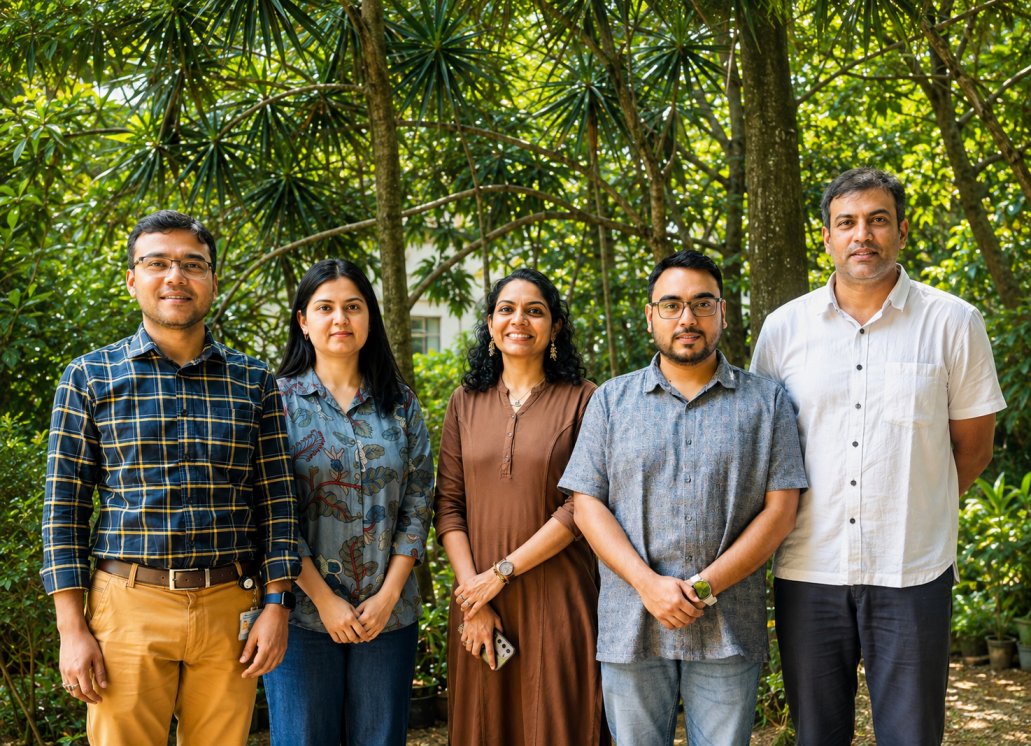
Modern science has already created technology that can engineer new antibodies and nanobodies without needing years of growth in laboratory animals. Using this technology during the COVID-19 pandemic, Dr Anchal Chandra and Prof. Minhaj Sirajuddin developed antibodies to counter the SARS coronavirus within 6–8 weeks.
Motivated by their success, these researchers resolved to apply the same development process to improving the detection of HPV and, consequently, cervical cancer. Their startup, bioLOCKEY, can now detect up to eight high-risk subtypes of HPV.
The kit appears similar to a standard antigen test or pregnancy test kit. There are two lines on the testing device, with the first showing that the kit works and the second indicating whether the patient has HPV. To use the kit, the patient takes a vaginal swab, mixes this with a buffer liquid, and adds two drops of the liquid onto the test device. Within five minutes, the second line on the device will provide a result.
This test can be performed within the comfort of one’s own home, both saving travel costs as well as avoiding the discomfort of hospital-based testing.
Who has supported this initiative so far?
bioLOCKEY’s head office is located in the Centre for Cellular and Molecular Platforms (C-CAMP), an incubator funded by the Department of Biotechnology (Ministry of Science and Technology, Govt. of India). The main clinical partner of the startup is CMC Vellore.
In terms of funding, bioLOCKEY has received support from Seachem Laboratories, Social Alpha, CSR grants from Pfizer, IKP EDEN’s Nidhi Prayas Grant, and the Karnataka state government’s Elevate fund.
Readiness for deployment
Currently, bioLOCKEY is still at the stage of clinical validation and is yet to commercialize its kits. Preliminary testing, however, suggests that the kits are as accurate as RT-PCR-based tests in predicting HPV infection.
While the kits could be used by all women vulnerable to HPV infection—i.e., in the age range of 21 to 65 years—they will be especially beneficial to those in villages and Tier-2/Tier-3 cities who cannot afford to travel long distances for health checkups.
bioLOCKEY has not yet finalized distribution plans, but it suggests that the most effective way to disseminate its product will be via existing public health programs. These would include national- or state-level programs, run by governments or NGOs, for cervical cancer screening. Once awareness of the kits’ efficiency is established, testing for HPV could become as simple as diagnosing the common cold.
Charting a path forward
As bioLOCKEY continues its research and development, procuring more samples of HPV subtypes will be crucial to ensure the reliability of results and applicability of the device across India. For this, policymakers may provide them with easier access to HPV sample databases, as well as supporting future clinical trials with their kits.
Popularizing a mobile screening kit such as that developed by bioLOCKEY will require convincing not only public health experts and the end users—women—but also, in many cases, extended families. This is because medical decisions are usually treated as collective decisions in Indian households. Public campaigns must therefore create awareness about women’s health in all spaces, not merely those specific to women. This would reduce social stigma, further empowering about half of the country’s workforce.
Share Your Story Today, Shape Viksit Bharat Tomorrow
Got an idea, innovation, or experience that's making a difference? Share your story now and ignite India's transformation because your voice can drive the future forward!
Disclaimer:
Resources to Replicate This Idea
BUILD YOUR OWN INTERVENTION
Handpicked stories tailored just for you
Explore stories that inspire, inform, and ignite new ideas across tech, innovation, and real-world impact

How AI Diagnostics Are Reaching India’s Frontline Health Workers
AffEx equips rural health workers with an AI-powered point-of-care screening kit — testing hemoglobin, blood pressure, ECG, and cardiac and...
Read More