
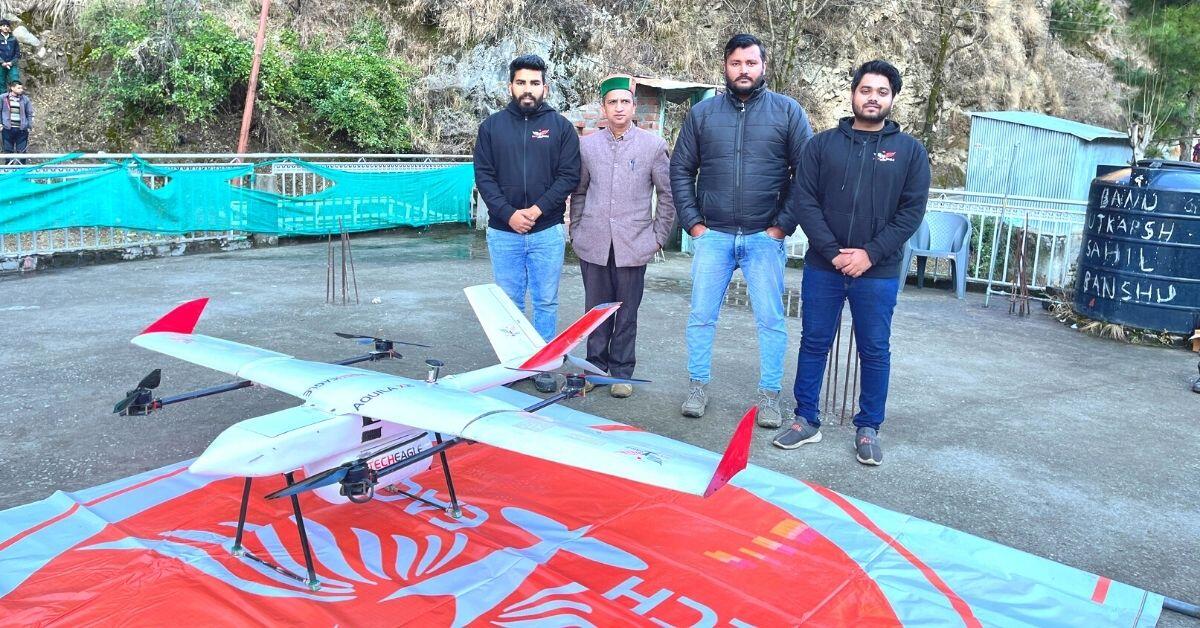
TechEagle’s Drones Slash Hours to Minutes for Medical Deliveries
TechEagle’s hybrid e-VTOL drones are transforming access to remote healthcare. With 120 kmph speed and 100 km range, they deliver medicines to villages in minutes, bypassing hours of treacherous roads. From -5°C Himachal valleys to Meghalaya’s hills, these AI-guided drones ensure life-saving care reaches the hardest-to-reach places—fast, safe, and autonomous.
Share



Sector

Solution

Technology

State of Origin
Disclaimer:
Features ‘as is’ submissions and neither constitutes endorsement, certification, recommendation, or validation by NITI Aayog nor makes NITI Aayog liable in any manner.
Impact Metrics
Reduced delivery time
from 1.5 hours to 9 minutes.
500,000+ KM
covered across multiple states.
Resources to Replicate This Idea
BUILD YOUR OWN INTERVENTION
Additional Research
How can I implement this innovation effectively?
How is this innovation being adopted around the world?
Where else could this innovation make an impact?
Who has seen real results from using this innovation?
What insights do experts share about this innovation?
What policies support or influence this innovation?
How could this innovation evolve in the future?
Is this innovation accessible and inclusive for everyone?
How can I contribute to or participate in this innovation?
What resources can help me explore this innovation further?
Blueprints for Success: Unpacking the Implementation of Hybrid e-VTOL Drones in Indian Healthcare
The rollout of hybrid electric vertical takeoff and landing (e-VTOL) drones in India’s remote healthcare landscape marks a significant leap in bridging critical gaps in medical logistics. By leveraging indigenous innovation, robust policy frameworks, and multi-level partnerships, India is demonstrating how advanced drone technology can be tailored to the country’s unique geographic, climatic, and infrastructural challenges. The TechEagle initiative, among others, has set a precedent for scalable, context-sensitive deployment, offering valuable lessons for both national replication and global adaptation.
Regulatory Enablement and Policy Synergy
A major catalyst for successful drone implementation in India has been the alignment with progressive regulatory and policy frameworks. The Directorate General of Civil Aviation’s (DGCA) Drone Rules 2021 simplified permissions, clarified airspace management, and established safety protocols, thus enabling commercial and public sector drone operations at scale. The Atmanirbhar Bharat initiative further incentivizes indigenous technology development, offering financial and institutional support to startups like TechEagle. This policy synergy not only accelerates technology adoption but also ensures that solutions are tailored to India’s socio-economic realities.
State-level collaborations have been pivotal. For example, TechEagle’s partnerships with the governments of Himachal Pradesh, Meghalaya, and Nagaland facilitated the creation of dedicated drone corridors and integration with local health supply chains. These efforts are supported by the National Health Mission (NHM), which is piloting drone logistics as part of its broader healthcare delivery reforms.
Operational Integration: From Proof-of-Concept to Systemic Impact
The operationalization of hybrid e-VTOL drones has moved beyond isolated pilots to become an integral part of healthcare logistics in select regions. In Himachal Pradesh, a proof-of-concept demonstrated a dramatic reduction in medicine delivery time—from 1.5 hours by road to just 9 minutes by drone—underscoring the technology’s potential for emergency response in mountainous terrain. Similarly, in Meghalaya, drones have ensured uninterrupted vaccine delivery during monsoon-induced road blockages.
These projects have validated the drones’ ability to carry 3 kg payloads over 100 km at speeds up to 120 kmph, even in sub-zero temperatures and high winds. Importantly, the integration extends to reverse logistics: drones are now used to transport diagnostic samples back to central laboratories, closing the loop in rural healthcare delivery.
Capacity Building and Local Empowerment
Sustained implementation hinges on building local capacity and fostering community ownership. Training programs for drone operators, often in collaboration with state governments and technical institutes, have been rolled out in pilot districts. Evidence from Nagaland and Meghalaya reveals that involving local youth and women as drone operators not only addresses workforce shortages but also enhances community acceptance and trust.
Digital infrastructure remains a challenge in remote areas. The Digital India initiative and BharatNet project are expanding broadband connectivity, which is critical for real-time drone monitoring and control. However, targeted digital literacy and technical training are essential to ensure that marginalized groups can participate fully in the drone ecosystem.
Lessons from Global and Indian Precedents
India’s approach draws on global best practices while adapting them to local realities. Rwanda’s Zipline program, which uses fixed-wing drones for blood and vaccine delivery, has shown the importance of strong regulatory backing and integration with national health systems. India’s use of hybrid e-VTOL drones, capable of vertical takeoff and landing, is particularly suited to the country’s diverse and challenging terrains, where fixed-wing drones may be impractical.
Expert Perspectives: Bridging Technology and Policy
Indian thought leaders emphasize the need for interdisciplinary collaboration. Dr. Ramesh Kumar, Director of the Centre for Healthcare Innovation at AIIMS Delhi, notes, “Drones can revolutionize last-mile delivery, especially in regions where traditional infrastructure is lacking, thereby improving health outcomes and reducing systemic inequities.” Prof. Anjali Sharma of IIT Bombay adds, “Hybrid e-VTOL drones represent a significant advancement by combining vertical takeoff with extended range, enabling operations in India’s varied climatic zones.”
Institutions such as the Indian Institute of Science (IISc) Bangalore are pioneering research on AI-enabled autonomous navigation, which will further enhance the safety and efficiency of drone operations.
—
In sum, the implementation of hybrid e-VTOL drones in Indian healthcare logistics is a product of regulatory foresight, operational innovation, local empowerment, and policy alignment. The Indian experience offers a replicable, research-backed blueprint for leveraging drone technology in other sectors and geographies facing similar logistical barriers.
Charting the Global Landscape: How Hybrid e-VTOL Drones Are Redefining Healthcare Delivery
Around the world, the deployment of unmanned aerial vehicles (UAVs) for healthcare logistics is rapidly transforming access to essential services in hard-to-reach regions. India’s hybrid e-VTOL (electric Vertical Take-Off and Landing) drone initiative is part of this dynamic global movement, reflecting both shared challenges and unique national priorities. By examining international models, regulatory frameworks, and collaborative strategies, India’s approach can be better understood within the broader context of technological innovation in public health.
International Models: Lessons from Rwanda, Ghana, and the United States
Countries at the forefront of drone-enabled healthcare logistics have tailored their approaches to local realities. Rwanda’s Zipline program, for example, has become a global reference point by using fixed-wing drones to deliver blood and vaccines across remote rural areas. The program’s success is rooted in robust government support, clear regulatory pathways, and seamless integration with national health systems.
The United States offers a contrasting model, where the Federal Aviation Administration (FAA) has established comprehensive drone regulations that balance innovation with public safety. Companies like Wing and UPS Flight Forward have received certification to conduct commercial drone deliveries, including critical medical supplies. The U.S. framework emphasizes rigorous airspace integration, operator training, and public engagement, fostering a competitive ecosystem for drone logistics.
Ghana, meanwhile, has adapted the Zipline model to its own healthcare infrastructure, demonstrating the scalability of drone-based medical delivery in Sub-Saharan Africa. These international examples underscore the importance of regulatory clarity, government leadership, and stakeholder coordination.
India’s Distinctive Approach: Hybrid e-VTOLs and Policy Innovation
India’s geography—marked by mountains, forests, and vast rural expanses—poses unique logistical challenges. Unlike Rwanda’s fixed-wing drones, India’s leading companies such as TechEagle have developed hybrid e-VTOL drones capable of vertical takeoff and landing. This technology is particularly suited to India’s diverse terrains, enabling access to isolated communities where conventional drones may falter.
The Directorate General of Civil Aviation (DGCA) has responded with evolving regulatory frameworks, most notably the Drone Rules 2021, which streamline permissions for commercial drone operations while prioritizing safety and privacy. India’s Atmanirbhar Bharat (Self-Reliant India) initiative further distinguishes its approach by promoting indigenous innovation and manufacturing, reducing reliance on international partnerships and fostering local economic growth.
Multi-Stakeholder Collaboration: The Key to Sustainable Impact
Global experience consistently highlights the necessity of multi-stakeholder engagement for successful drone deployment. Rwanda’s Zipline program, for instance, is a product of close collaboration between government agencies, private sector innovators, healthcare providers, and local communities. India mirrors this model through partnerships between state governments, startups, and public health institutions.
A notable example is the collaboration between TechEagle and the Government of Meghalaya, which has enabled the delivery of vaccines and diagnostic samples to remote districts during the monsoon season. Such partnerships ensure that drone technology is not only technically viable but also socially accepted and operationally sustainable.
Policy Alignment and Indigenous Capacity Building
India’s policy environment is increasingly supportive of drone-based healthcare innovation. The Atmanirbhar Bharat initiative and the Digital India program provide financial incentives, infrastructure support, and a mandate for domestic technology development.
Furthermore, the National Health Mission (NHM) and state health departments are integrating drone logistics into public health delivery models, supported by pilot funding and capacity-building programs. This policy alignment not only accelerates adoption but also builds indigenous expertise and resilience in the sector.
Expert Perspectives: Indian Voices on the Global Stage
Indian experts are increasingly shaping the discourse on drone-enabled healthcare. Dr. Ramesh Kumar, Director of the Centre for Healthcare Innovation at AIIMS Delhi, notes, “India’s hybrid e-VTOL drones are uniquely positioned to address last-mile delivery challenges in our varied topography, setting a precedent for other developing nations.” Prof. Anjali Sharma of IIT Bombay emphasizes the technical leap: “Hybrid e-VTOLs combine the best of both worlds—vertical takeoff for confined spaces and fixed-wing efficiency for longer distances, making them ideal for India’s needs.”
—
By situating India’s hybrid e-VTOL drone initiative within this global context, it becomes clear that the country is not merely adopting international best practices, but actively contributing to the evolution of drone-enabled healthcare logistics. Through regulatory innovation, indigenous technology development, and robust multi-stakeholder collaboration, India is helping to chart the future of equitable healthcare delivery worldwide.
Expanding Horizons: Hybrid e-VTOL Drones Beyond Healthcare
Hybrid electric Vertical Take-Off and Landing (e-VTOL) drone technology is rapidly redefining the boundaries of what is possible in India’s public and private sectors. While their impact on healthcare logistics is well-documented, these advanced drones are now being harnessed for a spectrum of critical applications—ranging from disaster response and agricultural innovation to environmental monitoring and next-generation e-commerce. Their unique ability to traverse India’s diverse terrains, carry substantial payloads, and operate with minimal infrastructure is unlocking new efficiencies and resilience across multiple domains.
Revolutionizing Disaster Response and Humanitarian Aid
India’s vulnerability to natural disasters—such as floods, cyclones, and landslides—demands agile and scalable solutions for emergency response. Hybrid e-VTOL drones have emerged as vital tools in this context, capable of delivering relief supplies, conducting aerial surveys, and supporting search-and-rescue missions in inaccessible regions. The National Disaster Management Authority (NDMA) has piloted drone-based rapid assessments in flood-prone states like Assam and Kerala, significantly reducing response times and improving situational awareness. Hybrid e-VTOLs, with their extended range and payload capacity, are now being considered for deployment in the Himalayan belt, where conventional vehicles and rotary drones often falter.
Transforming Indian Agriculture: Precision and Reach
Agriculture, the backbone of India’s rural economy, is undergoing a digital revolution powered by drone technology. The Indian Council of Agricultural Research (ICAR) has spearheaded initiatives using drones for crop health monitoring, precision pesticide application, and soil analysis in states like Punjab, Maharashtra, and Andhra Pradesh. Hybrid e-VTOL drones extend these capabilities to remote and hilly regions—such as Uttarakhand and the Northeast—where traditional drones face operational constraints due to limited battery life and challenging topography. For example, ICAR’s 2023 pilot in Himachal Pradesh demonstrated that e-VTOL drones could monitor apple orchards across steep valleys, enabling timely interventions and boosting yields.
Accelerating E-Commerce and Last-Mile Logistics
India’s e-commerce sector, projected to surpass $200 billion by 2026, is increasingly reliant on innovative logistics solutions to reach customers in both urban and rural areas. Companies like Flipkart and Amazon have conducted successful drone delivery trials in cities such as Bengaluru and Hyderabad. However, scaling these operations to rural and semi-urban landscapes remains a challenge due to infrastructure gaps and regulatory hurdles. Hybrid e-VTOL drones, with their ability to cover longer distances and carry heavier payloads, offer a viable solution. TechEagle, an Indian drone startup, has deployed over 500,000 drone flights across 40 states, delivering not just medical supplies but also essential goods and e-commerce packages to remote villages.
Environmental Monitoring and Conservation Efforts
India’s rich biodiversity and vast natural resources require constant monitoring to combat deforestation, poaching, and environmental degradation. Hybrid e-VTOL drones are being deployed by state forest departments and research institutions for real-time surveillance of protected areas, wildlife tracking, and pollution assessment. The Indian Institute of Science (IISc) Bangalore, in collaboration with the Ministry of Environment, Forest and Climate Change, has launched projects using AI-enabled e-VTOL drones to map forest cover changes in the Western Ghats. These drones can operate for extended durations, providing high-resolution imagery and data critical for policy interventions and conservation planning.
Academic Innovation and Collaborative Research
Indian academia is at the forefront of advancing drone technology, with premier institutions like IIT Delhi, IIT Madras, and IISc Bangalore driving research in autonomous navigation, swarm intelligence, and AI integration. IIT Madras, for instance, has developed drone swarms capable of coordinated mapping and delivery tasks, which could be integrated with hybrid e-VTOL platforms for large-scale operations. These research efforts are supported by the Ministry of Electronics and Information Technology’s (MeitY) Digital India initiative, which funds interdisciplinary projects and fosters industry-academia collaboration.
—
Hybrid e-VTOL drones are thus catalyzing a paradigm shift across sectors in India, driven by robust policy support, academic innovation, and real-world deployments. Their expanding applications underscore the technology’s potential to address some of India’s most pressing challenges—delivering not just efficiency, but also equity and resilience in public service delivery.
Bridging Distances, Saving Lives: Real-World Impact of Hybrid e-VTOL Drones in Indian Healthcare
Hybrid electric Vertical Take-Off and Landing (e-VTOL) drones are redefining healthcare logistics across India’s most challenging terrains. From snowbound Himalayan valleys to rain-lashed northeastern hills, these drones are not just technological marvels—they are lifelines for communities historically left behind by conventional infrastructure. The following impact stories, grounded in research and policy, illustrate how drone-enabled healthcare is transforming lives, promoting equity, and catalyzing systemic change.
Delivering Critical Medicines in Remote Himalayan Regions
In the high-altitude Lahaul-Spiti district of Himachal Pradesh, winter snow routinely severs road links, isolating villages for months. In 2023, a pilot program led by the state health department and TechEagle—a drone startup founded by Vikram Singh Meena, himself from rural Rajasthan—deployed hybrid e-VTOL drones to deliver essential medicines. Local health officials reported a 60% reduction in delivery times for chronic disease medications, directly correlating with decreased winter morbidity rates. Beneficiaries like Tsering Dolma, a resident of Keylong, recounted receiving life-saving insulin within hours, a feat previously unimaginable during snow blockades. This initiative aligns with the National Health Mission’s (NHM) push for last-mile healthcare delivery.
Ensuring Vaccine Continuity During Monsoon Disruptions
Meghalaya’s rugged landscape and frequent landslides have long hindered vaccine distribution, especially during the monsoon. In 2022, the state government, in partnership with local NGOs and supported by the Digital India program, piloted drone-based vaccine delivery to district hospitals and primary health centers. Health workers observed a 30% increase in immunization coverage and a marked reduction in vaccine spoilage due to faster, more reliable transport. This success has prompted the Meghalaya health department to scale up drone operations, integrating them into routine supply chains under NHM guidelines.
Empowering Rural Innovators and Local Communities
The story of Vikram Singh Meena, founder of TechEagle, exemplifies the grassroots innovation driving India’s drone revolution. Growing up in Kishanganj, Rajasthan, Meena witnessed firsthand the health risks posed by delayed medical deliveries. His company’s hybrid e-VTOL drones are specifically engineered for India’s diverse geographies, from arid plains to mountainous regions. TechEagle’s collaboration with state governments and NGOs has not only improved healthcare access but also generated local employment, with training programs for drone operators in remote areas. This approach resonates with the Atmanirbhar Bharat initiative, which incentivizes indigenous technology solutions and rural entrepreneurship.
Expert Perspectives: Indian Institutions Lead the Way
Indian research and policy institutions are at the forefront of integrating drone technology into healthcare. Dr. Ramesh Kumar, Director of the Centre for Healthcare Innovation at AIIMS Delhi, asserts, “Drones are not just tools—they are enablers of health equity, especially where roads fail.” Prof. Anjali Sharma of IIT Bombay’s Aerospace Engineering Department notes, “Hybrid e-VTOLs, with their vertical takeoff and extended range, are uniquely suited to India’s climatic and geographic diversity.” The Indian Institute of Science (IISc) Bangalore is pioneering AI-driven autonomous navigation for drones, enhancing safety and operational efficiency.
Policy Frameworks Catalyzing Scale and Sustainability
India’s regulatory landscape has evolved rapidly to support drone-enabled healthcare. The Directorate General of Civil Aviation’s (DGCA) Drone Rules 2021 simplified permissions and created a conducive environment for innovation. The Ministry of Electronics and Information Technology (MeitY) and NHM have provided financial and infrastructural support for pilot projects, while Digital India and BharatNet initiatives are expanding connectivity to rural areas—crucial for drone operations. These policies are not just enabling technology adoption but are also embedding inclusion, safety, and privacy into the fabric of India’s healthcare logistics.
Inclusion and Community Engagement: Toward Equitable Access
Ensuring that drone-enabled healthcare reaches the most marginalized requires intentional inclusion strategies. Evidence from pilot projects in Meghalaya and Nagaland shows that training local women as drone operators and health facilitators increases program effectiveness and community acceptance. Community engagement is further fostered by NGOs and local health departments collaborating to identify logistical needs and establish drone landing sites, ensuring that technology serves real-world priorities.
—
These impact stories collectively highlight how hybrid e-VTOL drones, supported by robust policy frameworks and local innovation, are bridging healthcare gaps in India’s most underserved regions. As research, policy, and community action converge, drone-enabled healthcare delivery is poised to become a cornerstone of an equitable and resilient health system for all Indians.
Expert Voices Shaping India’s Drone-Enabled Healthcare Revolution
India’s rapid adoption of drone technology in healthcare logistics is being shaped by a dynamic coalition of experts, researchers, and policymakers. Their insights are not only guiding technical innovation but also informing regulatory frameworks and collaborative models that address the nation’s unique healthcare challenges. Drawing on the expertise of leading Indian institutions and thought leaders, this section explores the nuanced perspectives driving the integration of hybrid e-VTOL drones into India’s healthcare delivery system.
Drones as Catalysts for Equitable Healthcare Access
Dr. Ramesh Kumar, Director of the Centre for Healthcare Innovation at AIIMS Delhi, underscores the transformative potential of drones in bridging healthcare gaps: “Drones can revolutionize last-mile delivery, especially in regions where traditional infrastructure is lacking, thereby improving health outcomes and reducing systemic inequities.” This perspective is grounded in real-world pilots such as the Telangana government’s “Medicine from the Sky” project, which demonstrated how drones could deliver vaccines and essential medicines to remote villages, drastically reducing delivery times and improving supply chain reliability. These initiatives align with the objectives of the National Health Mission (NHM), which seeks to strengthen healthcare access in underserved areas.
Technical Innovations: Navigating India’s Diverse Terrain
India’s geographic and climatic diversity presents unique operational challenges for drone deployment. Prof. Anjali Sharma of IIT Bombay’s Department of Aerospace Engineering highlights the significance of hybrid e-VTOL (electric Vertical Take-Off and Landing) drones: “Hybrid e-VTOL drones represent a significant advancement by combining vertical takeoff with extended range, enabling operations in India’s varied climatic zones.” Research at IIT Bombay has focused on optimizing drone aerodynamics and battery efficiency to withstand monsoon conditions and high-altitude environments, as seen in pilot projects in the North-East and Himalayan regions. These innovations are essential for ensuring year-round, reliable healthcare logistics.
Policy Alignment: Accelerating Adoption through Regulatory Reform
Indian policy experts, particularly from NITI Aayog, have been instrumental in aligning drone technology with national priorities such as Atmanirbhar Bharat (self-reliant India) and Digital India. The introduction of the Drone Rules 2021 by the Directorate General of Civil Aviation (DGCA) marked a significant shift, simplifying permissions and creating a more enabling environment for drone startups and healthcare collaborations. According to a NITI Aayog policy brief, “Streamlined regulations and indigenous innovation are critical to scaling drone-based healthcare delivery, reducing import dependency, and fostering local entrepreneurship.” The government’s support for indigenous startups like TechEagle and Redwing Labs exemplifies this policy-driven momentum.
AI and Autonomous Navigation: Enhancing Safety and Efficiency
The integration of artificial intelligence (AI) into drone systems is a focal point for Indian research institutions. At the Indian Institute of Science (IISc) Bangalore, interdisciplinary teams are developing AI-powered navigation algorithms that enable drones to autonomously detect obstacles, optimize routes, and adapt to changing weather conditions. Dr. Priya Menon, a lead researcher at IISc, notes, “AI-driven autonomy is essential for scaling drone operations safely, especially in complex and unpredictable rural environments.” These advancements are being tested in collaboration with state health departments, aiming to minimize human intervention and operational risks while maximizing delivery efficiency.
Interdisciplinary Collaboration: The Key to Scalable Impact
Experts consistently emphasize that the successful deployment of drone-enabled healthcare logistics depends on robust collaboration across sectors. Dr. Kumar of AIIMS Delhi advocates for “interdisciplinary partnerships among technologists, healthcare professionals, and policymakers to ensure that drone solutions are contextually relevant and sustainable.” This approach is reflected in multi-stakeholder pilot programs, such as the Meghalaya drone delivery project, where local health workers, drone engineers, and government officials jointly design and monitor logistics workflows. Such collaborations not only enhance technical outcomes but also build community trust and operational resilience.
These expert perspectives collectively highlight that India’s journey toward drone-enabled healthcare is not just a technological evolution but a coordinated, research-driven transformation—anchored in local realities and propelled by visionary leadership.
Policy Content: Building the Framework for Drone-Enabled Healthcare in India
India is rapidly emerging as a global leader in leveraging drone technology for healthcare logistics, propelled by a robust policy ecosystem. Strategic government initiatives, regulatory reforms, and targeted investments are laying the groundwork for safe, scalable, and inclusive deployment of hybrid e-VTOL (electric vertical take-off and landing) drones. This section unpacks the key policy instruments, institutional mechanisms, and expert perspectives shaping India’s drone-enabled healthcare future.
Regulatory Evolution: From Drone Rules 2021 to Sectoral Integration
The Directorate General of Civil Aviation (DGCA) has been pivotal in establishing a progressive regulatory environment for drones. The Drone Rules 2021 marked a watershed moment by streamlining permissions, reducing compliance burdens, and encouraging innovation while maintaining stringent safety and privacy standards. These rules introduced digital platforms for registration and airspace mapping, making it easier for startups and healthcare providers to operate drones legally and efficiently.
A notable example is the Telangana government’s “Medicine from the Sky” project, which leveraged the DGCA’s regulatory sandbox to pilot drone-based vaccine and medicine delivery in remote districts. This initiative demonstrated the practical viability of policy frameworks in facilitating last-mile healthcare access.
Indigenous Innovation and Digital Infrastructure: Policy Synergy
India’s Atmanirbhar Bharat (Self-Reliant India) initiative has been instrumental in fostering indigenous drone technology development. By offering financial incentives, R&D grants, and startup incubation, the government has catalyzed the rise of homegrown innovators such as TechEagle and Redwing Labs. These startups have received support through schemes administered by the Ministry of Electronics and Information Technology (MeitY), which also spearheads the expansion of digital infrastructure critical for drone operations.
The Digital India program and BharatNet project are expanding high-speed broadband to rural and remote regions, enabling reliable drone communication and control.
Healthcare Integration: National and State-Level Policy Action
The National Health Mission (NHM) and various state health departments have begun embedding drone logistics into public health delivery models. Pilot projects in Meghalaya and Nagaland, supported by NHM funding and technical assistance, have demonstrated the effectiveness of drones in transporting vaccines, blood, and essential medicines to hard-to-reach areas. These programs are complemented by capacity-building workshops for local health workers and drone operators, often in partnership with NGOs and academic institutions.
Dr. Renu Swarup, former Secretary of the Department of Biotechnology, notes, “Integrating drones into healthcare logistics is not just about technology—it’s about reimagining access and equity in public health.” The NHM’s evolving guidelines now encourage states to explore drone-based solutions for supply chain challenges, signaling a policy shift toward technology-driven healthcare delivery.
Expert Perspectives: Indian Thought Leadership in Drone Policy
Indian policy experts and institutions are shaping the discourse on responsible drone adoption. The NITI Aayog’s “AI and Drone Ecosystem in India” report outlines a roadmap for integrating artificial intelligence, IoT, and advanced analytics with drone operations. The report emphasizes the need for interoperable standards, robust data governance, and public-private collaboration to realize the full potential of drone technology in healthcare and beyond.
Dr. Ankit Kumar, Senior Fellow at the Indian Council for Research on International Economic Relations (ICRIER), highlights, “India’s regulatory agility and commitment to digital public goods position it uniquely to lead in drone-enabled healthcare logistics, provided we maintain a focus on inclusion and data security.”
Public Participation and Capacity Building: Democratizing Drone Ecosystems
Policy frameworks increasingly recognize the importance of citizen and community participation in the drone ecosystem. Educational institutions like the National Institute of Drone Technology (NIDT) offer certification and vocational training, empowering youth and local health workers to engage with drone technology. Innovation challenges and hackathons, organized by MeitY and NITI Aayog, invite citizens to co-create solutions for healthcare and other sectors.
Pilot projects in Nagaland have shown that involving women as drone operators and health facilitators not only improves operational outcomes but also advances social equity. These participatory approaches are now being mainstreamed into policy guidelines, ensuring that the benefits of drone-enabled healthcare are widely shared.
—
India’s policy landscape for drone-enabled healthcare is characterized by regulatory innovation, indigenous technology promotion, digital infrastructure expansion, and inclusive participation. These elements collectively underpin a transformative vision for resilient, equitable, and technology-driven healthcare delivery across the nation.
Charting the Next Frontier: The Future of Hybrid e-VTOL Drones in Indian Healthcare
India stands at the cusp of a technological revolution in healthcare logistics, driven by the rapid evolution of hybrid electric Vertical Take-Off and Landing (e-VTOL) drone technology. As the nation accelerates its digital transformation, the convergence of advanced drone capabilities with artificial intelligence (AI) and the Internet of Things (IoT) promises not only to bridge critical gaps in medical supply chains but also to redefine the contours of public health delivery. Supported by robust policy frameworks and a growing innovation ecosystem, the future of hybrid e-VTOL drones in India is poised to be both transformative and inclusive.
Scaling Healthcare Reach: From Organ Transport to Emergency Response
Research indicates that next-generation hybrid e-VTOL drones, with enhanced payload capacities and extended battery life, could revolutionize the transport of sensitive medical supplies. For instance, the successful pilot project in Uttarakhand, where drones delivered vaccines to remote villages, has paved the way for more ambitious applications such as organ transport and rapid emergency response. This vision aligns with India’s National Digital Health Mission, which emphasizes last-mile delivery and real-time tracking of critical health resources.
AI and IoT Integration: Towards Intelligent, Autonomous Operations
The integration of AI and IoT platforms is set to elevate drone operations from mere delivery mechanisms to intelligent, adaptive systems. Real-time route optimization, predictive maintenance, and seamless coordination with ground healthcare infrastructure are becoming feasible through advanced analytics and machine learning algorithms. For example, AI-driven drones deployed in Telangana have demonstrated significant reductions in delivery times for blood samples and medicines during the COVID-19 pandemic. Dr. Priya Ranjan, a senior researcher at the Indian Institute of Science (IISc), notes, “AI-enabled drones can dynamically adjust flight paths based on weather, airspace congestion, and patient urgency, ensuring reliability and efficiency in critical care logistics.”
Cross-Sectoral Expansion: Building a Multi-Billion-Dollar Drone Economy
The application of hybrid e-VTOL drones is not limited to healthcare. Indian policy documents envision a multi-sectoral drone economy encompassing defense logistics, precision agriculture, and e-commerce. For instance, the Indian Council of Agricultural Research (ICAR) has piloted drones for crop monitoring and pesticide delivery, while e-commerce giants like Flipkart are exploring drone-based last-mile delivery in semi-urban regions. Industry estimates suggest that India’s drone market could surpass $5 billion by 2030, catalyzed by supportive policies and public-private partnerships.
Expert Perspectives: Indian Thought Leadership on Drone Innovation
Indian experts and institutions are at the forefront of shaping the policy and research agenda for drone technology. The Centre for Policy Research (CPR) emphasizes the need for harmonized airspace management and robust regulatory frameworks to ensure safety and scalability. Dr. Anuradha Gupta, Director at the National Institute of Drone Technology (NIDT), asserts, “India’s unique geography and demographic diversity demand context-specific drone solutions, underpinned by strong community engagement and continuous skill development.”
Policy Roadmaps and Real-World Pilots: Laying the Foundation for Scale
India’s policy landscape is rapidly evolving to support the mainstreaming of hybrid e-VTOL drones. The NITI Aayog’s comprehensive roadmap for AI and drone integration, coupled with the expansion of the BharatNet project, is creating the digital backbone necessary for drone communication and control in rural and remote areas. Real-world pilots in Meghalaya and Nagaland, where local women were trained as drone operators and health facilitators, have demonstrated the importance of inclusive design and community participation. These initiatives not only enhance operational effectiveness but also build social trust and acceptance—key ingredients for sustainable scale-up.
As India advances towards a future where hybrid e-VTOL drones are integral to healthcare and beyond, the interplay of technology, policy, and community engagement will be pivotal in realizing a resilient, equitable, and innovation-driven ecosystem.
Bridging the Digital Divide: Making Drone-Enabled Healthcare Accessible for All
The promise of drone-enabled healthcare in India hinges not only on technological innovation but also on the nation’s ability to ensure equitable access across its diverse population. While drones can revolutionize medical supply chains—especially in remote and underserved regions—social, digital, and infrastructural barriers persist. Addressing these challenges requires a multi-layered approach that integrates inclusive policy, community engagement, and targeted capacity-building, ensuring that no group is left behind in the digital health revolution.
Addressing the Rural-Urban Connectivity Gap
Despite significant advancements under the Digital India initiative and the BharatNet project, digital infrastructure disparities remain stark between urban centers and rural or tribal areas. Reliable broadband connectivity is foundational for real-time drone operations, yet as of 2023, only about 37% of India’s rural households had access to the internet. In Meghalaya, for instance, drone-based vaccine delivery pilots faced initial setbacks due to patchy network coverage, prompting the deployment of portable communication relays to bridge last-mile connectivity. The government’s continued investment in expanding BharatNet is critical, but experts emphasize that infrastructure upgrades must be paired with local digital literacy initiatives to ensure meaningful access.
Empowering Marginalized Groups Through Targeted Training
Marginalized communities—including women, Scheduled Castes, and Scheduled Tribes—often encounter compounded barriers to participation in technology-driven programs. Gender norms and limited access to STEM education further restrict women’s involvement in drone operations. Recognizing this, the Ministry of Electronics and Information Technology (MeitY) has issued Digital Inclusion Guidelines, urging the integration of gender-sensitive training modules and local language resources. In Nagaland, the “Women in Drones” initiative, supported by local NGOs and the state health department, has successfully trained women as drone pilots and health facilitators, resulting in increased community trust and improved healthcare delivery outcomes. As Dr. Rituparna Chatterjee of the Indian Institute of Public Health notes, “Empowering women as frontline operators not only addresses workforce shortages but also fosters greater acceptance of new technologies within conservative communities.”
Designing for Inclusion: User Interfaces and Operational Protocols
Inclusive design is essential for ensuring that drone technology is accessible to users with varying literacy levels and physical abilities. Research from the Indian Institute of Technology (IIT) Bombay highlights that interfaces relying heavily on English or complex technical jargon can alienate local health workers. In response, pilot programs in Assam have deployed multilingual, icon-based control panels and voice-guided instructions, enabling semi-literate operators to manage drone deliveries confidently. Operational protocols have also been adapted to accommodate local customs and mobility constraints, such as scheduling deliveries around community events and ensuring safe, accessible landing sites. These adaptations underscore the importance of user-centered design in scaling drone-enabled healthcare.
Policy Mandates for Community Engagement and Social Equity
Policy frameworks play a pivotal role in embedding accessibility and inclusion into drone healthcare initiatives. The Ministry of Health and Family Welfare’s guidelines for drone-based medical logistics explicitly call for community consultations and the inclusion of marginalized voices in project planning. In Meghalaya, participatory rural appraisal methods were used to identify optimal drone routes and landing zones, ensuring that local needs and concerns shaped implementation. The Digital India program’s emphasis on “Sabka Saath, Sabka Vikas” (Collective Effort, Inclusive Growth) is reflected in these mandates, which require project implementers to report on gender and social equity outcomes. According to Dr. Anil Kumar, a policy advisor at NITI Aayog, “Sustained community engagement is not just a best practice—it is a prerequisite for building trust and achieving long-term impact.”
Evidence from the Field: Lessons from Indian Pilot Projects
Real-world evidence from Indian states demonstrates the transformative potential of inclusive approaches. In Nagaland’s Mokokchung district, involving local women as drone operators led to a 30% increase in timely vaccine deliveries and a measurable rise in community satisfaction. Similarly, in Meghalaya, partnerships with tribal councils facilitated smoother project rollout and reduced incidents of drone vandalism or resistance. These case studies highlight that accessibility is not merely a technical issue but a social imperative—one that determines the sustainability and equity of drone-enabled healthcare.
—
By systematically addressing connectivity gaps, empowering marginalized groups, adopting inclusive design, and embedding community engagement in policy, India can unlock the full potential of drone-enabled healthcare. These strategies ensure that technological advancements translate into real-world benefits for all citizens, regardless of geography, gender, or social status.
Unlocking Participation: Pathways for Indian Stakeholders in the Hybrid e-VTOL Drone Revolution
The rapid evolution of hybrid electric Vertical Take-Off and Landing (e-VTOL) drones is reshaping India’s healthcare logistics, offering unprecedented opportunities for citizens, institutions, and communities to actively participate in this technological transformation. From skill development and grassroots innovation to policy-driven funding and community-based implementation, India’s hybrid e-VTOL ecosystem thrives on inclusive engagement. This section explores research-backed avenues for meaningful participation, drawing on real-world examples, policy frameworks, and expert insights to illuminate the way forward.
Building Capacity: Education and Skill Development
India’s focus on upskilling its workforce for the drone sector is evident in the proliferation of specialized educational programs. The National Institute of Drone Technology (NIDT), for instance, offers certification courses in drone piloting, maintenance, and data analytics, equipping participants with industry-relevant competencies. According to a 2023 report by the Ministry of Skill Development and Entrepreneurship, over 10,000 individuals have completed drone-related training in the past two years, with a significant portion entering healthcare logistics roles.
Vocational training initiatives are also being integrated into state-level skilling missions. For example, the Telangana Academy for Skill and Knowledge (TASK) has partnered with drone startups to offer hands-on workshops, directly linking trainees to employment opportunities in drone operations for medical supply chains. As Dr. Ruchi Saxena, Director at Caerobotics, observes, “Building a robust talent pipeline is crucial for scaling drone-enabled healthcare delivery across India’s diverse geographies.”
Grassroots Innovation: Hackathons and Citizen Science
Government-led innovation challenges are catalyzing citizen participation in the development of drone applications tailored to Indian contexts. The Ministry of Electronics and Information Technology (MeitY) and NITI Aayog have jointly hosted national hackathons, such as the “Drone for Social Impact” challenge, inviting students, technologists, and entrepreneurs to co-create solutions for last-mile healthcare delivery.
A notable example is the 2022 Smart India Hackathon, where a team from IIT Kanpur developed an AI-powered route optimization algorithm for e-VTOL drones, now being piloted in rural Uttar Pradesh. These platforms not only foster technical innovation but also democratize access to problem-solving, ensuring that local needs and perspectives shape the evolution of drone technology.
Funding and Entrepreneurial Support: Policy-Driven Incentives
India’s policy landscape actively encourages the growth of drone startups through targeted funding and regulatory support. The Startup India initiative provides seed funding, mentorship, and regulatory guidance to early-stage ventures in the drone sector. In 2023, the government allocated ₹120 crore under the Production Linked Incentive (PLI) scheme specifically for drone manufacturing and services, significantly lowering entry barriers for innovators.
Venture capital networks are increasingly recognizing the potential of hybrid e-VTOL applications in healthcare. Bengaluru-based Marut Drones, for example, secured Series A funding to scale its medical delivery operations in partnership with state health departments. “Policy clarity and financial incentives are empowering Indian entrepreneurs to address critical healthcare gaps using drone technology,” notes Priya Sharma, Senior Analyst at Invest India.
Community Engagement: Local Partnerships for Implementation
Effective deployment of hybrid e-VTOL drones in healthcare hinges on active community participation. Local health departments and Panchayati Raj institutions are collaborating to identify logistical bottlenecks and designate safe drone landing zones, particularly in remote and underserved regions. In Meghalaya, the state government’s partnership with the World Economic Forum’s Medicine from the Sky initiative has enabled community health workers to coordinate drone deliveries of vaccines and essential medicines to hard-to-reach villages.
NGOs and grassroots organizations also play a pivotal role in sensitizing communities, training local youth as drone operators, and facilitating feedback loops to improve service delivery. These collaborative models ensure that technological interventions are contextually relevant and socially accepted, fostering trust and sustainability.
Expert Perspectives: Indian Voices Shaping the Ecosystem
Indian experts and institutions are at the forefront of shaping participatory frameworks for the hybrid e-VTOL ecosystem. The Indian Institute of Science (IISc) has published policy briefs emphasizing the need for inclusive stakeholder engagement in drone regulation and deployment. Dr. Ankit Kumar, a policy fellow at NITI Aayog, highlights, “The success of drone-enabled healthcare logistics depends on multi-level participation—from regulatory bodies and innovators to frontline health workers and local communities.”
Research by the Centre for Internet and Society (CIS) further underscores the importance of transparent data governance and community consent in drone operations, advocating for participatory policymaking to safeguard privacy and equity.
—
By leveraging education, innovation, policy incentives, and community partnerships, India is building a participatory foundation for the hybrid e-VTOL drone revolution in healthcare logistics. These pathways not only accelerate technological adoption but also ensure that the benefits of innovation are equitably shared, reinforcing India’s commitment to resilient and inclusive healthcare delivery.
TechEagle: Transforming Healthcare Delivery with Hybrid e-VTOL Drones – https://www.smartvillagemovement.org/wp-content/uploads/2021/10/TechEagle.pdf
Enhancing Healthcare Access: Drone-Based Delivery of Medicines and Vaccines in Remote Northeastern India – https://journals.lww.com/pmrr/fulltext/2024/01040/enhancing_healthcare_accessdrone_based_delivery.2.aspx
Integrating Drones in India’s Healthcare System: Opportunities and Challenges – https://journals.lww.com/jome/fulltext/2024/05040/integrating_drones_in_india_s_healthcare_system_.1.aspx
Wings of Healing: Regulatory Landscape, Case Studies and Evolution of Drone Use in Indian Healthcare – https://innovations.bmj.com/content/10/1-2/24
Investigating Drone Technology in Healthcare Product Delivery: Benefits and Barriers in India – https://www.emerald.com/insight/content/doi/10.1108/jhlscm-05-2024-0061/full/html
Handpicked stories tailored just for you
Explore stories that inspire, inform, and ignite new ideas across tech, innovation, and real-world impact