From Forecast to Financial Wrapper: How mistEO Is Rethinking Weather Risk
mistEO is a Trivandrum-based weather-tech startup using satellite, radar, and IoT sensor data to power Indra, a hyperlocal forecasting model. It translates weather data into sector-specific SOPs, financial risk estimates, and parametric insurance for agriculture, livestock, defence, and energy.
Updated on: 31 July 2026

Sector

Solution

Technology

State of Origin
Impact Metrics
Forecasts weather
at 3km spatial resolution, updated hourly, up to 7 days in advance.
25,000 paddy farmers
in Palakkad, Kerala have been reached through mistEO's parametric insurance model.
Pradhan Mantri Fasal Bima Yojana (PMFBY)
is one government initiative mistEO's parametric insurance work aligns with.
An upcoming NLM collaboration
aims to bring kilometer-resolution cattle heat-load tracking nationwide.
Where the Gap Lies
Climate change is no more just an environmental concern — it has become a financial one too. Thirteen major reservoirs in India have fallen below 50 per cent of their normal storage, with several river basins recording a rapid decline in water levels. Underscoring the amount of money states affected by climate-related calamities already absorb as losses, Samuel John, founder of mistEO, says that if the right mechanisms are not adopted — real-time early warning systems and financial wrappers to offset losses — these problems will only extrapolate in the future and have multi-sectoral, decadal impact.
Backing the 2,000 crores allocation to the IMD under Mission Mausam, Samuel highlights that reaching the last mile is of paramount importance, and that everything else can be built upon from there. “Being informed is ninety per cent of the story, and being prepared is the rest,” he says.
The gap that mistEO, a climate finance startup based in Kerala and Australia, aims to close is between knowing a weather event is coming and actually having a mechanism ready to absorb its impact.
What does mistEO do?
The forecasting model of mistEO, called Indra, gives a hyperlocal weather forecast at three-kilometer spatial resolution and zero hours to seven days out, at hourly resolution, giving different outputs in terms of weather forecast.
The company understood right at the beginning that there was a financial angle that could be tapped in the sector — to look at weather from an SOP point of view rather than absolute science.
In 2021, Meat & Livestock Australia (MLA), the regulatory body for meat and livestock management in Australian and international markets, approached the company with a problem — they were unable to accurately predict heat impact on animals. The agency provided mistEO with a grant of $100,000 Australian dollars to build the next-generation heat load index for the Australian meat industry.
Today, mistEO operates with a concrete base of weather forecasting, against which it has vertical pillars in several industries including agriculture, livestock, defense, mobility, and energy, all SOP-driven.
The observed and forecasted weather data is fed into the SOP, which then enables organizations to do, among many other things, the following:
- What’s going to be the operational impact?
- What’s going to be the rupee value of that operational impact?
- And how can you offset that loss?
The goal is to enable weather-related finance that can evolve into climate-mitigative investment for private players, ESG funds, and governments alike, sitting at the intersection of forecasting, climate analytics, and finance. Customer needs vary: the Indian Air Force uses only the forecasting layer, while Maruti Suzuki relies on the early-warning system.
Sensors, Radars, and Satellites: Building the Forecast
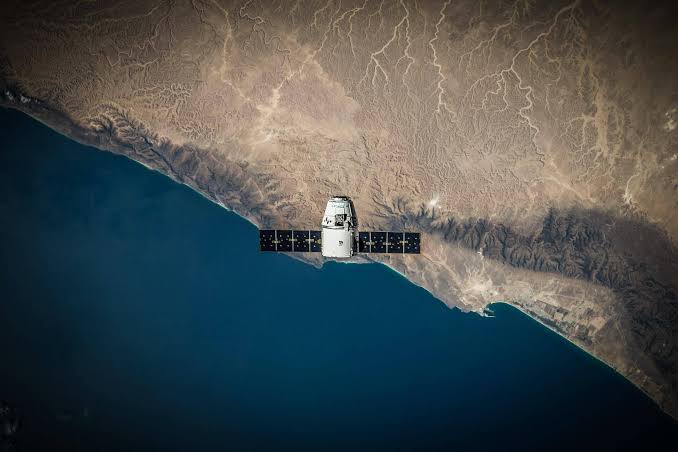
MistEO draws on three main data sources: in-situ ground sensors accessed through collaborations with government departments, Doppler Radars that estimate wind speed and detect storm formation, and India’s dedicated weather satellites, such as the INSAT-3D series.
Once this data has been downsampled, it is delivered into sector-specific SOPs where raw numbers get translated into actionable alerts. Sectors like defence which wish to plug mistEO’s output directly into their own existing systems are provided with APIs, while a dashboard system is provided for those who simply want to view the output directly, although the backend remains completely API-driven.
The Numbers So Far
Samuel believes that if a company has been able to save money by the early warning system and the SOP output alert set up under mistEO, it counts as a success.
mistEO’s parametric model was kick-started in the Palakkad district of Kerala in collaboration with the Government of Kerala. It ran for a period of three years and benefitted 25,000 paddy farmers in the district. The company’s solution was part of the top 15 sustainable finance solutions in the COP28 UAE TechSprint.
Perhaps the biggest impact of mistEO’s model has come in the form of DiCRA, Data and Climate Resilient Agriculture. Born from a September 2023 MoU between UNDP and NABARD, Samuel calls it “the world’s largest public good when it comes to agriculture.” A worldwide collaborative, open-sourced, and with no room for ambiguity, the founder says they are aiming to “build the largest single source of truth for agriculture in the country” with DiCRA.
Pradhan Mantri Fasal Bima Yojana (PMFBY) is looking to move away from Crop Cutting Experiments (CCEs) towards satellite-based observations for yield estimation. The first set of tests done under this are available on DiCRA, giving insurers the ease to access it free of cost.
A proposed MoU between IMD and DiCRA would add daily agriculture-meteorology alerts which would reach roughly 7 crore farmers through NABARD’s network of 10,000+ FPOs.
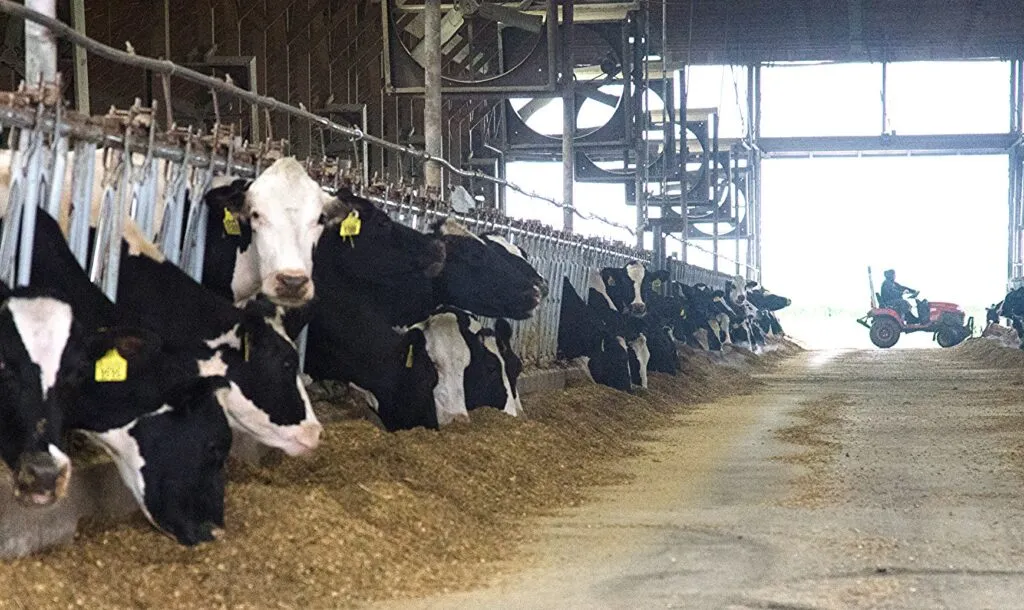
An upcoming collaboration between National Livestock Mission (NLM) and DiCRA will allow a kilometer resolution for the cattle heat load index across the country — potentially prompting every single dairy farmer across the country to undertake adequate safeguard measures for his cattle.
mistEO also helped develop the RBI’s climate risk index, now being open-sourced to help direct capital to the districts that need it most.
What’s Still Missing
While Samuel appreciates the policy-support that is available in the sector, he wants faster, larger grant disbursement and more equitable investment across non-strategic sectors — “the fundamental question,” he says, “is how do you enable that capital.”
Share Your Story Today, Shape Viksit Bharat Tomorrow
Got an idea, innovation, or experience that's making a difference? Share your story now and ignite India's transformation because your voice can drive the future forward!
Resources to Replicate This Idea
BUILD YOUR OWN INTERVENTION
Handpicked stories tailored just for you
Explore stories that inspire, inform, and ignite new ideas across tech, innovation, and real-world impact

Safe Access: India’s Community-Verified Digital Locator for HIV Prevention Services
Safe Access is a free, community-driven Indian platform that helps people locate verified PrEP and PEP providers nearby. By mapping...
Read More