
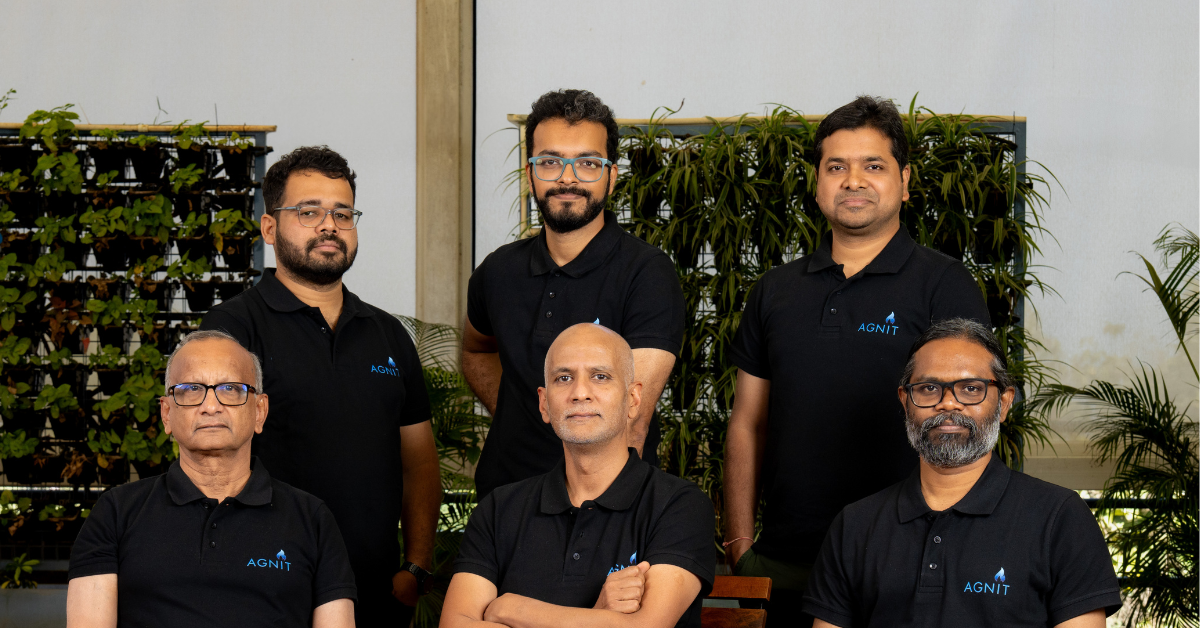
Frontier GaN Technology: Scaling India’s Semiconductor Ambitions Through Indigenous Innovation
Gallium Nitride (GaN) is emerging as a frontier semiconductor technology with the potential to transform India’s defence, telecommunications and power electronics sectors. Through indigenous innovation, companies like AGNIT are working to build a globally competitive semiconductor ecosystem, reduce technology dependence and scale India’s high-tech manufacturing capabilities.
Updated on: 19 October 2026

Sector

Solution

Technology

State of Origin
Disclaimer:
Features ‘as is’ submissions and neither constitutes endorsement, certification, recommendation, or validation by NITI Aayog nor makes NITI Aayog liable in any manner.
Impact Metrics
12+ patents licensed
from the Indian Institute of Science, advancing indigenous GaN technology development.
2 strategic sectors
defence and space, with pilot projects developing compact, high-power-density GaN components.
Supporting critical applications
telecommunications, power conversion and defence electronics, supporting India's semiconductor self-reliance and global competitiveness.
3.4 eV bandgap
enabling high-voltage, high-temperature and high-frequency performance for next-generation semiconductor applications.
In an age when we transmit most information wirelessly and our reliance on electricity has increased, we need technology that is compact, efficient, and power-dense. This is where Gallium Nitride (GaN) semiconductors have emerged as potential solutions to deliver such compact, efficient and power-dense signal amplification and power switching solutions.
However, Hareesh Chandrasekar, the co-founder and CEO of AGNIT that’s on a mission to unlock GaN’s full promise, reasons that customer adoption of GaN semiconductors is limited due to 3Cs: Customisability, convenience and cost.
Pointing to how different geographies come with changing needs, he emphasises a need for customer designs and use-cases to have application-specific GaN solutions for optimal price-performance trade-offs.
When it comes to current geopolitics and including access to critical next-gen semiconductor technologies like GaN, there is a need for localisation roadmaps for systems and semiconductors driven by policy levers like the Make in India initiatives and the need for secure, reliable and local supply chains, allied with strong application support.
Finally, the development cost of new GaN devices for fresh use-cases and tight control over the entire materials-to-component-to-module value chain is required to deliver the performance of GaN at the price of silicon.
With pilots running in strategic sectors — defence and space — AGNIT is able to maximise on developing compact, efficient and power-dense GaN components for their specific use-cases.
Frontier technology: GaN wafers and GaN radio-frequency components
As India’s first Gallium Nitride (GaN for short) product company headquartered in Bengaluru, the company’s vertical technology integration includes making GaN wafers (materials), using its proprietary semiconductor manufacturing processes, a technology that few companies have been able to develop.
Research has explored the various applications of Gallium Nitride (GaN) as a semiconductor material. Its high electron mobility; substantial saturation drift velocity — the maximum speed that charge carriers like electrons can reach inside a semiconductor when a very strong electric field is applied; an extensive forbidden energy band — a wide range of energy levels in a solid material where electrons cannot exist; and remarkable thermal stability make it a versatile material to have in electronic applications.
These include high-frequency power amplifiers, luminous high-brightness Light Emitting Diodes (LEDs), and lasers. Research has posited GaN to have “significant potential for future development and to assume a crucial role in the advancement of science and technology”.

Its ability to provide higher efficiency and performance in high power density and high temperature environments makes it a good choice for communication systems, radar systems, and amplifiers in the radio frequency band, while GaN’s high electron flow rate and good thermal conductivity make it ideal for high-power RF applications, enabling higher operating frequencies and lower power consumption.
Bridging the gap in the market
The market for beyond-silicon semiconductor components like GaN is necessarily global, and the strategic, telecom and power conversion use cases are also global drivers for GaN adoption.
AGNIT believes that to scale this technology to other geographies, all three aspects of customizability, convenience and cost outlined earlier will need to be addressed, which requires market access and customer clarity on systems and regulatory standards, including end-use requirements.
To date, AGNIT has licensed more than 12 patents exclusively from the Indian Institute of Science and filed for seven patents of its own. AGNIT is also the recipient of an Innovation in Defence Excellence (iDEX) grant from the Ministry of Defence (2024), the India Electronics and Semiconductor Association (IESA) Technovation Startup Award for Semiconductors (2025) and was featured in the Forbes Asia 100 to Watch List (2026).
Scaling the technology for India’s tech sector
India’s economic scale, defence spending, and telecommunications market create significant opportunities for semiconductor development. The India Semiconductor Mission aims to integrate the country into the global semiconductor value chain.
However, India still lacks a strong domestic supply chain built on indigenous semiconductor design and manufacturing. Gallium nitride (GaN) technology can support energy-efficient 5G communications and electric vehicles, reducing carbon emissions. It can also stimulate economic growth by creating high-value jobs and supporting wider employment across related industries. Through indigenous GaN innovation, companies such as AGNIT can reduce technological dependence, strengthen domestic supply chains, and boost exports of locally integrated electronic systems.
Gallium nitride (GaN) technology could play a significant role in India’s technology sector development by improving the efficiency, performance, and reliability of electronic devices. As a wide-bandgap semiconductor, GaN can operate at higher voltages, temperatures, and frequencies than traditional silicon, making it valuable for power electronics, telecommunications, and advanced computing.
In India’s rapidly expanding 5G and future 6G networks, GaN-based components could improve signal transmission and energy efficiency. GaN power devices could also support electric vehicles, renewable energy systems, fast chargers, and efficient data centres, contributing to India’s clean energy transition and digital infrastructure. Furthermore, developing domestic GaN research, design, fabrication, and packaging capabilities could reduce dependence on imported semiconductor technologies and strengthen supply-chain resilience.
Government initiatives, industry partnerships, and investment in semiconductor research could accelerate adoption. Universities and technology companies could collaborate to develop skilled talent and encourage innovation. By integrating GaN into strategic industries, India could enhance its global competitiveness, create high-value jobs, and build a stronger, more self-reliant semiconductor ecosystem.
Share Your Story Today, Shape Viksit Bharat Tomorrow
Got an idea, innovation, or experience that's making a difference? Share your story now and ignite India's transformation because your voice can drive the future forward!
Disclaimer:
Features ‘as is’ submissions and neither constitutes endorsement, certification, recommendation, or validation by NITI Aayog nor makes NITI Aayog liable in any manner.
Resources to Replicate This Idea
BUILD YOUR OWN INTERVENTION
Handpicked stories tailored just for you
Explore stories that inspire, inform, and ignite new ideas across tech, innovation, and real-world impact


Pilotless Cargo Flights with Zero Failures: Reimagining Diagnostic Logistics in Indian Cities
An energy-efficient autonomous aircraft combining vertical take-off with fixed-wing cruise has completed over 1,000 flights carrying diagnostic samples between hospitals,...
Read More