9,000 Women, 700 Villages: An AI-Led Transformation in Gender Equality
Ghar Ayee Nanhi Pari uses AI-powered voice advisories and a “phygital” network to empower rural women across Gujarat and Uttar Pradesh. Reaching 9,000 mothers and newborn girls in 700 panchayats, it has increased women’s incomes by 40% and improved service delivery by 70%, while strengthening healthcare access, digital literacy, and women’s participation in local governance.
Updated on: 29 April 2026

Sector
Healthcare

Solution
Maternal Health

Technology

State of Origin
Uttar Pradesh
Impact Metrics
700 panchayats
covered across Gujarat and Uttar Pradesh, reaching 9,000+ newborn girls and mothers.
40% increase
in rural women’s income, with women reinvesting up to 90% of earnings into household needs.
Increased participation
of women in panchayat-level decision-making, with 70% improvement in service delivery through digital tools.
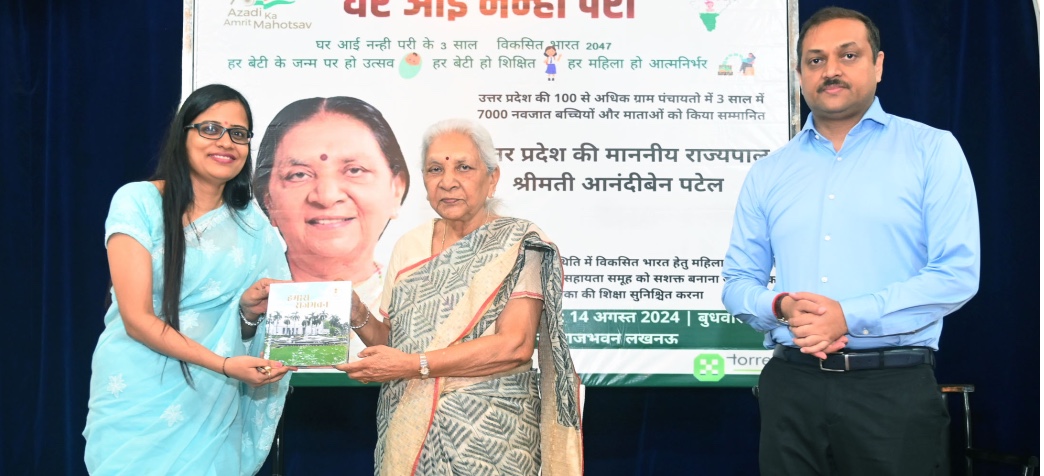
In rural India, where deeply embedded social norms often shape the trajectory of a girl’s life even before birth, Ghar Ayee Nanhi Pari, founded by Ebha Patel in 2022, is working to fundamentally shift both mindset and opportunity. Operating across Gujarat and Uttar Pradesh, the initiative combines community engagement with advanced technologies like Artificial Intelligence (AI) to address gender inequality at its roots—while also building pathways for long-term economic and social empowerment.
At its core, the initiative responds to a stark reality: women globally earn about 20% less than men, are overrepresented in informal and unpaid work, and face persistent barriers to education, healthcare, and leadership. In rural India, these inequalities are compounded by low digital literacy, limited access to financial systems, and entrenched patriarchal norms. Ghar Ayee Nanhi Pari tackles these challenges not as isolated issues, but as interconnected problems requiring systemic, technology-enabled solutions.
AI-Powered Access Through Voice and Vernacular

One of the most transformative aspects of the initiative is its use of AI-powered, voice-enabled advisory systems. Recognising that literacy and digital access remain significant barriers for rural women, the platform uses vernacular, voice-based chatbots that allow women to access critical information without needing to read or type. These tools provide real-time, personalised guidance on agriculture, health, and livelihoods—delivered in local dialects.
This is particularly significant in agriculture, where women often manage small-scale or backyard farming but are excluded from traditional extension services. By tailoring insights specifically to women-centric farming practices, the platform enables them to make informed, independent decisions.
The innovation goes a step further through a “phygital” model—blending digital tools with human networks. A cadre of trained rural women entrepreneurs, known as “Sahelis,” act as intermediaries who help others navigate the technology, build trust, and overcome social resistance. This hybrid approach ensures that technology adoption is not just functional, but also socially embedded and sustainable.
Drones and data-driven monitoring add another layer to the initiative’s impact, enabling more efficient delivery of services and real-time tracking of community-level outcomes. Together, these technologies shift the role of data from passive collection to active problem-solving—supporting everything from agricultural productivity to governance.
Scale and Measurable Impact
The scale and outcomes are significant. The initiative has reached over 9,000 newborn girls and their mothers across nearly 700 panchayats. It has contributed to a 40% increase in rural women’s income and a 70% improvement in service delivery through digital tools.
Beyond numbers, however, the real impact lies in the cascading effects on families and communities. Women reinvest up to 90% of their earnings into household needs—improving nutrition, healthcare, and education, and breaking cycles of intergenerational poverty.
Health outcomes have also improved, with greater awareness leading to increased antenatal care, better immunisation rates, and early detection of malnutrition. At the same time, initiatives around menstrual health and gender awareness—including engagement with male audiences—are helping dismantle long-standing taboos.
Women in Governance and Leadership
Equally important is the initiative’s focus on governance and leadership. Through targeted training and engagement, women are gaining confidence to participate in panchayat-level decision-making. This has led to more inclusive local planning, with greater emphasis on issues like water access, sanitation, and education. In many villages, women who were once excluded from public life are now active agents of change.
What sets Ghar Ayee Nanhi Pari apart is its recognition that technology alone cannot solve gender inequality—but when combined with community trust, local leadership, and culturally sensitive design, it can become a powerful catalyst. The initiative’s success also highlights broader lessons for scaling such models: the importance of long-term funding, strong public-private partnerships, and policy support to bridge implementation gaps.
In a world where over 277 million more men than women still use the internet, and where women remain underrepresented across economic and political spheres, this model offers a compelling blueprint. By turning technology into an accessible, inclusive tool—and placing it in the hands of rural women—Ghar Ayee Nanhi Pari is not just addressing inequality; it is actively redesigning the systems that sustain it.
Share Your Story Today, Shape Viksit Bharat Tomorrow
Got an idea, innovation, or experience that's making a difference? Share your story now and ignite India's transformation because your voice can drive the future forward!
Resources to Replicate This Idea

BUILD YOUR OWN
Do you want to know how this innovator scaled their idea, how much it cost them, and what resources/partnerships they deployed?
Handpicked stories tailored just for you
Explore stories that inspire, inform, and ignite new ideas across tech, innovation, and real-world impact

AI-Enabled Gynaecological Care Expands Access to 400,000+ Women Across India
Pinky Promise is a chat-first, AI-assisted women’s healthcare platform delivering affordable, confidential gynaecological care at scale. Founded in 2022, it...
Read More