
How a Frontier Technology Is Taking AI-Powered Learning to 3.3 Million Children
By combining offline-first technology, multilingual digital content and AI-driven personalisation, a new model of smart education is helping bridge the digital divide in India’s government schools. The focus is shifting beyond providing hardware to ensuring meaningful classroom adoption, improved learning outcomes and greater access for underserved students.
Updated on: 21 November 2026

Sector

Solution

Technology

State of Origin
Disclaimer:
Features ‘as is’ submissions and neither constitutes endorsement, certification, recommendation, or validation by NITI Aayog nor makes NITI Aayog liable in any manner.
Impact Metrics
40,000 classrooms reached
bringing technology-enabled teaching and curriculum-aligned digital resources to schools across India.
3.3 million children
using the platform, extending access to digital learning resources for students at home and in school.
23 states covered
expanding the reach of offline-first digital education solutions across diverse geographical and infrastructural contexts.
9 languages supported
making curriculum-aligned digital learning content more accessible to students and teachers from different linguistic backgrounds.
According to government data, seven out of ten schools lack smart classrooms. But, as iDream Education discovered, even the ones that did have the hardware for a smart classroom installed, often did not utilise it. The reasons for this, were attributed to three key challenges: infrastructure-related constraints, psychological barriers and the lack of an integrated digital learning platform.
The first challenge was infrastructural. Unreliable electricity supply made the regular use of computers difficult. The second challenge was psychological and behavioural in nature. Unlike individuals from more urban or privileged backgrounds, who had experienced the evolution of technology from desktop computers and laptops to touch-based smartphones and other digital devices, teachers in government schools, particularly those from rural and low-income communities, had experienced a relatively limited technological transition, largely from television to mobile phones.
Consequently, there was little inherent familiarity.
The third challenge was the absence of an integrated digital learning platform that could provide teachers with relevant classroom resources in one place. There was a clear need for a comprehensive platform offering digital content such as videos, assessments, questions, books and other teaching materials that educators could readily access and incorporate into their classroom instruction.
These three factors: infrastructure, psychological readiness and the availability of relevant digital content, emerged as the primary barriers to the effective utilisation of technology in government schools.
The emergence of a learning management solution
As the ecosystem has evolved, the nature of the challenges has also changed. While access to hardware and digital content is gradually being addressed, the focus has shifted towards ensuring effective utilisation. The key questions now concern how teachers are supported, trained and monitored to ensure that the digital resources made available to them are being meaningfully integrated into classroom teaching and contributing to improved learning outcomes.
Consequently, iDream Education incorporated programme monitoring and reporting mechanisms to track classroom usage following the installation of hardware and completion of teacher training.

Its teams now assess usage patterns, identify factors influencing adoption and provide teachers with pedagogical guidance, motivational support and recognition to encourage consistent classroom utilisation. The organisation also incorporates learning assessments at different stages of programme implementation. Baseline assessments establish students’ initial learning levels, midline assessments evaluate progress and indicate whether interventions are producing the intended results, while endline assessments measure overall impact. Where progress is insufficient, the programme design is reviewed and modified to improve effectiveness.
Thus, iDream Education’s approach has evolved from addressing the availability and accessibility of digital infrastructure to ensuring its effective utilisation, continuous monitoring and measurable impact on learning outcomes.
Taking offline learning to rural pockets
According to data, 11,372 villages in India do not have 4G mobile connectivity as of November 2026.
In light of this, iDream Education’s approach to frontier technology has been guided by a fundamental principle: leveraging technological innovation to address practical challenges within the education ecosystem, particularly in underserved and rural communities. When they began their journey, one of the key technological innovations was the development of an Android application capable of functioning entirely offline. At a time when most edtech solutions were designed around continuous internet connectivity and primarily catered to urban students, iDream Education identified an opportunity to make digital learning accessible to schools with limited or unreliable internet infrastructure.
The organisation developed APK- and EXE-based applications that could be installed directly on devices and preloaded with curriculum-aligned content. This enabled teachers to conduct digital classroom sessions without depending on internet connectivity or video streaming, which were significant challenges in rural areas.
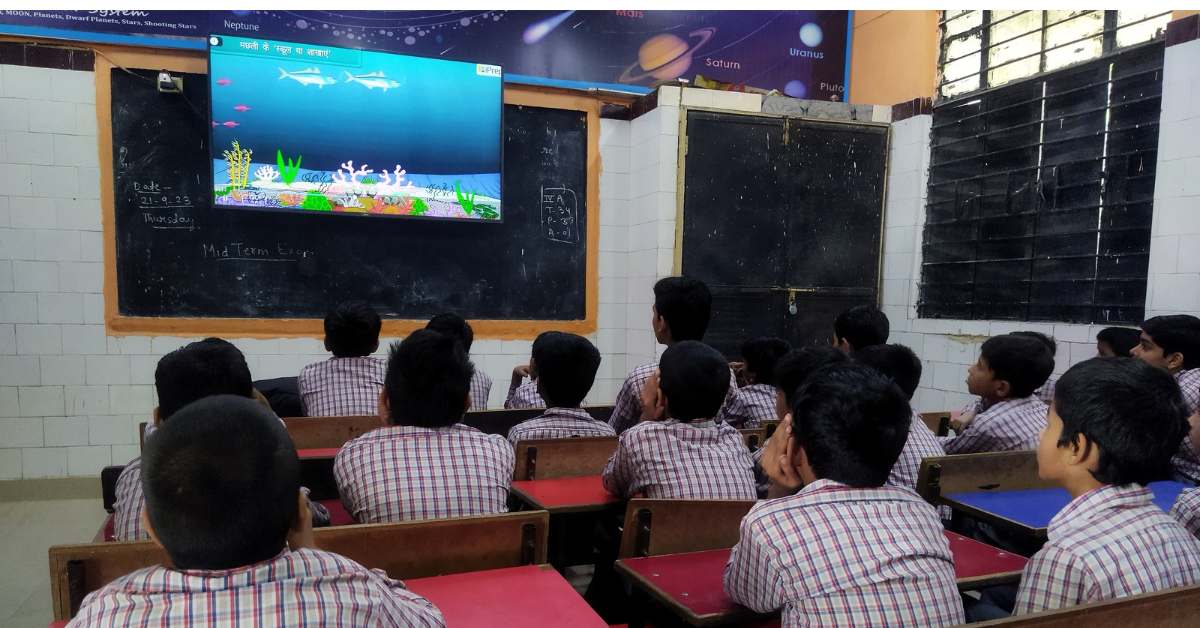
As the organisation expanded, it recognised the need for technological flexibility across different hardware and operating systems. While it initially focused on Android devices, the growing presence of Windows-based computers, Linux systems, tablets and internet-enabled devices necessitated a more adaptable technology architecture. It consequently transitioned from native Android development to Flutter, enabling the deployment of a common application across multiple platforms and devices. The objective was to ensure that iPrep could operate in local languages and offline environments, irrespective of whether a school used a smartphone, tablet, laptop, desktop, smart TV, projector or interactive display.
Another significant innovation was the introduction of the concept of a PC-free smart classroom. Traditionally, smart classrooms required multiple components, including a desktop computer, keyboard, mouse, projector and screen. This could be simplified by using a single Android-based smart television preloaded with educational content through a pen drive. This made technology adoption considerably easier for teachers, who were already familiar with operating televisions. As display technology evolved and became more affordable, schools increasingly transitioned towards larger screens and interactive flat-panel displays, which could also serve as replacements for conventional blackboards. Smart TVs continue to provide a cost-effective alternative for schools operating with tighter budgets.

The belief is that technology should provide teachers with the precise resources they need, exactly when they need them. Its existing application follows a micro-lesson approach, with content structured according to the curriculum. For instance, while teaching photosynthesis, a teacher can instantly access a two-minute explanatory video to help students visualise the concept, followed by a set of five assessment questions to evaluate their understanding. This approach eliminates the need for teachers to generate content independently during classroom instruction.
In terms of scale, iDream has reached approximately 40,000 classrooms across 23 states, with around 3.3 million children using its application either at home or in school. Its content is currently available in nine languages. The organisation has also remained bootstrapped throughout its journey.
In tandem with India’s ‘smart’ education goals
Data suggests that in 2025–26, zero-enrolment schools saw a significant 29 percent decline compared to the previous year (2024-25), dropping to 5,663.
While India is fast-tracking its educational goals, frontier technology that contributes to smart classrooms helps achieve this.
Currently, iDream Education operates across three key areas: smart classrooms, personalised adaptive learning labs and digital libraries. While smart classrooms provide teachers with technology-enabled resources to enhance classroom instruction, personalised adaptive learning labs are designed to help students identify their individual learning gaps and receive customised remediation plans. These solutions enable learners to address their weaknesses systematically and progress towards achieving grade-level competencies. The digital library, meanwhile, focuses on developing students’ reading habits, language proficiency and comprehension skills.
Rather than making AI an additional layer of complexity for students, the objective is to create an intuitive learning experience in which AI continuously analyses a child’s interests, background, learning context and individual learning patterns to deliver highly personalised content and learning pathways.
Currently, most smart classroom implementations are primarily one-directional, with teachers using digital resources to deliver lessons. The vision is to move toward more interactive, intelligent classroom environments where technology also supports student assessment and helps teachers understand students’ learning levels. Even in schools with limited budgets, smart classroom solutions could eventually incorporate intelligent evaluation mechanisms that identify conceptual gaps and indicate where teachers need to intervene to improve learning outcomes.
Across all three segments, the organisation sees artificial intelligence as an important enabler of the next phase of educational transformation, with a particular emphasis on personalisation, accessibility and measurable learning outcomes for students at the last mile.
Share Your Story Today, Shape Viksit Bharat Tomorrow
Got an idea, innovation, or experience that's making a difference? Share your story now and ignite India's transformation because your voice can drive the future forward!
Disclaimer:
Features ‘as is’ submissions and neither constitutes endorsement, certification, recommendation, or validation by NITI Aayog nor makes NITI Aayog liable in any manner.
Resources to Replicate This Idea
BUILD YOUR OWN INTERVENTION
Handpicked stories tailored just for you
Explore stories that inspire, inform, and ignite new ideas across tech, innovation, and real-world impact


25,000 Students, One Ai-Powered Mission: Using Frontier Technology To Expand Access to Communication Skills Education
An AI-powered learning platform is transforming how students develop communication, public speaking and critical thinking skills, reaching 25,000 learners, including...
Read More