How 2 Lakh Farmers Are Using AI To Earn Carbon Credits and Remove 2 Million Tonnes of Carbon
With AI, satellite imagery and regenerative farming, Varaha has brought 1.1 million acres under climate-positive agriculture, helping over 2 lakh farmers earn from carbon credits while restoring the land.
Updated on: 10 July 2026

Sector

Solution

Technology

State of Origin
Disclaimer:
Features ‘as is’ submissions and neither constitutes endorsement, certification, recommendation, or validation by NITI Aayog nor makes NITI Aayog liable in any manner.
Impact Metrics
2 lakh+ farmers
supported in adopting regenerative agriculture and earning additional income through carbon credits across India, Nepal, Bangladesh, Kenya, and Côte d'Ivoire.
1.1 million+ acres under regenerative agriculture
bringing climate-positive farming practices such as agroforestry, biochar application, and reduced tillage to agricultural landscapes.
2 million+ tonnes of CO₂e sequestered
removing greenhouse gases from the atmosphere through regenerative agriculture and carbon sequestration projects.
2.4 million+ litres of water conserved
improving water efficiency through sustainable agricultural practices across Varaha's projects.
Picture farmer Ramesh.
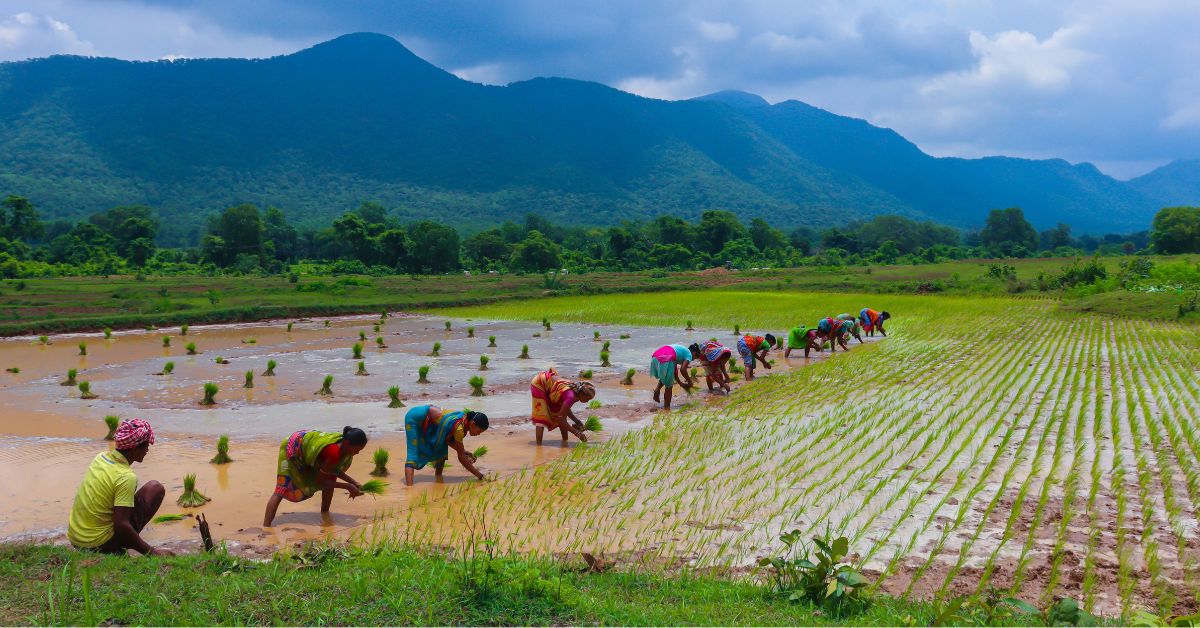
He owns 2 acres of land. Usually, he burns crop residue after harvest and ploughs the soil deeply every season. These practices release carbon into the atmosphere.
Climate-led company Varaha, which was started in 2022 to empower smallholder farmers in India, approaches him and suggests a few changes: don’t burn crop residue, plant trees around the farm (agroforestry), use biochar and reduce tillage and follow regenerative farming practices.
These changes help the soil store more carbon instead of releasing it into the air. In other words, Ramesh’s farm is now helping fight climate change.
Varaha maps Ramesh’s farm, uses satellite images and AI to monitor whether he’s following the practices, collects soil data and runs scientific models to estimate how much carbon his farm has stored, and gets the results independently verified by international organisations. Depending on the amount of CO2 that farmer Ramesh’s practices have removed from the atmosphere (measured in tonnes), this becomes carbon credits.
Who buys these credits?
International companies that want to compensate for unavoidable emissions. So now, farmer Ramesh has two income sources, one being the usual income from selling crops and the other being the additional income from carbon credits.
While this model does seem lucrative, the challenge lies in calculating the carbon credits. This needs to be measured scientifically; the land needs to be monitored over time; farmers need to get independent international certification and find buyers in global carbon markets.
An individual farmer cannot realistically do this alone. This is where Varaha’s expertise comes in. It handles the science, technology, certification, and sales, and then distributes part of the revenue back to the farmers.
Think of Varaha as a bridge between small farmers and the global carbon market, making it possible for farmers to earn from environmental benefits that would otherwise have no direct financial value.
Carbon credits in Indian agriculture
India has one of the world’s largest agricultural sectors. The country has committed to ambitious national and international climate goals, including doubling farmers’ incomes, restoring 26 million hectares of degraded land, reducing greenhouse gas (GHG) emissions, increasing renewable energy use, and meeting its commitments under the Paris Agreement and the Sustainable Development Goals (SDGs).
Against this backdrop, a study by the Indian Council of Agricultural Research (ICAR) explores how carbon trading and voluntary carbon markets (VCMs) can transform agriculture from being a significant source of emissions into a powerful tool for climate mitigation while simultaneously improving farmers’ livelihoods.
Agriculture contributes around 14 percent of India’s greenhouse gas emissions — studies suggest that 6.5 percent of agricultural emissions come from manure management, while crop residue burning contributes to 2 percent — but if the right approaches are wielded, it possesses immense potential to remove carbon dioxide from the atmosphere through sustainable farming practices.
Adopting practices such as agroforestry, conservation agriculture, reduced tillage, improved water management, crop diversification, biochar application, and improved livestock management can significantly reduce emissions while increasing the amount of carbon stored in soils.
Healthy soils rich in organic carbon improve water retention, increase microbial activity, reduce erosion, improve fertility, and make farms more resilient to droughts and changing weather patterns.
This is where carbon trading could be the key.

It provides an economic incentive for farmers. A carbon credit represents the reduction or removal of one tonne of carbon dioxide equivalent (tCO₂e) from the atmosphere. When farmers adopt practices that either reduce greenhouse gas emissions or increase carbon sequestration in soils and vegetation, these environmental benefits can be scientifically measured and verified. Once verified, carbon credits are issued and sold to governments or companies that wish to offset emissions they are unable to eliminate.
Studies suggest agriculture as being particularly well suited for carbon trading because many farming practices both reduce emissions and increase carbon sequestration.
Potential lies in: agroforestry, which increases tree cover and stores carbon above and below ground; reduced tillage which minimises soil disturbance, allowing more carbon to remain stored in the soil; improved irrigation methods such as alternate wetting and drying in rice cultivation, which reduce methane emissions and recycling crop residues instead of burning them, which prevents air pollution and greenhouse gas emissions while improving soil organic matter.
Together, these interventions improve environmental sustainability while increasing agricultural productivity.
Studies by ICAR suggest that global soil carbon sequestration could remove approximately 2.6 gigatonnes of emissions annually.
Recognising the need to support farmers in accessing these opportunities, the Government launched the Framework for Voluntary Carbon Market in Agriculture Sector in January 2024, which seeks to create awareness, build technical capacity, establish credible methodologies, and encourage the adoption of sustainable agricultural practices that generate carbon credits.
We turn our gaze to the Varaha model, which is emerging as an exemplar in wielding the benefits of carbon credits.
Tackling climate change through regenerative agriculture
Gurugram-based Varaha recognised that millions of farmers lacked financial incentives to adopt sustainable farming practices; the founders created a model that links healthier soil with carbon markets.
By encouraging practices such as reduced tillage, agroforestry, biochar application, and enhanced rock weathering, Varaha enables farmers to restore soil fertility, reduce greenhouse gas emissions, and earn an additional source of income through carbon credits.
The company works closely with farmers through field teams, NGOs, and local partners who explain the programme and support them throughout the transition.
Farmers’ land is mapped using Varaha’s mobile application, Vann, after which soil assessments determine the most suitable regenerative practices for each plot. Depending on the requirements, farmers receive resources such as saplings, biochar, or specialised machinery to help implement these changes.
Technology plays a central role in Varaha’s model. Satellite imagery and artificial intelligence continuously monitor farms to verify whether recommended practices are being followed, replacing traditional manual inspections.
Machine learning models estimate how much carbon has been captured or emissions reduced, while independent audits certify these results against internationally recognised standards. Once verified, carbon credits are issued through global registries and sold to companies seeking to offset their emissions.
A share of the revenue is then distributed directly to participating farmers, providing them with an additional income from the very first year.
Beyond the financial benefits, regenerative farming gradually improves soil health by increasing organic carbon, enhancing moisture retention, supporting microbial activity, and reducing dependence on chemical fertilisers. This leads to more productive and climate-resilient farms over time.
Today, Varaha works with more than two lakh farmers across India, Nepal, Bangladesh, Kenya, and Côte d’Ivoire. Across more than 20 active projects, it has brought over 1.1 million acres under regenerative agriculture and other climate-positive interventions, sequestered over 2 million tonnes of carbon dioxide equivalent and conserved over 2.4 million litres of water.
Varaha aims to remove one billion tonnes of carbon by 2030 while enabling millions more farmers to restore their land, strengthen their incomes, and build resilience against climate change.
If this model is scaled successfully, agriculture could emerge as one of the world’s largest carbon sequestration ecosystems. With nearly 130 million smallholder farmers and millions of hectares of cultivable land, India has the potential to transform farms into climate assets that absorb carbon while producing food. Carbon markets could create a new revenue stream for farmers, accelerating the adoption of regenerative agriculture, restoring degraded soils, strengthening rural livelihoods, and positioning agriculture as a key driver of global climate action.
Sources:

Share Your Story Today, Shape Viksit Bharat Tomorrow
Got an idea, innovation, or experience that's making a difference? Share your story now and ignite India's transformation because your voice can drive the future forward!
Disclaimer:
Features ‘as is’ submissions and neither constitutes endorsement, certification, recommendation, or validation by NITI Aayog nor makes NITI Aayog liable in any manner.
Resources to Replicate This Idea
BUILD YOUR OWN INTERVENTION
Handpicked stories tailored just for you
Explore stories that inspire, inform, and ignite new ideas across tech, innovation, and real-world impact


Pilotless Cargo Flights with Zero Failures: Reimagining Diagnostic Logistics in Indian Cities
An energy-efficient autonomous aircraft combining vertical take-off with fixed-wing cruise has completed over 1,000 flights carrying diagnostic samples between hospitals,...
Read More